

Supportive, Professional, Client-Focused Service
From prototypes to full-scale production, we’ve got you covered.


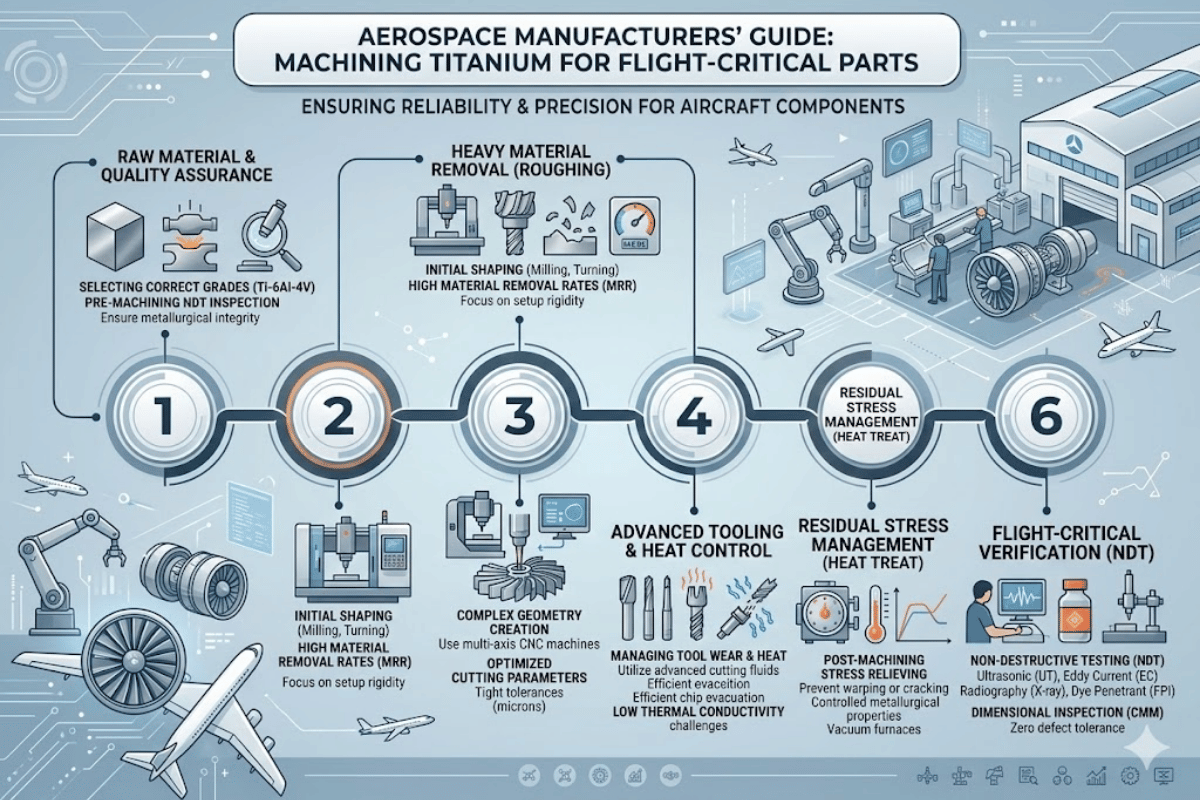
How Aerospace Manufacturers Machine Titanium for Flight-Critical Parts
Titanium is the essence of airfoil. That’s because it’s immune to fatigue at Flight Level 300, unaffected by chemical or corrosion attacks produced by salt spray Common Carrier decks, and able to retain its shape at temperatures that will cause aluminum to an embarrassment of softness. However, raw titanium billets turned into high-performance components is for the most part an entirely different story.
This reference pieces apart the alloys, CNC methods, tooling approaches, and demanding specifications that characterize aerospace titanium machining – from published data on materials, the tooling manufactures advice, to aerospace quality systems.
In This Guide
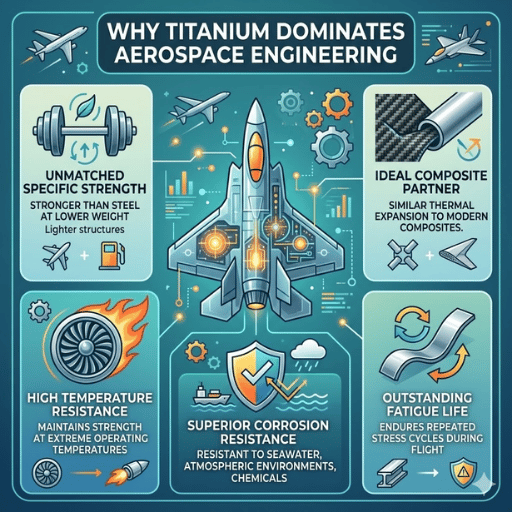
Thus titanium was adopted by the aerospace industry because it three problems—strength, light weight and corrosion—were met simultaneously. The use of titanium in the Boeing 787 Dreamliner is about 15% of structural weight—over 19 tonnes per airframe—whilst the Airbus A350 XWB is believed to contain about 14% titanium—mainly in the landing gear, pylons, and the carbon fiber—metal joint attachments.
The numbers speak for themselves. Although titanium is almost exactly intermediate to aluminum (2.70 g/cm) and steel (7.85 g/cm), at a density of 4.43 g/cm, the high strength-to-weight ratio is characteristic of high strength steel alloys. An airframe structural titanium element is typically about 45% lighter than equivalent steel while providing the same tensile characteristics.
This combination of high strength steel alloys with weight savings is the main motivation for nickel-based titanium use in today’s airframes according to the American National Standards Institute (ANSI).
Corrosion resistance provides even more insensitivities. Rapid formation of a self-healing titanium dioxide (TiO) passive oxide, in a matter of milliseconds from air contact, makes titanium extremely corrosion resistant. The U.S. Nuclear Regulatory Commission (NRC) reports that after 16 years of operation in contaminated seawater, titanium tubing exhibited no signs of corrosion that even stainless steel can only dream of! For our naval aviation aircraft and carrier borne aircraft, a mind-boggling $ billions can be saved over fleet lifecycles.
Withstood high temperature uses it is also highly resistant to be used in high temperature applications. For instance, alloys such as Ti-6Al-4V can be used as high as 400 C and near-alpha alloys such as Ti-6Al-2Sn-4 Zr-2 Mo can be used as high as 540 C which accounts for in-turbine engine compressor and after-burner assemblies with Aluminum would have become almost useless.
Titanium’s strength-to-weight ratio and corrosion resistance make it the material of choice for both aircraft and spacecraft — at roughly half the weight of steel, it delivers structural integrity in environments where every kilogram saved translates to fuel savings over decades of service.
What makes titanium so valuable in aerospace applications is the distinct combination of high strength, low density, outstanding corrosion resistance and over temperature capability, none other of the structural metals can match four at once.
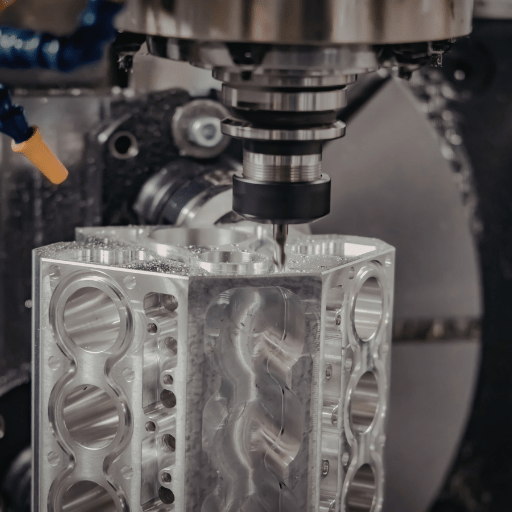
Titanium machining is always difficult due the same characteristics that make it such a useful material to the aerospace industry, namely its strength, low thermal conductivity and sensitive nature, will become the enemy of the cutting tool. Therefore, whether it is going to be manufactured into a finished part, it is important to understand these properties in order to avoid an un-economic scrap rate and early tool wear.
| Property | Ti-6Al-4V | Aluminum 6061 | Stainless Steel 304 |
|---|---|---|---|
| Thermal Conductivity (W/m·K) | 6.7 | 167 | 14.4 |
| Elastic Modulus (GPa) | 114 | 69 | 200 |
| Typical Milling Speed (SFM) | 160–230 | 800–1,500 | 300–400 |
| Work Hardening | Severe | Minimal | Moderate |
| Galling Tendency | High | Low | Moderate |
Heat remains in cutting zone- Due to the vast difference in thermal conductivity, the heat when machining Aluminum is transmitted 25 times quicker than that of Ti-6Al-4V. When machining Titanium, nearly 80% of the heat at the Tool-Chip interface gets transmitted into the cutting tool edge from the Chip and Work. Kyocera SGS Precision Tools notes that about 80% of the heat
Increasing the cutting speed by 30% could result in 80% blade life.
Titanium spring back distorts dimensions. Since the elastic modulus of titanium is 114 GPA-about 1/2 of steel-it deforms as the cutting force is applied and spring backs when the tool moves. This leads to chatter, rubbing against the freshly-machined surface and distorted-thin-walled components.5 Machinists working with titanium/ nickel/ copper/ titanium/ etc. are aware of this and compensate for spring-back/thinwalled distortion when fixturing and planning tool-paths.
Build-up is destructive to tools. Titanium’s chemical reactivity means that chips tend to glue, pit and weld onto cutting edges through a condition known as built-up edge. How every rotation of the tool pulls off built-up deposits, pulling graphite carbide grains away from the insert, and produce cratered, rough surfaces which cause crater wear.
Unlike metals like aluminum that shed heat quickly, titanium presents unique challenges: rapid heat buildup at the cutting edge, a strong tendency to gall against tool surfaces, and severe work hardening when feeds drop too low.
Using Aluminum or Steel Cutting parameters on Titanium is one of the most common mistakes when shops are first introduced to the material. Invariably, the tool fails, the surface work hardens and the dimensional error becomes more costly than the scrap. Use the Titanium parameter tables and go from there.

Not every titanium alloy cuts the same. Selecting among titanium grades used in aerospace requires balancing machinability against service conditions — each alloy offers a different tradeoff between high corrosion resistance, creep strength, and ease of cutting. Each grade requires different cutting parameters, tooling selections, and coolant strategies. While Ti-6Al-4V is by far the most common material in aerospace engineering – using up 50% of all titanium produced world-wide – other grades are more suited to particular aerospace applications.
| Alloy | UTS (MPa) | Max Temp (°C) | Primary Aerospace Use |
|---|---|---|---|
| Ti-6Al-4V (Grade 5) | 950–1,200 | 400 | Airframes, fan blades, fasteners |
| Ti-6Al-2Sn-4Zr-2Mo | 1,110–1,155 | 540 | Compressor disks, afterburners |
| CP Grade 2 | 345–515 | 250 | Non-structural, corrosion-critical |
| Ti-5Al-2.5Sn (Grade 6) | ~900 | 480 | Wing spars, fuselage frames |
Ti-6Al-4V – otherwise known as UNS R56400 and more commonly called Ti64 – is the work horse. Its alpha-beta microstructure provides the highest tensile strength (minimum 950 MPa in the annealed condition, according to SAE AMS 4928), fracture toughness (84-107 MPam^), and ease of welding. Ti-6Al-4V makes up the Boeing Rolls-Royce Trent 1000 fan blades, landing gear forgings, and thousands of aerospace fasteners.
Ti-6Al-2Sn-4Zr-2Mo takes over at the higher end where Ti-6Al-4V does not work – above 400C Continuous temperatures. Near-alpha alloy, retains its creep properties up to 540C. Used as the most common alloy for the intermediate compressor stages/disks of turbine engines.
Also has silicon (~0.1%) to improve the creep behavior at high temperatures.
CP Grade 2 – here you sacrifice strength for formability and corrosion resistance. Has lower UTS (345-515MPa) but higher elongation (20-30%) than alloyed grades, hence it machines at faster rate. Used in Aerospace for non-structural titanium parts, hydraulic tubing and critical hardware requiring corrosion-resistance.
Ti-5Al-2.5Sn (Grade 6) is an all-alpha alloy with good weldability, excellent maintainability to 480C and toughness and fracture toughness. It is used for structural components in the airframe such as wing spars, diverter and exhaust components.
As a general rule, check if the spec level you’re choosing has the appropriate controls required for your aerospace components. AMS 4911 has higher controls over chemical composition and microstructure for the same Ti6AL-4V alloy than ASTM B265 spec level. If you choose the incorrect spec level, first article inspection may reprove.
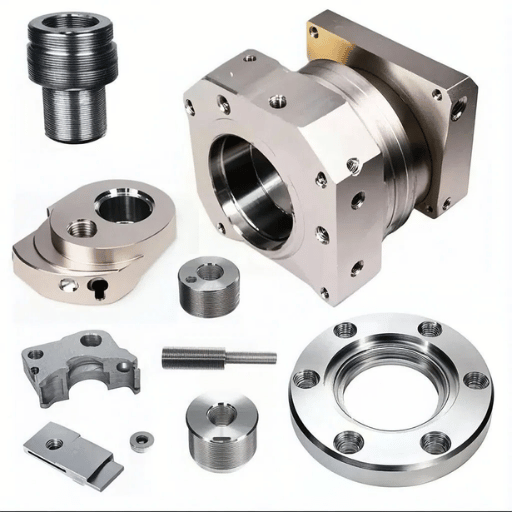
Titanium aerospace CNC machining is a combination of four different processes. Not all procedures will work for all parts or all forms, as the choice between processes falls more to the shape of the part and the tolerance expectations rather than the raw material itself.
Fives axis milling has been widely adopted for complex aerospace titanium features, since this process allows the single feeding of the cutting tool in 5 different axes in a single setup. In contrast, multiple fixtures produce cumulative repositioning errors, a concern in the most aircraft-critical components, such as blisks, turbine blades or structural fittings. 5-axis milling can reach an accuracy of 0.005 mm in these tasks, considering the tolerances for aircraft segments according to Sandvik Coromant.
Trochoidal milling is a 5-axis milling technique that uses very light radial engagement combined with a high axial depth of cut. In this way, the contact arc between the titanium workpiece and tool is minimized while a high chip removal rate is maintained. Since heat generation is proportional to the contact arc, the result is reduced cutting pressures, increased tool life and dramatically higher productivity in milled titanium parts. Published reports by the Society of Manufacturing Engineers (SME) estimate cycle time has been cut by over 40% with trochoidal toolpaths in machining trials, while tool life was improved by a factor of 2 or more in all cases. Shops that specialize in machining titanium for aerospace applications often rely on 5-axis milling centers paired with advanced technology for real-time tool monitoring and adaptive feed control.
CNC turning is used to machine rotational features such as machined hardened ti-alloy shafts and bushings. Titanium parts machined in well controlled, cooled conditions and using coated carbide inserts have been regularly produced to Ra 0.19 μm surface finishes. Applied heat is a concern – in practice, feed rates need to be maintained at a sufficient level to avoid work-hardening the workpiece under the tool; at the same time they need to be low enough to allow coating and insert life to endure.
While standard milling is optimized for 3 axes of linear motion and 2 axes of rotational positioning (the so-called 3+2 moves, since the angles remain fixed during the operation) simultaneous 5-axis machining uses all 5 axes simultaneously. As a result, ruled surfaces on blades and impellers, as well as structural ribs with historically difficult undercuts can now be machined in a single setup.
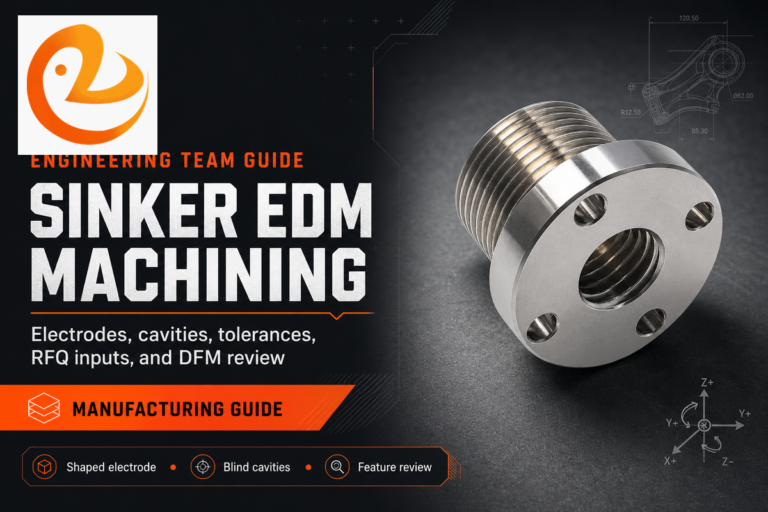
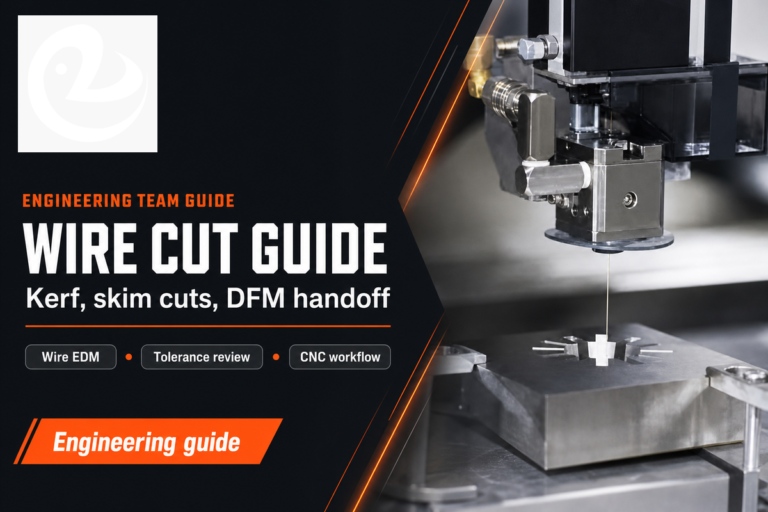
EDM can be used to generate internal features, such as accessible or inaccessible holes, and for overly complex geometries where multiple milling setups would have otherwise been required. NASA’s White Sands Test Facility writes “EDM is one of the most accurate precision machining processes available” for complex components machined in all manner of exotic metals including titanium, tantalum, niobium, like, tungsten, rhenium, etc. Wire EDM achieves Ra 0.8 μm surface finishes on finished titanium alloy edges, while die-sink EDM can create internal cavities or tiny, irregularly shaped features too difficult for even multi-fixturing milling.
Identify the best process for each part geometry: 5-axis milling for complex, prismatic features with tight tolerances; CNC turning for features with rotational symmetry; EDM for internal features, thin-walled parts less than 0.5 mm that would cause extra stress on mechanical operations, or tough, work-hardened surfaces. Few, if any, aerospace titanium parts are milled; even then, most are milled using a combination of two or more of these processes.

Finding the right cutting technique for titanium is just as critical as choosing the original alloy. Set cutting parameters for 6Al-4V to published research and tooling manufacturer guidelines and what you get is not just a working result but world class productivity and long tool life.
| Parameter | Roughing | Finishing |
|---|---|---|
| Cutting Speed | 50–70 m/min (160–230 SFM) | 60–90 m/min (200–300 SFM) |
| Feed per Tooth | 0.06–0.15 mm/tooth | 0.04–0.08 mm/tooth |
| Axial Depth of Cut | 1.0–3.0 mm | 0.2–0.5 mm |
| Radial Engagement | ~30% of tool diameter | 10–20% of tool diameter |
| Tool Life (per edge) | 60–90 minutes | 45–75 minutes |
Use carbide tooling and not ceramics. While ceramic tooling is well suited for tough nickel based superalloys, conventional coated or uncoated cemented carbide is considered to be the best solution for machining titanium. To refine cutting edges and micro-structure, coatings, such as TiAlN and AlCrN, with oxide layers of only a few microns are sometimes used. Reinforced layers, multi-coat systems of TiAlN + AlCrN yielded performance improvements of at least 15% over uncoated carbide inserts and should be considered.
Coolant pressure is more critical than coolant flow. Deliver coolant at high pressure and you’ll generate a hydraulic wedge trapped between the insert and the chip. This wedge exerted a peel force that cleanly fractures the chip and takes heat away from the cut zone. The aerospace machining process guide produced by Sandvik Coromant recommends precision pressure coolant at 70-100 bar and claims up to a 50% boost in tool life and 20% faster cuts. Titanium requires a coolant concentration of 10-14% and filtration to 25 microns or better. Skilled technicians who work with titanium daily develop a feel for how the material responds to different cutting strategies — a practical knowledge base that demanding specifications and tight-tolerance aerospace work require.
Cutting costs by dropping coolant pressure is false economy. Flood coolant does not reach into the tool-chip interface in thermally-stressed titanium machining. Chips will have a hardened surface layer, tool wear occurs prematurely, and parts are rejected. Invest in through-spindle delivery at a minimum of 500 psi (34 bar).
Today’s carbide tools will lengthen each cutting edge to a session of 60-90 minutes – a drastic gain over the 10-minute tool life common in the last decade. According to SME’s manufacturing process analysis: keep feed rates high enough to prevent work hardening but controlled enough to maximize tool life.
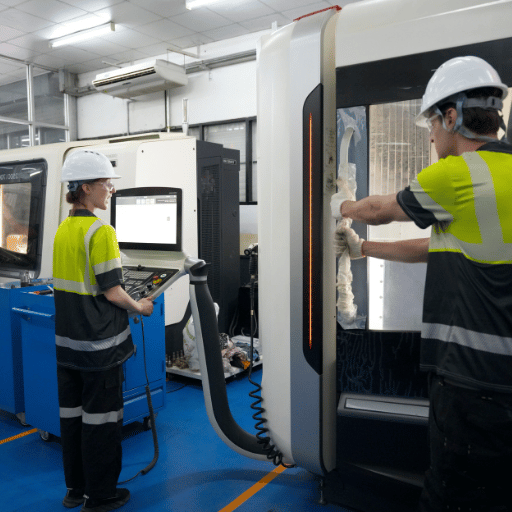
Getting the aerospace parts process right from the beginning is half the task. Knowing that each part left the shop within specified limits (and that you can document it!) is the differentiator between aerospace-approved suppliers and others.
Aerospace quality inspection goes through many stages. Coordinate Measuring Machines (CMMs) will verify critical dimensions, while NIST-certified high end units will reach an accuracy of 0.0044 mm (0.00017 in) over 1,200 mm (47 in) spans. Non-destructive testing (NDT) – ultrasonic inspection (UT), liquid penetrant testing (PT), radiography (RT) – detects surface flaws, cracks and internal porosity unseen by dimensional inspection. The American Society for Nondestructive Testing (ASNT) maintains standards for all six core NDT techniques used in aerospace.
Material documentation completes the quality assurance chain. FAA Advisory Circular AC 23-20 specifies that every lot of titanium must be identifiable back to the original mill certification, with documentation proving the connection between the raw material batch number and every manufacturing operation till the finished product.
Before you send a purchase order for aerospace grade titanium, check on (1) AS9100D accreditation current and audited, (2) NADCAP accreditation for relevant special processes, (3) material documentation chain documenting origin down to mill batch number, (4) CMM and NDT capacity either in-house or through an approved subcontractor, (5) documented FAI process per AS9102C.

The proof of a serious precision titanium machining service provider is evident in three key business areas: investment in machine tool capacity, rigorous process management, and disciplined record keeping.
Equipment counts. The buyer should take for granted five-axis machine tools paired with advanced technology for through-spindle coolant delivery at high pressure. A shop with 3-axis mills or low pressure flood coolant will be frustrated with tool life on aerospace parts, and may have trouble achieving tight tolerances. Look for CNC turning centers with live tooling, and inquire whether EDM has been outsourced or brought in-house.
Capability processes. How tight can a technician hold those tolerances you require? Only skilled technicians who understand titanium’s temperature-dependent elastic and thermal characteristics can hold the tolerances that untrained operators using conventional practice cannot. Request process capability data (Cpk values) for other titanium parts of a similar type; if the data shows a Cpk of greater than 1.33, the process is stable and in control.
Pre-systems documentation preparation will save months. Aerospace programs call for AS9102 First Article packages, full traceability mill certs, and CMM reports including GD& T callouts. Businesses that have pre-existing this infrastructure speed up delivery timelines versus shops creating these mechanisms on the fly.
Le-creator’s team has 17 years of experience and we specialize in machining aerospace titanium machining, combined with 80+ advanced CNC machines and 100% incoming quality inspection. We serve customers through product development to high-volume production – if your project calls for competitive tight-tolerance CNC machined titanium parts, review our titanium CNC machining services and talk to our engineering professionals for a technical consultation.

The number one factor is heat control. Use uncoated or PVD coated carbides and always run a through spindle coolant at least 70-100 bar, 10-14% concentration. Keep milling speeds at 50-70 m/min.
Run your trochoidal tool paths at approximately 30% radial engagement, so your contact arc is short. Feed rates should be sufficiently high to ensure the tool is always cutting fresh material, rather than rubbing in a work-hardened surface. With these conditions, today’s carbide inserts can achieve 60-90 minutes per edge, compared to the 10 minute tool life that was common ten years ago.
Chip evacuation should be continuous. Re-cutting chips in titanium results in rapid edge failure.
This guide has been created by the engineering content team at Le-creator – a precision CNC machine shop in Shenzhen (17 yrs. aerospace Ti experience), with customers in the medical, aerospace & industrial sectors. Material Property data and cutting parameter suggestions are taken from published standards (SAE, ASTM), government agencies (NASA,NIST,FAA), and technical documents from tooling manufacturers. We produce Ti-6 Al-4 V and similar aerospace alloys on a daily basis.
This is the guide that incorporates those parameters successfully adopted by real world machines.