

Supportive, Professional, Client-Focused Service
From prototypes to full-scale production, we’ve got you covered.


Explore our gallery of custom CNC turning parts, showcasing precision-engineered components tailored to meet your unique needs.
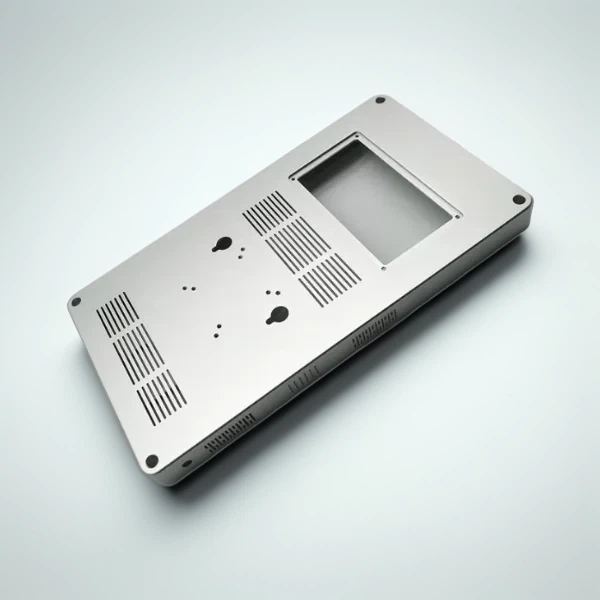


From simple prototypes to complex assemblies, our precision CNC turning services deliver parts that meet the most demanding specifications.
Standard lathe operation best suited for round components such as shafts and pins, delivering excellent surface finish.
Combine turning with milling in a single setup. Create complex features like flats, slots, and cross-holes.
Guide bushing support allows tight tolerances on long, slender components and small complex parts.
Fast-turn service for validation. Get functional metal or plastic prototypes in as fast as 3 business days.
The art of CNC turning with high volume and good quality. This involves automation and fast set-up for hundred to 100,000 pieces, utilizing tool monitoring and latest CAD/CAM setups.
Fulfilling every possible combo of customer needs including threading, knurling, heat treatment, and precision grinding.
We give effective precision machining for greater than 50 kinds of metal and plastic. From custom-made metals and steels like brass, aluminum alloys, and superalloys to plastics, we have all the competence to take a raw piece of material and turn it into a precision component.
Compare material properties, machinability ratings, and hardness values to select the optimal material for your CNC turning project.
Convert between Rockwell C (HRC), Brinell (HB), and Vickers (HV) hardness scales
Our AS9100D-certified CNC turning services are designed to meet the most rigorous standards, delivering critical parts for aerospace, medical, and automotive sectors.

The manufacture of flight-critical components meets full traceability requirements, with material certifications and full DFARS compliance standards.

Implantable and surgical instrument components manufactured compatible with cleanroom environments, employing biocompatible materials.

High-volume production with full PPAP documentation. Finite-quality evidence provided for transmission and safety system components.
Professional calculators for CNC lathe operations. Calculate spindle speed, feed rates, tolerances, and part weight with real engineering formulas.
| Size Range (mm) | IT5 | IT6 | IT7 | IT8 | IT9 | IT10 |
|---|---|---|---|---|---|---|
| Over 1 to 3 | 0.004 | 0.006 | 0.010 | 0.014 | 0.025 | 0.040 |
| Over 3 to 6 | 0.005 | 0.008 | 0.012 | 0.018 | 0.030 | 0.048 |
| Over 6 to 10 | 0.006 | 0.009 | 0.015 | 0.022 | 0.036 | 0.058 |
| Over 10 to 18 | 0.008 | 0.011 | 0.018 | 0.027 | 0.043 | 0.070 |
| Over 18 to 30 | 0.009 | 0.013 | 0.021 | 0.033 | 0.052 | 0.084 |
| Over 30 to 50 | 0.011 | 0.016 | 0.025 | 0.039 | 0.062 | 0.100 |
| Over 50 to 80 | 0.013 | 0.019 | 0.030 | 0.046 | 0.074 | 0.120 |
| Over 80 to 120 | 0.015 | 0.022 | 0.035 | 0.054 | 0.087 | 0.140 |
How Our Precision CNC Turning Services Solve Real Manufacturing Challenges.
A Tier-1 aerospace supplier faced a 30% rejection rate and delays with their previous vendor due to tool chatter and inability to hold ±0.0005" tolerances on titanium shafts.
"Their titanium machining know-how and AS9100D procedures have secured them as our preferred supplier for all flight-critical turned components."

A startup needed complex bone screws (1.5mm dia) with variable thread pitches. They required ±0.01mm accuracy and rapid iterations for FDA 510(k) submission.
"Their ISO 13485 quality system gave investors confidence, and rapid prototyping accelerated our FDA timeline by four months."

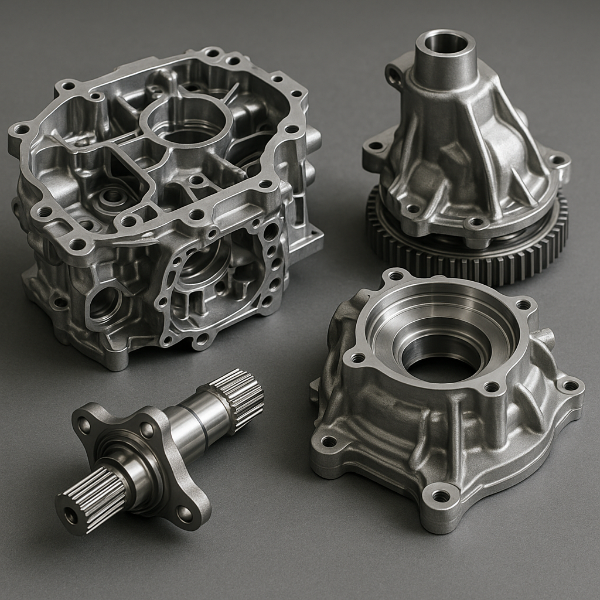
An EV maker needed to scale motor shaft adapters from 50 to 50,000 units while maintaining ±0.001" spline tolerances and passing PPAP Level 3 requirements.
"Their organized way of production scaling was different. Their PPAP was really good and they met all the deadlines."
Convert between imperial and metric units commonly used in CNC turning and precision machining.
To create cylindrical components, CNC turning uses CNC lathes, which rotate the workpiece while cutting tools sculpt it. This differs from CNC milling and CNC turning integrated workflows, where milling uses rotating cutters to remove material from a stationary or moving workpiece. There is a multitude of different CNC processes that are often integrated with one another—cnc turning and cnc milling—which create more advanced components that demand several machining processes to achieve precise and intricate features.
Lathe services are best suited to cylindrical or concentrically feature-rich parts, such as small and large shafts. Common materials used are parts of aluminum, steels, stainless steel, brass, and different plastics—which includes options for metal and plastic parts. Turning solutions are highly tailored to produce perfect parts and can handle quick-turn requirements, delivering high-quality outputs even with smaller or more complex components.
Most CNC turning work involves CAD and CAM programming, CNC lathe setup, turning operations such as taper turning and facing, finishing, and inspection. Some other operations will follow. When combining CNC turning with milling services, several machining operations may be required. Standard CNC turning steps comprise operational CNC turning steps aimed at ensuring the CNC turning is efficient and the parts presented are of the CNC turning quality needed.
Definitely, they do this using advanced, specialized tools. With live tooling and multi-axis lathes, it is possible to do milling, drilling, and tapping with the lathe. This helps produce technologically advanced parts or those with detailed designs. These can achieve a level of precision that may be required and include features that other machining operations must perform separately. That would also mean setting up other separate configurations.
Many jobs combine CNC turning and CNC milling. The lathe produces parts with cylindrical features. CNC milling machines can add flat surfaces, slots, or more complex contours. The integration of these machines offers less operator handling, improved efficiency and accuracy, and potentially lower costs and setup time when jobs can be completed in a single workflow or on multi-function machines.
The costs depend on a few things and these are material (aluminum parts can be low cost), how complicated the part is, what the tolerances are, and the run quantity. Small and quick turn parts can increase the cost per part. However, there are various balances of costs and setup times because of CNC efficiencies and lowered costs that are achieved with larger run quantities. Instant online quote tools are usually available for estimating costs and times to help achieve a good price and rapid turnover.
Many CNC lathes are equipped with features such as automatic tool changers, multi-axis control, sub-spindles, and live tooling, which are essential for manufacturing both high-quality and precise parts. These features also allow for taper turning and threading, as well as turning, which are required for parts with high concentricity. CNC lathe services offered by manufacturers enable the production of both simple standard parts and complex components for advanced integrated systems.
Most suppliers offer a form to generate an instant online quote, where you can upload drawings, materials (metal and plastic parts), finishes, and quantities. This helps expedite cost estimation and setup time. This also helps to determine if you require CNC turning for the parts you need. If you are interested in our CNC services, you can view our lead times for quick-turn parts, precision part production, and other CNC machining services by requesting a quote.