Fraud Blocker

Get in touch with Lecreator Company

Contact Form 在用

PEEK CNC Machining

Expert PEEK CNC Machining Services

Manufacture of precision parts using PEEK to be applied in aerospace, medical, and semiconductor industries is what we are good at. From rapid prototypes to production runs, accuracies are maintained as narrow as ±0.001″.
ISO 9001:2015
ISO 13485 Medical
AS9100D Aerospace
ITAR Registered

Why Choose PEEK for Your Precision Components?

PEEK exhibits a rare combination of properties which render it suitable for the harshest of all applications of the world.
Extreme Temperature Resistance
The continuous operating temperature is as high as 260°C (500°F); short-term exposures can go up to 300°C. Maintains its physical properties while other plastics get weak.
Legendary Chemical Resistance
Resistant to almost all organic solvents, acids, and bases. Does not get dissolved by jet fuels, hydraulic fluids, or other hostile industrial chemicals.
High Mechanical Strength
Tensile strength varies between 90-210 MPa depending on the grade, and it shows excellent fatigue resistance. High strength-to-weight ratios allow replacement of metals.
Excellent Dimensional Stability
Low coefficient of thermal expansion (47 ppm/°C) and minimal moisture absorption (0.1%) ensure dimensional stability.
Proven Biocompatibility.
Medical-grade PEEK (ISO 10993, USP Class VI) is well-established for permanent implants. Being radiolucent is great, as it gives a clear image of a clean implant.
Replacing Light Metals
PEEK may save up to 70 percent of weight compared steel yet maintaining the same strength. Just feel an enormous compromise, like performance to weight.

Gallery of Custom CNC Machining PEEK Parts

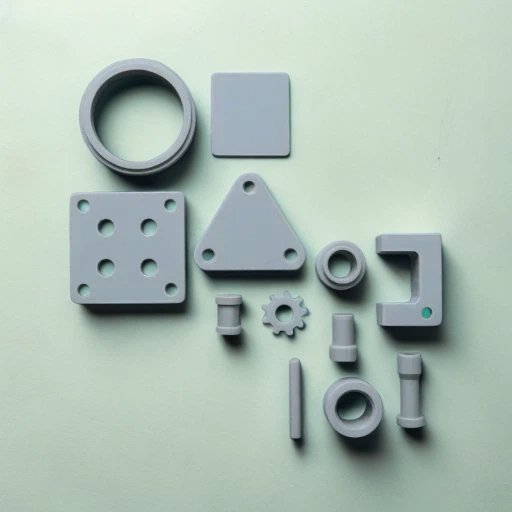
Discover our broad portfolio of custom CNC machining peek parts- Precisely engineered parts able to meet the highest demands in industries across the spectrum.
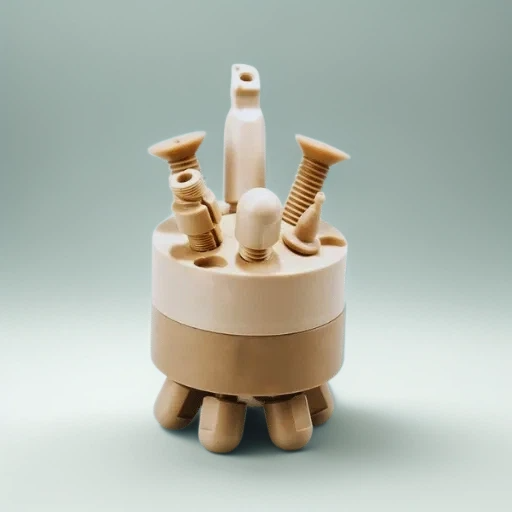
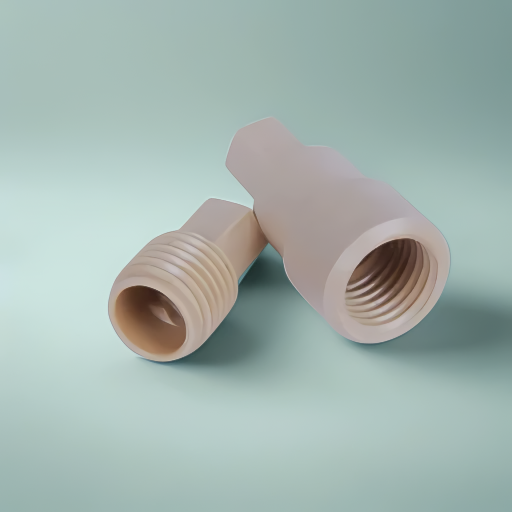
Medical grade PEEK machining for spinal implants and surgical devices
Aerospace PEEK parts CNC machined for high-temperature fuel systems
Precision PEEK CNC machining for semiconductor wafer carriers and test sockets
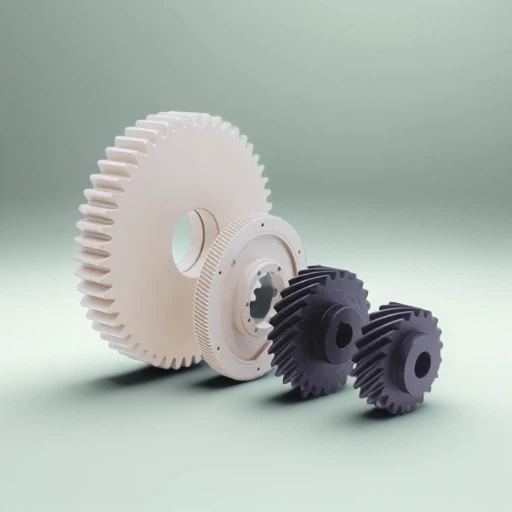
Custom carbon-filled PEEK gears with high wear resistance and strength

PEEK Grades: Choosing the Right Material for Custom PEEK Parts

A conclusion may be formed that all PEEK are not same. Selecting the most appropriate PEEK grade for your application is vital to bring about high performance and operate cost-effectively. Here’s a rundown of the commonly employed grades for CNC machining PEEK parts:
Unfilled PEEK (Virgin PEEK)
A grade that offers features of PEEK, namely superior mechanical performance qualities, superb chemical resistance, and compliance with FDA regulations for household and food applications. Ideal for the general-purpose components where filled grades are not required. This is the easiest to machine and achieve surface finish.
Glass-Filled PEEK (30% GF)
The inclusion of glass fiber grants PEEK greater rigidity and dimensional stability at high temperatures. There is a sacrifice for this, as the tool wears away a little while machining and surface finish quality goes down. You see this used in structural materials for automotive and the aerospace industries.
Carbon Fiber PEEK (30% CF)
PEEK filled with carbon fiber possesses the best weight-to-strength ratio possible, unlike the unfilled variety of this material. Often, it is used for orthopedic load-bearing instances and, of course, dormancy bearings. When tooled, it does require PCD or diamond coating to realize the best final findings.
Bearing Grades of PEEK (PEEK PVX)
The self-lubrication reinforcement of specialized compounded materials with PTFE and graphite and carbon fiber necessitates a great amount of sliding parts for very low heat output. This is called bushings, wear rings, and sliding material for very-low-friction mechanisms.
Medical Grade PEEK (Implant Grade)
PEEK-OPTIMA™ by Invibio and Zeniva® by Solvay are specifically made for implantation in the long term. They are out-and-out biocompatible polymers that comply with ISO 10993 requirements and radioluce (invisible on X-ray, MRI, and CT), making them highly useful for spinal fusion cages, dental implants, and trauma-fixation devices.

PEEK Material Properties Data Sheets

PEEK 1000

Standard Unfilled PEEK
Technical Data Sheet
Download PDF

PEEK HPV

Bearing Grade PEEK
Technical Data Sheet
Download PDF

PEEK GF30

Glass Filled PEEK
Technical Data Sheet
Download PDF

PEEK CA30

Carbon Filled PEEK
Technical Data Sheet
Download PDF

PEEK Machining Challenges And Solutions

Machining PEEK indeed poses particular challenges which necessitate an expert approach. Here is how we deal with the most typical problems.
01
Heat Build-up in the Cutting Zone
Low thermal conductivity (0.25 W/m·K) keeps the heat at the tool-to-workpiece interface; which often surfaces as thermal softening or dimensional instability.
  • Material sticks in a gummy form and becomes very adherent to the tool.
  • Poor finish and dimensional drift.
  • Accelerated cutting-edge wear and premature loss.
Our Thermal Management Solution
We apply optimized cutting parameters, coolants, and milling alerting direction for effective heat management.
  • High-speed, low-force cutting parameters maintain heat generation away.
  • The compressed air or mist spray cools chips very quickly.
  • As a general rule in PEEK cutting, sharp and uncoated carbide tools with positive rake angles that reduce cutting forces should be used.
02
Warping and Material Instability
This suggests that PEEK is embedding such residual stresses in its material, and these stresses are released during the machining process, causing the part to warp, twist or alter dimension.
  • The parts extend beyond the tolerance limits when subject to machining.
  • NON-ISO layer-wise material removal will induce non-robust distortion.
  • Infiltration effects for fragile wall features.
Our Stress Relief Protocol
Multistep machining together with intermediate annealing resulting in parts with dimensional stability.
  • Rough machining Anneal Mid stage Annealing Finish.
  • Symmetrical material removal would take away all stresses.
  • Controlled cycle annealed at 150-200 °C with slow cooling period.
03
Rapid Tool Wear (Filled Grades)
Glass and carbon fiber reinforcements in PEEK-filled composites are highly abrasive, which results in rapid tool degradation and results.
  • Tool life is shortened by 70-80% of that of unfilled PEEK.
  • Poor surface finish as tools wear.
  • Potential for increased cost per part when changing the tool frequently.
Our Advanced Tooling Strategy
We machine with PCD (polycrystalline diamond) and diamond-coated tools that are specifically made for machining reinforced polymer.
  • PCD tooling outlives carbide by ten to twenty times.
  • Speeds/feeds optimization for each type of filler material.
  • Tool wear detection is in agreement with in-process monitoring of some sort.
04
Burr formations & edge quality
Due to toughness and ductility of PEEK, the material pushes once and does not shear off, thereby creating burrs that are difficult to dislodge.
  • Burrs at hole exits and egress transition points.
  • Manual burring puts the part at enormous risk.
  • Edge quality varies by function.
Our Anti-Burr Approach
Climb milling, sharp cutting tools, and DFM-optimized geometries can alleviate burring right at the source.
  • Razor-sharp uncoated carbide; rake angles are very high.
  • In play-it-safe materials one can encourage push-out.
  • Chamfers and blends are then to break out nothing.

Achievable PEEK Machining Tolerances & Surface Finish

The accuracy of PEEK plastic machining is important worldwide, and understanding what is and isn’t feasible will always set appropriate expectations.
Standard Tolerance
±0.005″
±0.127mm • Common machining
Tolerance in Precision
±0.001″
±0.025mm • with stress relieving
Ultra Precise
±0.0005″
±0.013mm • Medical Implants
Surface Finish Capabilities
Finishing Level
Ra Value
Process
Application
Straight from machine
Ra 1.6-3.2 μm
Standard milling/turning
General parts
Fine machining
Ra 0.8-1.6 μm
Finish pass with new tooling
Sealing surfaces
Variety of polishings
Ra 0.2-0.4 μm
Multiple super-polishings
Medical Implants
⚠️
The Overback Cost Impact
Tolerancing something at ±0.001″ that would perform identically at ±0.005″ can lead to part costs getting doubled or trebled. Work with our team to fine-tune additional provisions of your project.

Machining PEEK Plastic Applications By Industry

CNC-machined PEEK parts have been developed for some of the most demanding industries based on their mission-critical applications.
Medical & Life Sciences
Biocompatible PEEK implants for surgical instrumentation and examination devices. ISO 13485 certified.
Applications
  • Spinal fusion cages
  • Orthopedic implants
  • Dental abutments
  • Surgical instruments
Key Advantages
  • Radiolucent: Does not show in imaging
  • Modulus similar to bone
  • Sterilization-compatible
Aerospace & Defense
Lightweight, high-strength components according to AS9100D and ITAR requirements.
Applications
  • Engine components
  • Structural brackets
  • Electrical connectors
  • Seals & gaskets
Key Advantages
  • 3.4 times lighter than titanium
  • Can withstand up to 250°C
  • FST-compliant
Semiconductor
Ultra-clean PEEK for wafer handling and processing in cleanroom environments.
Applications
  • Wafer carriers
  • Process chamber parts
  • End effectors
  • ESD components
Key Advantages
  • Low outgassing
  • ESD-safe grades available
  • Chemical resistant
Oil & Gas
Chemically resistant components for the harshest downhole environments and a high-pressure process.
Applications
  • Valve Seats
  • Use backup rings as Seals
  • Compressor Parts
  • Seals
Key Advantages
  • Resistant to H₂S, CO₂, and brines
  • Maximum working temperature of 250°C
  • Long-term creep resistance
Automotive
Provides lightweight metal alternative to the powertrain and transmission applications.
Applications
  • Transmission Gears
  • Thrust Washers
  • Sensor Housings
  • Bushings
Key Advantages
  • Possible reduction in rotational mass
  • Consistent with transmission oil applications
  • Quietest operation
Food & Beverage
FDA-compliant components for the processing equipment and direct food contact.
Applications
  • Pump Components
  • Valve Seats
  • Bearings
  • Wear Parts
Key Advantages
  • FDA-compliant materials
  • CIP- / SIP-resistant
  • No contamination

PEEK Design for Manufacturing (DFM)

Make the best of your PEEK parts designs in manufacturability, higher quality, and most cost-effectiveness.
Wall Thickness
Consistent wall thickness is required; use 3:1 tapers to prevent stress concentration.
Minimum 1.0 mm (0.040″)
Internal Corners
Radii in the corners increase strength and help cut machining costs.
Min Radius 0.5 mm (0.020″)
Hole Depth
Prefer through holes; limit the depth to diameter ratio for blind holes.
Max D:Ø 10:1 Std, 20:1 Max
Threads
PEEK threads easily; for high-load applications, consider inserts.
Min Size M3 / #4-40
Pocket Depth
Large pockets-efficient use of small tools. Depth relationships to width design.
Max D:W 4:1 Recommended
Text and Marking
Text is easily machined by engraving and laser works especially well for small texts and great details.
Min Height 3 mm (0.120″)

PEEK Machining Services Cost & Pricing Guide

PEEK is an expensive plastic where special skills are called for. Having a good idea of what are the cost drivers may help in optimizing your budget.
Material Cost
$100-500/kg
Varies by grade (medical highest)
Simple Parts
$50-150
Per piece at 100+ quantity
Complex/Medical
$200-1,000+
Tight tolerance implants
Key Cost Factors
  • Material grade: Medical-grade costs 3-5× more than industrial
  • Part complexity: 5-axis machining, deep pockets increase cost
  • Tolerances: ±0.001″ can double cost vs ±0.005″
  • Quantity: Setup costs are amortized over larger runs
  • Filled grades: Require expensive diamond tooling
How To Reduce Costs
  • Right-size tolerances: Only specify tight tolerances on critical dimensions
  • Design for manufacturability: Follow DFM guidelines
  • Choose the right grade: Don’t over-specify material
  • Batch similar parts: Combine orders to reduce setups

Advanced CNC Equipment Fleet

Customized to machining of high-performance polymer, the state-of-the-art equipment ranges.
5-Axis CNC Mills
DMG Mori, Mazak, for complicated geometries
8 Machines
CNC Lathes
Swiss-type and regular turning
12 Machines
CMM Inspection
Zeiss, climate-controlled set-up
4 Systems
Annealing Ovens
Programmable stress relief cycles
3 Units

Precision PEEK Machining Case Studies

Case Study I: Medical Grade Components In Endoscopes
IndustryMedical Devices: Endoscopy
MaterialPEEK Optima™ LT1 (Invibio)
Tolerances±0.0005’’ (±0.013mm)
KeywordsFDA, ISO 13485, Medical Grade
The Challenge
  • 22% rejection rate due to ovality and surface finish issues.
  • Surface finish Ra > 32 μin on optical lens seats (spec: Ra 16 max).
  • Contamination by remaining particles failing ISO cleanliness.
  • Internal stresses leading to dimension distortion post-machining.
Engineering Solution
  • Annealing: 200°C nitrogen atmosphere stress relief before machining.
  • Machining: 18,000 RPM spindle with 15° positive rake carbide tools.
  • Process: 3-stage protocol (Rough / Stress Relief / Precision Finish).
  • Cleaning: ISO Class 7 cleanroom with ultrasonic IPA cleaning.
Results & Outcomes
  • Rejection rate plummeted from 22% to 0.8%.
  • Critical bores achieved 100% compliance at ±0.0005″.
  • Surface finish regularly obtained Ra 12-14 μin.
  • Lead time reduced from 8 weeks to 4 weeks.
  • 18% reduction in per-part cost through yield efficiency.
“After dealing with three different suppliers in a row without success, we finally discovered a collaborator who evidently grasps medical-grade PEEK machining. Their stress relief and contamination control engineering approaches are what shifted the quality of our production. We later expanded our collaboration to an additional five families of endoscope components.” — Senior Manufacturing Engineer, Fortune 500 Medical Device Company
Case Study II: Aerospace PEEK Structural Brackets
IndustryAerospace and Defense
MaterialPEEK-GF30 (30% Glass Filled)
StandardAS9100 / Boeing 787 Program
Weight Savings42% vs Aluminum
The Challenge
  • Galvanic corrosion issues with original aluminum brackets.
  • Glass fibers causing tool failure after only 15-20 parts.
  • Fiber pull-out causing delamination and surface defects.
  • Tooling costs exceeding $180 per bracket.
Engineering Solution
  • Tooling: Switched to custom PCD (Polycrystalline Diamond) tools.
  • Tool Life: Extended from 18 parts to 300+ parts per tool.
  • CAM: Developed fiber orientation-aware toolpaths (Climb milling only).
  • Strategy: Trochoidal milling to manage chip load and heat.
Results & Outcomes
  • Tooling cost reduced from $180/part to $12/part (93% reduction).
  • 2,400 parts produced with zero delamination defects.
  • Critical dimensions maintained at Cpk > 1.67.
  • 3 years of field service with zero corrosion failures.
Case Study III: Semiconductor PEEK Wafer Handling
IndustrySemiconductor Manufacturing
MaterialVirgin PEEK (Ultra-High Purity)
Flatness0.05 mm over 350mm
OutgassingTML < 0.1% (ASTM E595)
The Challenge
  • Zero-tolerance for metal contamination in vacuum chambers.
  • Extreme flatness requirements (0.05mm) over large surfaces.
  • Strict outgassing limits for high vacuum compatibility.
  • Maintaining precision through 500+ thermal cycles.
Engineering Solution
  • Equipment: Makino D500 5-Axis center in HEPA-filtered ISO Class 6 enclosure.
  • Fixturing: Vacuum chuck work holding to eliminate mechanical marks.
  • Stabilization: 3-stage heat treatment process (220°C/180°C/150°C).
  • Cleaning: 6-cycle ultrasonic IPA and 18 MΩcm DI water rinse.
Results & Outcomes
  • Zero contamination of wafers over 18 months of production.
  • Flatness achieved: 0.03mm (40% better than specification).
  • Outgassing TML: 0.04% (NASA standard compliance).
  • 65% weight reduction compared to aluminum alternates.
Interactive Engineering Tool

PEEK Material Selection & Cost Analysis

Professional tools for optimal PEEK grade selection and machining cost estimation

<

PEEK Grade Selector Tool

Answer questions about your application to receive personalized PEEK grade recommendations

📋
Application Requirements
Find Recommended Grades →
🔍
Ready to Help You Choose
Complete the form and click the button to see PEEK recommendations

Tolerance & Cost Impact Calculator

Understand how tolerance specifications affect your PEEK part pricing

📊
Part Specifications
+/-0.005 in (Standard)
+/-0.010 in +/-0.005 in +/-0.001 in +/-0.0005 in
Ra 1.6 um (Standard)
Ra 3.2 um Ra 1.6 um Ra 0.4 um
Estimated Part Cost
$85per part
Based on 100+ piece production quantity
📈
Cost Breakdown
Base Machining
$50
Material Cost
$15
Tolerance Premium
$101.0x
Finish Premium
$101.0x
Cost Optimization Tip
Your current tolerance is well-optimized for most applications.
Ready to Start Your PEEK Project?
Get a detailed quote with DFM feedback within 24 hours
Get Instant Quote
Free DFM Review
24-Hour Quote
No Minimum Order
ISO 13485 Certified

PEEK CNC Parts FAQs

Q: How does Peek CNC machining differ from machining Peek plastic on a cnc machine?

A: Peek cnc machining and machining peek plastic on a cnc machine actually mean the same thing: cutting polyetheretherketone on CNC machines. While one focuses on how to manufacture, the second type reviews what is done to choose the right material. Both require dedicated tools, proper feed and speed controls, thermal behavior because PEEK is not good at heat dissipation, and a few-times annealing for lowering the internal stress. Thereby, the dimensional stability, surface finish can be obtained.

Q: What are the primary properties of the Peek material, and how do they affect cnc machining Peek parts?

A: The attributes of the Peek material, namely resistance to high temperatures up to 260°C, pseudo-thermoplastic structure, high chemical resistance, superior mechanical properties, resistance to wear, are suited to cnc CNC-machined Peek parts. These characteristics impose use of very sharp cutting tools, perfectly controlled machining parameters, consideration of cooling use (which generally is, at best, minimal or even dry), and strategies for proper utilization to meet tight or very tight tolerances, a smooth surface finish, and possible elimination of deformation or thermal damage.

Q: What generally should be the machining process steps for the production of CNC-machined PEEK parts with tight tolerances?

A: The preferred machining approach consists of choosing the right peek grade (unfilled or glass fiber or carbon fiber reinforced), roughing with a moderate feed to remove bulk material, finish passes with lighter cut for accurate dimensions, possible annealing to relax internal stress, and final finishing for the surface finish. Cutting teeth with the carbide or diamond-coated material, together with optimizing feed-speed-thermoplastic behavior, must be designed while fixture design avoids part movement. Regarding a tighter tolerance than naturally a given would become, in other industries, metal materials are used.

Q: What are common applications in the aerospace, medical, and automotive industries for PEEK materials and cnc machining?

A: For aerospace applications in high-temperature operation, for medical-grade PEEK implants and instruments (including the USP Class VI PEEK for biocompatibility), and for automotive applications requiring the performance quality, PEEK has been a high-performance, high-thermal-polymer-based chemical resistance and dimensional stability material. CNC machining applications cover custom parts, precision cnc parts, and components where reinforced PEEK components or natural PEEK provide a sturdy, low-wear resistant part that performs well under conditions of high temperature.

Q: In what way do reinforced Peek and medical-grade Peek intercept machining and properties of Peek parts?

A: Reinforced PEEK increases modulus of elasticity, wear resistance, and thermal conductivity while making PEEK stiffer, but it can be difficult to machine as it is more abrasive to tools and may produce different finishes. Medical grade peek and usp class vi peek also have biocompatibility as a reason for selection since they will be used in an implant/medical scenario, these grades require contamination control, machining services compatible with cleanroom environments, and medical standard compliance due to the control of the processes in question. Grade is selection is also a contributor to the increases in feeds and speeds, and decreases in cutting tool life, and part performance.

Q: What is the average surface finish and the typical post-machining processes for cnc CNC-machined PEEK?

A: The expected surface finish is generally a function of the use of the part. For a number of parts, a smooth surface is necessary and can be done in a few ways, such as a fine finish pass, polishing, or light sanding. Depending on the use of the parts, post-machining processes such as annealing to relieve internal stresses, deburring, ultrasonic cleaning for medical parts, and inspection for dimensional stability may be a factor. To achieve surfaces that are more aesthetically pleasing, optimized machining and tool selection such that they do not produce a lot of melt, chatter, and tool marks.

Q: What are the benefits of CNC machining PEEK parts over injection molded or other plastic CNC methods?

A: CNC machining of Peek parts is advantageous for the manufacture of low-volume custom designed items, tight tolerances, complex geometries without any tooling costs, and rapid prototyping. Machining from a block of PEEK maintains material homogeneity and it would be possible to select specific grades (medical-grade PEEK, industrial-grade PEEK). Better control dimensions for CNC machined compared to injection molding are crucial for precision applications and rapid iterations are required for custom CNC and machining services.

Q: In machining Peek to avoid meltings and issues with dimensional stability, which machining parameters, cutting tool, and coolant strategy work best?

A: Best machining parameters should be, say, moderate spindle speeds and appropriate feed and a light depth of cut for the finish pass and here the preference must go to carbide and diamond-coated cutting tools. Coolant is not recommended because for Peek, its cooling characteristics are different from that of metal; if used, it could be forced-air blast or low-pressure coolant; nozzle temperature control may be considered. Pre-annealing internally relieves stress, while the dimensionally stable condition of the PEEK material will ensure linearity. Watching chips, preventing rubbing, and tuning to proper feed and speed as per the material quality (unfilled PEEK vs. GF/CF filled) must be checked regularly to prohibit melting or get the best results.