

Supportive, Professional, Client-Focused Service
From prototypes to full-scale production, we’ve got you covered.


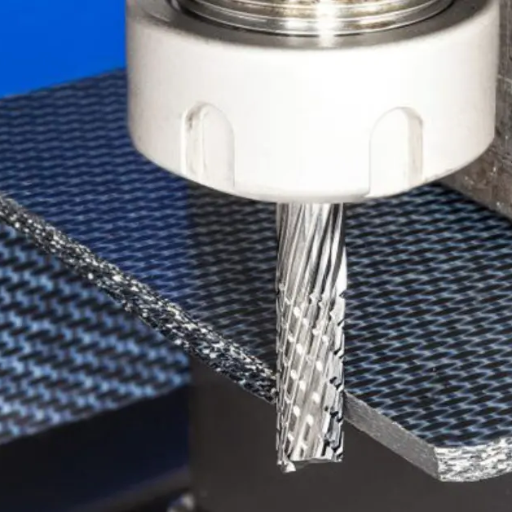
Working on carbon fiber poses various difficulties, and one of the most common and serious ones is dealing with carbon fiber delamination prevention. It is because delamination decreases the strength of the carbon-fiber parts and is also a big source of wastage and cost increases. This is why, who have the responsibility of national manufacturing industry, must have a clear understanding of the problem and its possible solutions not to compromise accuracy and excellence of their work. This article focuses on these in-depth looking at the roots of the delamination issues, simple and effective ways of addressing it and more importantly some responsible ways that can help you get the job done right when dealing with carbon fiber and related materials. Regardless of your experiences with composite materials work, either you are a veteran or a novice in these issues, the guide will give you some useful practices, which will assist in improving your technique and results.
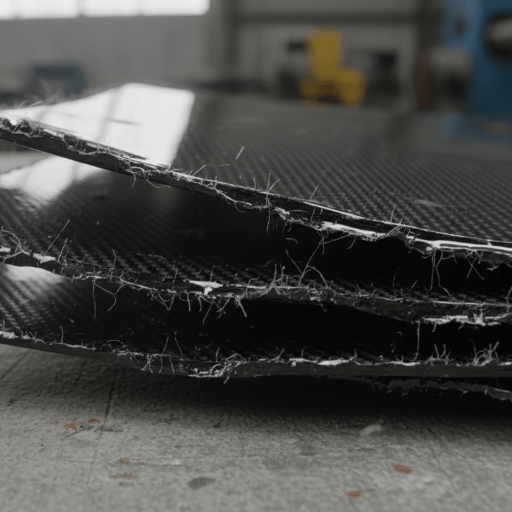
Carbon fiber itself is a strong material, but delamination leads to loss of rigidity among other properties. Delamination forms between the layers of composite and is known to occur due to some stretch, incorrect mechanisms, or fabrication reasons. It reduces the structure’s strength and quite often severely decreases its effectiveness. Physical indicators of the separation of the material are usually cracks, handling, several spots on the surface, or flanks with no contact between layers. However, this problem requires either changing techniques or processes to avoid any future occurrence such as ensuring relevant tooling, speeds of cutting, and handling during fabrication.
In simpler terms, delamination refers to the loss of cohesion of the layers within a material, which is commonly witnessed in composite materials, lamination structures, or coating. This problem may come from several sources which include mechanical stress, thermal expansion, exposure to external factors, poor manufacturing methods, and even fatigue of the materials over an extended period. Based on the current studies and materials available, delamination cases are prevalent and serious in the aerospace, construction, and electronics industries. It is because it may cause instability in the structure, decrease in the performance, or even causing the material to function below, or in sub-optimal levels. Counter-measures are aimed based on the use of good quality material, improving methods of constructions, or regular intervals in maintenance or care in order to detect and repair damage while it is still fresh.
Interlaminar strength is a critical property in carbon fiber composites that determines their ability to withstand stresses between individual layers. Resistance to problems like delamination, crack propagation, and structural failure under load all depend on this property. The unrivaled strength-to-weight ratio of carbon fiber composites is the reason behind their appeal to aerospace, automotive, and wind or energy applications. Yet, interlaminar bonding can critically weaken composite constructions, especially in high-stress or dynamic environments.
Manufactures elect to fortify interlaminar strength by introducing advanced techniques, e.g., resin infusion, toughening agents, and surface treatments to enhance the bonding at the fiber-matrix interface. Adhering to stringent testing criteria probably will subject the interlaminar performance to evaluation in terms of short-beam shear and double-cantilever beam tests. By targeting reinforcing the interlaminar strength, industries perhaps have had these materials contribute maximally to the efficiency, durability, and safety of their applications. Another potential boost to early and expensive failures of the structure is the structural inspection and maintenance for identification of early signs of structure repairs.
Delamination in composites is simply described as material becoming separated into layers; such a physical separation weakens the structure as a whole and can possibly result in catastrophic structural failure. This is generally a result of poor adhesion across the interface between the two layers, which may turn out to be poorer for some reasons such as manufacturing design, fiber contamination of some kind or curing under improper on-spec conditions. Exposure to difficult conditions like extremes in temperature and moisture, and chemical precursors, may further deteriorate extraordinarily weak bonding, favoring delamination initiation.
Repeated loading, impact, and sudden force exertion exceeding the design limits to which the composite is subjected is yet another cause of another incidence of delamination. Over a period, these stresses may initiate inequalities in the matrix in the form of microcracks that grow and eventually lead to the widespread separation of layers. From a mechanical aspect, inadequate structural design accomplice with poor material choice or lack of reinforcing might also be the source of mechanical delamination.
Preventing delamination can be achieved by way of stringent quality control throughout the manufacturing process. The curing process must be carried out correctly. Clean and well-prepared bonding surfaces are also beneficial to prevent delamination. Designing composites will allow for expected loads and conditions, avoiding delamination. This involves timely attention to damage during monitoring and in-service maintenance of the structure, providing for successful enhancements to the further performance of the composite section against an extended time frame.
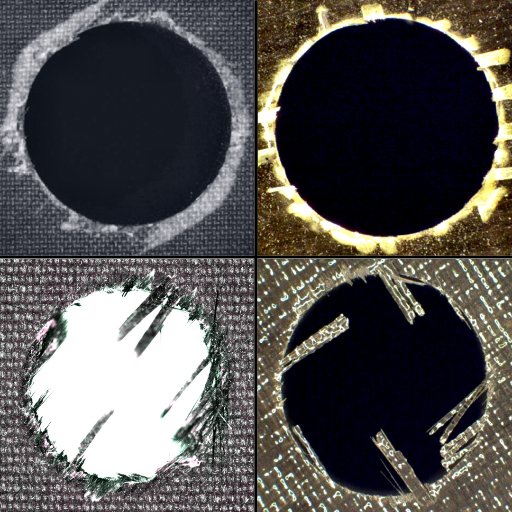
One major aspect of risk associated with the carbon fiber production is the tool being worn. In the course of this wear, mechanical friction and thermal stress gradually degrade the cutting tools, leading to dull cutting edges. Deterioration in cutting efficiency thereafter causes of resultant of causing wrong cutting and tearing of the carbon fibers, rather than a proper cut. Therefore, work in the research field would indicate that excessive tool wear causes higher forces and heat during machining, that would increase delamination concerns, such as causing the material to lose integrity. Recent information suggests that advanced cutting tools are more wear-resistant and hence have a longer life, plus they give less chance for the carbon fibers to be damaged during the machining process. Nonetheless, careful checking and replacement are imperative even with the use of the advance cutting tools to make sure they perform at optimum. The proper setup of machining parameters, namely, advances in feed rate and spindle speed, shall provide the tools and composite fibers with much stress relief. A smart blend of outstanding materials for the tools and constructive machining methods will help maintain the structural integrity.
The usage of incorrect feed rates and speed for the spindle form the main causes of delamination during the machining of carbon fiber. Delamination occurs when the composite layers separate and hence lessen the strength and performance of the material. Feeding rates at an exceptionally high level can generate excessive vibrational forces and uneven cutting, destroying the cutting edge or pulling out fibers from the inside. Conversely, paces that are slower may lead to overheating and unnecessary friction that can result in the degradation of the resin matrix and the weakening of the bond shears between plies. Spindle speed is instrumental in preventing the delamination. Low spindle speed may lead to fiber tearing. Very high spindle speeds may generate heat and soften the resin, delaminating plies. In recent days, data has pointed out that optimum feed rate and spindle speed are an essential combination to reduce mechanical stresses during cutting. Arrangement of progressive cutting, proper clamping systems, and utilizing sharp and tough tools can then provide further minimization in delamination possibility for an accurate and high quality machining result.
Thermal damage and heat generation have a direct bearing on the creation of carbon fiber delamination while being machined. High-speed cutting comprises the main scenarios for such delamination, especially with feed rates that the tooling cannot sustain owing to overwear and roughness. Those temperatures are high enough to soften the resin, which binds into the carbon fibers and hence reduces the overall performance, hence, promoting the occurrence of delamination between the layers of material.
Another cause is turning the bond into high-heat delamination due to improper cooling or inadequate lubrication during actual turning. Without cooling to tide away the heat, the heat rather penetrates away into the very first source of thermal degradation. From there, microcracking is developed due to heat deformed the edges or between the plies due to a very low bonding strength towards one another, reducing the mechanical strength studied in the material.
In order to mitigate this, one must optimize the cutting parameters. One must balance spindle speed against feed rate, use sharp and coolant-resistant cutting tools, and provide effective cooling mechanisms to minimize heat production. Such measures ensure the accuracy of the cut as well as the quality and performance of the carbon fiber parts.
| Effect Area | Impact Description |
|---|---|
| Structural Integrity | Reduces load-bearing capacity; creates stress risers that accelerate cracking and failure under mechanical forces. |
| Surface Finish | Results in rough, uneven surfaces, degraded aerodynamic properties, and costly secondary finishing operations. |
| Fatigue Life | Accelerates wear under dynamic loading; stress concentrations lead to early fatigue failure and shortened service life. |
| Environmental Sensitivity | Moisture, UV radiation, and temperature variance exacerbate layer separation and accelerate performance degradation. |
| Production Costs | Increases rework, inspection, and repair costs; extends lead times in high-tolerance aerospace and automotive applications. |
Delaminations in carbon fiber components can cause severe damage to structural integrity, resulting in reduced load-bearing capacity and possibly leading to a failure owing to stress. Current theories and findings suggest that the bonding among the layers of fiber is weakened in the zones affected by delamination, thereby reducing the capability of the material to comprehensively redistribute various stresses. In return, this may act as a stress riser that results in a component under high mechanical forces to crack and break. Then, when applied to highly demanding applications, delamination only speeds up the progress of wear that occurs due to fatigue, including aerospace and automotive industries, being based on high-performance materials. To control delamination, carrying out precise manufacturing methods with material handling and quality control will help preserve longevity and reliability in carbon fibre components.
This is considered to be a vital factor that causes the surface finish of carbon fiber parts to be very rough and uneven, with several spots that look unacceptable. Their structural performance, therefore, typically is reduced then exhibited in their aerodynamic properties. In critical applications, this represents very valuable input for R&D personnel. To fix a surface marked by delamination, several finishing and repair works need to be done; which, in effect, cause the consequent extension of production time and more costs. Overall, it is immensely critical to prevent delamination in order to maintain the structural and cosmetic integrity of cored composite parts.
Delamination has a marked effect on the long-term performance of components made of carbon fibers, resulting in a decrease in the structural integrity and mechanical properties. While fiber layers separate, this obviously weakens the part’s load-transmitting and carrying capacity and makes the materials weaker, leaving potential for catastrophic failure under loading. Its implications are quite significant in high-stakes applications, like aerospace, automotive, and sports equipment sectors, where reliability and consistent performance are paramount.
Delamination is the harbinger of failure by fatigue as far as stress concentrations are in contact with the weakened layer. The harmful effect of dynamic loading accumulates wear and tear, which, coupled with the continuous stress, are accumulated significantly until the casualties start to mount. That paves the way for much later safety breaches and a shortening of the functional life of the equipment, requiring thorough inspection or safe repairs to prevent those hazardous tendencies.
Other protective conditions or capitalization tactics would be: laboring under the influence of factors such as moisture, temperature variance, ultraviolet radiation, exacerbates the delamination effect. For example, whenever these outer aggravating factors chisel layers of separation, making defects more visible and bringing down the performance potential to alarmingly low levels, industry and academia alike would want to look at the future more rigorously. Employment may be carried out in stipulation of most favorable environmental conditions and technological-economic practices demanded by the manufacturer as part of the protective development, not on carbon fiber.
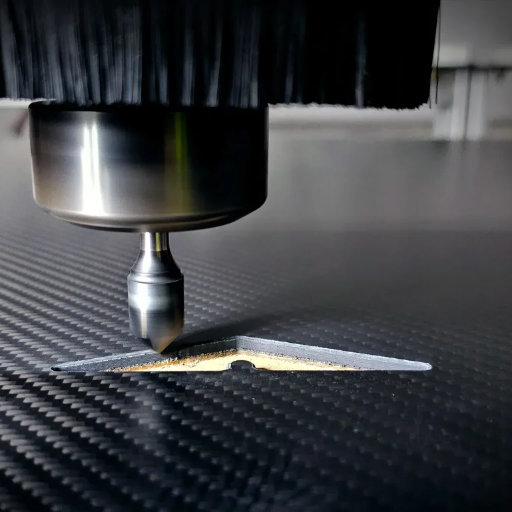
Compression cutters have become an integral part of machining processes aimed at amongst others minimizing delamination whereby the emphasis is often more directed towards composite materials. They work by subjecting the medium to cutting to the forces equal and thereby compressing so that layers are no longer tempted to pull apart. This phenomenon brings out higher edge quality and freedom from separation between bonding surfaces, thus preserving materials with reclaimed structural dynamics. It is crucial to select the optimal compression cutter in the respective material type and associated thickness levels for best results and to avoid possible defects.
To prevent delamination during carbon fiber machining, one must pay a great deal of attention to cutting parameters and choice of tool. Tooling such as compression cutters is absolutely indispensable: here, the prevention of delamination and fiber separation are accomplished through the application of equal amounts of forces. The optimization of spindle speed and path rate thus becomes a crucial factor (greater than the stress imparted during machining). It is meanwhile more common to obtain the best results with even faster spindle speeds in combination with moderate feed rates. This technique reduces heat buildup and fiber pullout.
Material support during machining of carbon fiber then becomes secondary. Vibration can be absorbed through the use of sacrificial packing layers, which protects the carbon fibers from chipping or delaminating at the edges. Suffice it to say that clean and precise cuts will be achieved through tools that are sharp and made of diamond or carbide which will also assist in minimizing the risk of frays.
Last but not least, regular maintenance and inspection of tools are critical. Dull or chipped tools can increase the occurrence of unwanted blemishes and enhance such problems as delamination. If a maintained vigilant patrol can be kept on equipment as well as a close observance of particular cutting parameters, manufacturers can assure proper structural integrity and aesthetic appeal in carbon-fiber components.
| Parameter | Incorrect Setting | Recommended Setting | Risk if Wrong |
|---|---|---|---|
| Spindle Speed | Too low or too high | High with moderate feed | Fiber tearing or resin softening |
| Feed Rate | Excessively high | Moderate and consistent | Vibration, fiber pullout |
| Tool Condition | Dull or chipped | Sharp, regularly replaced | Edge tearing, heat increase |
| Cooling | No coolant applied | Air or minimal flood coolant | Thermal degradation of resin |
| Workpiece Support | Unsupported / loose | Sacrificial backing + clamping | Edge chipping, layer separation |
Sufficient support must be given to the workpiece during the machining of carbon fiber in order to minimize the attack chances of delamination. Applying sacrificial supports or backings made from foams or other readily machinable materials have a potential added advantage: their presence can provide added support from pressure exerted on the outermost lamina, thereby mitigating stress concentrations during cutting or drilling events. In addition, clamping systems should apply an even pressure across the workpiece in order to avoid critical non-uniform pressure loading, which, in fact, weakens fibers.
Aides support supported either by customized fixturing for stabilizing the workpiece and minimizing vibration, or single adapt them to land in improved machining quality. This is really a facility that, when combined with cutting conditions as optimum, leads to better tool geometries, and engages in the routine inspections of wear patterns, producing variables for prevention of laminate separation from built-in, heightened stability. Consequently, manufacturers who previously feared this problem have been able to maximize the quality of their products much more.
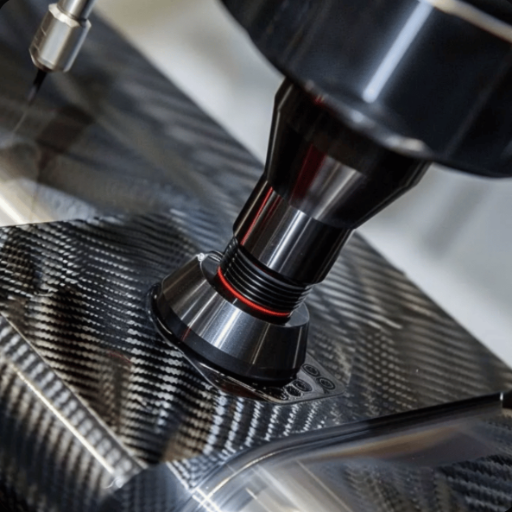
Gearing towards a perfect surface finish in carbon fiber machining requires well-defined tool selection, cutting parameters, and overall setup. Tool selection is vital; sharp cutters of high quality minimize fraying and promise quick, clean cuts. Diamond-coated or carbide tools have durability and precision relatively necessary for carbon fiber use.
Also of high importance is the selection of appropriate cutting parameters — low feed rates with moderate spindle speed can lead to greater control of the cutting process, thus reducing chances for heat generation and obviate damages on fibers, resin matrix, or any other component structures. Thus far, uniformity in these cutting parameters would guarantee identical surface texture that resists damages.
Finally, in every machining activity, the most significant feature is to maintain a well-supported work piece. Proper fixturing ensures that surface finish is not compromised through any induced vibrations and movement. By periodic inspection of tools and timely replacement when needed, a consistent result can be maintained. Proper implementation of finesses with any of these practices offers the manufacture of precise high-quality finishes on a carbon-fiber material.
Controlling heat evolution is a major concern in the machining of carbon fiber to prevent any damage to the purpose-built fiber matrical composite. Heat formation, in this case, causes resin degradation, fiber pullout, and even may occasionally reshape the part itself, thus it causes overall undermining regarding the quality parameters of the part. Hence, it is important to use cutting tools having less friction. It is also important for adequate attention to be given to grinding tools. Their use should mainly be for the purpose of reducing friction and storing heat energy through clean and efficient cuts.
It is a good idea to work on reducing cutting speeds and feed speeds. The technology used for cooling itself should also focus on cooling techniques that could suppress temperature jumping in the component during the machining process. Some of these techniques include air cooling and minimal flood coolant. Additional means for getting rid of debris are employing vacuum systems or removing secondary friction. By using a combination of such techniques, heat generation in the carbon fiber composite can be effectively managed, followed by good durability and precise machinery component formation.
Quality testing is vital to ensure the reliability and precision of carbon machining deals. The key measures are:
These actions are directed by the manufacturer in order to keep intact the possibility of extremely high tolerances for the quality, integrity, and performance of carbon fiber components in their practical applications.
Q.01
What is delamination in composites and why would we commonly see delamination in CFRP?
Delamination in composites is the separation of two layers of a composite material such as in carbon fiber reinforced polymer (CFRP) composite laminates, where the stress in interlaminar strength subsides the other conditions of mechanical load, impact, thermal cycle, voids, or poor fiber orientation and resin distribution. General points that bring about delamination include manufacturing or processing defects like voids from resin transfer molding or improper autoclave curing, machining-induced damage from the inappropriate drill bit or cutter tool use, and wear and debris. These traits create stress concentrations. So assessing the delamination and understanding why it occurs would be very crucial in order to ensure the reliability and strength of the composite in high-performance applications.
Q.02
How can delamination prevention be implemented during the production of carbon fiber and layup?
Delamination prevention during the manufacturing of carbon fiber and layup involves setting out standards such as the use of good-quality carbon fiber, controlling the amount of resin, orientation of fibers, and the fiber or resin ratio during producing by automated fiber placement or by hand layup. The goal here is to remove or minimize the voids using specific autoclave cycles or that of resin transfer molding parameters, complete the curing cycle to thermally match the coefficient of expansion of its composite materials, and use compatible epoxy systems. Following this, ensure good preparation of the surface between layer placements; this involves some dos and don’ts, contamination, dirt, and general debris must be avoided to reduce the chances of damage due to delamination to a great extent as with delamination issues in the way.
Q.03
What types of machining ways are thought to help in preventing the delamination of carbon fiber sheets and CFRP composites?
Delamination of carbon or CFRP composites decreases as machining ways and geometrical factors decrease, with an effective yet low-damage means of prevention — orbital drilling. Indeed, orbital drilling with the correct tool bits reduces the risk of drill bit-sheet interaction that would cause cut injection and subsequent delamination. Water jet cutting — while being a means to avoid heat buildup — helps reduce the overall risk of delamination, especially if the cutting is done under a jet of water. Withdrawal of dust and tracking of tool life work to reduce debris and wear, which raises the risk of delamination. High-tolerance equipment that operates at slow feed cycles keeps the composite from being torn apart.
Q.04
What are the best tools and bits available to prevent delaminating in carbon fiber reinforced plastic composite layers?
One just has to choose the right tools, such as appropriate drill bits. A drill bit fitted with carbide or coated with diamond will work awesome for composite materials when flute geometry is optimized. They would also stop fiber pull-outs and matrix dotting. When a cutting tool is kept running longer enough to insulate a blade from the work surface, it will be so altered to just increase over-cutting and to vibrate at the delamination layer — the flexural moduli will thereby also be doped away into oblivion. Again, setting up high-precision CNC machines for accurate fitting is a sure guarantee of minimal peeling, and hence mech properties losses.
Q.05
What techniques are there for examining delamination and general integrity in CFRP within non-destructive testing?
Among those methods, ultrasonography, phased-array ultrasonics, thermography, tap testing, and shearography cover the territory of assessing delamination. All these techniques are incorporated to detect subsurface delamination, voids, resin-rich and resin-starved areas without causing any damage to the components. In high-end performance applications the combination of in-service inspection subsequent to automated fiber placement, autoclave curing, or resin transfer molding aids in early detection of delamination, ensuring the composite mechanical strength well within the design loads.
Occurrence and Propagation of Delamination During the Machining of Carbon Fibre Reinforced Plastics (CFRPs) – An Experimental Study
Link to source
Explores cutting strategies and techniques to avoid delamination during the milling of carbon fiber reinforced plastics.
Determination of Delamination in Drilling of Carbon Fiber Reinforced Carbon Matrix Composites/Al 6013-T651 Stacks
Link to source
Analyzes cutting parameters and their impact on delamination factors during drilling of carbon fiber composites.
Laser Scored Machining of Fiber Reinforced Plastics to Prevent Delamination
Link to source
Discusses the use of laser scoring as a method to minimize delamination in the machining of fiber-reinforced plastics.
Drilling of Carbon Fiber Reinforced Plastics/Titanium Stacks with Ultra Hard Coated Carbide Tools
Link to source
Examines the role of ultra-hard coated carbide tools in reducing delamination and wear during machining.