

Supportive, Professional, Client-Focused Service
From prototypes to full-scale production, we’ve got you covered.



The automotive industry is a very demanding field, where the use of CNC aluminum parts has to meet the highest standards of precision, efficiency, and quality. With the growing complexity of today’s vehicles, along with the demand for better performance and reliability, manufacturers are required to follow the highest standards. An automotive sector standard called IATF 16949 compliance has come up as a solution—it is a widely acknowledged quality management standard. We will enlighten you with the discussion on the connection of CNC aluminum parts to automotive innovation and the pivotal role of IATF 16949 compliance in satisfying the demands of the automotive industry. Starting from exploring the manufacturing techniques to revealing the upshots of compliance, this paper will provide you with a practical understanding of the area where powerful engineering and quality assurance meet.

IATF 16949 is the automotive industry’s go-to standard for quality management systems, and it has received worldwide recognition. The standard was developed by the International Automotive Task Force (IATF) and is based on the ISO 9001 requirements with additional guidance specific to the automotive industry. The main aim of the standard is to make sure the quality of products is consistent throughout the supply chain, thus highlighting its importance to suppliers and manufacturers in the automotive sector.
IATF 16949 certification is a great way to prove to the world that a company’s quality standards and customer expectations are the highest ones. Certification necessitates the development of procedures for the elimination of defects, reduction of variability and waste, and the cultivation of a continuous improvement mindset.
The uniformity not only solidifies the trust between OEMs (Original Equipment Manufacturers) and suppliers but also positions the companies with a competitive edge in the global market. Apart from this, IATF 16949 is a major factor in increasing customer satisfaction and meeting compliance with regulatory requirements. It is the certification that matches the highest industry standards, and therefore it shows the companies where they are in terms of product quality according to customer specifications and legal requirements. By applying the IATF 16949 framework, companies will be able to market their products with full confidence of being safer, more reliable, and in sync with the ever-changing requirements of the automotive industry.
The certification indicates that the supplier is committed to providing quality, safe and reliable products – three factors that are extremely important for car manufacturers. One can say thus that this trust can lead to developments in new business projects and can also fortify the current alliances making the supplier the favored and reliable choice in the industry.
Aluminum parts bearing the certification seals with the strictest requirements are the main factor of the positive and direct impact on quality and safety for the automotive industry. High-quality certified aluminum guarantees the use of safe and stable materials in the most critical parts of the automobiles, such as chassis, frames, and suspension systems, consequently saving lives through the reliable performance of these pieces and even the whole car, making it possible for the car to survive under the worst road conditions and thus, reducing the risks for drivers and passengers.
Reliable performance in critical automotive components
Uniform output quality throughout production chain
Eco-friendly and higher-grade aluminum materials
Moreover, certified aluminum implies that molding and shaping of the parts from metal would be done with the same level of care and precision for all casts hence the whole production chain would be of the same output quality. Compliance with the quality norm cuts down the production variability making sure that the components match exactly the engineering specifications. The result is that the OEMs have fewer rejects, get products that are more compatible with others they intend to use, and the performance of their products is extended in time.

CNC (Computer Numerical Control) machining is one of the manufacturing processes that enables the production of very small and complicated parts with great precision by controlling the machines based on the software produced by the computer beforehand. This method has a high level of accuracy, repeatability, and efficiency, which makes it indispensable for modern manufacturing needs, such as the production of aluminum parts for cars. The process normally includes cutting tools and aluminum or other materials being operated on by machine tools such as lathes, mills, and routers. The tools follow programmed instructions to form the material as per the established specifications.
Another major benefit of CNC machining aluminum parts is the lighter weight of the final vehicle. The quality of aluminum— high strength, resistance to corrosion and light weight— is even more advantageous when it is machined to CNC precision. This means the parts not only take away the vehicle’s weight but also make the vehicle eco-friendly, safer, and more economical in running costs. The synergy of CNC machining and the properties of aluminum keeps the manufacturers in the automotive industry competitive while they also meet the strict regulations, innovate and keep up with the advancements.
Note: Together, these alloys indicate why aluminum is still the number one choice in CNC machining for companies of modern times.
CNC-machined aluminum components are the ones that impress with their exceptional versatility and precision at the same time so they can be used in a wide range of applications without the need to compromise on qualities or specifications. Aluminum is lightweight but it is also strong so it assures high performance without the problem of weight increase. The latter is particularly true for the aircraft, aerospace and automotive industries that heavily rely on aluminum for parts and components that need to be efficiently light and strong at the same time.
Moreover, aluminum has good heat dissipation and it is also durable which contributes to the life and reliable performance of the machined components. No matter in what environment it is used, it remains corrosion-resistant in most of them, thereby, ensuring its long-term performance. Coupled with protective coatings, aluminum’s natural properties are enhanced further and thus it is cemented as a material of choice in CNC machining for modern industrial applications.
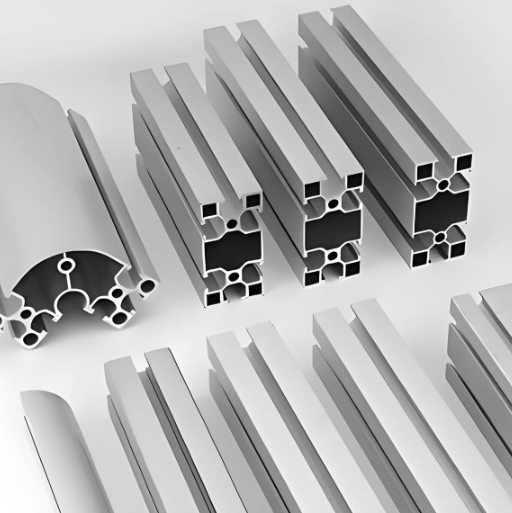
Several key techniques are employed in the process of machining aluminum parts, and these techniques are chosen according to the requirements of the component in terms of its complexity, precision, and application.
One of the most commonly used methods, involving rotating cutting tools to take away material and get the desired dimensions and surface finishes. Milling is a great option for making intricate contours like grooves, slots, and holes, and it is very efficient in terms of medium to high production volumes.
Another important machining method employed for aluminum, usually used for making cylindrical or rotationally symmetric parts. Aluminum workpieces are rotated against cutting tools to form the material. Turning offers a high level of precision and is thus the right choice for making parts such as shafts, bushings, and fittings.
A major technique for making holes in aluminum parts. Whether the holes are for threaded fasteners or other uses, drilling is accurate and can be done for a wide range of diameters and depths. This process frequently goes hand in hand with threading and tapping so that the specifications are exactly met.
Summary: All these machining methods work in concert to make sure that the production of aluminum parts is reliable for many industrial and commercial applications.
Enhancing the attractiveness of machined aluminum parts, providing a good surface to work on, and even giving them more functionality are some of the reasons why machining aluminum parts is followed by surface finishing. The selection of an appropriate surface finishing method is determined by application-related factors such as visual and functional requirements.
All these finishing techniques allow manufacturers to customize aluminum parts to comply with the performance and design criteria of different industries.
Custom aluminum solutions are admirable with wide-ranging versatility and practicality for many applications from different sectors. Due to its light weight, super high strength-to-weight ratio, and good corrosion resistance, aluminum is the perfect material for customization, i.e. giving or satisfying both functional and aesthetic needs. Aluminum can be made to specifications of the designer’s choice with specialized designs and finishes for its even use at construction sites, in transportation, or in consumer products where special operational requirements prevail.
In addition, tailored aluminum solutions offer huge value in the area of sustainability. Aluminum is extensively recyclable with no loss of its original properties, hence, such recycling results in lower costs and reduced environmental impact. That is why it is widely used in the manufacturing sectors that want to implement environmentally friendly practices. By taking advantage of the metals’ flexible nature and permanent, long-lasting quality, the industries can obtain trustworthy performance while being in line with the present-day’ eco-friendly practices and standards.
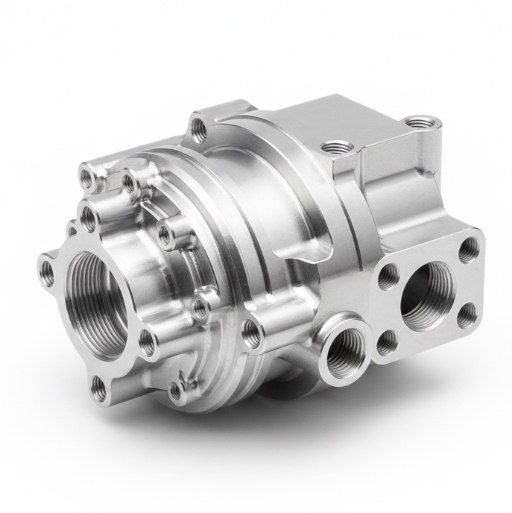
To put it simply, Aluminum 6061 and 7075 share distinct features, among such features strength, corrosion resistance, and machinability. Understanding these differences is crucial for selecting the right alloy for your specific application.
When strength and high-stress performance are the most important factors, aluminum grade 7075 is definitely the best choice. However, if corrosion resistance, easy fabrication, and cost are the main concerns, then Aluminum 6061 is clearly the best choice. Ultimately, the specific project requirements will determine which alloy to use.
Aluminum is one of the most widely used materials as its potential properties can meet the demands of almost any application.
About one-third of steel weight, critical for aerospace, automotive, and transport industries while maintaining excellent strength
Some grades have strength exceeding steel, providing excellent performance under stress conditions
Forms protective oxide film, lasts in harsh environments, ideal for outdoor structures and marine applications
Very ductile and easy to form into various shapes and components without losing strength
Can be reprocessed without property loss, uses much less energy than new production, environmentally friendly
Superior heat dissipation characteristics enhance component longevity and reliability
The automotive industry has extensively adopted aluminum alloys owing to their perfect blend of lightweight characteristics, strength, and anti-corrosion properties. Fostering fuel efficiency, emission reduction, and vehicle performance, these characteristics are the main contributors. Among the aluminum alloys that find wide usage in automotive parts are 5000-series alloys and 6000-series alloys.
Main Alloying Element: Magnesium
Key Properties:
Applications: Body panels, fuel tanks, interior frames, structural purposes
Main Alloying Elements: Magnesium and Silicon
Key Properties:
Applications: Wheels, engine parts, structural reinforcement
Industry Impact: The different alloys together indicate a significant part of aluminum in the production of energy-efficient, long-lasting, and lightweight auto parts.
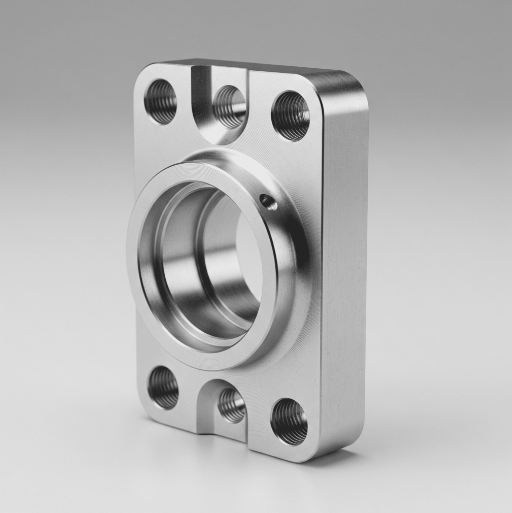
CNC machining services are manufacturing processes that use computer-controlled tools to produce parts with the highest precision imaginable, thus offering the highest level of precision in manufacture. Such a high level of precision will consequently confirm that the components will be able to meet even the most stringent requirements, thereby eliminating errors and ensuring that the product is consistent throughout the batch. The CNC machining automation process has been able to minimize manual intervention, which is a factor that has significantly contributed to achieving the high level of accuracy in production and thereby reducing the possibility of human errors.
Manufacturers benefit from CNC machining’s combination of precision and efficiency, which helps them to optimize production and reduce waste. This precision-driven and efficient approach not only saves time and costs but also supports sustainability efforts in modern manufacturing industries.
Modern manufacturing has been revolutionized by CNC machining, which comes with considerable direct and indirect cost-saving advantages because of its high accuracy and automation. Manual steps in the production processes are eliminated, and this reduces the chance of mistakes by human operators; hence, there will be fewer defective products and less waste of materials. Thus, the manufacturers can produce at a consistent quality and are not liable to incur costs due to the rework or scrapping of parts.
Reduced Material Waste
CAD software ensures materials are used to the fullest
Lower Labor Costs
Automation reduces need for manual intervention
Fewer Defects
Eliminates human error, reducing rework and scrap
High-Volume Production
Long continuous runs without breaks maximize output
Lastly, since CNC machines are mainly automated, they need little human intervention, thus, the cost of labor is gradually reduced. In that sense, the initial outlay for CNC machines may be greater, but in the end, the cost advantages of the long run outweigh the initial money; hence the technology becomes a viable and economically wise choice for manufacturers who want to increase output while keeping costs under control.
CNC parts production to be consistent and reliable is accomplished through a combination of precise programming, stringent processes, and quality control measures. By means of advanced software, CNC machines carry out exact orders and make sure that every single part matches the specifications to the letter. This process eliminates nearly all variations and leads to the production of the same kind of products, even in case of large batches.
Moreover, using a variety of methods, manufacturers can deliver high-quality CNC parts that meet customer requirements while minimizing production errors. These comprehensive quality control measures help guarantee the minimum level of production consistency and reliability.