

Supportive, Professional, Client-Focused Service
From prototypes to full-scale production, we’ve got you covered.


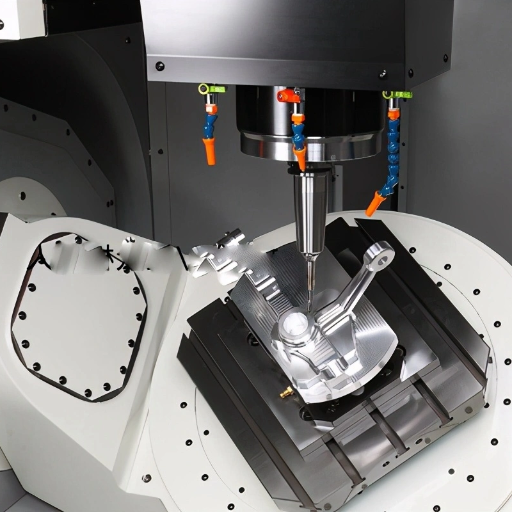
The Precision, the creativity efficiency are the hallmarks of the auto industry and the CNC (Computer Numerical Control or known as luck machines in some regions) addressing the issue as efficiently as possible by satisfying the demands met in the paragraph above. From prototyping in the early stages, to actual and mass/material manufacturing, incorporation of CNC machined components is one that cannot be made off contemporary vehicle manufacturing processes. Automotive CNC Parts. This further looks into the anatomy of automotive CNC parts through the lens of understanding and disclosing process, materials and technology that enhance design ideas, turning them into reliable and effective parts anyone would love to fit and use. Whether you are an authority in the field or want to understand how CNC machines factor in respect to auto engineering in the future, herein is the explanation of the propane torch and its role in the creation of such vital parts.

Production of Automotive CNC Parts involves computerised machines that are operated to convert raw materials into parts with high quality and durability. The technology use is advantageous because high precision and repeated cycles can be obtained; a case in point are components with outlined dimensions. The case examples of engine parts, components of the transmission or the braking systems can be listed as exemplary. Computer Numeric Control is vital in effective production, which leads to lesser mistakes, waste and thereby improving efficiency and one of the raging needs in the automobile industry is the need for strong parts that can be used without breaking down often.
The use of a Computer Numerical Control (CNC) follows a process of computer-assisted manufacturing by software programs. CNC enables complete control over machinery equipment, which includes but is not limited to lathes, mills, routers, and grinders, in producing highly precise parts and components that are closely engineered. Through the CNC machining process, digital designs are converted to machine-readable code, which instructs the machines to cut, mill, grind, or fabricate the components. Such means of manufacturing leave no room for human intervention, providing a high amount of precision and repeat ability.
CNC machines are ubiquitously applied in a variety of industries from automotive, aerospace, healthcare, and electronics, thanks to the advent of producing intricate and complex design with close tolerances. Present-day design software has integrated the said software, with CNC being the way to go for such operations in saving time towards speeding up production, with at-most quality being maintained in mass production.
The machines with CNC are super valuable in assisting cars produced with the utmost precision and efficiency. These machineries are found normally used in the manufacturing process of automobile components like engine blocks, gears, brake systems, transmission parts, and the like. The automation of the production process does result in consistent quality; it eliminates human mistakes and shipping off parts with quality requirements. In addition, it is able to meet all product-related specifications, such as performance and safety and maintenance of the complex designs. The constant evolution of CNC technology attends to the progressive materials of lightweight aluminum and composites, contributing to vehicle efficiency and a drop in emissions. It is the symbiotic partnership of innovation and precision that makes CNC machining of utmost significance in the manufacture of modern-day automobiles.

Different examples of the application of CNC machined components in automobile manufacturing exists being precision, reliability, and resistance to decay. Engine parts, custom brackets, transmission parts, and suspension systems are examples of use in CNC machining. CNC machining is also required for the generation of prototypes and ensuring precise specifications along with building a foundation for creative and novel designs within automotive domain. With an ability to deal with a wide range of materials, CNC machining is thus a suitable system for both regular applications and high performance requirements.
| Component Type | Description |
|---|---|
| Engine Components | CNC machining is commonly used in making engine component such as cylinder head, pistons, and crankshaft. Precision is very critical to these components for proper function and durability of the engine. |
| Transmission Components | Components like gears, shafts, and gearbox housing are CNC machined. Precision machining is essential to maintain sound, efficient and uninterrupted power transfers. |
| Brake System Components | Brake discs, calipers, and brackets are also machined using CNC machining. In these automotive systems, the precision of these components is a mandate for vehicle safety and effective braking. |
| Steering and Suspension Parts | The manufacturing of their components, like steering knuckle, control arms, and suspension points are also made by CNC machining, keeping in mind efficiency, and stability. |
| Custom Furnishings | Following the form of surface finishing with the collaboration from an expert in aesthetics design, CNC machines can create features like dashboard parts, knobs, or trim for the car, giving customizing options to standard manufacture items. |
All these components demonstrate how CNC machining has been a great asset to the automotive industry in furnishing high-quality and reliable bespoke solutions.
A high-precision CNC machining process is indispensable for effective manufacturing of engine components that take over the engine performance at optimum accuracy and reliability. The processes allow complex parts like valve covers, pistons, crank shafts, camshafts to be manufactured to high tolerances and exactitude measuring just a micron or two. Such exactitude can go a long way in ensuring proper functioning of the engine, reduction in wear and consumption of fuels.
The CNC milling of engine parts continues to be held in high esteem by car producers on account of the machines’ ability to withstand complicated designs; uniform re-workability; and applicability to various kinds of material: aluminum, steel, and titanium. Besides, of course, parts could consistently be produced faster now as a result of connecting the machines with the new, improved high-tech, such as AI-driven monitoring and 5-axis machining. This prevalence of accuracy and novelty is perpetuating CNC as the future, dictating the course of manufacturing strategies far into the future for the automotive and high-performance engine industries.
Custom CNC machining is essential for the creation of unique automotive components as it provides highly accurate production. This kind of unique combination of accurate working gives the manufacturer the ability to produce parts to the required number shapes and dimensions-be it for performance improvement or pure style! Advanced software and tools at work enable the CNC machine to produce parts with complex shapes and very tight tolerances; this makes the parts fit seamlessly into the system where they function for the operation of the vehicle. This precision and customization render such CNC machines the best solution for everything from prototyping to small-scale production and more.
Manufacturing is a process of transitioning to production from prototypes and typically involves a sequence of steps. It starts with designing as well as making the prototype necessary to test and validate the component in question. Once a prototype is meeting the performance standards that have been set, the production process is scaled up using CNC techniques or any other of the choice to preserve repeatability and precision. This procedure is advantageous as there is economy of scale while maintaining tight quality for automotive applications.
Prototyping is a high-burst and low-puzzle method in CNC blanking due to time-efficient development, quality assuredness, flexibility and material capability. CNC machining mirrors solid modeling models exactly onto finished components with very high accuracy and explicitly tolerances. This type of manufacturing allows all models designed so far to be realized quickly. It can use a wide range of materials which approximate the end product, e.g., ABS for fully functioning prototypes, or low-run full-presentation items. Besides, CNC machining guarantees quality consistency and repeatability, thus being ideal for functional tests and fitting tests.
One of the paramount strong points of CNC machining is that it makes it suitable for mass production due to its appropriate fitting for precision and speed and efficiency. CNC machines can produce huge quantities of parts with little variance since they use automation to manufacture the requested parts. This way, a streamlined form of mass production is arrived at coupled with constant excellence and quality. Better equations of machining incorporated in the technology of the machine, like performing multidimensional machining, give the machine its capacity for quick as well as accurate production schemes through multiple axes. The CNC machining process benefits from the wide compatibility of these machines with a variety of materials in the industries of aviation, car manufacturing, and medical industries. Requiring repetitive production of complex designs with tight tolerances, CNC machining is geared toward the manufacture of other parts.
Quality control is indispensable in the manufacturing of automotive parts to see to it that there is vehicle safety, performance, and reliability. Manufacturers employ sophisticated techniques to meet international standards and regulatory requirements Precision measurement tools, automated inspection systems, and stringent testing protocols: implemented to perfection by automotive manufacturing companies. With the integration of computer vision and AI-driven defect detection championed by companies and their collaborative partners, quality control has been revolutionized-it’s all thanks to the advent of technologies such as these. Certainly, the checks are a step toward uninterrupted production monitoring and hence the reduced number of errors. The manufacturer would use erasable Statistical Process Control (SPC) to trace variations in the manufacturing process, ensuring a product that is the same across all production lines. Such measures would not only enhance durability and facility but also build up customer confidence in the product, thereby creating more brand loyalty to edge out those sticky little cliques of the competition.

Recent transportation machinery has arm-forged technological capabilities for precision, increase, and meticulousness by enhancing control and inspection of 4- to 8-axis machining totally buried in computing and software, while the fusion of mechanized engineering, the use of robots, all join hand-in-hand to provide more streamlined operation, hence inhibiting the forces that usually drag the production time-cost equation. The spacial moments wherein delivery, disposition etc. of data might take active place are instantiated by The Internet of Things (IoT) as an entire cluster. Here, the machines are fully poised to value long-term operation via real-time data tracking, remote monitoring, and predictive maintenance. ConnectionState also fulfills its obligation to CNC machinery in terms of performing on-the-spot changes to erase obsolete technology in alignment to the latest machine demands.
This has been another key area brought under spotlight after the automation of CNC machining services – enabling both, efficiency and precision of manufacturing with great improvements. While automated CNC machines really bring down the need for human intervention that could hamper a particular action, they make processes smooth and facilitate faster production cycles incurred through manual-handled errors. They could adapt in complex designs or optimize cutting paths in real-time with machine learning and artificial intelligence to enhance things further in regards to scope accuracy and material use.
Beyond the shadow of doubt; another one template that stands tall is automation; this can provide lots of savings in due time. Besides being able to efficacy by minimizing waste, prolonging tools’ lives by predicting maintenance, and offering continuity in operation by contributing to fewer stops, automation helps enable economies of scale, hence do small batch and mass production with little or no retooling or delays.
Although automation offers a number of benefits, it still comes with some obstacles. The high initial costs add up to the need for an aptly trained skill set as it maintains any machine. On the other hand, with technology getting more and more reachable and a push on employee training at all relevant levels, this gap is gradually being filled.
Service CNC machining capacities exploit automation to provide unprecedented precision, speed, and adaptability as per the requirements of a myriad of the modern industry.
As industries worldwide aim to limit ecological impact, sustainability is becoming a material issue in the life of CNC machining. However, by adopting environmentally friendly practices such as optimizing the use of materials and minimizing waste, CNC machining can thereby drastically decrease its appetite for resources; advanced software concentrates on precise programming with very little waste produced. Recycling of leftover materials such as metal shavings can further contribute to this, thus reducing waste. Therefore, by integrating energy-efficient equipment, as well as using renewable energy sources in the operations, CNC machining therefore gradually reduces the carbon footprint in the face of CNC machining operations.
The importance of biodegradable or recyclable cutting fluids, which tend to minimize the environmental footprint of traditional chemically based alternatives, was mentioned. In attempts to work in tandem with international environmental standards such as the Paris Agreement, the foremost companies that are forerunners of sustainability in innovative advance cleaner production methods and management of waste. All in all, the advances also shed light on how CNC machining can achieve both high-performance manufacturing and environmental sustainability.

The manufacturer of your choice will have a successful track record regarding quality, reliability, and adherence to industry standards. Such a manufacturer should be evaluated for advanced competence in terms of machinery and absence of harmful environmental impacts and should have urgently needed certifications. Moreover, assess these negative aspects of such manufacturer communication, time and ability to hit requirements. A good manufacturer must exhibit transparency, competitive pricing, and continuous customer support.
Application of the prerequisites is important to the success of new-experience partnership at secured delivery of CNC parts fitted to customer specifications.
The evaluation of CNC machining services for automotive applications must revolve around these key factors.
Experience in Automotive Applications: A needed service provider should shine at machining in the automotive industry for understanding very well the precise tolerances and performance levels of the industry.
Compatibility of Materials; Make sure your service provider has some diversity in the experience in working with the materials that are going to serve the specific purposes, eg, aluminum, steel, or advanced composites; these are frequently used materials for automotive parts.
Quality assurance: Assess the control mechanism to determine the quality of the services that a provider offers. Providers with many certifications in the field of automobile manufacturing could often be relied upon. Having a certificate like ISO 9001 or IATF 16949 would be needed to prove their constant striving for excellence in every little thing they make.
Lead time and scalability will be needed: In this particular area, scalability can be the one deciding factor to choose a partner. At manufacturing levels, this is meant for both one small piece and millions of the same to be made.
Advanced Capabilities – evaluate CNC machining service providers of countries in which language is not a barrier
By considering the attributes, you can choose CNC machine services that are best tent parachutes toward fulfillment of your automotive needs and which ensure good results.
In great part, the automotive sector depends on innovative technical solutions for both OEM (Original equipment manufacturers) and custom solutions, which are crafted to appeal to varied consumer and manufacturing needs. OEM solutions provide reliable, quality spare parts in standard production for mass-market vehicles built to particular industry specifications, allowing for the integration at subsystem level into the vehicle. On the other hand, custom solutions refer to ordain fait designs specific to addresses that demand performance gains, aesthetic improvements, or individual applications such as electric vehicles or motorsport.
Custom solutions’ demand trend is growing driven by advances in technology and consumer preference for personalized automotive products, based on contemporary statistics. For example, the advent of the electric and hybrid vehicles fueled the need for innovative custom-threaded components accessible to energy efficiency, and sustainability regulations. In parallel, OEM answers as before underpin large-scale reliability and uniformity, guarding the vehicle norms and operational dependability. It is through a healthy mix of standardized responses and in-house technology where these two solutions complement each other in moving the auto industry farther down the road.
Integration of Additive Manufacturing with CNC Sheet Metal Fabrication for Hybrid Fixtures
Prototyping Guide for Engineering Students at The Ohio State University
Multi-Process CNC Build Preliminary Proposal
Computer Integrated Manufacturing at Luzerne County Community College
Professional CNC machining solutions for all your automotive component needs
CNC machining and parts milling create good repeatability of precision for automotive specialists; they support the ability to flare CNC machined parts with precise repeatable processes controlled by CNC (computer numerical controlled) machineries and machining centers from the best above the environment under stringent backup systems. Precision machinings are typically accomplished and variations are minimized, and engineering into components with very tight tolerances, like in press fits or in kinematically assembled bore-and-pin tolerancing, for fit and function in drivetrains, bushing existential or paramount applications in other, well all means of metal parts. Notwithstanding parallel cnc turning works, the likes of aluminum parts production and CNC stainless steel parts, those CNC milling operations are met in recurrence in substantial volume of end goods for aftermarket refit, racing, and off-road.
Typical machining capabilities have in them 3-to-5 axis cnc milling, cnc lathing, multi-spindle screw machining, and advanced machining centers machining aluminum components, alloy, and stainless steel. This supports the precision manufacture of parts, quality components characterized by close tolerances, and high-volume manufacturing of components. CAM CNC programming and CAD-driven quality control systems help oversee the commendable specificationsceach machining part for automotive parts and parts for the automotive industry in close compliance.
Heavy-duty applications are cited as optimal venues for stainless-steel components, where the reality is that stainless is essential to meet requirements for enhanced corrosion resistance and durability. These heavy-duty applications are represented by drivetrain components, exhaust hardware, and some steering components. Yet at the same time, aluminum is likely to be suitable for lightweight applications where vehicle performance, where available, and fuel efficiency are most important, like for example custom vehicles, or aftermarket parts where the issue of weight is pertinent. Surely there are functional end-insightful alternatives to the machining value that could be achieved, may be preferably accomplished through CNC milling and CNC turning. The alteration in the form of the operation should capture the answer to fit and function, materials durability, and weight removal by welding, assembly, or bending.
Yes, nowadays, a custom cnc machine shop and component manufacturing facility is set up to accept single-piece custom car/ racing car jobs along with high volume production runs, mainly pertaining to aftermarket and OE applications. Machining centers, screw machines, and strong automation provide affluent scalability. Shops with cnc machining services, precision machining, and QC systems can deliver a consistent-quality product from small-run to high quantities with the help of their Rfq process, which includes cost estimation.
In-process inspection, CMM scanning, and visual testing like first article inspection are some methods used to confirm component conformance with close tolerances to the boards. From those methods, materials evaluation, surface finish evaluation, and functional testing for the assemblies assure part-fit verification against athletic performance. A robust QC system will be required during production of drivetrain components, bushings, or other safety-critical automotive-machined parts to promote the manufacture of a potentially highest quality, high-durability component.
Insight is given for the complete range of CNC automotive parts manufacturing, starting from the prototype stage up to production. The latest updates and detailed specs exist within the file; please ask certified CNC machinists about the CAD file available.