

Supportive, Professional, Client-Focused Service
From prototypes to full-scale production, we’ve got you covered.


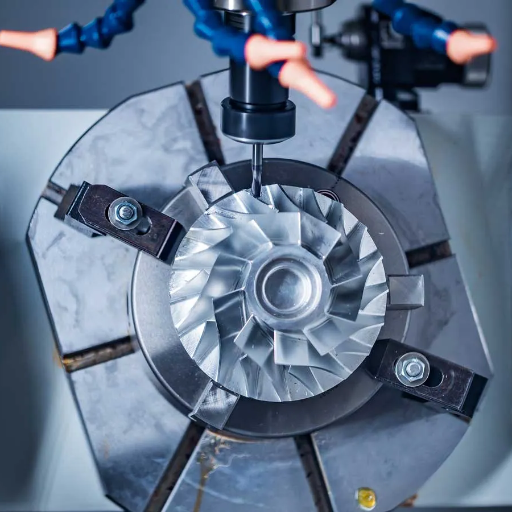
Advanced CNC tools work exceptionally well with Aluminum 2024, an aerospace-grade alloy known for its lightweight construction, superior strength, and excellent machinability. This comprehensive guide explores the mechanical properties, advantages, and applications of Aluminum 2024, demonstrating why it remains a primary material in precision engineering and high-stakes industries. Whether you’re an experienced practitioner or someone fascinated by modern manufacturing technology, this detailed overview will provide valuable insights into Aluminum 2024 and its crucial role in contemporary manufacturing.

Since its introduction to CNC machining applications, Aluminum 2024 has attracted considerable attention for its outstanding properties. This enhanced aluminum-copper-magnesium alloy delivers high performance for aircraft and vehicle systems. Engineers primarily select this material for aircraft frames, fuselage skin panels, and precision-machined components. While exceptionally strong, this alloy exhibits lower oxidation resistance than other aluminum alloys, making protective coatings essential for optimal longevity.
Aluminum 2024 consists primarily of aluminum with copper and smaller amounts of magnesium, manganese, and iron. Its high strength-to-weight ratio and excellent fatigue resistance make it invaluable in aeronautics. The alloy’s superior machinability facilitates production of high-precision parts including aircraft fuselages, wings, and engine components. However, this alloy requires protective coatings or chemical treatments to enhance corrosion resistance, as it performs less favorably than other aluminum alloys in this regard. Recent advances have expanded its use to automotive manufacturing and competitive sports equipment, making it valuable across sectors that require lightweight materials with exceptional strength.
While Aluminum 2024 offers exceptional strength and fatigue resistance, it demonstrates relatively poor corrosion resistance compared to other aluminum alloys. This characteristic necessitates additional protective treatments, such as anodizing or cladding, to ensure material longevity, particularly in harsh environmental conditions.
Aluminum 2024 features aluminum as its primary element with copper serving as the main alloying metal. The typical composition includes:
This composition is ideal for applications under high stress due to its excellent strength and fatigue properties. The alloy exhibits excellent machinability and is widely used in airframe construction and other high-performance applications.
The application of Aluminum 2024 proves particularly prominent in the aviation sector due to its superior mechanical properties and significantly low weight. Aircraft structures, including wings, fuselages, and load-bearing components, benefit from the alloy’s exceptionally high strength-to-weight ratio. The material demonstrates excellent durability under cyclic loading, essential for aerospace equipment operations.
Although Aluminum 2024 exhibits lower corrosion resistance, processes such as anodizing or cladding effectively mitigate this limitation, thereby extending the material’s service life. Additionally, the alloy’s superior machinability enables precision machining of intricate designs standard in aerospace applications that demand high performance and durability. The alloy’s versatility contributes significantly to aviation development.
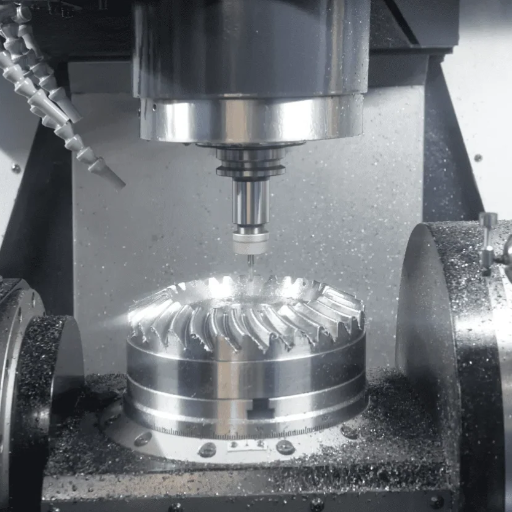
Computer Numerical Control (CNC) machining is a manufacturing process in which multitasking tools and machinery operate under the control of CNC-coded software. CNC machines perform cutting, drilling, planning, and contouring operations across various materials. This technology dominates manufacturing by eliminating the need for continuous human supervision during the production of intricate parts for aircraft, vehicles, and medical devices. CNC machining delivers unmatched accuracy and economy, making CNC technology indispensable across these industries.
Aluminum 2024 CNC machining is a manufacturing process in which computer software controls the movement of machinery and tools. CNC machining systems employ pre-written code to execute cutting, drilling, and turning operations. These machines manage equipment operations, including cutting, drilling, turning, and milling, with excellent operational precision across various materials such as metals, plastics, and composites.
CNC machining is invaluable because it is the only method for efficiently machining exact, complex shapes. It is especially essential in aviation, automotive, and medical equipment manufacturing, where precision, speed, and the production of intricate shapes, such as implants, are crucial. Global adoption of CNC machining continues to grow because it enables efficient production, high-quality standards, and minimal waste.
CNC machining delivers high precision, allowing fabrication of Aluminum 2024 parts meeting stringent dimensional requirements for applications intolerant of errors.
This process produces parts with complex designs exploiting Aluminum 2024’s lightweight yet strong characteristics, features finding strong support in aviation and transportation industries.
CNC-machined 2024 aluminum parts maintain consistent standards throughout production, even when produced in large quantities.
CNC machining enables precise structure buildup, minimizing material costs through cost-effective, environmentally friendly manufacturing particularly suited for Aluminum 2024.
Advanced designs incorporating complicated architectural structures made from Aluminum 2024 become achievable through linear technology.
Stock shaping and cutting aluminum using rotary cutters. Ideal for building complex features and surfaces with good tolerances.
Manufacturing cylindrical aluminum components through workpiece rotation against the cutting tool.
Applying cutting-edge technology to drill holes in aluminum workpieces, with CNC machines achieving accurate position and size control.
Using abrasive wheels to finish aluminum surfaces to precise smoothness.
Using electrical discharges to cut material for machining complex profiles or difficult-to-machine aluminum materials.
Aluminum 2024 CNC machining requires several intricate techniques due to the alloy’s high strength and lower machinability compared to other aluminum alloys. Grinding, milling, and boring with carbide-tipped tools are the primary techniques used to accommodate the structure’s hardness in this process. Coolants are consciously used to extend cutting tool life and improve surface finish. The alloy’s heat sensitivity imposes constraints on cutting parameters, such as cutting speed and feed rate, to prevent deformation or work hardening of the machined part.
Aluminum 2024 CNC machining requires setting optimal cutting parameters to obtain maximum performance and accuracy. Based on current manufacturing practices and data, applicable cutting speeds with carbide tools almost always fall within defined ranges. These parameters depend on the tool, the machining equipment, and the required final surface state.
In CNC machining of 2024 aluminum, where precision and efficiency are critical, tool selection is vital. Many machinists select carbide tools due to their lifespan and resistance to bluntin,g even at significantly higher speeds. High-speed steel tools remain available but are better suited to low-speed conditions and less severe applications.
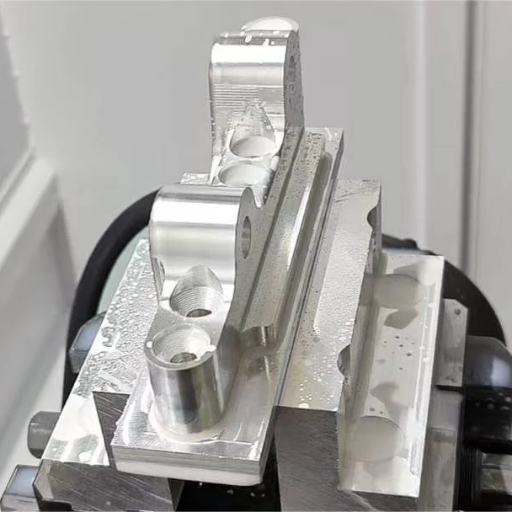
Aluminum alloy 2024 is suitable for aerospace applications and other structural uses due to its excellent strength-to-weight ratio. It demonstrates high fatigue resistance, excellent machinability, and limited corrosion resistance. The alloy’s copper content increases its strength but may require surface treatments to minimize degradation. Heat treatment of Aluminum 2024 can still be used to achieve enhanced mechanical properties, depending on product usage requirements.
Aluminum 2024 exhibits excellent mechanical properties, particularly strength and fatigue resistance. It demonstrates elevated tensile strength, offering sustainability in applications requiring enhanced performance. The material’s ability to remain elastic under varying stress conditions supports structural and aerospace applications for extended periods. These alloys enable ease of machining, with further strengthening and hardening achievable through heat treatment. However, corrosion resistance in this alloy is relatively poor compared with other aluminum-based alloys and typically requires surface treatment to inhibit corrosion. Therefore, the use of Aluminum 2024 is rational for applications where strength and fatigue are more critical than corrosion.
Aluminum 2024 maintains a reputation for remarkable strength and fatigue resistance but falls short of counterparts like 6061 or 5052 aluminum alloy grades in corrosion resistance. This inability to withstand oxidation stems from the high copper content, which increases strength but compromises oxidation resistance, especially in moist or marine environments. Hence, this particular grade receives enhanced corrosion resistance through cladding with aluminum layers or anodizing. Furthermore, adequate maintenance procedures, typically contaminant removal and structure surface sealing, prove essential for improving both wear and service life under aggressive conditions.
Aluminum 2024, 6061, and 7075 differ primarily in strength, weight, corrosion resistance, and machinability characteristics:

Aluminum 2024 CNC machining proves highly suitable for manufacturing various critical aerospace components:
Manufactured leveraging excellent load-bearing ratio to weight characteristics
Produced requiring superior structural strength capabilities
Machining provides mechanical advantages while maintaining lightweight materials
Designed to enable stiffness within precise dimensional requirements
Components subjected to high impact yet designed to withstand stress with ease
Aluminum 2024 ranks among the strongest and lightest metals in the aircraft metal alloy group. This alloy helps reduce overall weight while maintaining necessary structural advantages due to its very high strength-to-weight ratio. The material possesses high fatigue resistance, protecting it from damage caused by constant twisting and bending during flights. Additionally, the alloy exhibits good machinability, consistent with the engineering benefits of CNC machining Aluminum 2024 parts with complex geometries.
When subjected to heat treatment, the material undergoes further strengthening, which is critical for components intended for aerospace environments. While it doesn’t perform as well in corrosion resistance as other aluminum alloys such as 6061, coatings or cladding may be applied for enhanced protection. These desired properties, coupled with recent metallurgical developments, underscore the continued significance of Aluminum 2024 in aircraft design and manufacturing. The explicit use of this material and its properties is essential in the aerospace sector, where each selected material matters for safety, maintenance, and performance.
The design and manufacturing of machined aerospace components follow specific criteria to maintain high standards of weight optimization, durability, and strength.
Ultra-modern structural grade featuring high strength and lightweight properties enhancing aircraft performance by reducing overall aircraft weight to minimum levels
Good fatigue resistance enabling excellent performance under conditions including repetitive stresses and vibration
Very high workability making aerospace forms more accessible, easy, and less time-consuming to fabricate
With suitable treatment or protective coating application, achieves manageable levels of galvanic and pitting corrosion
Effectively manages high temperatures in relatively high heat-generating applications
Machining of Aluminum Alloys: A Review
Characterization of 2024-T3: An Aerospace Aluminum Alloy
Aluminum 2024 CNC machining encompasses precision processes for 2024 aluminum alloys, including CNC milling, turning, and drilling. 2024 aluminum is a high-strength, copper-bearing alloy primarily used in aircraft structural construction for strength and fatigue resistance. CNC machining of 2024 aluminum leverages the alloy’s properties: lightweight construction, excellent machinability, and corrosion resistance after treatment. However, these machining traits are affected by factors such as aluminum oxide formation during machining and alloying elements, such as copper, present in 2024.
Manufacturers should choose appropriate aluminum grades for custom parts based on application requirements. While 6061 and 6063 are the most commonly used aluminum alloys for extruding profiles and general-purpose parts, offering excellent corrosion resistance and weldability, 7075 and 2024 are favorites when maximum strength is required. CNC aluminum machining commonly uses grade 6061 or 7075 to produce precision parts requiring tight tolerances. Material selection for CNC machining should consider factors including strength, weight, finish, anodizing compatibility, and machining costs.
In aluminum machining, CNC milling, turning, and drilling are commonly used, along with operations such as tapping, deburring, and surface treatment. Complex aluminum machining or customized aluminum parts necessitate using multiple parallel CNC processes. Machining houses that work with aluminum can adjust cutting speed, feed rates, tooling, and coolant to reduce machining times, given aluminum’s low density, while mitigating deformation concerns for thin aluminum sheets or parts.
Aluminum 2024 is valuable for its cost-effectiveness and excellent mechanical fatigue resistance, making it ideal for producing structural aerospace parts via CNC machining. However, it might not suit every application. Aluminum 6061 and 6063 offer better corrosion resistance, anodizability, and weldability, while 7075 aluminum provides higher strength at the cost of decreased corrosion resistance. Deciding which aluminum alloy best suits a particular application requires consideration of application requirements, current machining capabilities, finishing requirements, and cost factors.
Machining costs and lead times depend on the selected aluminum alloy (e.g., 6061 vs. 7075), CNC process complexity, precision machining tolerances, and required surface finishes. Custom parts and machined aluminum parts that require tight tolerances, deep pockets, or multiple setups increase machining costs and lead time. Working with experienced machining shops or aluminum machining services can reduce waste, optimize tooling, lower machining costs, and accelerate delivery.
Aluminum is commonly used to produce CNC parts owing mainly to its excellent strength-to-weight ratio, high electrical and thermal conductivity, ease of machining, and a wide range of post-processing options, including anodizing to enhance corrosion resistance. The availability of different aluminum alloys enables designers to select materials that balance requirements for aluminum properties such as strength, cost, and surface finish.
Aluminum 2024 stands as a cornerstone material in aerospace engineering and precision manufacturing. Its exceptional strength-to-weight ratio, superior fatigue resistance, and excellent machinability make it indispensable for critical aerospace applications. While corrosion resistance requires additional protective measures, the alloy’s overall performance continues to drive innovation in aircraft design and structural engineering. Understanding proper CNC machining techniques, optimal tooling choices, and appropriate surface treatments ensures maximum benefit from this remarkable aerospace-grade alloy. As technology advances and manufacturing processes evolve, Aluminum 2024 will undoubtedly remain essential for applications demanding the perfect balance of strength, weight, and performance.