

Supportive, Professional, Client-Focused Service
From prototypes to full-scale production, we’ve got you covered.


Possible on precision parts with multiple skim passes.
Achieved with mirror-like finish on a multi-pass cut.
Able to handle larger workpieces that are 15″ thick.
Complex tapered profiles with draft angles.
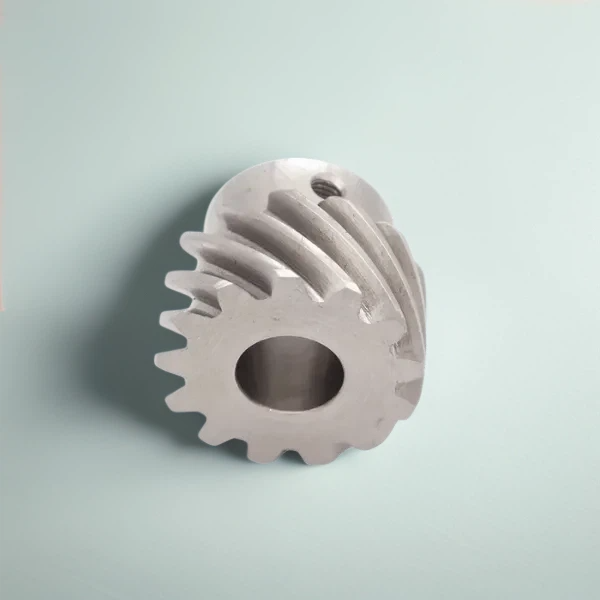
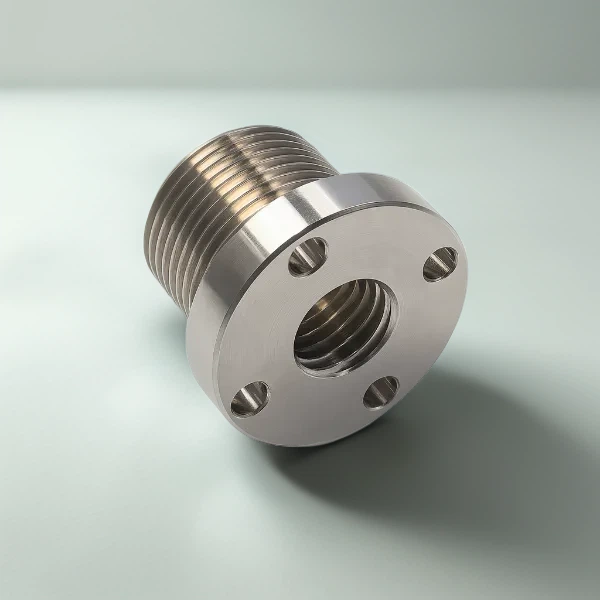
Come see the pictures of custom-made Wire EDM cutting service parts made for you with high precision.


| Material | Standard | Achievable |
|---|---|---|
| Aluminum 6061 | ±0.002″ | ±0.0005″ |
| Tool Steel (Hardened) | ±0.003″ | ±0.0008″ |
| Titanium Ti-6Al-4V | ±0.004″ | ±0.001″ |
| Inconel 718 | ±0.005″ | ±0.001″ |
| Tungsten Carbide | ±0.003″ | ±0.0008″ |
| Stainless 316 | ±0.002″ | ±0.0005″ |
On medical devices that save lives and aerospace parts that are mission-critical. We deliver precision that matters.
Components made for ITAR compliant technologies for use in commercial and military aircraft, spacecraft, and defense systems.
Life-critical implants and surgical instruments made with FDA-compliant quality standards.
Complex dies, tooling components, and other such parts are fabricated from hardened compounds using high-precision methods.
What differentiates our wire EDM service from competing firms.
We deliver tolerances of ±0.0001″ with positional accuracy of 0.00004″. Each of our machines is calibrated daily to ensure the best results.
Our non-contact cutting approach does not exert mechanical stress on any of your parts, which is optimal for thin walls, intricate structures and fragile materials.
No matter the hardness of the material, cutting speeds remain unaffected. We machine pre-hardened tool steels at 60+ HRC just as easily as softer ones, like aluminum.
Our wire EDM process can easily achieve sharp inner corners, intricate profiles, and other features that are challenging to make with conventional machining. Minimum corner radius of 0.001″.
We invest in the latest technology to deliver superior results
Tier 1 aerospace suppliers had to supply highly complex fir-tree root forms for commercial jet engine turbine blades. These parts demanded extreme tolerances in the machining of Inconel 718 superalloy (44 HRC) hardened state. Traditional machining methods were leading to severe tool wear, inconsistent surface finishes, and drifting of parts dimensionally after 15-20 pieces. Given the AS9100D certification requirements and 2,400 blades in an order, a dependable method that kept within the tolerances of ±0.0002″ throughout the run was necessary.
We were doing conventional machining for a few months and had a lot of trouble. Therefore, we found a partner that really understands how to do aerospace tolerancing. They do wire EDM processes and were able to achieve every single one of the blade roots, which we thought was impossible with inconel. The detailed FAI packages made quality audits a breeze. Now they are our go to for every single one of the critical path components.
A top medical device maker was making their next-generation laparoscopic grasper, featuring jaw geometry, including internal ratcheting mechanisms with internal serrations that are 0.008″ and 0.250″ deep (31:1 aspect ratio). The internal corners are 0.002″ for better gripping of the tissue. The internal corners are sharp and the parts are made of 17-4 PH stainless steel in the H900 condition. The parts need a perfect finish to avoid damages and also to comply with the biocompatible regulations of the FDA. The previous contractors discarded the work, saying that it was too complicated to produce.
When three other shops told us that our design could not be manufactured, we were ready to compromise on the design functionality. Instead, we sought other experts who viewed the challenge as an opportunity. The micro-slots they produced have sharper features than what we originally specified, and our surgeons are happy with the grip performance. Since then, we have transferred all our crucial EDM work to their facility.
An automotive stamping supplier needed to replace a 47 station progressive die that makes 15 million electrical connector terminals a year. The die was originally built 8 years ago, but there are no longer replacement punches and dies available from the original toolmaker. Crucial dimensions of the tool have to match the original to within 0.0001″ to ensure proper press timing and part quality are maintained. The die was built out of D2 tool steel, hardened to 60-62 HRC, and had complex forming profiles with clearances being as tight as 0.0008″ for a 0.008″ brass strip.
We were about to experience an 8-week shutdown waiting for a new die. In 18 days, they delivered a full 127-piece rebuild that fit our press without needing any adjustments—in our industry, that is virtually unheard of. The die has produced more than 15 million parts without a single quality problem. We have already contracted them for the next 3 die builds.
A specialty aluminum extrusion firm specializing in custom extrusion profiles needed a complex multi void die. The die needed to have 14 individual void openings with bearing lands needing ±0.0005″ precision to accommodate 3-degree draft angles for material flow with a polished finish for the aluminum flow finish characteristics. The material tungsten carbide (91% WC, 9% Co, 92 HRA) posed extreme machining obstacles with potential diamond grinding quoted as prohibitively expensive at $48,000 and conventional sinker EDM not able to achieve the corner sharpness requirements needed.
We received one quotation for diamond grinding costing $48,000 with a 6-week lead time. Wire EDM delivered the same, albeit better, die with sharper corners for $17,000 in 5 days. That die has processed over 250k lbs. of aluminum with no visible wear. We already ordered 3 additional carbide dies for new product lines.
Technical tools to optimize your Wire EDM design and manufacturing process
| Property | Value | Notes |
|---|
Send your CAD file to us and get your detailed quote within one day. Our engineering team is ready to help you with your project.
Get Instant QuoteElectric discharge machining, abbreviated as EDM, is a process by which a machine uses electrical current to remove conductive metal from a workpiece. It achieves this by generating a spark from a discharge electrode or thin wire to the workpiece while a dielectric fluid, most commonly deionized water, is used. EDM differs from conventional machining because, while conventional machining involves a cutting tool that contacts the workpiece directly, EDM bypasses the need for mechanical cutting altogether. This process is most useful for machining brittle workpieces, hardened metal, or complicated geometries that are hard to machine using conventional methods, and includes wire EDM and sinker EDM options as well.
For high precision wire EDM machining one of the most critical factors is the electrode wire used. With a thin electrode wire, the EDM can achieve cuts on the workpiece with micron level accuracy. This process is controlled through either CNC or EDM systems and is able to achieve very tight tolerances and fine surface finishes on EDM wire parts. Because of this, manufacturers are able to create highly detailed workpieces which include intricate shapes, fine contours, and even precision arrays when multiple holes need to be machined in the workpiece.
Some benefits of electric discharge machining are the capabilities of produce intricate internal contours and forms which are costly or impossible to manufacture from a solid blank using a traditional cutting tool. No mechanical stresses are induced to the part, and it can be utilized on hard or brittle materials. It produces a better surface finish than other non-conventional machining processes, and the process has repeatable highly accurate results. Wire EDM is especially good in producing precision parts in high volume and tight tolerances, typically in the aerospace and automotive industries, as well as in die and mold machining.
Certainly, a major of EDM machine shops and metal working shops integrate CNC machining and wire cut EDM, and it is to maximize the benefits of both processes. A component can be rough machined through conventional machining or waterjet cutting, and then finished with wire edm to achieve the required tolerances, precision surface finish, and to add on intricate machining features to the part. Integrative manufacturing services usually consist of a mixture of prototypes, mass production, and part processing.
EDM wires act as electrodes and facilitate the generation of electric energy, which concentrates on the area around conductive materials, causing them to vaporize, but with no mechanical contact. This thin wire approach EDM performs is perfect for materials that need cutting and have fine details (thin sections, slots, intricate patterns) as it retains a decent surface finish and accuracy to the required dimensions.
EDM Processes utilize dielectric fluids, usually deionized water for wire EDM, to displace particles and provide a stable environment for the fluid. Pulse energy is controlled at the wire and the fluid is fed to allow the spark to decrease, this controls the thermal energy in the workpiece so that the surface finish is smooth on the side of the workpiece and the recast layer is thin. Quality machine and EDM settings are used to allow the part to have good surface finish and secondary operations.
Wire EDM services are best suited for aerospace and automotive applications. EDM wire is precision-machined and allows for the machining of hard and heat-sensitive materials, while being able to produce complex parts within tight tolerances. EDM wire machining aids in the development and manufacture of high-performance parts for the thin electrodes of microfeatures, hole edm for cooling channels, and complex geometries for these industries.
When you are selecting an EDM department, you should expect a full spectrum of machining capabilities to include wire electrical discharge machining for precise wire cutting, sinker edm for cavities, and complex shapes plus process planning for dielectric management, and finishing to achieve the required surface finish and tolerances. Such services would include requesting a quote for parts to be produced along with advice on material suitability (substrate metal and conductive materials), alternatives for either high mix low volume or prototype runs, and post integration with other manufacturing services and metal fabrication.