

Supportive, Professional, Client-Focused Service
From prototypes to full-scale production, we’ve got you covered.




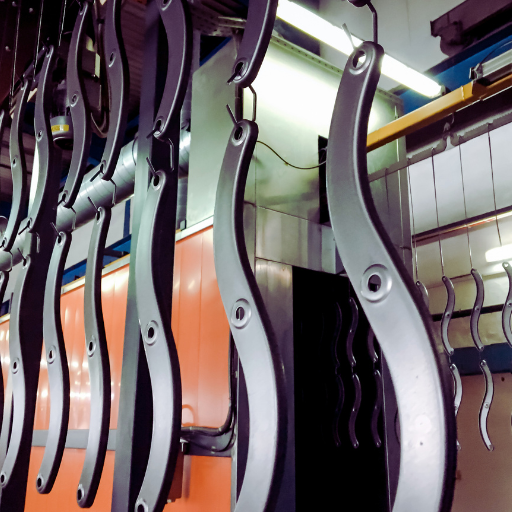
In terms of surface coatings applied to engineering components used in aerospace applications, varying finishes are obtainable; say for example, Anodizing, Alodine, Powder-Coating, Electroless Nickel and Bead Blasting.
Explore The Various Surface Finishing Options For Your Technical Facts.
| Alloy | Strength | Corrosion Resistance | Weldability | Relative Cost | Best Application |
|---|---|---|---|---|---|
| AZ31B | Medium | Good | Excellent | $ | General Purpose |
| AZ91D | High | Excellent | Fair | $ | Die Casting |
| AM60B | Medium | Good | Good | $ | Safety Critical |
| WE43 | High | Excellent | Good | $$$ | Aerospace/Medical |
| ZK60A | Very High | Good | Fair | $$ | High-Strength Structural |
| QE22 | High | Good | Good | $$$ | High-Temperature |
| Alloy | Composition | Density | Tensile Strength | Best For | Relative Cost |
|---|---|---|---|---|---|
| AZ31B | 3% Al, 1% Zn | 1.77 g/cm³ | 260 MPa | General Purpose | $ |
| AZ91D | 9% Al, 0.7% Zn | 1.81 g/cm³ | 230 MPa | Die Casting | $ |
| AM60B | 6% Al, Mn | 1.79 g/cm³ | 225 MPa | Automotive Safety | $ |
| WE43 | 4% Y, 3% RE | 1.84 g/cm³ | 250 MPa | Aerospace/Medical | $$$$ |
| ZK60A | 5.5% Zn, 0.5% Zr | 1.83 g/cm³ | 340 MPa | High Strength | $$ |
Machining of magnesium is an area of specialty where fire safety is a critical factor. Unlike the majority of machine shops, we have completely committed ourselves to the perfect magnesium machining process with the support of dedicated tools, trained personnel, and protocols. With more than 20 years in the industry without any accidents caused by magnesium machining, we are not only completely but also slowly committed to safety as a whole without sacrificing precision or efficiency.
Magnesium chips and fine dust are so flammable that they can ignite spontaneously in some circumstances.
Fires caused by magnesium can, unlike other metal fires, not be extinguished by water—on the contrary, water used in the process worsens the situation by releasing hydrogen gas.
That is why the need for specialized equipment, trained staff, and strict protocols arise, and why only a limited number of manufacturers offer magnesium machining services.
The operator working at our plant who is responsible for safety during magnesium machining will first go through an extensive training program before being certified. Our training program includes:
Removes chips in real-time.
Specialized for metal fires.
Ensures air quality control.
Never water-based coolants.
Sealed steel containers.
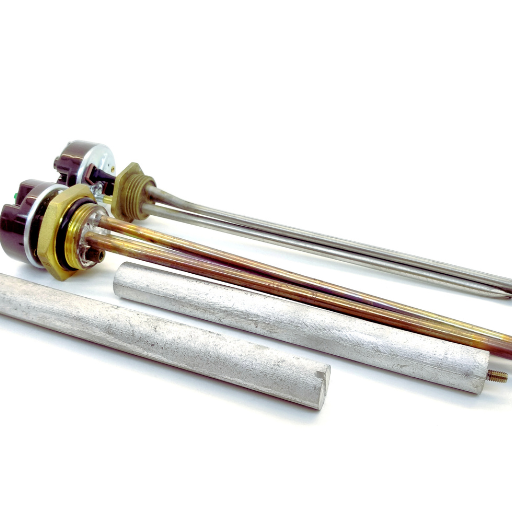





A foremost satellite components producer required urgent, strategic, and critical weight savings on their next-gen communications satellite platform. Aluminum bracket components were a massive lifted weight, with $20,000 in launch costs per kg to be put into orbit.
After performing a detailed DFM, our engineers suggested using WE43 magnesium alloy, offering exceptional high-temperature creep resistance.
| Metric | Results | Impact |
|---|---|---|
| Weight Reduction | 38% | Surpassed goal by 3% |
| Dimensional Accuracy | ±0.0008″ | 20% better than req |
| Cost Saved | $4.2M | Reduced launch cost |
| Defect Rate | 0.08% | Industry normal > 0.5% |
With every new-generation EVA, unsprung mass must be reduced to improve range, handling, and ride quality. The aluminum transmission housing was identified as the first target for weight optimization.
AZ91D magnesium alloy was selected due to its qualities of superior castability coupled with detail CNC finishing.
| Metric | Result | Impact |
|---|---|---|
| Weight Reduction | 31% | 6% above target |
| NVH Improvement | +15% | Improved damping |
| Cpk (Critical Dims) | 2.1 | Exceeds 1.67 req |
| EV Range Impact | +3.2% | Significant Advantage |
One of the world’s largest technology companies required a full unibody Magnesium Alloy chassis. This would make the product significantly lighter and offer excellent EMI shielding.
We implemented a gapless sequencing of material removal and ultra-thin wall machining, paired with advanced programming of toolpaths.
| Metric | Result | Impact |
|---|---|---|
| Weight vs Aluminum | 42% Lighter | Market-leading |
| Wall Thickness | 0.55mm | 8% thinner than spec |
| Surface Finish | Ra 0.6 μm | 25% better than target |
| Production Yield | 98.7% | Industry Leading |
The pioneering surgical robotics company was developing a next-generation system. The system’s robotic arm was critical and highly dependent on lower weight.
We entrusted our ISO 13485 certified medical device manufacturing expertise for surgical robotics required quality systems.
| Measurement | Outcome | Impact |
|---|---|---|
| Weight Reduction | 47% | Vs Titanium |
| Fatigue Life | 15000+ | 50% over req |
| Positioning | ±0.05mm | Precision improved |
| FDA Clearance | Zero Findings | First Submission |
One of the major defense contractors needed a specialized machining partner for the next generation of long-endurance UAV programs. Extreme weight optimization was needed.
An ITAR facility, and with magnesium machining capabilities, we offered tailored solutions. ZK60A was 15% stronger than AZ31B.
| Metric | Result | Impact |
|---|---|---|
| Weight Savings | 52% | Vs Aluminum |
| Endurance | +18% | Enabled by weight |
| MIL-STD-810H | Pass | First time success |
Magnesium CNC machining services are attributed to the strictest safety measures, as the metal chips and dust are prone to fire. Proper chip evacuation, spark-resistant tooling/fixtures wherever applicable, continuous coolant or mist systems to lower ignition risk, and closed extraction and filtration are some of how the risk of fire is minimized. The operators should wear antistatic uniforms, practice grounding, and keep Class D fire extinguishers close by. Specific protocols in the shop should be followed for magnesium stock, swarf handling,g and storage.
Magnesium is not as hard as most alloys, yet the tooling still plays an important role in the production of parts. When machining magnesium, carbide and PVD-coated high-speed steel tools are among the most prevalent due to their durability and high heat resistance. The type of insert should encourage a smooth flow of chips to avoid built-up edge and, consequently, lessen the risk of sparks. Non-ferrous machining tool coatings and edge preparations that are suitable for non-ferrous machining can improve surface finish and tool life in magnesium CNC machining services.
Magnesium is a material that can be processed in various methods, like high-speed milling, precision turning, and CNC grinding, among others, which are the best methods for getting tight tolerances on magnesium. High-speed machining also means less cutting force and less heat, which will help to keep dimensional stability. Fine finishing passes, rigid fixturing, and in-process measurement systems should be used for critical features. You can find many magnesium CNC machining services that can provide multi-axis machining and coordinate measurement to reliably meet tight tolerances.
Typically, non-ferrous finishing techniques are applied to magnesium. The combination of using sharp tools, matching feeds and speeds, and finishing processes like micro-milling or light polishing will result in low Ra values. Further operations like vibratory finishing, bead blasting, or anodizing-prep treatments can beautify and enhance the surface with respect to rot resistance. It is advisable to consult your provider of magnesium CNC machining services for finish samples and process suggestions.
Magnesium is a heat-sensitive material, and its distortion could be caused by excessive heat. When using high-speed machining that is coupled with coolant or air mist, the cutting temperatures are reduced, and workpiece deformation is minimized. Climb milling, multiple light passes, and staged machining strategies are ways to control heat build-up. Expert magnesium CNC machining services plan operations that will keep the part flat and dimensions unchanged throughout the process.
The manufacturing of magnesium parts with specialized machining materials and CNC processes has spawned the use of magnesium in aerospace brackets, electronics cases, automotive parts, and portable devices' frames, where the properties of low weight and high stiffness are essential. Magnesium CNC machining services are widely accepted for rapid prototyping and low-to-medium volume production, where weight saving and heat management give design superiority.
The answer is affirmative; magnesium parts can be combined with aluminum, titanium, and steel as well as with composite materials in a multi-material assembly. The design aspect takes into account the prevention of galvanic corrosion (by using proper coatings or insulating barriers), strategies for fastening, and differences in thermal expansion. Trustworthy magnesium CNC machining services will advise on the selection of joining methods, coatings, and tolerances to ensure lasting performance.
Among the various ways of working with magnesium, avoiding excessively thin sections, providing ample fillets and corner radii to avert stress concentrations, and planning for even wall thickness to eliminate distortion are some of the manufacturability tips to keep in mind. In addition, specify tolerances and surface finish targets that are achievable, and make sure that you bring your magnesium CNC machining services into the process early on for tooling, fixturing, and sequence planning. Working together early will not only save cost and time but also make production reliable.
CNC machining of magnesium is the process of making magnesium alloy parts with the help of computer numerical control machines, where a CNC machine performs programmed milling strategies to subtract material and create parts that are light and strong; modern CNC machines, such as 3D CNC and 5-axis CNC machines, allow the manufacture of very complex shapes with high-precision CNC work on magnesium alloys like magnesium alloy AZ31B and magnesium alloy AZ91D, and our expertise in CNC machining of magnesium ensures that every project has the right tools, spindle speeds, and feeds to maintain surface quality, control high temperatures, and avoid defects while producing magnesium parts that conform to your design intentions.
Magnesium parts and machined magnesium provide a clear performance advantage in your designs since magnesium possesses a refined weight-to-strength ratio that beats the majority of aluminum alloys—besides, it allows the use of light magnesium parts in various applications where the reduction of weight leads to improvement in efficiency, more ergonomic products, and less expensive manufacturing; all these are gained through our magnesium CNC machining service which retains tight tolerances and involves magnesium machining that does not alter the material’s mechanical properties allowing you to use the more confident magnesium machined parts in high strength and weight-sensitive applications.