

Supportive, Professional, Client-Focused Service
From prototypes to full-scale production, we’ve got you covered.


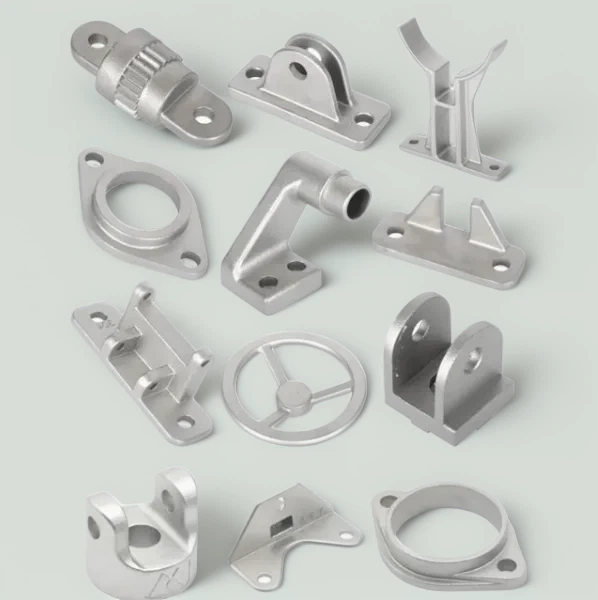
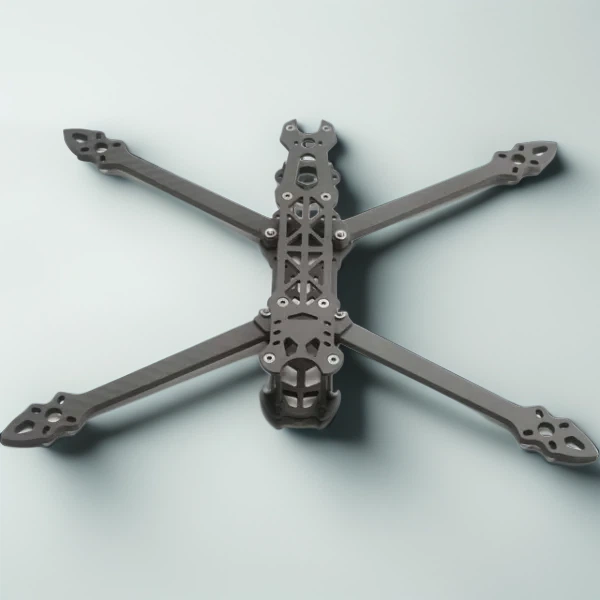
Explore our gallery of custom parts made with our 3D printing service. See examples of our work and get inspired for your next project.
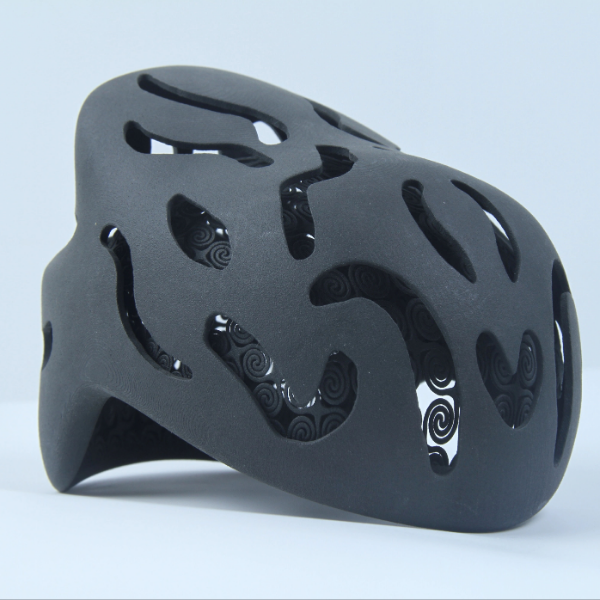

PA11 and PA12 are used for making durable functional parts that have good impact resistance.
An engineering thermoplastic suitable for tough prototypes and end-use components is ABS.
A green biodegradable material is used for concept models and packaging.
The use of high-detail photopolymer resins for jewelry, dental, and fine features.
The aerospace and medical-grade Ti6Al4V for lightweight high-strength parts.
AlSi10Mg alloy is used for lightweight structural components and housings.
316L and 17-4PH for corrosion-resistant industrial applications.
A high-temperature polymer for demanding aerospace and medical uses.
Find the perfect 3D printing technology, material, and specifications for your project
Answer 5 quick questions to find the optimal 3D printing technology for your specific needs
Question 1 of 5
What is the primary application for your part?
Question 2 of 5
How important is surface finish quality?
Question 3 of 5
What level of mechanical strength do you need?
Question 4 of 5
What is your budget priority?
Question 5 of 5
What production volume do you need?
Browse and filter 14+ materials to find the perfect match for your application requirements
Understand the differences between common file formats to submit optimal files for 3D printing
| Feature | STL | STEP | 3MF | OBJ |
|---|---|---|---|---|
| Geometry Data | ✓ Mesh | ✓ BREP | ✓ Mesh | ✓ Mesh |
| Color/Texture | ✗ | ◐ | ✓ | ✓ |
| Multiple Parts | ✗ | ✓ | ✓ | ✓ |
| Print Settings | ✗ | ✗ | ✓ | ✗ |
| Unit Information | ✗ | ✓ | ✓ | ✗ |
| Editable Geometry | ✗ | ✓ | ✗ | ✗ |
| Industry Adoption | ✓ Universal | ✓ Engineering | ◐ Growing | ◐ Graphics |
Understand achievable tolerances for each technology to design parts that fit perfectly
💡 Design Tips for Better Tolerances
Compare 3D printing against traditional manufacturing to find the best approach for your project
💡 When to Choose 3D Printing
3D printing excels for low-to-medium volumes (1-500 units), complex geometries, rapid prototyping, and customized parts. Traditional manufacturing becomes more cost-effective at higher volumes due to lower per-unit costs after initial tooling investment. Consider 3D printing when you need design flexibility, quick iterations, or when tooling costs aren’t justified.
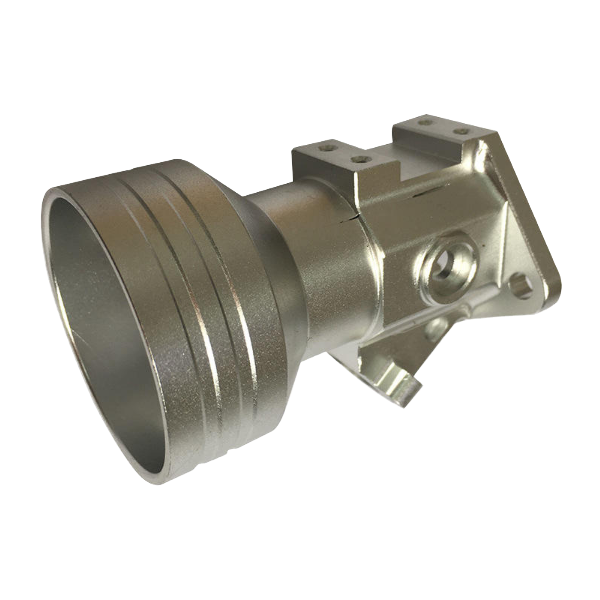
AS9100-certified facility engineering creates lightweight structural parts, complex duct systems, and flight-ready parts comprising titanium work, aluminum, and different high-performance polymers.
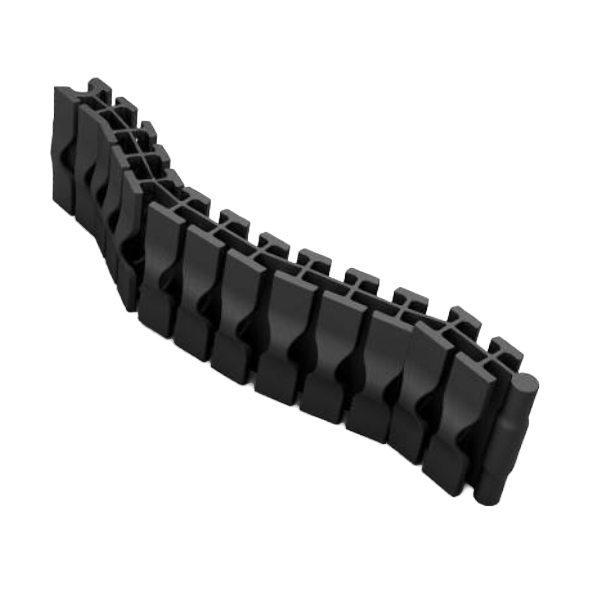
ADA and CE marked surgical guides, anatomic models, 3D-printed orthopedic spinal implants and many other prosthetics, and dental devices made with biocompatible materials in a regulated controlled environment.
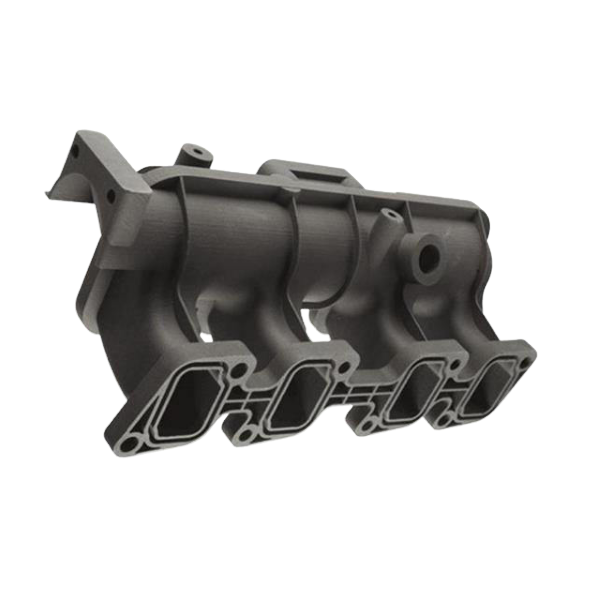
Features rapid prototyping and production of functional automotive parts, including custom tooling, jigs and assembly fixtures, and production parts for OEM and aftermarket.
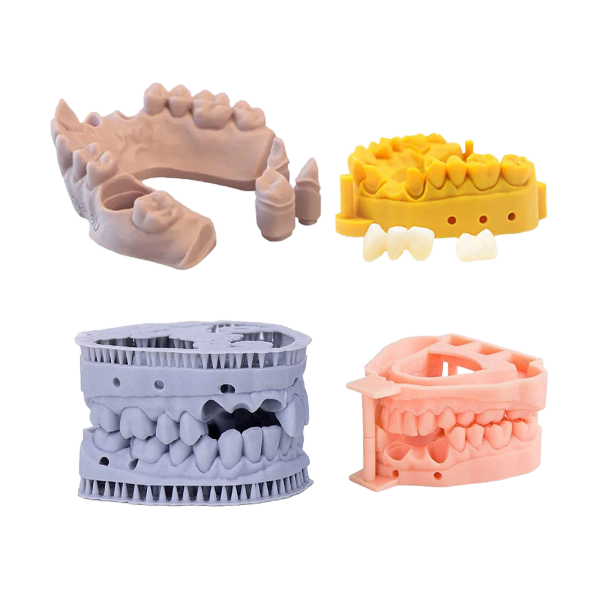
3D dental models, FDA-cleared high-precision surgical guides, transparent aligners, custom-made medical appliances, crowns and bridges.
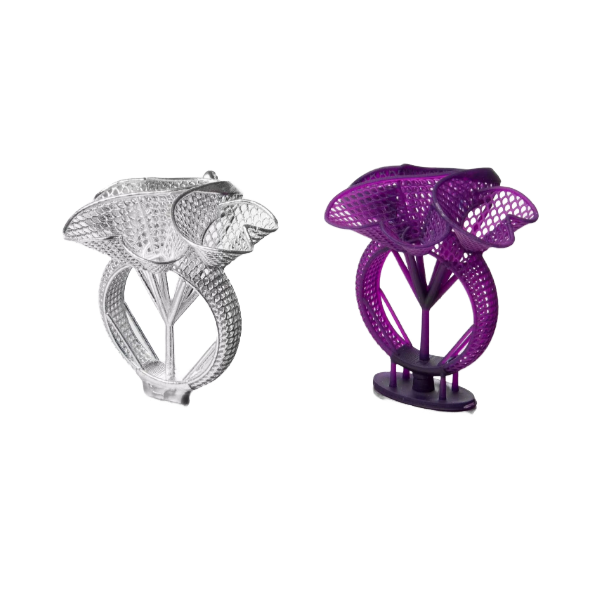
Create sophisticated jewelry representations with castable resin patterns, direct metal printing, and high-detail wax models for investment casting.
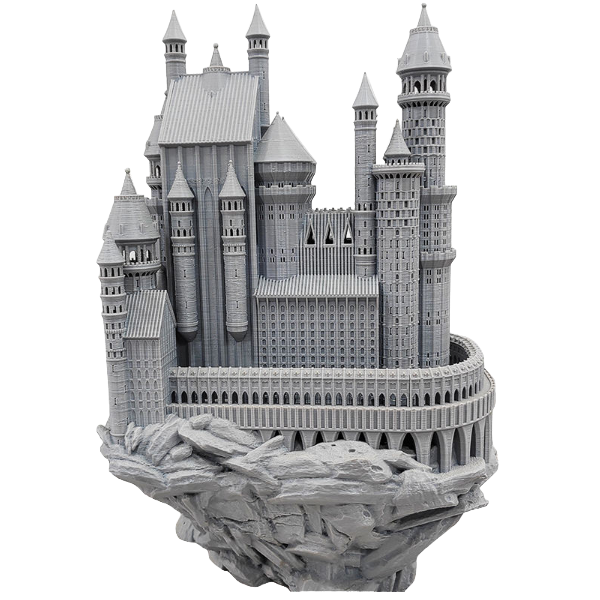
Intricate architectural scale models, including structural prototypes, and visualizations for urban planning, offering fine-graded geometry through a wide range of materials.
Most people are lost selecting between FDM, SLA, SLS, MJF, and metal 3D printing.
We advise on the most suitable technology.
Surprise charges for setup and shipping can ruin project budgets.
Get instant, all-inclusive quotes.
Wall thickness problems and incompatible formats can halt execution.
Professional advice before production.
Not knowing arrival times causes delays in downstream manufacturing.
Options with guarantees and tracking.
Variations in accuracy and finish between batches hurt assembly.
ISO-certified processes for consistency.
Fear of design theft and unauthorized replication prevents outsourcing.
Full legal coverage and data encryption.
Plan your 3D printing project with accurate cost estimates, lead times, and design guidelines
Get instant cost estimates based on part dimensions, technology, material, and quantity
Part Specifications
Part Dimensions (mm)
Infill Percentage
Technology
Material
Quantity
Cost Estimate
Total Estimated Cost
$0.00
$0.00 per unit
Estimate delivery time based on technology, quantity, complexity, and post-processing needs
Project Details
3D Printing Technology
Quantity (Number of Parts)
Estimated Part Size
Part Complexity
Post-Processing Required
Estimated Lead Time
Standard Lead Time
5-7business days
Verify your design meets 3D printing requirements before submission to avoid costly revisions
Choose the right finishing options to achieve your desired surface quality and functionality
Explore how different industries leverage 3D printing for competitive advantage
Understand which quality certifications are required for your industry and application
Ordering custom 3D-printed parts is straightforward and quick—stop and pick parts.
Upload your secure STL, STEP, or 3MF files. We accept all major 3D print file formats.
Select technology, material, and finishing. Get one transparent price instantly.
Engineers check for printability and send DFM feedback. Upon approval, production starts.
Parts printed with ISO-certified quality control and real-time tracking.
Thorough quality check and full documentation. Express and standard shipping.
3D printing service takes advantage of additive manufacturing techniques, including fused deposition modeling (FDM), stereolithography (SLA), selective laser sintering (SLS), multi-jet fusion (MJF), binder jetting, and DMLS/SLM for metal printing, to construct items from 3D design files (STL, STEP), one layer at a time. Additive manufacturing services comprise 3D printers, software, and materials (plastics, nylon, metals) qualified to deliver mid-volume production of end-use parts, prototypes, and intricate designs, while managing build orientation and performing post-processing and quality control.
All large 3D printing service companies have simple, instant quoting systems that let you upload a 3D file (STL, OBJ) and retrieve live 3D printing prices. Rapid quotation systems take into account printing time, materials (plastic and metal), and post-processing to allow you to calculate the cost of rapid prototyping or production parts.
Your application is key in determining the appropriate technology for your project. SLA/stereolithography is appropriate for high-detailed prototypes and models. For large-format prototypes and other quick-melting parts, use FDM/fused deposition modeling, although it’s most likely the lowest-cost option. Functional models and final parts in nylon can be produced in SLS/selective laser sintering and MJF/multi jet fusion. For final parts that are to be produced in metal, use DMLS/SLM and Fused Deposition Modeling (FDM). When choosing your tech, keep in mind your desired print features, desired mechanics, and the post finish in your final product.
3D printing has become more versatile over time, enabling the production of unique industrial materials such as thermoplastics (PLA, ABS, PETG) and nylon (PA12, PA11), craft-grade materials such as elastomer composites, and precious-metal powders for DMLS/SLM. The finish, strength, and final costs must be balanced with your industry requirements for functional prototypes and final parts. The providers for your 3D printing industry needs will make appropriate recommendations for end-use components and production-grade materials.
This depends on factors like process, material, size of the order, and the post-processing details. Smaller FDM and SLA prototypes can be done within 1-2 days. However SLS, MJF, or metal DMLS jobs can take anywhere from a few days to 1 week. Many services online offer rapid prototyping and production parts. Customers who need parts urgently have the option of fast turnaround and expedited services. Customers can receive their parts faster by using instant quoting and selecting materials that are most available in stock.
Certainly, Large-format builds and complex designs, such as intricate structures, internal channels, and lattice formations, can be done by industrial 3D printers. Large FDM machines, binder jetting, and SLS and MJF technologies are used for these manufacturing solutions. These services produce high-quality 3D-printed parts for prototype models and end-of-life operational products. Services such as designing and file preparation, along with post-processing, are included in 3D manufacturing solutions.
Yes, 3D files can be in multiple formats, including STL, OBJ, STEP, and IGES. Many services also provide 3d modeling and engineering to assist in file preparation or optimization for printing, streamline manufacturability, repair errors, and orientation and support recommendations before uploading the file 3D for quoting and production.
For small production runs, 3D printing often decreases the costs and lead times for prototyping and 3D printing of complex designs. Printing costs vary by material, machine time, volume, and post-processing. CNC machining or hybrid manufacturing can be more cost-effective for durable, metal parts or when tight tolerances are needed. Cost comparisons are available from many manufacturing services and they assist you in saving costs on 3D printing by selecting the optimum technology and materials.
Service providers also assist with design and engineering, as well as post-processing and assembly, quality assurance, and scaling up production. 3D printing services offered online provide immediate pricing, file repair, rapid prototyping, workflows from prototyping to production and on-demand production of end-use parts, custom 3D printed components and production parts with durability and quick turnaround.