

Supportive, Professional, Client-Focused Service
From prototypes to full-scale production, we’ve got you covered.


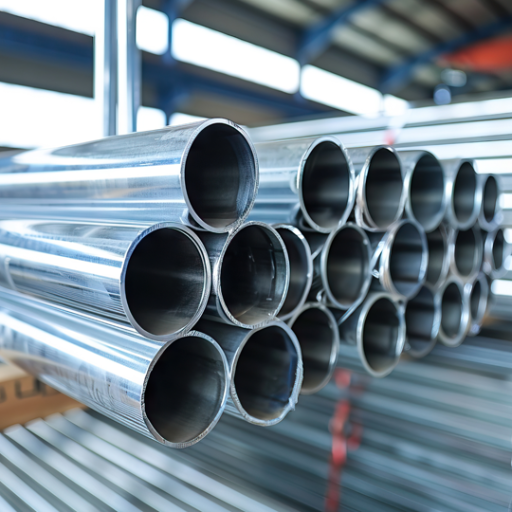
An understanding of how diverse stainless steel grades compare is a very helpful tool for finding the most proper steel for any constructive work. Still, grades 303 and 304 of stainless steel are among the most popular and these two differ considerably in application, despite their seeming likeness. If the wrong steel material is chosen, it might affect the longevity of the product, the cost involved, and the product’s intended use. The differences are important in these regards. The present discussion will look into the differences that apply to the two steel grades in terms of their generalities with respect to 303 vs 304 Stainless Steel. The discussion is aimed at assisting you in the making of the correct determination; the metal holds for you in the entire process, whatever field you are in whether this is in the manufacturing sector, constructing industry or the field where stainless steel finds an application.
Stainless steel grading is the categorization into which one can generally first recognize how the steel was intended to form, and further, the steel’s possible applications. Anyhow, within this grade, he has to choose between the two available grades, 303 and 304. These two fall into the 300 series containing the advantage of corrosion resistance and durability-phosphorus. 303 is a metal for use in fabrication where there are several requirements of user-friendly machining. On the other hand, 304 is quite adaptable and also has the hardest mining responsibility, thus it can be comfortably used in any process that exposes it to water, chemicals, corrosive atmosphere, or wear and tear. The information is crucial in choosing the best grade correct for the intended purpose.
One of the stainless steels of 303 is a complete anneal and has the most machinable type of stainless steel. With a level of additions of nickel, chromium (min 18%), and sulfur, 303 has relatively better machinal properties. The presence of sulfur clearly shows that it will be quite poor in corrosion. This is why 303 is considered to be useful for the design of so many mechanical parts. Besides automotive components, it is widely used in most other applied engineering departments where machining remains a critical factor. Will it resist corrosion exceptionally well? Why, though as a high water-or chemical oriented material, due to some incidental agents, it becomes one of the most usable materials in those stakes in the sense of industries. In re-special machinability, though, 303 Stainless Steel sets. with high rigidity into forming environments, good for formability and weldabilities.
Type 304 stainless steel alloy is one of the best known to be stainless steel grades. This is due mainly to its quality properties that originate from the material composition of the principle. The 304-grade austenitic alloy steel is primarily formed from 18-20% chromium and 8-10.5% nickel, enjoying good resistance against oxidation and corrosion, very notably in the situations having water or acid in them. Because of its hygienic implications and power, 304 stainless steel is famous in kitchen utensils, processing equipment, chemical treating tanks, and some other architectural foundations.
304 stainless steel would be a nice choice as an alloy even in the areas of development and housing since it has a very low cost-performance ratio. Nonetheless, since it can not resist the attack of corrosive-rich chloride environments, that is coastal and maritime environments. Meanwhile, times so commonly arise when 303 vs 304 Stainless Steel cannot be placed in exposure to the beach for any reason since crevice and pitting corrosion are fast-tracking up in these circumstances, requiring the use of 316 stainless steel.
303 differs from 304 primarily in its higher sulfur content, which improves machinability at the cost of reduced corrosion resistance and durability.
| Key Point | 303 Stainless Steel | 304 Stainless Steel |
|---|---|---|
| Machinability | Excellent | Moderate |
| Corrosion Res. | Lower | Higher |
| Durability | Reduced | Excellent |
| Sulfur Content | Higher | Lower |
| Welding Ability | Limited | Superior |
| Cost | Relatively Higher | Lower |
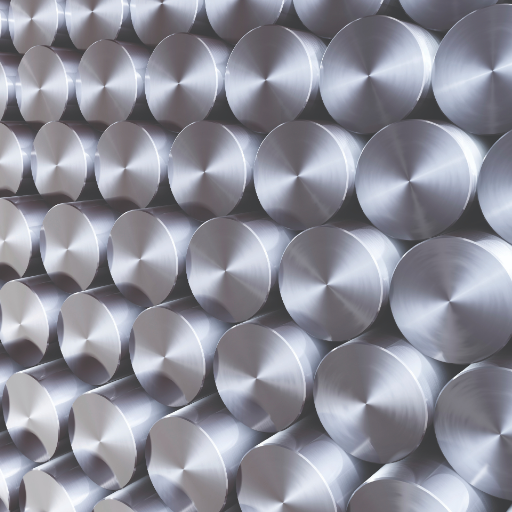
Steel grades such as 303 and 304 possess compositional and operational distinctions from each other. In contrast to 304 whose composition is mainly concerned with corrosion resistance and strength, grade 303 contains sulfur for the purpose of enhancing machinability. However, this increases the impact on corrosion resistance and strength of 303 over 304. Nevertheless, excellent structural characteristics added to the corrosion resistant properties of 304 steel grade make it applicable to a wide range of uses.
Areas that require the component to repeatedly undergo heavy structurning such as strong fasteners, pinhole bushings or worm wheels refractory alloy 303 is mostly preferred. The high level of sulfur content in the steel hasten the process of lap-welding and ensures the durability of the products is subject to environmental factors such as elements of corrosion.
Due to its low sulfur content and excellent weldability, 304 stainless steel is commonly used in the manufacture of food processing machinery and equipment, furniture and fittings for commercial-grade kitchens, chemical tanks, and architectural panels. Since it is more durable and does not rust or corrode easily in most circumstances, it is often preferred for materials that are used in damp or chemical environments among others.
Nonetheless, it remains true to state that knowing when to use 303 versus 304 stainless steel will be guided by aspects of application, such as whether or not it is easy to machine, how easily it can be corroded and whether costs will be a problem.
There are differences between 303 vs 304 Stainless Steel, carbon content, and Hot Workability especially when it comes to cold working. Stainless steel 303 is easier to machine as therefore additional sulfur to the alloy. How the sulfur is held in a matrix is to create small structures within the metal, which act as stress relief inclusions for the cutting tool. Nevertheless, this advantage in machining comes with deteriorated corrosion resistance and slightly improved tensile strength when compared to 304 stainless steel. One of the most widely used stainless steel alloys for components that require easy machining and do not have to withstand aggressive environments is 303.
When one looks at the corrosion capabilities of 303 vs 304 Stainless Steel, 304 emerges as the better option. The chromium and nickel contents in stainless steel 304 are much higher; this explains why it is able to resist oxidation as well as other extreme conditions such as moisture or even different colors of chemical exposure. Whereas 303 steel, on the contrary, is much more machine friendly because extra sulfur is added to make it that way. However, this comes at the expense of some corrosion resistance and it is not appropriate for structures which will come into contact with the sea or strong common acids for long periods of time. Thanks to the recent findings and search results, it is best to adopt stainless steel 304 while considering corrosion resistance whereas in cases where corrosion is not a big issue as most of the time it is about machining where it is tight, 303 is recommended.
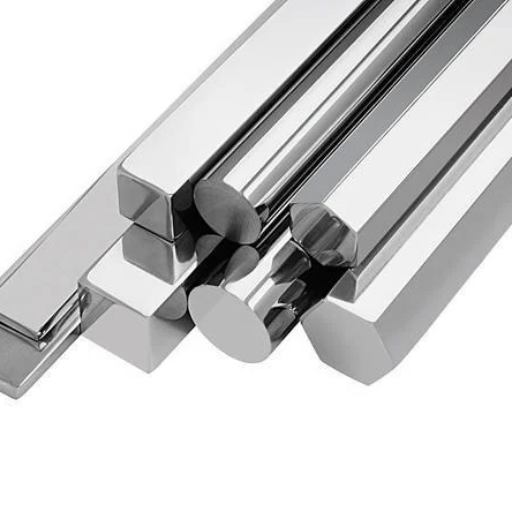
Although the differences between 303 vs 304 Stainless Steel appear to be miniscule, they do actually result in notable changes. Inserting Q into X or Y will impact Z, making the user consider Q in case of adding one or both of X and Y. Besides offering free machining characteristics, it is advised because it is machinable and efficient. It also results in a lower surface to contact with cutting tools which enables the production of components such as fasteners, fittings, or shafts with use of the material in question with less production interruptions. On the other hand, those properties imply certain disadvantages such as low corrosion resistance and therefore would have specific application limitations.
When discussing 303 vs 304 Stainless Steel there are noticeable differences in both their toughness and weldability as a result of different chemical compositions. Slight differences exist between the structures of the two stainless steels, especially when in its 304 form, which makes its toughness astoundingly outstanding and useable for a large variety of purposes. This is due to the fact that the 304 stainless steel can be used in harsh environments or at very low or high temperatures, given that it will still remain impact and deformation resistant, due to its excellent mechanical properties.
The 303 stainless steel, unlike the 304 stainless steel, which is an extension of the base structure of the 304, however, it has increased presence of sulphur to improve the machine-ability at a slight cost of toughness. This one factor makes the latter capable of enduring greater force or impacting pressure whereas the former is unable to do so.
With respect to the weldability property, 304 is very good steel due to its extensive applicability to various welding methods such as tungsten inert gas (TIG), metal inert gas (MIG) or simply resistance welding. Little to no secondary processing is needed after welding. Owing to the sulfur content in 303, which improves the machinability steel causes a lot of problems when it comes to welding, and the welds are often weak with a greater chance of cracking or other defects. Because of this disability of 303, it is typically not used in the components which require extensive welding.
So, even though 303 performs well in machinability and is suitable for fine machining, 304 has superior strength to withstand as well as being much more weldable so it can be used in different structures and load-bearing designs.
The machinability of stainless steel 303 is exceptional. However, it has to be compensated at the expense of strength and ductility against 304. Such strength is sufficient where machining and resistance to corrosion are appropriate while it is very inadequate for equipment that is exposed to much mechanical work and would require such materials.
Nonetheless, 304 stainless steel carries even better strength and ductility significantly due to its balanced composition. It allows the material to take more stress than 303 without fail making it convenient for structures and all other cases where the ability to resist mechanical strain is of high importance. 303 vs 304 Stainless Steel- This duality of strength and flexibility provides strong advantages of 304 particularly in challenging applications.
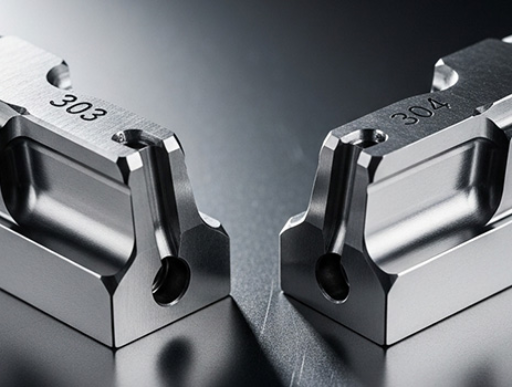
The metal stainless steel of the grade 303 is made more favorable for manufacturing purposes by further enhancing its machinability, which is why it is often used for fabricating parts that require high machining operations. It is reasonably resistant to rusting in normal weather conditions but is lacking in comparison to 304 stainless steel especially when used in critical or chloride containing environments. The sulfur content in 303 is a beneficial feature for the machinability of 303 vs 304 Stainless Steel; however, it makes it a little bit more fragile and less impervious to crumbling in the crevices of the equipment. Therefore, it is better used where bolts, screws and equipments are employed, where the concentration of chemicals is low and thongs or conditions are not severe.
Corrosion resistance is reason why 304 stainless steel is used the most in corrosive environments. It has higher chromium and nickel content, which when oxidized creates a barrier on the surface that can withstand moisture, acids or even chlorides, hence, protecting the surface. Therefore, it is “highly recommended” for industries such as underwater, chemicals and food where robustness and cleanliness are imperative. More so 304 stainless steel is as strong, and durable as represented thus offering good service in the long run in harsh environments.
303 stainless steel offers better machinability, while 304 stainless steel provides superior corrosion resistance, strength, and versatility.
| Parameter | 303 SS | 304 SS |
|---|---|---|
| Corrosion | Moderate | High |
| Machinability | Excellent | Good |
| Strength | Moderate | High |
| Weldability | Limited | Excellent |
| Durability | Moderate | High |
| Versatility | Limited | Broad |
| Applications | Machining | Marine, Food |
303 is ideal for complex machining projects due to its excellent machinability, while 304 is more suited for environments demanding high corrosion resistance and durability.
The choice between 303 vs 304 Stainless Steel is depending on the end-use, the desired characteristic, and properties. Despite the fact that an application calls for some heavy machining, 303 stainless steel will be a relatively good choice as opposed to other grades, for it is the most machinable. On the other hand, if considerations are given to properties such as what is on the order of embellishment or susceptibility to corrosion in addition to weight economy, 304 is the choice. Most of the grade 304 are used in environments like food and medical since it is capable of giving very much needed mechanical properties. Safety measures are engaged so that the environments and stress and optimization considerations must be met before choosing a specific grade.
Analysis of Abrasion Mechanisms in the AISI 303 Stainless Steel: Effect of Deformed Layer – A study comparing the mechanical behavior of AISI 303 and 304 stainless steel during scratch tests.
A Comparison of the General and Localized Corrosion Resistance of Conventional and Rapidly Solidified AISI 303 Stainless Steel – Research on the corrosion performance of AISI 303 and 304 stainless steel under different conditions.
Responses of Austenitic Stainless Steel AISI 303 Subjected to Different Environmental Conditions – A paper discussing the machinability and corrosion resistance differences between grades 303 and 304.
Nitrogen Implantation of Type 303 Stainless Steel Gears for Improved Wear and Fatigue Resistance – Research on wear and fatigue resistance improvements in 303 stainless steel compared to 304.
Essentially, the distinction between the 303 and 304 series of stainless steel lies in the sulfur and carbon modification levels: grade 303, also known as 303 steel, is a stainless steel fit for free machining, where it is produced from the hackers of 304 came into the world with a chance of sulfur to enhance the machining process, providing faster rate of metal removal. Grade 304 stainless steel or austenitic provides lower sulfur content for a different ratio of the weight percent of carbon in austenite wood. However, they are to anymore but variations austenitic; in fact, both types 303 and 304 are classed among what one may consider austenitic. However, grade 304 is richer in chromium and nickel relative to grade 303; hence, it is better for corrosion resistance and anticrystal by many measures.
The truth is that 304 stainless steel, with better galvanic corrosion resistance but not the same mix available from compacts of 303 stainless, is usually favored in corrosion resistance-concerned situations. Due to the addition of sulfur, 303 stainless steel can be machined with ease. However, the higher sulfur content marginally decreases corrosion resistance; thus, for applications with anything in the way of pretty strong corrosive media, usually in any environment that would result into oxidation, 303 might even be skipped and just choose 316. Sometimes, 304 may satisfy under these conditions.
The 303 and 304 series of stainless steels contain austenite that is non-magnetic in the solution-annealed state. A small amount of cold work will cause magnetic attraction. It is mostly believed that these steels are non-magnetic, even though technical processing in the case of stainless fixation can make the steel exhibit some magnetic influence.
Grade 303 is bores de souci while compared to type 304, with respect to strength in terms of mechanical properties. For cases wherein the tensile strength or yield strength is a great concern as to the employment in structures, type 304 (or other grades with greater strength in stainless steels) is given preference over grade 303.
When it comes to food safety, the more desirable type is 304 grades compared to 303. The reason for this is that the amount of any sulfur content is much less, and anticorrosive properties are greater which makes it very well suited for the hygienic environment. All the while, in food service equipment, 304 versus 316 is always a comparison; 316 is better in resolving exposure to industrial chemicals while 304 has proven itself to be the most popularly used of the austenitic stainless steels for food processing applications.