

Supportive, Professional, Client-Focused Service
From prototypes to full-scale production, we’ve got you covered.


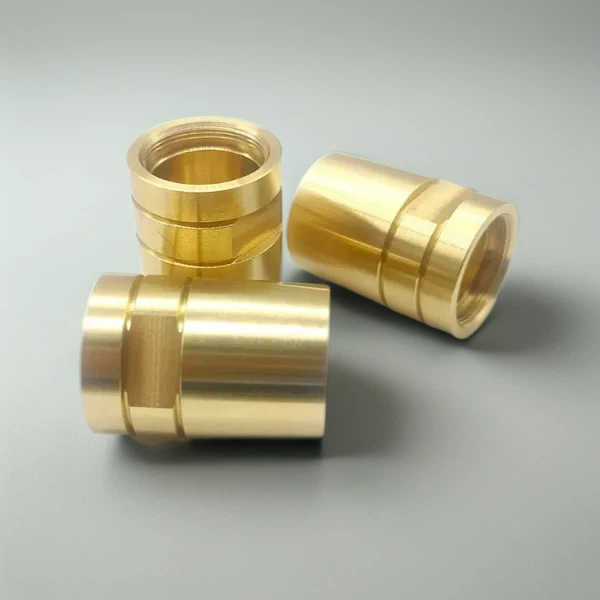
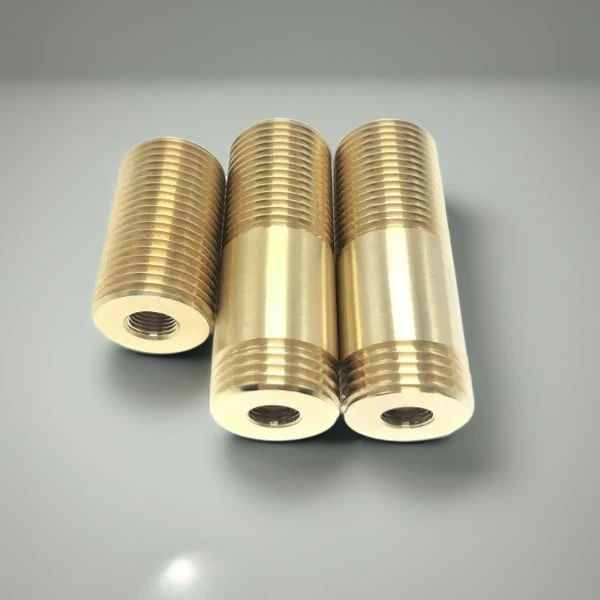
Explore our gallery of custom brass machined parts. See examples of high-quality, precision-engineered components for various industries.


| Grade | Composition | Tensile Strength | Yield Strength | Hardness | Machinability | Applications |
|---|---|---|---|---|---|---|
|
C360
Free-Cutting Brass
Most Popular
|
61.5% Cu
35.5% Zn
3.0% Pb
|
338-469 MPa
49-68 ksi
|
124-310 MPa
18-45 ksi
|
55-80 HRB
Soft-Half Hard
|
100% Rating
|
Gears
Valves
Fittings
Fasteners
|
|
C260
Cartridge Brass
|
70% Cu
30% Zn
|
303-896 MPa
44-130 ksi
|
76-448 MPa
11-65 ksi
|
45-82 HRB
Annealed-Spring
|
30% Rating
|
Radiators
Rivets
Hinges
Casings
|
|
C464
Naval Brass
Marine Grade
|
60% Cu
39.2% Zn
0.8% Sn
|
379-607 MPa
55-88 ksi
|
172-455 MPa
25-66 ksi
|
58-85 HRB
Soft-Hard
|
30% Rating
|
Marine Hardware
Propellers
Pumps
|
|
C69300
Silicon Brass (Eco Brass)
Lead-Free
|
75% Cu
21.4% Zn
3% Si
|
517-655 MPa
75-95 ksi
|
241-379 MPa
35-55 ksi
|
70-92 HRB
Half Hard-Hard
|
80% Rating
|
Potable Water
Medical
Food Processing
|
|
C385
Architectural Bronze
|
57% Cu
40% Zn
3% Pb
|
414 MPa
60 ksi
|
138 MPa
20 ksi
|
65 HRB
Half Hard
|
90% Rating
|
Door Hardware
Decorative
Hinges
|
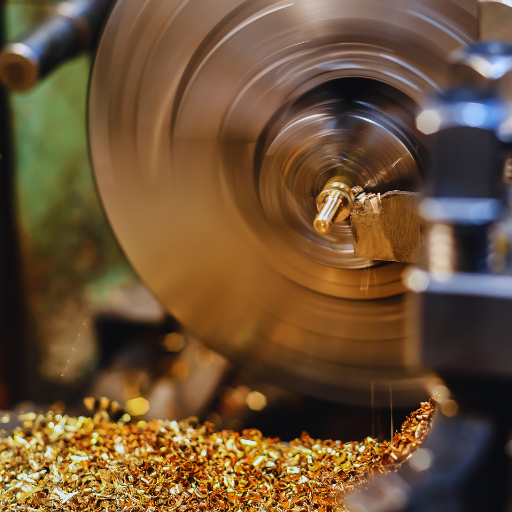

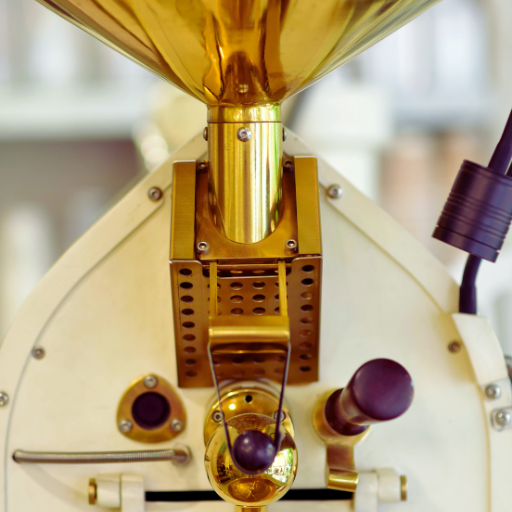

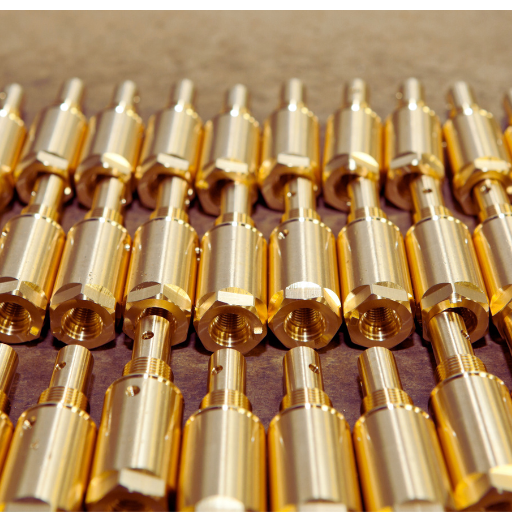
Changing stainless steel with biocompatible, lead-free brass and thus reducing the weight of the instrument by 25% while complying with FDA and EU MDR regulations.
Fabricating fittings out of Brass for hydraulic systems of 3,000 PSI that have 100% AS9100D traceability, no pores, and a service life of 20 years.
Changeover of leaded brass to NSF/ANSI 61 compliant lead-free brass for 500,000+ valves per year without any cost increase or production slowing down.
Manufacture brass impellers for cooling systems using seawater that have a life of 10+ years, no dissolution of zinc, and G2.5 dynamic balancing.
Increase production from 10,000 to 100,000 pieces per month for connectors made of brass having a contact resistance of less than 50 micro-ohm and 10,000 mating cycles.
Create AGMA 12 quality brass gears for robot joint actuators with noise level of less than 45 dB and backlash of less than 0.02mm for force-sensing precision.


Brass is an alloy of metals that consists of the copper-zinc combination, and these effects are produced by ratios of copper to zinc. Appropriate characteristics can be brought forward by choosing brass material with a copper-to-zinc ratio that ensures quality, durability, color, and machinability. For example, low brass (Cu-20 Zn) is less strengthened, but the high zinc helps drill holes quite efficiently.
Brass is employed extensively in myriad applications across various industries, including plumbing fixtures, electrical connectors, valve components, musical instruments, and architectural embellishments. Due to its low friction coefficient and corrosion-resistant property, brass is highly desired when a material is involved, either as metal or a non-metal in hybrid systems.
Since brass has copper in it, it resists corrosion in many environments and is partially tarnish-resistant and possibly hydrating, having innate antimicrobial properties. Being of a lower ranking with regard to corrosion resistance than stainless steel, brass is applied cost-effectively to many outdoor and semi-marine areas, so long as it is alloyed and finishes competently.
Yes, brass material is also very popular for its shiny, gold-like appearance for decoration and ornamentation, which polishes off beautifully to that polished, glinting finish. Brass architectural hardware, lighting fixtures, and trim give lots of benefits in the look-along with durability.
Brass material normally appears very cost efficient in terms of its machinability aspect and lower tool wear. These things, in turn, reduce production costs and lead times. The raw material cost at alloy level has a lot about it, but in many cases, handling costs in fewer machine setups and faster cycle times may indeed put a brass alloy in a more competitive light alongside more expensive metals or composites of complex metal and plastic, among which brass finds increasing preference and application.
With good ole time on your mind, here's a set of machine shops for brass that could handle everything you need, from protos to the finish line, even with brass machining as one of their core competences. While working with brass, good tool paths, material grades (copper/zinc ratios), and conceivable finishes that meet functional as well as aesthetic requirements are best practiced by personnel extensively trained in brass.
Brass is well-known not only for its low friction coefficient, but also for its ductility and thermal conductivity. Stay careful to avoid designing too thin walls around higher-stress areas, as galvanic corrosion could arise when brass is coupled with other materials. Surface finishes must be established for either aesthetic or functional reasons. Talking to your machining partner early in the process can eliminate rework and ensure that a design is easily manufacturable.
The choice of the best type of brass alloy-whether brass c360 (also known as free machining brass or 360 brass), c260 cartridge brass, red brass, naval brass or specialized leaded brass-would depend on the ease of machinability, tensile strength, and Lead content; brass c360 (brass 360) has always been considered the best alloy as its machinability properties (given by the controlled level of lead) enhance tool life dramatically, improve quality of finish, and allow faster prototyping and production runs into the bargain, while c260 is used in machining operations such as pressure-beating applications and other kinds of brass applications that demand strength and corrosion resistance.
Different machining processes deliver different benefits for brass part: cnc milling enables complex shapes, pockets and multi-axis features with excellent surfaces and tight tolerances for assemblies and prototypes; cnc turning and screw machine operations optimized for efficient production of the turned and screw machine parts such as fasteners, shafts, and precision fitting all with consistent diameters and threading; swiss machining is the best option for very small, intricate turned components and often those with long production runs needing high precision and minimal secondary operations so choosing the correct process influences cost, lead time, and the achievable quality of final brass components.
Certainly, and in simple terms, when drafting detailed drawings identifying the specific alloy (such as brass c360, c260, or shipbuilding brass), include required tolerances, surface finish, thread specifications, heat treatment/plating requirements, and any other quality considerations such as material tracing or certification. Also, fill out intended use, expected loading, electrical requirements, and any environmental considerations that can help guide our CNC machining service to suggest the appropriate type of brass, the machinable kind for ease of machining or the highly corrosion-resistant variety for marine. We will expect faster response times in terms of quotes, rapid prototyping, and mass production.