

Supportive, Professional, Client-Focused Service
From prototypes to full-scale production, we’ve got you covered.



Undercuts are one of the most captivating and demanding characteristics of CNC machining. They indeed allow the creation of complex and highly useful parts, but at the same time, they bring along design and manufacturing difficulties that are unique. If the undercuts are not handled properly, this could result in higher costs, lower quality, or even delays in production. The present post discusses the important things to consider when dealing with undercuts in CNC machining. We will also indicate when undercuts should be avoided, the design techniques that are able to resolve them efficiently, and how to find the right point between innovation and practicality in working with machines. The guide is designed to suit all, from experienced engineers to those who are just getting acquainted with CNC design, as it will hand out practical advises that will boost their manufacturing processes.
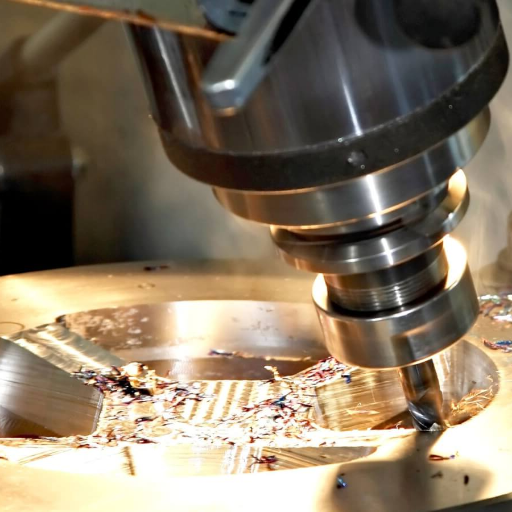
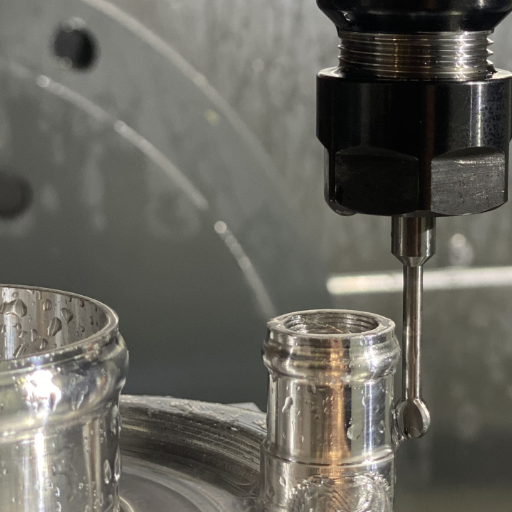
In CNC machining, undercuts are defined as the structural parts of a component that cannot be accessed easily through a standard tool cutting process. The machining process of such surfaces needs to involve the use of specific tools – like T-slot cutters or lollipop end mills, for instance – which can cut under the surface effectively. Although undirectional cuts often contribute to a design’s functionality or beauty, they tend to raise the complexity and hence, cost of manufacturing processes. As to internal cuts, the designers can either offer counteracting solutions via: redefining the part to get rid of the inaccessible areas or by applying new machining methods that are still to be discovered. It is therefore very important to always think of ease and manufacturability when coming up with new designs, as this will lead to production efficiency.
Undercuts are described as characteristics in a part or a structure that result in depressions or protruding areas which cannot be reached by standard machining tools like straight end mills. Undercuts are typically created for the purposes of interlocking components, mating parts in a design, or purely for aesthetics. They usually come with the requirement of specialized tools or multi-axis machining techniques to access and fabricate these areas effectively, thereby increasing the complexity of production.
Undercuts are often discussed as a problem in the design aspect in various manufacturing industries like injection molding, CNC machining, and 3D printing. Their presence necessitates the design phase to be very efficient and production-friendly so that no clashing happens and the parts are of good quality. The use of advanced techniques like modular design or custom tooling enables the manufacturers to conquer the undercuts while keeping the product quality and performance standards intact.
There are several types of undercuts in CNC machining, including T-slots, dovetails, grooves, internal threads, and hidden cavities.
Undercut features recognition is a paramount issue in the manufacturing and design processes since it guarantees the trinity of efficiency, precision, and cost-effectiveness. Among the undercut features are T-slots, dovetails, and grooves which heave up the necessity of specialized tools and machining techniques. An early recognition of these features in the design phase can be a lot of help in planning the tool access, setup, and machining strategies thereby avoiding production errors and making lead time shorter.
Undercuts can have an impact on the selection of the tool, the programming of the machine, and the part functionality. The inability to take care of undercuts properly can lead to problems such as improper fit, weakened structure, or increased cost of operation. The use of advanced design tools such as CAD simulations is the way to go since they help accurately model and assess these features and consequently optimize the entire manufacturing workflow. By recognizing these aspects, the assurance is given that the end product will comply with the precision and quality standards, hence there is no wastage of resources and long-term performance is improved. A proper grasp of undercuts is the key to inventing and maintaining quality in complex designs.
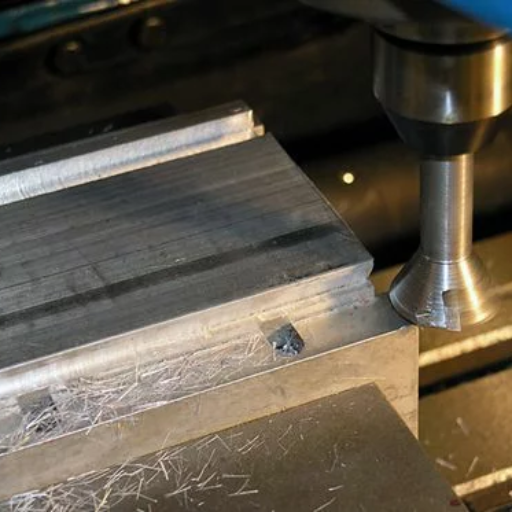
The access to tight and intricate areas with standard cutting tools is the main reason why undercuts can be difficult to machine. As a rule, the use of specialized tools is required, which adds a layer of complexity to the production process.
The necessity for custom setups and specific tooling can lead to a dramatic increase in machining times, which in turn lowers the overall productivity.
There is a possibility that the special tools for undercut machining will have a higher wear rate or breakage, thus contributing to the cost of operation.
It can be more difficult to keep precision in undercut areas because of the vibrations or the limitations in tool stability which can ultimately cause errors or defects.
The requirements of specialized tools, longer setup, and machining times together lead to increased production costs, which may affect project budgets.
CNC machined parts with undercuts have both functional and design implications. On one side, they might become the main features that allow the parts to be assembled into complex structures or to perform certain mechanical functions. But on the other side, they are a challenge that manufacturers must overcome during production. The machining of undercuts may result in using particular tools like lollipop or D-shaped cutters and the implementation of strategies like multi-axis operations that are difficult to access. The process may also take longer than usual and thus cost more since the production has to maintain the same level of precision.
Undercuts may be seen as challenges from the designers’ viewpoint that they would have to deal with the need for more support structures, machining paths and that their workflow would be complicated. If the situation is not dealt with properly, undercuts can pour down the structural integrity or even the functionality of the part. Furthermore, undercuts, if well designed and done, will let the engineers to break the limits in the performance and assembly capabilities of parts. Thus, undercuts will not only be a hindrance but also a source of new possibilities in the CNC machining world.
In parts with complex shapes, it is a common problem that the cutting tool cannot easily access the areas that are undercut. In the case of aerospace components with internal cavities, a wrongly planned undercut might force the use of additional tools or machining processes, hence raising costs and prolonging production time.
Undercuts in plastic injection molding may cause there to be areas of weakness if the design is not optimized. For example, snap-fit features with undercuts may become non-functional when subjected to stress because there will be lack of material reinforcement hence, the product’s durability will be affected.
Undercuts in die-cast parts can create a situation where the mold is not filled completely which in turn will lead to surface defects or voids. A good example of this is in automotive components such as engine casings where precise dimensions are critical.
Undercuts may also be a reason that assembly is more complicated. For example, in the case of consumer electronics; undercuts’ bad design in plastic housings may result in imperfect part alignment, thus causing more rework or more defects.
If they deal with these issues during the design stage, manufacturers will be able to cut down the risks and simultaneously assure that the production process is efficient and of good quality.
With undercut working, the very first thing to do is to ensure a simple yet functional design. Complicated shapes should be totally avoided as they might complicate the molding or machining processes. Moreover, always use angles of drafts so that the parts can be easily pulled out of the mold during production, and think about the placement of the parting line for not to affecting the assembly or the aesthetic finishes too much. Close collaboration with the manufacturers is necessary in such a way that the potential challenges are already spotted and the production process is made easier through the adjustments. The application of simulation tools can also be very useful in foreseeing and resolving issues, thus you will have a design that is not only of high quality but also economical.
Undercuts should be kept as shallow as possible to lower tooling complexity and provide easier part ejection during molding processes.
Appropriate draft angles should be incorporated to ensure smooth ejection, reduce mold wear, and hence, prolong the tool’s life.
If the undercuts are designed in such a way that they are easy to use with side actions or collapsible cores, the production cost and time can be reduced significantly.
Select materials that can endure the stress caused by the undercuts during manufacturing process, thus, ensuring durability and consistent quality.
Undercut features should be designed in such a way that they fit the assembly process, thereby, preventing any interference, misalignment or extra handling steps that can complicate production.
Mold design is one of the areas where sliding cores or lifters can be applied to reduce the formation of undercuts, expire the mold’s different functionalities, and at the same time, not add too much complexity.
The undercut should be able to come off without any difficulty or damage, so it is necessary to design undercut with the right angles or geometry to facilitate this process.
Extravagant features should be minimized as much as possible because, with simple shapes, a manufacturer can easily and cheaply produce.
For some applications, the possibility of using flexible materials is to allow undercuts to be stretched out during the demolding process without necessitating extra tooling.
Make good use of the inserts to make the details of the undercut, as they can make the mold design simpler and cut the costs, mostly by complex parts.
By means of these methods, the manufacturers can boost the power, quality, and cost-effectiveness of the designs with undercuts.
Undercuts in machining lead to problems that can be tackled only by using specialized tools coupled with advanced technologies that guarantee high precision and efficiency. The following mentioned tools and techniques are the most effective ones:
Custom end mills and tool inserts made for undercuts directly are very important for the accurate execution of the work and cutting down the possibility of tool breakage. With these tools, machinists can create intricate forms without compromising the surface quality.
These tools are meant for internal cutting of features such as grooves and undercut slots, thus making it possible to execute very accurate machining in the most difficult areas.
Computer-Aided Manufacturing (CAM) software, for example, Fusion 360 or Mastercam, can program machines at very high levels, enabling the efficient execution of complicated tool paths. Besides, this software allows the verification of simulations to avoid the machining of areas with mistakes.
5-axis and multi-axis CNC machines play a key role in the manufacturing sector of undercuts that are practically impossible to be done using traditional equipment. These machines not only allow tool flexibility but also let one adjust angles without needing to reposition the workpiece.
In the area of non-conventional machining, laser cutting or waterjet cutting technologies can develop very precise undercut shapes by eliminating any material. These techniques work particularly well with fragile or thin materials.
All these tools and technologies when used together can result in manufacturers being able to cut undercuts quickly while still delivering high-quality products and cutting down the total production time.
Undercuts can be formed accurately by the traditional methods and state of the art techniques plus the specialized tools. The primary methods include T-slot cutters, dovetail cutters, and lollipop end mills for the traditional method, etc. But if the geometry is really complicated or very delicate, then non-conventional techniques like EDM (Electrical Discharge Machining), laser cutting, or waterjet cutting are still highly effective due to the precision and the ability to work with difficult materials. Manufacturers can choose the right way according to the material properties and design requirements to get the undercuts they want with high accuracy and minimal production hurdles.
Undercut machining has often been a challenge leading to the requirements of specialized tools designed specifically for the geometric problems. Among the most common tools are the undercut end mills, having an elongated neck and uniquely shaped cutting edges to access and machine the areas that standard tools cannot reach. Another tool frequently used for this purpose is the keyseat cutter, sometimes referred to as T-slot cutters, which are predominantly employed to notch and groove even the most inaccessible regions. Custom tooling might also be an option depending on the material and design complexity to get the exact results. Proper tool selection brings around the benefits of efficiency, accuracy, and low material wastage.
The machining process of parts with undercuts needs to employ highly skilled techniques and special tools besides that it requires a lot of time to do accurate and efficient work. As a rule, the parts of the undercut are subjected to the use of either end mills, keyseat cutters, or lollipop cutters, and the selection of the appropriateness among them depends on the specified geometry and requirements. The advanced CNC machining centers of the contemporary world make use of the multi-axis capability to position the tooling at the exact angles required to reach the delicate spots. To add to this, the software of CAD/CAM is very important for it helps in the toolpaths and the possible errors, and optimizing the process, thus making the whole process more efficient.
In order to have the best possible outcome, manufacturers usually count on the integration of real-time data and quality control throughout the entire machining operation. Based on the degree of difficulty of the undercut, the application of wire EDM (Electrical Discharge Machining) might be one of the options for the use of such a technology that offers even more accuracy. Due to the improvements in the machining processes and the advancements in material science, the machining of even difficult undercuts has become a little less challenging and more feasible, which in turn can serve the high demand of such industries as aviation, medical, and automotive engineering.
Durable and accurate cutting tools specifically designed to work with undercuts should be purchased. Performance and tool life during machining can also be enhanced with coated tools.
Toolpaths need to be carefully planned so as to provide smooth transitions and precise cuts, thereby minimizing the movement of tools which may cause inefficiencies or inaccuracies.
In order to handle difficult undercuts, technologies such as 5-axis CNC machines and wire EDM can be applied for high access and accuracy.
Machines and cutting tools that are dirty, dull, or improperly heated should not be allowed because their situation will result in downtime and an uneven quality of production.
CAD/CAM and simulation software must be used to detect any potential difficulties in the machining process very early, so that changes can be made before the actual production.
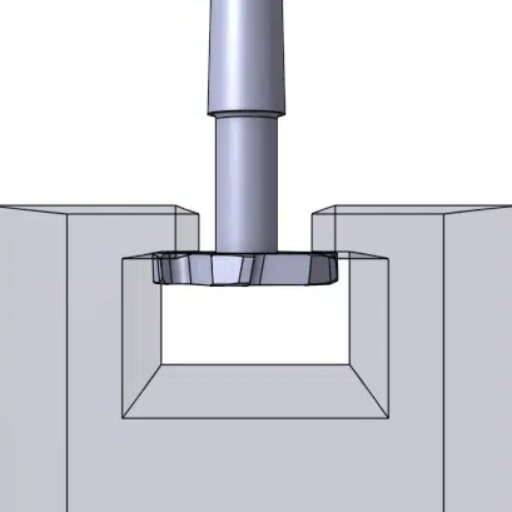
Designing undercuts without taking the reach and size of the cutting tools into account can create complications in machining or result in incomplete features.
Some materials could get deformed or even break due to the stresses imposed by intricate undercuts, hence producing defective parts.
Not taking into account the right tolerances in the areas of undercut can lead to the production of incompatible components or difficult assembly.
Lack of support during the machining operation can result in noise or shifting, thus impacting the quality of the final product.
The necessity of large production tools and longer cycles of machining drives up the cost and time for complex undercut designs among other factors.
To reduce the risks that undercut features bring about, a strategic combination of design methods, modern tools, and strong processes is needed. The first thing is to apply the latest CAD software for accurate digital representation of the undercuts which will then be the basis for proper tolerances and alignment. All through the design process, machinists should be in constant communication with designers, so that manufacturability is considered right from the beginning. Furthermore, supplying the right quality and kind of tooling, like angled tools and custom cutters, really minimizes the inaccuracies that are brought about by complex digitals. Besides that, incorrect support structures can lead to excessive noise or color changes, thus implementing the right support structures can help in controlling that.
Moreover, careful planning of both time and budget is also very important in minimizing unforeseen production costs. Engineers should work with simulation software to get an idea of the machining duration and also to discover the areas of difficulty that might arise during the process. Continuous quality assurance and trial manufacturing can confirm the design and point out those things that need to be fixed before the full-scale production starts. By mixing modern technologies, skilled expertise, and thorough planning, manufacturers can reduce hassle and at the same time obtain outstanding quality on the parts with undercut features.
Utilize accurate tools like coordinate measuring machines (CMM) or laser scanners for the purpose of verifying dimensions and validating the rightness in the undercut regions.
Make sure cutting tools are sharp and in their best state to avoid defects due to tool wear, especially in complicated undercut geometries.
Real-time monitoring should be adopted during production to spot deviations and to adjust accordingly, thus reducing the occurrence of expensive errors.
Conduct a thorough analysis and take a decision on materials that improve machinability while the required strength and durability of the component are kept.
The design and manufacturing process are validated by the creation of prototypes, which allow the early detection of potential quality problems before they reach the stage of mass production.
Contribute to the development of skilled operators and training on a regular basis to guarantee that machinery is properly handled and that quality standards are adhered to.
The effective implementation of these strategies aids in sustaining high-quality standards and in the assurance of CNC parts with undercuts reliability.
Digital Design and Fabrication Techniques Using a 3-Axis CNC Mill
Prototyping Guide for Engineering Students at The Ohio State University
Computer-Aided Tooling Design for Manufacturing Processes
Implementing Computer Numerical Control Machine Tools in a Job Shop Environment
Professional undercut machining solutions for your precision needs
CNC parts should not have undercuts when it can be economically reducing the cost of the production process via simplification, when it is practically possible to perform front or back standard machining for a similar purpose, or when the undercuts demand special tools whose supply is not extended by your machining corporation. For instance, re-designing to allow 45 and 60 degrees draft, employing tapered features and splitting one part into two assemblies are some of the ways to reduce the need for undercuts. In prototyping and high-volume production areas going for designs that do not entail access to complicated undercut regions will lower the cycle time and the necessity for custom machining or intricate CNC undercut tool setups.
The two principal types of undercuts are a one-sided undercut (which can only be reached from one direction) and a T-shaped undercut (which sets the… undercutting on the inside and requires special tooling). One-sided undercut is less complicated and is widely done using side milling or slot cutter tools, while T-shaped and complex undercuts in machined parts that have undercuts usually necessitate custom tooling, broaching, or secondary ops. It’s absolutely vital to determine precise undercut standards and whether the machining tools cannot reach the undercut without specialized equipment when coming up with component designs with undercuts.
In cases of making undercuts where the traditional tools cannot access, one option is to employ dedicated CNC undercut tool holders, slot cutter attachments, and angled end mills for precise undercut, undercut-specific broaches, or wire EDM for intricate shapes. Sometimes, vertical shaft attachments and narrow shaft tools can access tight undercut regions. Professional machining services or a machining company offering custom machining and machining CNC capabilities can recommend the best approach for machined parts with undercuts.
To be precise undercut features that meet precise undercut standards it is necessary first to have clearly stated dimensions for undercut areas, the specification of tolerances, and taking into account the diameter of the tool and the tool needed for making the feature. Specify undercuts with ranges for dimensions, draft angles, and surface finish. You should consult with a professional machining company to ensure that the tool can reach the feature and include notes about whether the undercut is meant for metal and plastic design or for certain machining services like EDM or slot cutter operations.
When functional or assembly needs require, recesses which standard profiles cannot provide up lift the necessity of using undercuts. Nonetheless, many undercuts can be eliminated by re-designing parts— for instance, features can be made removable, parting lines can be changed, or assemblies can be split up to avoid complex undercut machining. Ask yourself whether simple undercuts are enough or whether complex undercutting tasks justify the expenditure on specialized tooling and the addition of production steps.