

Supportive, Professional, Client-Focused Service
From prototypes to full-scale production, we’ve got you covered.



Choosing the appropriate aluminum alloy in CNC machining can make all the difference in the success of your project. The two most commonly used ones, aluminum 6061 and aluminum 7075, present entirely different properties and advantages that suit different applications. But then, how to tell whether one of them is right or otherwise? In the case of aluminum 6061, is it suitable? For what about aluminum 7075? Let’s compare aluminum 6061 versus aluminum 7075 in order to identify their strengths and weaknesses and the best field of application. Now, whether you value cost optimization, strength, or machinability, here is a guide that will give you the much-needed knowledge to make an informed decision.

Aluminum alloys are materials that are created by combining aluminum with various other elements to improve its characteristics. These are alloys that are manufactured to enhance traits such as strength, corrosion resistance, and machinability. Any possibility opens up for any use of aluminum that may come in the future.
The key elements that could be added to aluminum are magnesium, silicon, zinc, and copper, among several others. Depending on the specific combination of the elements, aluminum alloys can be placed into two main categories: wrought alloys and cast alloys. Wrought alloys are created by the mechanical working of aluminum into sheets, plates, or extrusions, while cast alloys are made by pouring metal into molds.
Aluminium alloys are often used in different products, for instance, in airplanes, in automobiles, for construction, and in electronics, due to their remarkable weight-to-strength ratio, corrosion resistance, and versatility. Their lightness helps in fuel saving during transportation and it makes them durable by ensuring a long-term performance in various environments.
The right alloy is crucial to ensuring the success and efficiency of any project. Different types of alloys have unique characteristics of strength, weight, corrosion resistance, and conductivity that make them valuable for specific applications. Therefore, choosing the right alloy is a matter of balancing these properties such that it fits the requirements of the intended use. For example, aluminum alloys with high corrosion resistance are used in sea-going environments, while those with higher strength would be more suitable for use as construction materials.
The selection of materials coupled with the appropriate production methods also implies long-term performance and cost-effectiveness. Use of an unsuitable alloy causes premature failure of mechanical parts, which increases maintenance and operational costs. Conversely, the right alloy choice will enhance durability, decrease repair requirements, and, in the end, improve productivity.
Moreover, environmental friendliness is now becoming a significant consideration in alloy selection. Many industries are in pursuit of materials that can be recycled or have low carbon footprints. Aluminum alloys have a particular edge because they are highly recyclable and also sustainable for material sourcing. Choosing the appropriate alloy needs a clear understanding of project requirements while balancing performance, costs, and sustainability while ensuring that the alloy in question provides both tangible performance now and tangible long-term benefits.
Among the most widely used aluminum alloys, the 6061 and 7075 aluminum alloys show unique properties that can be tailored to fit several applications. While both are valued for their strength-to-weight ratios and corrosion resistance, they differ in composition and characteristics, hence their diverse specific uses in different industries.
6061 aluminum can serve as an outstanding example of good versatile performance with offering moderate strength, good corrosion resistance, and good machinability. This makes it ideal for a wide range of applications that include structural components, aerospace parts, and automotive manufacturing. Its heat treatability and weldability further enhance its adaptability, making it a standard choice in conditions requiring equal stress on strength and workability.
The strength of 7075 aluminum exceeds that of many steel grades. The increased zinc content, coupled with the state-of-the-art heat treatment, ensures superior high strength. However, 7075 is slightly more prone to corrosion than 6061 is. Besides this, it is not a recommended option for welding processes. Expect primary industrial applications in high-performance areas such as aerospace, defense, competitive sports equipment, etc., where strength and durability come in as priority requirements.
Engineers and designers will also consider their needs while selecting aluminum alloys for use in these two ends. In retrospect, the mechanical strength requirement for certain applications as contrasted with corrosion resistance of the material and ease of fabricating should govern the basis for the choice for high-end applications in specific cases between 6061 and 7075.
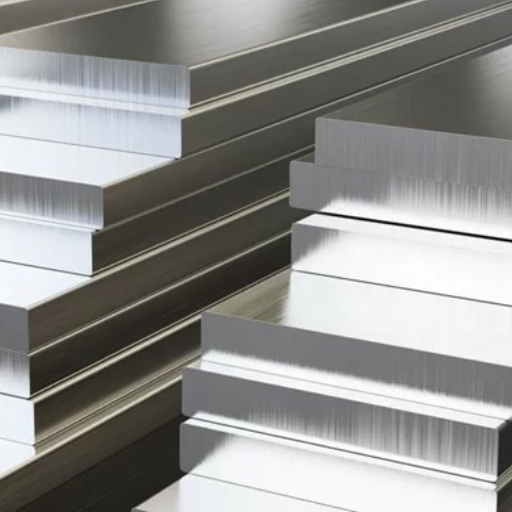
Aluminum alloys are known to lose their structure unless an otherwise applied tensile stress makes them difficult to break. One can clearly make a comparison on the basis of the tensile strength of 6061 and 7075 aluminum alloys.
| Property | Aluminum 6061 | Aluminum 7075 |
|---|---|---|
| Tensile Strength | ~45,000 psi | ~83,000 psi |
| Best For | General structural applications | High-stress aerospace & defense |
This extensive difference implies that 7075 is evidently flourishing in industrial applications that demand high strength, for example, aerospace parts and high-performance equipment.
However, although 6061 aluminum undoubtedly has lower tensile strength, still, it is like nothing the industry has ever seen in terms of an unusual broken feature—known to push all mettle toward great balance—is a measure of its potential for versatility. It renders strong resistance to corrosion, is easily weldable, and has commendable strength for an array of structural applications. Projects not requiring very high tensile strength often bestow laurel upon the 6061 series because of its resilience to abrasion, corrosion, and ease of handling and fabrication to withstand environmental factors.
The preference between 6061 and 7075 aluminum will depend on the specific requirements of the application. In a nutshell, 7075 aluminum will have a clear advantage if high tensile strength is put at a premium. However, 6061 aluminum will be preferred in applications where permissible strength in combination with corrosion resistance and cost-efficient manufacturing with great ease is needed.
When we compare the hardness levels of 6061 and 7075 aluminum, 7075 features higher hardness compared to 6061. In composition, this mainly owes to the amount of zinc in the alloy. 7075 has a higher zinc content, resulting in its higher hardness and strength levels. In contrast, 6061 is a very versatile alloy composed mainly of magnesium and silicon and has only moderate hardness, so it is suitable for applications requiring machinability and some corrosion resistance.
| Alloy | Brinell Hardness (T6 Temper) | Key Characteristic |
|---|---|---|
| 6061 | ~95 | Moderate hardness, excellent machinability |
| 7075 | ~150 | High hardness, superior wear resistance |
This pushes it out of possibilities with respect to its ability to withstand wear and endure severe service conditions, like aerospace or automotive parts. But the density of wear-resistant and harder compositions may correspond to a limited resistance to corrosion as compared to 6061.
Ultimately, the determination about using either of these two alloys ought to be based on the specific requirements of the application. If the requirement is for exceptional hardness and strength in the alloy, 7075 is a better choice. If moderate hardness, corrosion resistance, and easy fabrication outweigh other factors, then 6061 would be a more appropriate alloy.
Both Aluminum 6061 and Aluminum 7075 show unique corrosion resistance potential. Technically speaking, a corrosion solution has been worked out for Aluminum 6061 when it is used in an environment of moist air. This is explained by its composition and the elements, such as magnesium and silicon, that cause an oxide film to neutralize corrosion from farther.
On the other hand, aluminum 7075 can talk of poorer resistance. This one, with more zinc than 6061 is included to enhance its properties, and this actually makes it suffer from corrosion, especially in such environments as marine conditions. Just with protection coatings and surface treatment, the material remains prone to pitting and stress corrosion cracking when left for a long length of time in the presence of moist air or aggressive substances.
In the end, what you ought to be guided by is really the environment you find yourself in. For projects requiring strong corrosion resistance, for instance, say once in marine climates or humid climates, this could probably go in favor of using 6061 aluminum. By contrast, in applications requiring structural properties and where corrosion becomes a secondary issue, an option could be the use of 7075, provided that the available corrosion protection is possible in that situation.

Thermal conductivity is defined as the ability of a material to conduct heat. In heat exchangers or electronic enclosures, the material with higher thermal conductivity is all too crucial, leaving the aluminum 6061 and aluminum 7075 alloys behind.
Better thermal conductivity is displayed by aluminum 6061 compared to aluminum 7075. 6061 has a thermal conductivity very quantitatively 167 W/m-K while comparatively 130 W/m-K is what 7075 reflects. This indicates that, apart from anything, 6061 is an even better option when the consideration of heat impartance is also present, which would help this material easily with the constant mitigation of thermal energy while minimizing any kind of heating.
| Physical Property | 6061 Aluminum | 7075 Aluminum |
|---|---|---|
| Thermal Conductivity | 167 W/m-K | 130 W/m-K |
| Density | 2.70 g/cm³ | 2.81 g/cm³ |
However, the choice between 6061 and 7075 must take other material properties and operational requirements into account as well. While 6061 boasts exceptional thermal conductivity, 7075 is known for its greater strength and hardness qualities more crucial if the usage is structural. The vital thing is the balance between thermal performance and mechanical strength, which is very much needed in the optimization of the materials selected.
There is a marked contrast in the weight and density between 6061 and 7075 aluminum alloys: the density of 6061 aluminum is about 2.70 g/cm³, whereas 7075 aluminum is slightly denser with a density of about 2.81 g/cm³. So components made of 7075 would be slightly heavier with a similar volume compared to ones made from 6061.
That slight increase in density on 7075 is the result of a high number of alloying elements especially zinc, which thereby increases the overall strength of the material. However, for applications requiring weight to be minimized, 6061 might be recommended, provided that its current strength and ductility are appropriate for the intended design.
On the other hand, the selection should weigh the difference between the two material resources not based on weight alone but on the facets of each particular requirement of utility. If, for instance, a component has to show the give and take between lightness and resistance to high stresses, added weight with 7075 could be seen paradoxically very fair because of improved strength. On the contrary, for sectors where weight saving is their top-most requisite—be it transportation or aerospace—the low-density and hence weight of 6061 could be a big plus for it without compromising performance.
Of these two alloys, it is generally recognized that 6061 aluminum has the better weldability. This metallurgical characteristic of the alloy has been attributed to near universal compatibility with many welding processes, including the TIG and MIG processes. The 6061 alloy can be handled reasonably well under the welding torch with lesser worries of cracks showing up, something that is, however, contingent on the application of some heat treatment following the welding process.
Just the opposite, 7075 aluminum possesses a poor weldability property due to its high-strength option, which is vulnerable to stress-induced cracking. In addition, welding of 7075 can destroy some of the precious strength properties that need consideration and respect in some environments.
Based on machinability, 6061 and 7075 aluminum display good machining qualities, with 7075 being preferred mainly for high-precision machining tasks. Its machinability is fairly endearing: it permits smooth cutting, maintains close tolerances, and executes excellent finishes; hence, it is a favorite of industries producing precision complex parts. 6061 is also good for machining but is generally easier to machine because of its lower hardness which makes the aluminum more acceptable for general manufacturing when ultimate precision is not greatly essential.
With regard to machinability and weldability, the actual choice between 6061 and 7075 is in the hands of the project based on its individual application requirements. In welding and simplicity of fabrication, 6061 is preferable when used in the project, whereas 7075 may be conceptualized in any and various applications calling for extremely high strength and machinability, even under circumstances where weldability was not an issue.

When looking at prices for aluminum alloys, the 7075 variant is noticeably much more expensive compared to other alloys. This cost is a little compensation for the fact that its strength (it is known for this specifically) and the performance per unit volume of the special qualities the material possesses make it suitable for rigorously demanding applications. Such clogging is causing more advanced processing and advanced composition to be accomplished.
In contrast to these, the most common materials like 6061 would be less costly than 7075. They offer a good balance of strength, corrosion resistance, and machinability, making them a popular choice for price-sensitive applications. These materials are readily available and relatively easier to work with, thereby cutting down the cost overall.
A mix of budget and the project’s performance will decide which alloy should be used. While 7075 aluminum is valued for its high strength in critical applications, as far as key specifications for performance are not required in the project, the economically priced 6061 aluminum option can be considered.
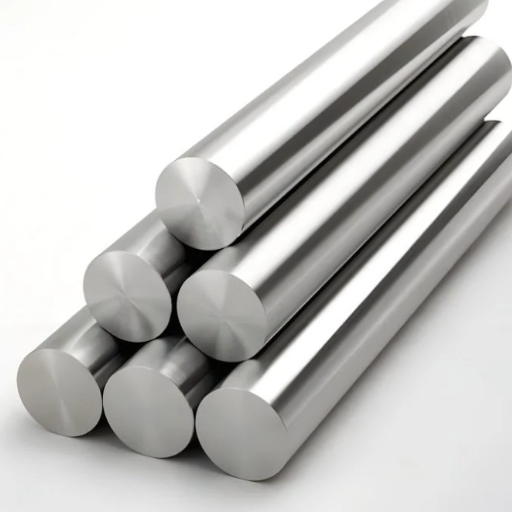
6061 Aluminium is a perfect choice for general-purpose projects needing a good compromise in terms of strong machinability and cost. This is why it is so commonly used in a variety of industries for its good corrosion resistance, excellent ease of machinability, and dependability. Thus it is an appropriate material for automotive parts, aerospace components, and consumer products. In addition, prototyping a product that does not require extreme strength is going to be cheaper to do with 6061 than with 7075 Aluminium.
In contrast, 7075 aluminum is best for machining parts requiring high strength and durability. It is extensively utilized in the performance-critical areas such as aerospace, defense, and high-performance automotive engineering, where materials must endure arduous stresses and harsh environmental conditions. Despite its higher cost, 7075 aluminum is known to give excellent performance under pressure, making it very necessary for applications focusing on strength-to-weight ratio.
| Industry | 6061 Applications | 7075 Applications |
|---|---|---|
| Aerospace | General aircraft components, interior structures | Aircraft fittings, wing structures, high-stress parts |
| Automotive | Body panels, chassis, frames | High-performance gears, racing components |
| Marine | Boat structures, marine fittings, hulls | Limited use (requires protective coating) |
| Defense | General equipment, non-critical components | Weapon systems, critical structural parts |
| Sports Equipment | Bicycle frames, recreational equipment | Competitive sports gear, rock climbing equipment |
| Consumer Products | Electronics housings, general manufacturing | High-end precision instruments |
Depending on the requirements of the project, both 6061 and 7075 aluminum are able to offer advantages to CNC milling. The choice is based on considerations like the desired mechanical properties, budget constraints, and the service environment of the end product. Opting for 6061 aluminum gives flexibility and cost savings, whereas 7075 aluminum is fascinating in applications where strength and endurance are critical.
Drilling is a core machining technique used to establish holes with due precision into a component. Unlike 6061 aluminum, drilling with 7075 aluminum requires the correct selection of tools, feed speeds, and cutting-speed designs to prevent surface damage. The softer 6061 aluminum is more forgiving under milder conditions, whereas the harder 7075 aluminum must be held to a much tighter structural constraint to remain cool and avoid tool wear.
Other than drilling, machining processes such as taping, threading, and milling are also used on these grades of aluminum. Due to its exceptional machinability, 6061 could be tailored during machining for complex setups and customization. However, while machining 7075 aluminum, the advanced tools and techniques may come into practice in respect of machining tools to mildly balance ingot defects, heat extraction, and surface finish while not compromising its superior tensile strength.
To get the cutting job done at its best end, such things as lubrication, chip removal, and tool maintenance must be seriously considered. One should do their best to eliminate trouble in the form of cracks, overheating, and rough finishes. This way, the aluminum grades considered do not matter; the best possible part is produced quickly and reliably.
The primary differences between 6061 aluminium alloy and 7075 aluminium are strength, toughness, corrosion resistance, and formability. For the common temper of 7075-T6, it is much stronger than a 6061-T6 alloy, for better yield strength and ultimate tensile strength—often nearly twice those of 6061-T6 for some tempers. 6061 is more formable and easier to machine, has better corrosion resistance or toughness, and is a popular aluminum grade for general-use applications, while 7075 has excelled in high-stress environments where strength and shear strength are critical.
6061 T6 is generally better for machining and formed applications because 6061 aluminum is easier to form and reacts to machining more predictably. While it has hardness that are less ductile than 6061, 7075 generally does not stand up as well to forming; it is typically stretch-formed and solution heat-treated and aged for strength to reduce its formability. If something needs to be formed and then heat-treated, then 6061 is the way to go.
6061 aluminum has better corrosion resistance and is commonly given anodizing for an enhanced oxide layer on the surface. Both alloys will impart a layer of oxide; the oxide layer formed in 7075 and its subsequent corrosion resistance is however, less than that in 6061 (temper T6). 7075 can be anodized, but the result has inferior corrosion resistance and poor contrast to the corrosion resistance on 6061-T6.
Yes, generally 6061 has a better thermal conductivity than the 7075 alloy, which can help in heat dissipation. In mechanical comparisons, 7075 surpasses 6061 in ultimate tensile strength and yield strength, although 6061 offers better elongation and fabricability. Physical properties-wise, 7075 shows higher hardness and strength, again 6061 has the advantage in heat distribution and welding.
Yes. Applications of 7075 include aircraft fittings, gears, and high-stress components where strength and shear strength matter. 6061 is used for structural frames, marine fittings, bicycle frames, and general fabrication where corrosion resistance, weldability, and formability are important. Choosing between 6061 or 7075 depends on whether you need corrosion resistance and toughness (6061) or the highest possible strength (7075); 6061 comparisons show 7075 excels in strength.