

Supportive, Professional, Client-Focused Service
From prototypes to full-scale production, we’ve got you covered.




The wall size, which constitutes a major aspect favoring the prosperous development of aluminium CNC-machined parts, plays a significant role. The adequate thickness of the wall is important elsewhere to help keep the structure part being complete; to avoid warping during machining; and to keep with low chances of it vibrating or failing. If the wall is too thin, then with machining it will warp, and when it is thin, those walls are used, they involve costs. And another disadvantage is that the material is excessive. In general, it is easier to look at aluminum when applying wall thicknesses, beginning with a minimum of, say, 0.8 mm for milled parts and 1.5 mm for turned parts-but that could also be changed in line with design and specification demands. Manufacturing methods can expect success best when there is a right balance between strength and manufacturability; the area where an option close to perfection is attainable is broad, indeed.
One of the key aspects that is considered when reviewing a component’s design is the thickness of walls due to the effect it has on its strength, life span and the ease of manufacturing it. Engineering a part that has very thin walls might offer some advantages like reduction of mass and weight however this might be to the detriment of its capability such as, subsequent machining or mechanical load may cause distortion or dimension variation. On the opposite side of the spectrum, parts may have thicker walls to make them more resistant to damage but that comes with a price, higher material usage, longer cooling cycles in case of molded parts, and additional problems such as sink marks in plastic elements.
The performance of the design is only as good as the materials used, their application, and the manufacturing technique. As an example, metals like aluminum necessitate machining to achieve certain minimum thicknesses lest the piece should have weak sections; this is for example 0.8mm for turning and 1.5mm for milling. Although plastics are injection molded, these parts cannot build up walls because this will cause stresses, gas pockets or other defects within the product later. It is therefore such factors that make it possible for parts to be manufactured at a reasonable cost and at the same time satisfy design requirements.
When it comes to aluminum machined parts, the advised wall thickness shouldn’t be less than 0.8mm. This helps in maintaining the material preference and durability, although it is not without course of unearned transformations during production. Larger elements and those that will experience more load may call for thicker walls. This thickness ensures good performance and manageable machining of the part.
Wall Thickness Guidelines for CNC Machined Aluminum relate to exploring options in fabricating aluminum details by making several arguments. Thin wall aluminum offers green technologies as it consumes less materials, presents lower weight and cost of producing items. With everything in place, lightness of thin walls becomes a guarantee in all activities such as aerospace, automotive and even in electronics where weight is a factor to consider. Machining thin walls, however, is not without difficulty, since the part can possibly deform, vibrate, or develop a poor surface during machining. This, therefore, calls for the need to choose the right tools, employ parameters and supporting techniques to eliminate such variances. It is vital to the success of any such designs that the pros and the cons are well considered.

The efficiency of a CNC machine greatly depends on the materials used as well as the quality of the output. The hardness of the materials used will affect the choice of materials, machinability, transfer of heat and deformation, among other things will all play a role in the material selection. For instance, aluminum, being a soft metal can be easily machined however the strength may be low, while titanium or steel which is hard do not contain machining characteristics that allow for easy tool changes. To avoid this, the machinist needs to know the features of the component material to ensure the cutting tool will serve for a longer period, the process will not take too long and the finishing will not be bad.
Material properties of aluminum play a prominent role during any design or manufacturing wall thickness decisions. As a very soft material, aluminum does not break or crack greatly when shaped into thin walls. The strength of aluminum is obviously quite lesser in comparison to other materials, and if the walls become too thin, they would lead to unsteady characteristics of the structure. The alloy of access is also important to consider in this case: some aluminum alloys like 6061 and 7075, for instance, comprising better strength and durability than normal aluminum yet easily machined.
Aluminum’s thermal conductivity is also worthy of attention in forms of heat dissipation relevant to extrusion and machining. High conductance can dissipate heat throughout local zones and further lengthen thin walls, when unregulated. Also, the nonreactive nature of aluminum allows the utmost thinness to be achieved even if these qualities decrease with other metallic materials. Appropriate regulation of these characteristics allows the necessary thickness required to meet the functional needs of the part to be determined while enabling the highest level of effectiveness and capacity under manufacturing circumstances.
In contemporary parts design aluminum alloys have a lot of importance in that they are varied and flexible. As required, different alloys alter the strength, corrosion resistance or even ability of a certain material, which in other words enables a designer to use a fitting one. Consider for example the transportation industry that is locked in attaining the lowest weight possible that would be structurally sound with this purpose there are certain alloys, specific for the industry, and others to enhance the durability for construction purposes. Because each and every selected alloy affects the performance, cost and service life of the design, the importance of specification of the most suitable material for the application cannot be overemphasized.
Machinability and strength-to-weight ratio play a huge role in the manufacturing efficiency and product performance when selecting materials for CNC machining.
Machinability is about how easily the material can be cut, shaped, and finished by a CNC machine. With numerous materials with high machinability, such as aluminum, brass, and certain plastics, it is usually faster for Production, finishes smoother, and less tool wear. The cost-effective material options are those which have greater machinability. On the other hand materials that are generally harder like stainless steel and titanium require specialized tools and might make it take longer to machine an end product, because of their lesser machinability. Recent tooling technology advances, including coated cutting tools, have considerably improved the machinability of many materials that were previously seen as difficult.
It is especially important in the automotive, robotic, and aerospace industries to maintain structural integrity while minimizing weight, as exemplified by the ratio of power to watts. It is in high-strength-to-weight ratios that titanium alloy, or Ti-6Al-4V, excels, making it suitable for high-stress applications. While aluminum alloys assuage less strength compared to titanium, using aluminum will necessarily help in packing weight since it is less dense. Choosing the ideal material for a project poses a dilemma and should leave just enough room for compromise to be profitable while still functional.
By maximizing the machinability as well as the strength-to-weight ratio, one can optimize material performance in many ways, thus defining the ultimate value of varying sectors within the economy.
Achieving the optimal wall thickness is very important while using aluminum as the machining material to keep its structural integrity so that the main memory part is not distorted by any cause such as deformation or inaccuracies. Typically, a recommended minimum wall thickness of 0.8mm is considered for aluminum parts used in coring from CNC tooling, although the numbers can vary depending on the particular application and design needs. By using thicker walls, the strength of the material will be increased in favor of meeting the machining stress, with natural increase in weight and materials. Therefore, the right balance between strength and weight should be identified. It also becomes crucial to use tooling precision and machining strategies to ensure that intricate features work as intended, given the fact that this can cause manipulation of material quality.
A few design recommendations can be followed for CNC machining with Aluminum to have improved efficiency and quality. It is highly popular due to improved strength-to-weight ratio, machinability, and Avi-on resistance, but one should design from the best practices for better outcomes.
In following these guidelines, the designer is able to improve the manufacture, save on the cost, and further attain qualitative aluminum production components.
The choice of machining tools is a greatly determining factor in the attainable wall thickness in aluminum parts. It is directly proportional to precision, tool choice, and tool condition. Quality tools like carbide mills and precise drilling give even better tolerances and uniform wall thickness, particularly in workpieces that have thin walls. The current level of CNC technology provides higher control over material removal, thereby reducing distortion in the aluminum material.
An above all, when cutting thin walls, tool rigidity, feed rate, and cutting speed are factors to be taken into meticulous control so that the part does not undergo any twisting or vibration that could weaken the structure. Accordingly, use of adaptive machining methodologies-implying dynamic toolpath generation and cutting strategies that are optimized for cutting angles-calms down the pressures on the material. Such modern techniques see to it that even intricate designs with thin walls are not lost on their strengths and dimensional accuracies, successfully striking a balance between performance and manufacturability.
As for precise tolerances for CNC machined aluminum materials, various drawbacks exist. The moldability of aluminum materials is very high, which is a headache because every hit or whirl is a dent to the dimension tolerance of the workpiece. Vibration, especially during cutting, introduces significance to the integrity of the surface, and then the precision becomes difficult to maintain. Wear of cutting tools might bring into play possible variations beyond control or imperfections in machining. Also, the variable material properties of different aluminum alloys necessitate variation in machining parameters, thereby rendering machined outcomes unpredictable. Hence, it is important to copeur with the various constraints and turn them to an operation that enhances tool life management and is suitable for improved cutting strategies and thermal manageability.
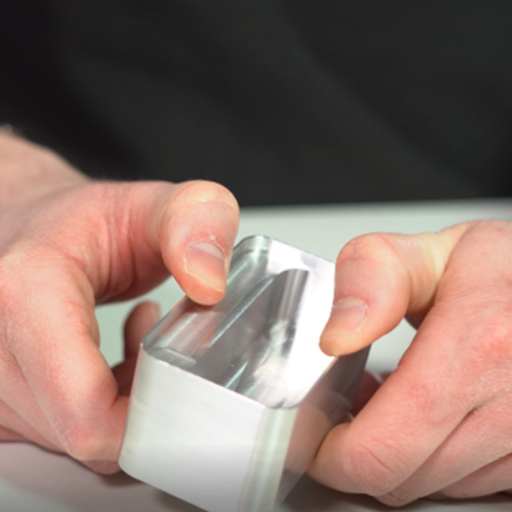
Excessive cutting force leads to tool deflection, which causes dimensional inconsistencies, particularly when faced with thinner walls.
The particular alloy of aluminum has the potential to severely affect machinability and hence the possible wall thickness as-well, including variations in strength and rigidity.
The CNC parameters, namely the feed rate, cutting speed, and depth of cut dictate and influence significantly on stability and precision of the machining of thin walls.
The lack of rigidity in the setup or tooling vibration disrupt wall thickness uniformity rayasetera.
Complex geometries and sections that are unsupported will make it very hard to maintain uniform Wall Thickness and accuracy during machining.
The issue of material strength is a major determinant of the machinability of thin walls. If material is strong, then it is resistant to any deformation which may come about during processing, with the attendant higher values for tolerance and reproducibility. However, if the material is too stiff, difficulties arise into the area of greater tool wear or the machinability can become an issue. In contrast, conversely, if the material is comparatively softer, the processing becomes easier but this puts the part into a very unstable, wobbly situation that could lead to wall thickness non-uniformity. It is important that a material be chosen keeping in mind that the strength characteristics must be balanced in balance to set and achieve the reliability and similarity in results.
Several variables related to the actual machining process directly influence the thickness of the wall achievable during the production of an aluminum component. The thin walls might end up rocking with the processing vibrations during the cutting process and subsequently lead to inaccuracies or uneven surfaces. That capacity to maintain the structural integrity of thin walls is important because cutting speed, tool geometry, and machining strategies severely limit the milling of thin walls. High-speed cutting with optimized tools is one way to greatly reduce the risk of deflection; nonetheless, too much pressure from the tool may jeopardize the material as well.
A major drawback is an associated thermal expansion and heat generated during machining. While aluminum has a high thermal conductivity, this local heat can distort the material, mainly focusing on thin-walled parts, making obtaining precision highly challenging. Sophisticated cooling systems and effective lubrication are absolutely crucial to tackle this issue.
Typical guidelines are used for CNC machined products: a critical wall thickness of 0.8-1.5 is prescribed for aluminum. Developments in modern technology and cutting tools, however, have rendered thinner walls obtainable by applying primary techniques; these latter seek to curtail the limitations of processing. In summary, optimising toolpath parametrisation, thin-wall support (e.g., fixturing), and ongoing simulation software is very crucial to perfecting wall thickness.
The sharpness of internal corners determines the thickness that can be attained in the manufacture of a particular part by CNC processing of aluminum. Sharp corners will induce severe stress concentrations endangering the component strength, thus being as seen potential causes of failure. Larger internal radii are called for in machining operations to mitigate this because they exceed the tool radius.
Reducing the corner radius actually contributes to less tool wear, smoother transitions, and less vibration during machining, all of which increase accuracy and precision by helping in the bettering of thin walls. Ensuring even distribution along the contours in the design also helps relieve all stress, thus preempting possible warping or deformation in thin-wall features too. Observing these pointers in design in machining the inner corners ensures a good arrangement between stability and machinability.
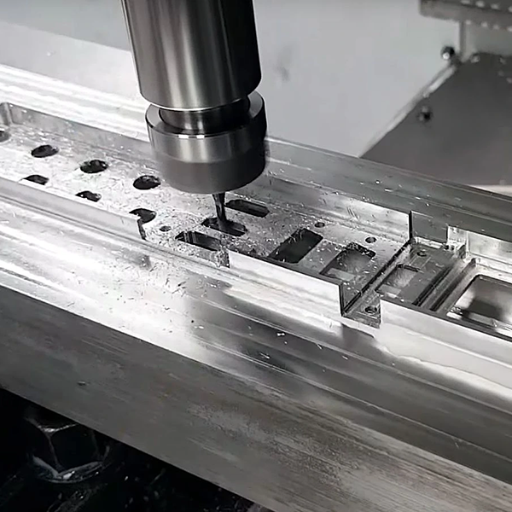
If one is to fashion milled aluminum components, then it should be must: thence, material thickness and uniformity should never be disregarded to prevent making or distortion during machining. Correct radii rounded internal corners are paramount to avoid stress concentration and tool wear. Also worth considering are standard hole sizes and thread-diameter sizes in order to simplify manufacturing and yet would make the resulting product structurally sound and viable. The perfect distribution would lead to a well-balanced design: optimizing aluminum parts in function and cost-effectiveness.
The integral structural durability as well as the component durability of aluminum sections is contingent on the material properties as well as considerations in designing. This is to say, aluminum exhibits a rather inborn feature, which allows it to be used in a relatively wide variety of applications involving lightweight and a high strength-to-weight ratio. Evidently, the proper choice of the aluminum pre-alloy is thus of prime importance in any given case. Annealing and solution treatment heat treatments are additional methods employed to improve the mechanical characteristics.
One of the most common questions is how one maintains the structural integrity while decreasing the weight. The best approaches include employing finite element analysis (FEA) during the design phase to simulate stress and load conditions, optimizing part geometry, removing non-essential material, and incorporating ribs and gussets where needed. When adopted naturally and together, the mentioned methods offer lightweight yet robust aluminum components compatible to high-performance applications.
Wall thickness affects the manufacturability of aluminum parts a lot. In terms of material usage and general weight, a thinner wall would be better, leading to material, energy, and therefore cost savings and functional benefits. Having said that, too thin walls could pose a challenge in manufacturing due to less resistance to warping, poor tolerances, and thus, weakened structural integrity.
Thicker walls, on the other side, are good strength and durability solutions when there is some extra weight and cost of material to be generated. They tend to slow down the cooling rate during casting or extrusion, which has its own repercussions on production efficiency. To increase manufacturability according to both cost and performance, one needs to adhere to benchmark wall thicknesses provided by the chosen manufacturing segment. The combination of strength, weight, and manufacturability would support the generation of high-quality aluminum products.
Maintenance of thin walls while working on CNC aluminum machining-though they remain challenging when creating dimensional lightweight parts-exceeds the close (no) consideration for manufacturing of thin, large parts. The major considerations among the guidelines mentioned are:
It is important to use aluminum alloys like 6061 and 7075 mainly due to the strong metallurgy, with excellent machinability and property of strength-to-weight ratio making them ideal for a thin wall.
Use high-quality cutting tools for most excellent properties such as sharpness. Your feed rates and spindle speeds need to be close to the optimization, and also must be set so very well to immerse in sometimes thinner walls due to vibrations that could damage the wall accuracy or flatness during machining.
Pay attention to the wall thickness to height ratio so that the part can maintain ideal dimensional accuracy; deformation or structural failure can be prevented during the machining process. An initial wall/thickness-to-height ratio of 1:10 is suggested.
Hold the aluminum piece in such a way that the maximum possible resistance to movement is offered. Dampers, etc., might be used during machining to reduce the vibrations and to stabilize the thin-wall section.
Consider removing material incrementally in several cut passes as to avoid known big cuts; thus this will lead to lower internal stress due to agglomeration of processing chips, while promoting dimensions’ true accuracy.
This practice will enable to effectively manufacture thin-walled aluminum parts conforming to both performance and aesthetic requirements.
Thin Wall Milling at a Maximized Axial Depth of Cut – PMC
Milling of Thin Walled Components from Aluminum Alloys
Machining of Thin Walls and Thin Floor Aerospace Components Made of Aluminum Alloy
IRJET: Thin Wall Machining of Aluminum Alloy – A Review
Rendering of CNC machined aluminum parts, the wall thickness can be between 0.5 mm-1.5 mm in thin-walled features, though a better design guide generally recommends 1.5-2.0, if manufacturability is to be balanced with strength issues. When thinner than 0.5 mm, walls up to 0.45 mm are relatively alright and a lot more common. Yet they would be tough to machine, could require special fixtures, and are more expensive. In all cases, 0.45 mm is the point of diminishing returns in design work for construction. Strive and ultimately raise material removal rate to the level commensurate with ADA. Is a thinner wall acceptable?
Thin-walled parts and deep pockets likely will suffer from vibration and deflection during CNC machining; hence, the surface finish will suffer and achieving tight tolerances might be problematic. In parts that are machined from aluminum and brass and similar metals, adding some slight thickness or adding some supporting ribs would be the trick to getting them stiffer for the tight tolerances, besides the fact that it would also avoid multiple setups. When constructing the design specification, it is good practice to round off internal corners for stress relief; this will benefit tool life and surface finish even in a comparatively simple procedure.
With regards to the question of minimum width or walls, that would depend on material used, machine, station, and mill. The general rule is that recreational walls should have an 0.8 mm-1.0 mm of wall width to achieve reliable results for aluminum. Achieve a minimum of 0.5 mm only when using smaller diameter tools, little cutting forces but less cost, and possible rework acceptance. Increase the thickness around the wall for cylindrical features or tall thin walls to prevent the inclination and vibration.
Machining thin-walled parts is especially challenging when wall thicknesses less than 0.5 mm to 0.8 mm are required over large unsupported spans, or where narrow tolerances are necessary. Such designs cry out for several operations, fixtures, slow feed rates, small cutter diameters, which raise the direct and indirect costs of machining and increase the risks of scrap due to deformation or chatter. Other processing possibilities for extremely thin or complex geometries would be 3D printing, but it is also worth considering redesigning to include reinforcement.
Aluminum and brass offer two different paths in machining with aluminum, being softer with more likelihood of deflection in thin walls. Brass, on the other hand, delivers better surface finish but may be heavier. Temperature may increase or decrease significantly during machining. Thermal expansion may ruin the tight tolerances during machining. As high-precision precision parts are being manufactured in production, thermal compensation should be taken care of and a range for wall thickness, minimum, and maximum, should be determined in order to control thermal effects and stability.