

Supportive, Professional, Client-Focused Service
From prototypes to full-scale production, we’ve got you covered.



Aluminum is widely used across industries for its lightweight, durability, and versatility. However, protecting aluminum surfaces against corrosion while maintaining conductivity and preparing them for subsequent processes such as painting or bonding presents significant challenges that require specialized treatments.
Chemical conversion coating—known as Alodine—is one of the most reliable methods for improving performance and extending the life of aluminum components. Whether you’re a manufacturer, engineer, or industry professional, understanding this breakthrough in metal finishing can provide valuable insights to optimize the performance of aluminum parts.
✓ Enhanced corrosion resistance
✓ Improved paint adhesion
✓ Maintains electrical conductivity
✓ Industry standard compliance

Alodine coating is a chemical process used to protect aluminum surfaces against corrosion and enhance the adhesion of paints or primers. This technique involves applying a conversion coating that extends the lifespan of aluminum while maintaining its electrical conductivity. The aerospace, automotive, and electronics sectors are primary users of this metal-finishing technique, where reliability and longevity are essential.
Industry Recognition: Alodine is recognized for its efficiency, cost-effectiveness, and compliance with numerous industry standards across multiple sectors.
Alodine is a chemical treatment—also called a chromate conversion coating—primarily applied to metals such as aluminum to enhance their properties. The coating produced by this process is skinny and, unlike anodizing, does not alter the metal’s dimensions, enabling precision applications.
This process has found its way into aerospace, automotive, military, and electronics industries as it offers durability, reliability, and conductivity. Modern Alodine formulations incorporate both hexavalent chromate-based coatings (e.g., Alodine 1200) and safer, more environmentally friendly trivalent chromate products aligning with rigorous safety and regulatory standards.
Such coatings are considered indispensable for extending the service life of metal parts, even under harsh conditions, providing reliable protection while maintaining critical electrical and dimensional properties.
Chemical conversion coating is a process that applies a surface treatment to metals, thereby increasing their corrosion resistance and improving their paintability. Aluminum, zinc, or magnesium are coated, and their surfaces are chemically altered to form oxides by reacting them with solutions composed of chromates, phosphates, or other compounds.
The resulting surface features a protective coating that resists environmental degradation, thereby prolonging its service life. Chromate conversion coatings, such as Alodine, are widely used for their excellent corrosion resistance and high conductivity, making them essential in the aerospace, automotive, and electronics industries.
Due to regulatory changes, manufacturers have developed trivalent chromate solutions that are safer, more environmentally friendly, and perform as well as original chromate coatings, while addressing environmental and human health concerns.
Understanding the differences between Alodine and anodizing helps manufacturers select the appropriate surface treatment for specific applications. The following comparison highlights critical distinctions:
| Key Point | Alodine | Anodizing |
|---|---|---|
| Process | Chemical coating | Electrochemical |
| Purpose | Corrosion resist. | Corrosion resist. |
| Thickness | Thin | Thick |
| Durability | Moderate | High |
| Appearance | Limited colors | Multiple colors |
| Cost | Lower | Higher |
| Eco-Friendly | Moderate | High |
| Adhesion | Improves paint | Improves paint |
| Typical Use | Aerospace | Architecture |
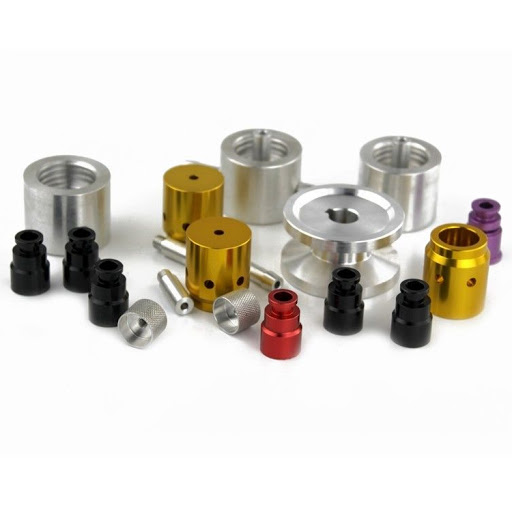
There are primarily two main types of Alodine coatings—Alodine 1200 and Alodine 5200—each with distinct properties and applications suited for different industrial requirements:
| Key Point | Alodine 1200 | Alodine 5200 |
|---|---|---|
| Type | Chromate | Non-Chromate |
| Eco-Friendly | Moderate | High |
| Color | Gold | Clear |
| Corrosion | High resist. | Moderate resist. |
| Adhesion | Improves paint | Improves paint |
| Cost | Lower | Higher |
| Use | Aerospace | General Ind. |
Alodine 1200 and Alodine 1201 are the most common chromate conversion coatings used on various metal surfaces to improve corrosion resistance and maintain electrical conductivity. Alodine 1200 is typically applied to aluminum and its alloys by immersion or brushing, resulting in a gold-like coating with exceptional durability.
Alodine 1201 is considered a lower-concentration but still highly effective option for brush application. The product is particularly convenient for touch-ups or smaller-scale applications, and although the coating appears lighter, it retains all the corrosion-resistance properties of the main product.
MIL-DTL-5541F Approved: Both products are approved to MIL-DTL-5541F, making them reliable solutions for industrial applications requiring conductivity, longevity, and protection against environmental degradation.
| Type | Standard | Color | Use | Key Feature |
|---|---|---|---|---|
| Alodine 1200 | MIL-DTL-5541 | Gold | Industrial | Corrosion resist |
| Alodine 1201 | MIL-DTL-5541 | Lighter | Touch-ups | Easy apply |
| Alodine 1500 | MIL-DTL-5541 | Clear | Specific parts | High precision |
| Alodine 1600 | MIL-DTL-5541 | Gold | Broad | Versatile |
| Alodine 5200 | REACH Comply | Clear | Eco-friendly | No chromium |
| Alodine T5900 | REACH Comply | Clear | Advanced build | High adhesion |
Increased corrosion resistance extends the service life of aluminum parts in harsh environments.
Paint adhesion is very high, significantly increasing coating durability.
Various applications can be addressed with custom formulations to meet specific requirements.
Use of Alodine 5200 reduces environmental impact and is an eco-friendly coating option.
Simple application methods make touch-up and maintenance processes fast and efficient.
Alodine creates a chemical bond with the metal surface, making aluminum parts highly corrosion-resistant through a protective coating. Corrosion slows significantly when the metal is no longer exposed to air and moisture, the primary environmental factors that drive it.
The coating enables easy application and is highly compatible with paint systems, providing long-lasting metal protection under various conditions and applications.
Alodine is crucial in improving bond strength for paints and primers applied to aluminum surfaces. Through chemical treatment, Alodine alters the aluminum surface, forming a chromate or non-chromate layer that improves bond strength between the metal and the coating.
Industry Data: Research signifies this practice is heavily used in automotive, aerospace, and manufacturing industries where durable, long-lasting finishes are expected. Higher adhesion means longer coating life, reduced maintenance, and improved overall performance.
Aluminum coating and its preparation processes prioritize minimizing environmental impact. Industries adopt environmentally friendly practices, such as reducing the use of harmful chemicals and switching to water-based coatings instead of solvent-based coatings.
These options generally produce fewer VOCs (volatile organic compounds), enhancing air quality. Moreover, aluminum recycling is widely practiced because it is 100% recyclable with no loss of properties. By focusing on sustainability, these methods help reduce waste and conserve resources while keeping environmental protection objectives aligned.
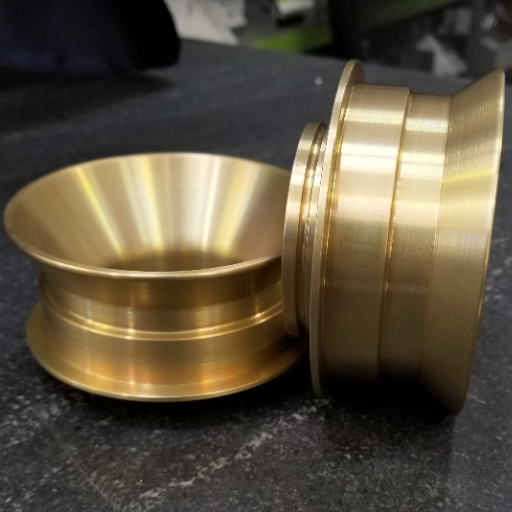
Alodine coatings serve numerous industries requiring superior corrosion protection and reliable surface preparation. The following sectors benefit significantly from this advanced coating technology:
Alodine coatings are indispensable in aerospace due to their exceptional ability to enable materials to withstand harsh conditions while providing corrosion resistance. Applied to wings, landing gear, and fuselage components.
Standard in automotive for protecting and extending the life of metal parts. Acts as a guard against rust on the chassis, underbody, and other components that suffer from harsh conditions.
Essential in the electronics industry for protecting sensitive components and metal enclosures. Maintains electrical conductivity of aluminum while preventing corrosion on circuit boards, connectors, and heat sinks.
Applied to parts exposed to saltwater environments, providing reliable protection against corrosion in maritime applications where environmental conditions are particularly aggressive.
Used extensively in construction for architectural features, such as aluminum facades and structural components that require weather resistance and aesthetic longevity.
Often applied to protect wind turbine parts and solar panel components, where the ability to withstand weathering is a characteristic that keeps them functional in the most challenging conditions.
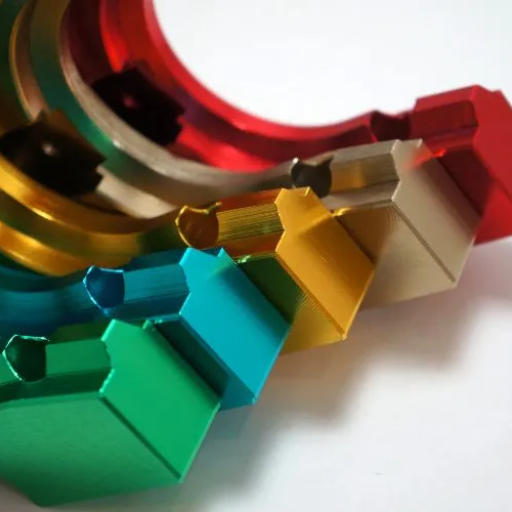
The Alodine procedure follows a systematic set of steps to ensure optimal coating quality and performance. Understanding each phase is essential for achieving reliable, long-lasting results:
Aluminum parts preparation involves several critical steps to ensure optimal performance and longevity. Initially, surfaces are thoroughly cleaned to remove dust, grease, and other impurities. This step is necessary for coatings or treatments to bond perfectly. Aluminum is typically either etched or lightly abraded to increase surface texture, thereby facilitating coating application. Ultimately, appropriate chemical treatment provides corrosion resistance while preparing surfaces for subsequent processing, such as painting and priming.
Alodine coating application involves meticulous techniques to ensure optimal performance and uniform coverage. After deep cleaning to eliminate all contaminants, the Alodine solution is applied through dipping, spraying, or brushing. Method choice depends on the aluminum part size and shape:
The coating reacts with aluminum over time, forming a protective, corrosion-resistant layer. After the reaction, the areas are rinsed with water to remove any residual solution.
Once the Alodine solution has been used and the excess rinsed off, the surfaces must be adequately dried. Air-drying is usually sufficient for small parts, while controlled drying, such as oven drying, may be required for larger or precision parts. This guarantees coating cures uniformly and sticks firmly to aluminum surfaces. Curing imparts the protective layer with fully corrosion-resistant properties, making the parts ready for subsequent applications or use.
Critical Compliance: Adhering to manufacturer specifications and safety regulations at every step is vital to achieving coatings that are both long-lasting and efficient.
Alodine finish is a chemical conversion process producing a thin chemical film on aluminum part surfaces to enhance corrosion resistance. Often called a chromate conversion coating for aluminum, this coating reacts with the aluminum oxide layer to form a protective coating on aluminum alloys used in manufacturing. The resulting conversion process includes a film that not only protects aluminum from corrosion but also improves the adhesion of subsequent coatings, such as powder coat or organic coatings.
Chem film is a catch-all term for chemical conversion coatings on aluminum and, in practice, refers to Alodine-type treatments. Various chromate conversion coatings exist, with MIL-DTL-5541 Type II as a standard specification. Some chem film historically contained hexavalent chromium; however, modern formulations and industry standards increasingly favor trivalent chromate to reduce health and environmental risks. Always verify product data sheets to determine whether particular conversion coatings contain hexavalent chromium or are hexavalent chromate alternatives.
Aluminum conversion coatings, such as Alodine, apply thin, fragile layers to metal surfaces, rather than forming oxide layers through anodizing. Anodized aluminum is produced via electrolytic processes that accelerate the formation of aluminum oxide to enhance wear and corrosion resistance. In contrast, chromate conversion processes chemically convert existing oxide into a protective film. Conversion coatings often enhance corrosion resistance while maintaining conductivity and paint adhesion, making them preferred pretreatments before powder coating or organic coatings on metal parts.
The key difference between Alodine and anodized aluminum lies in their protection mechanisms and thickness. Alodine is a chemical conversion coating that forms a thin chromate-containing layer on aluminum oxide, providing corrosion protection and paint adhesion with negligible dimensional alteration. Anodizing is an electrolytic process that thickens the aluminum oxide layer, creating tougher, more wear-resistant surfaces with a range of aesthetic options. The decision depends on the required protection level, whether conductivity must be maintained, and the required post-treatment.
When applying conversion coatings, bare aluminum or aluminum with its natural oxide layer is typically the surface; anodized aluminum already contains thick oxide layers formed by electrolytic processes, so chromate conversion coatings are generally not used on anodized surfaces. Instead, anodized parts rely on the anodized finish for protection. When coding metal parts, manufacturers choose the process best suited to the intended performance requirements for corrosion resistance, adhesion, and appearance.
Chemical conversion coating (Alodine) is a proven, reliable method for enhancing the performance of aluminum parts across diverse industrial applications. By providing superior corrosion resistance, improved paint adhesion, and maintained electrical conductivity, Alodine coatings extend component lifespan while meeting stringent industry standards.
Whether in aerospace, automotive, electronics, or other demanding sectors, Alodine coating technology continues evolving with environmentally friendly formulations that maintain high performance while addressing safety and regulatory requirements. Understanding proper application techniques and selecting appropriate coating types ensures optimal results for your specific aluminum protection needs.
Conversion Coating Chemicals for Aluminum – Alodine 404