

Supportive, Professional, Client-Focused Service
From prototypes to full-scale production, we’ve got you covered.


Updated: March 2026 | Reading time: ~12 min
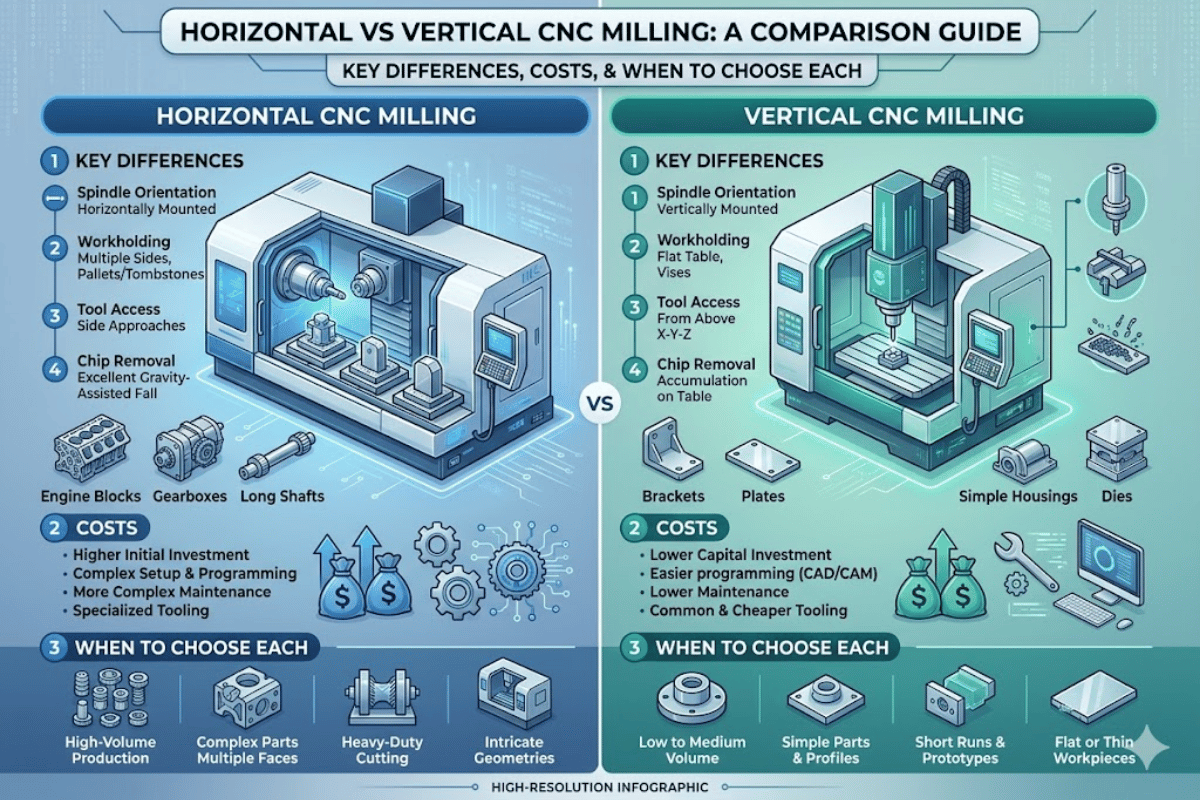
All CNC milling jobs begin with a machine choice – one that often boils down to one important question: should the spindle point down, or to the side?
That one axis of orientation impacts chip evacuation, fixturing strategy, per-part costs, and the number of setups your CNC milling provider will be running for you.
This comparison chart brings HMCs and VMCs head to head on specs, tolerances, tangible costs, and application.
Whether quoting 10 prototype pieces, or a 10,000-unit production run, use the table below to help specify the right machine, or at least ask your CNC milling service provider the right questions.
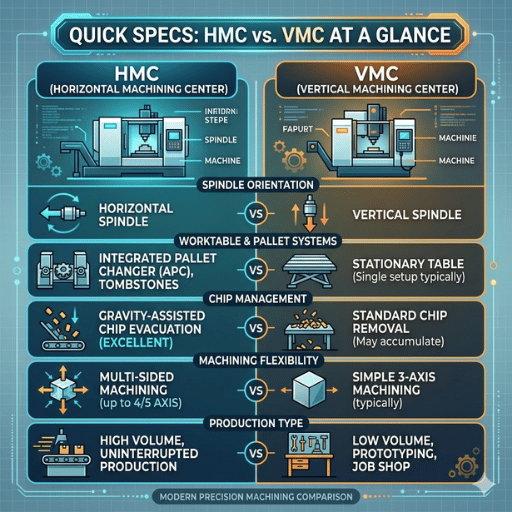
Before getting into the engineering, here is a quick side-by-side snapshot of the two machine options.
Use it as a cheat sheet.
| Parameter | Vertical Milling (VMC) | Horizontal Milling (HMC) |
|---|---|---|
| Spindle Orientation | Vertical (perpendicular to table) | Horizontal (parallel to table) |
| Machine Cost | $80K–$250K | $250K–$600K+ |
| Hourly Rate (US) | $40–$80 | $75–$150 |
| Chip Evacuation | Chips collect on workpiece | Gravity drops chips away |
| Workpiece Access | 1 face per setup (top) | 4 faces via tombstone |
| Tool Capacity (ATC) | 20–40 tools | 40–120 tools (ATC/pallet) |
| Floor Space | Smaller footprint | 2–3x larger footprint |
| Best For | Prototypes, small parts, detail work | Production runs, multi-face, heavy cuts |
The bottom line: VMCs are lower cost and more widely accessible; they fit simple work pieces and multi-Machine cell operation well.
HMCs justify their premium price with increased throughput, multi-face work, and ultra-efficient chip removal. Here’s why
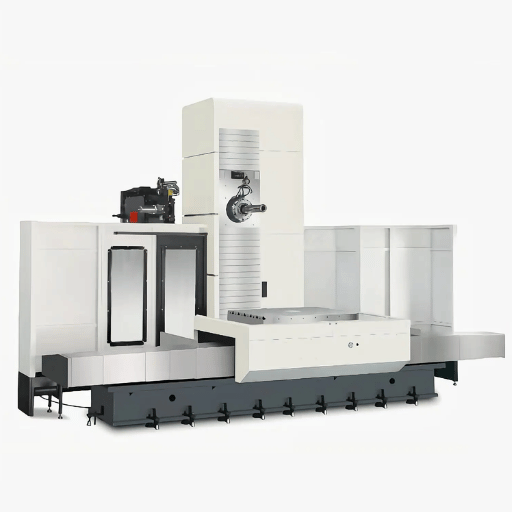
In a VMC the spindle points vertically downward, perpendicular to the work table.
Each cutting tool engages the work piece in downward cutting action from above. Its tool moves in the X and Y axes, and the machine table moves in the Z. Being able to watch the cut in a clear line of sight remains one of the key reasons VMCs dominate job shop and prototype work.
Two common VMC configurations are turret (tilted head) and bed (fixed-head table). A turret gives the operator tilt control for angled milling.
A bed design stalls the head-column in one position so the table can shift along the X and Y axes in a very rigid platform – ideal for heavier workpieces. Both can face mill, drill, bore, and produce top face cuts, but with benefits for each.
An HMC tool orients in the side of the machine, parallel with the floor. Workpieces integrate on a rotary table or fixture which indexes to access four, six, or more sides of the product with no re-fixturing. In fact, an optional arbor mounted cutter can take wide side cuts across broad faces.
Because gravity pulls the chips away from the cut zone, side mounting the tool reduces its deflection and chip recutting, extends tool life, and enhances surface finish performance in pockets deeper than 3 times the tool diameter. An HMC offers a pallet changer as well.
While one pallet gets its pocket cut, the operator repositions the fixture to load the next job. This means instant chip-to-chip spindle time of 80 to 95 percent, a virtual lights-out process.
🔧 Engineering Note — Spindle Deflection & Chip Clearance
Pictured below, with the tool mounted downward, the effects of gravity add deflection to the long-reach tools, and chips must be pulled out of the pocket, then out of reach of the cutter. Both can result in dimensional issues. With the tool mounted sideways or on its side, gravity help pushes the chips out of the cut pocket, and it doesn’t get re-cut.
For pocket depths more than three times the diameter of the cutter, HMC’s typically offer 15 to 25 percent improvement in finished surface quality.
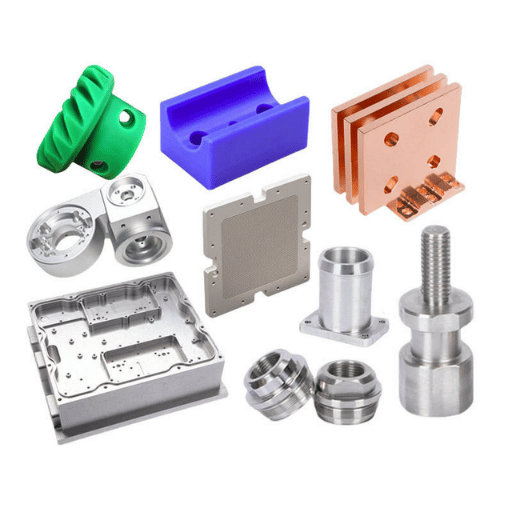
As far as position accuracy and repeatability in flat open areas,the contemporary VMCs and HMCs cannot be distinguished. Differences arise in deep pockets, increased tool-reach conditions and high production where good chip control is required.
| Parameter | VMC | HMC |
|---|---|---|
| Positioning Accuracy | ±0.005 mm | ±0.005 mm |
| Repeatability | ±0.003 mm | ±0.003 mm |
| Surface Finish (flat) | Ra 0.8 µm | Ra 0.8 µm |
| Surface Finish (deep pocket) | Ra 3.2 µm (chip recutting) | Ra 1.6 µm (gravity chip clearance) |
| Tool Life | Baseline | 15–30% longer |
| Spindle Speed | Up to 15,000 RPM | Up to 10,000 RPM (heavier spindle) |
| Chip Evacuation | Manual / air blast needed | Gravity + through-spindle coolant |
Observe that the discontinuity on flat, uncrowded surfaces is zero as well. It shows up during deep pocket machining and with long runs of parts where broken chips are recirculated on a VMC tool slowly erodes it and leaves visible marks. If your cavities go deeper than three times the cutter diameter, a HMC produces cleaner walls with less work performed afterward.
Informative as well: VMCs generally run higher (up to 15,000 rpm as compared to 10,000 rpm on the HMCs). That added speed can come in handy on little tool diameters when machining aluminum or plastics. HMCs make up for it with a beefier, more rigid spindle to take larger diameters and greater depths of cuts.
Cost is where most shops and most buyers decide. At headline level, the number–the bottom line–the hourly rate–favors VMCs. But the per-part cost at volume often may reverse the verdict.
| Cost Factor | VMC | HMC |
|---|---|---|
| Machine Purchase | $80K–$250K | $250K–$600K+ |
| Hourly Rate | $40–$80 | $75–$150 |
| Setup Time | 15–30 min per setup | 5–15 min (pallet changer) |
| Fixtures | Standard vise ~$500 | Tombstone + fixtures $2K–$10K |
| Spindle Uptime | 50–65% (manual load) | 80–95% (pallet changer) |
| Cost per Part (1 unit) | $50–$150 | $100–$250 |
| Cost per Part (1,000 units) | $25–$75 | $15–$40 |
💡 Decision Tip
For the hourly rate, HMC costs more but makes more parts per shift. Above around 200 parts/month on multi-face work, HMC generally results in less per-part cost even when higher hourly rate is included. The crossover point is even lower when the part has three or more setups on a VMC but only one on an HMC with a tombstone.
For single face prototypes, or runs under 50 pcs, VMC is virtually always more economical. The economics change when you include technician hours, fixture changeovers, and the dead spindle hours while manually loading parts. A pallet equipped HMC running through the night will produce Monday morning what a VMC did the entire week prior.

Many shops run both. VMCs handle the incoming quote variety — different parts every week. HMCs run the bread-and-butter repeat orders that keep the lights on.

If your parts need multi-face access but your volumes don’t justify a full HMC, two middle-ground options exist.
Bolt a rotary table or 4th-axis indexer onto a VMC for multi-face (or 4 face) machining at VMC price. Your workpiece rotates about the A-axis to bring another 1-2-3 sides to the vertical spindle. Works well on small 2-3 face workpieces as long as your budget is under $120K total.
Tradeoffs: indexing is slower than a dedicated HMC rotary table, there’s no pallet changer for load/unload, and chips still collect on the workpiece. For production above 200 parts/month, these limitations add up.
Universal milling machines have a spindle head that can tilt from vertical to horizontal – and any intermediate angle too. Maxes out at a single machine solution. Pricing from $150K to $350K, making them more expensive than the VMC but cheaper than a HMC.
Universal mills are good in tool rooms and R&D departments that machine many different workpiece forms, yet not enough of them to justify a dedicated HMC. They won’t have the throughput advantage of palletized HMCs but you can’t beat their degree of flexibility.
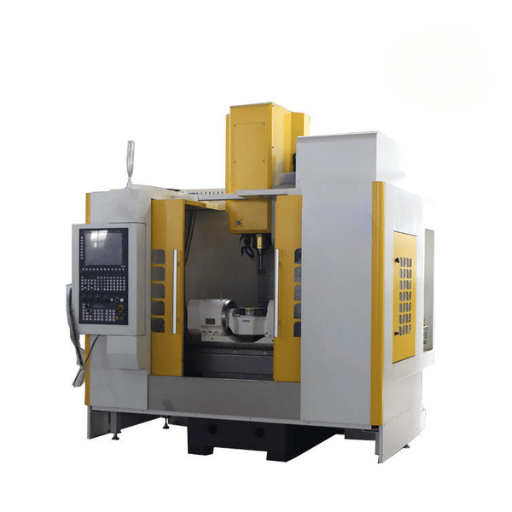
Complete checklist here. If most of your answers fall into the right column, spend the extra on an HMC.
| Question | → VMC | → HMC |
|---|---|---|
| How many faces need machining? | 1–2 | 3–5 |
| Monthly volume? | < 200 parts | > 200 parts |
| Deepest pocket depth? | < 3x tool dia. | > 3x tool dia. |
| Material? | Aluminum, plastics | Cast iron, steel, titanium |
| Automation needed? | Manual OK | Pallet changer / lights-out |
| Budget priority? | Low upfront cost | Low per-part cost at volume |
| Surface finish on deep features? | Ra 3.2 µm acceptable | Ra 1.6 µm or better needed |
Here at Le Creator, we run both VMC and HMC lines. For each quoting project, we assign each part geometry & order volume to whichever machine type will be more cost effective, provide the desired quality, and still hit your lead time. Submit a quote and our engineering team will advise you on the best machine type as part of the DFM review. No more confusion.
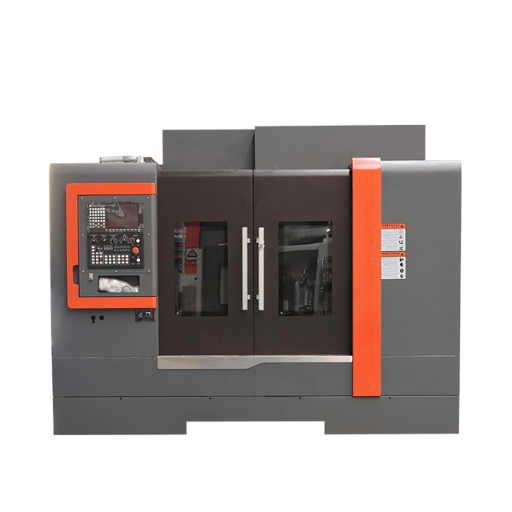
The main difference between VMCs & HMCs is in spindle orientation. In a VMC spindle pointed vertically down, perpendicular to the work table. In an HMC it runs in a parallel to the work table plane. The difference drives workpiece access, chip removal & collection, tool capacity and ultimately per-part costs at high production volumes.
A VMC’s challenges in deep pockets is chip evacuation because chips fall onto the work surface and the edges get recut leading to rough surface conditions on finished work and faster tool wear. Only one face can be reached per setup without a rotary axis so on multi-face parts you’ll be at a hit on machine hours. Its spindle time uptime range is 50-65% without a pallet changer so they aren’t very productive on high volume projects unless you have a high level of multi-face work.
In a competitive bid process, an HMC will cost two to three times what the equivalent VMC will. They need more floor space, so require larger & more costly fixturing – tombstonework is usually made from cast iron or aluminum, and $2,000 to $10,000. A straightforward single face part or low-Q prototype in an HMC would be an expensive choice with little gain.
If the throughput is a concern, yes. HMCs can hit 80-95% spindle uptime via pallet changers rather than 50-65% in VMCs. Combine that with multi-face through tombstone mills and an HMC can produce 2-4X the number of finished parts in a shift on similar multi-face work.
A tombstone fixture consists of a tall rectangular column of aluminum or cast iron that is bolted onto the HMC rotary table. The fixture will typically have 4 or 6 faces onto which individual workpieces or sub machines are bolted. The fixtures index as the worktable rotates providing accessibility to an individual face, through the spindle.
Select horizontal milling for machining on 3 or more faces of the part, over 200 per month, or deep-pocket surface finishes less than Ra 1.6 m. HMC is the preferred default for lights out automated manufacturing.
Upload your CAD file and our engineers will help you select the machine type, setup strategy, and provide a quote—usually within 24 hours.