

Supportive, Professional, Client-Focused Service
From prototypes to full-scale production, we’ve got you covered.



The industries related to defense and military are during the period of receiving very stringent demands for nothing else but complete effectiveness, infallible functional capabilities, and life span as the main features of the equipment and components. The spectrum of items that needs to operate with utmost precision is very wide which includes aircraft components and the most advanced weaponry systems. CNC (Computer Numerical Control) machining has thus become a very vital support system for the defense sector. The present article will discuss the extent to which CNC machining is changing the production pattern of high-performance military-grade components, the advantages it is bringing to the defense manufacturing sector, and the justification for treating its accuracy and speed as issues of national security. Come along as we unearth the impact of high tech machining techniques on the defense tech’s transformation process.

CNC Machines (Computer Numerical Control) are one of the most remarkable tools that, once programmed by experts, operate automatically and produce items of excellent quality with perfect precision even of very difficult shapes. Nowadays, these machines are the most reliable and accurate devices for the production of various parts at any time within the set limits. CNC machines can cut, mill, drill, and shape a wide variety of materials—metals, composites, and plastics—and still maintain the same quality for the most intricate designs.
In the military industry, CNC machines are responsible for literally feeding high military quality components which can be parts of aircraft or entire weapon systems. User feedback has revealed a concern that CNC machining is still viewed by some as a controversial issue in regard to national security. The main reason for this is the extremely high accuracy of the machines, the reproducibility of the settings, and the fact that their output meets or even exceeds the military requirements for defense technologies.
⚙️ Key Advantage: CNC machining not only improves military equipment but also provides quick responses to changing defense situations, hence being always prepared during critical moments by minimizing human errors and speeding up production.
For the defense industry, precision is the highest priority since even the tiniest error during the production process can result in the mission’s failure or the security of the country at stake. The collaboration of CNC machining, technology, and engineering has guaranteed that all of the components meet the stringent requirements. The most recent technological breakthroughs, for instance, the application of AI in process optimization and material analysis, not only ensure CNC machining achieves the utmost accuracy but also contributes significantly to the development of future defense systems.
On the other hand, the ability to quickly prototype and manufacture parts in short periods of time creates a scenario of flexibility and quicker reactions to threats. Therefore, manufacturing precision bolsters the trustworthiness of crucial defense resources and by this means, it shows its indispensable role in the prevention of security problems worldwide.
The defense sector is surrounded by first-class technologies and extremely high levels of expertise that are essential to meet and surpass the constantly changing global challenges; hence it is at the crossroads of invention, strategy, and national security. The most complicated digital attacks are not only repelled by the latest cybersecurity techniques but also by the application of AI in critical decision-making and automated processes, thus, AI acts as a supportive force in both decision-making and autonomous operations.
Addressing these needs in a timely manner is essential to ensuring security objectives amidst the constantly changing geopolitical landscape.

CNC machining services designed for the military and defense industries comprise a whole range of specifications customized to the very demanding characteristics of the sector. These services include:
| Service Type | Description | Applications |
|---|---|---|
| Milling | CNC milling technique for producing complex parts with the tightest tolerances | Aerospace brackets, housings, missile guidance system parts |
| Turning | Ideal for producing cylindrical-shaped components | Shafts, fasteners, connectors for vehicles and artillery systems |
| Drilling | Precision drilling for consistent hole sizing | Weapon assemblies, engine blocks, critical enclosures |
| Precision Grinding | Finishing for smooth surfaces and precise measurements | Key parts of optics, weaponry, aviation systems |
| Prototyping | Rapid production of models for testing and evaluation | Testing, evaluation, development time reduction |
| Multi-Axis Machining | Advanced machining enhancing quality of finished products | High-level applications requiring complex geometries |
✓ Quality Assurance: All these services are equipped with the latest technologies which ensure that production will be of top quality and that defense sector standards, like ITAR compliance and AS9100 certification, will be strictly adhered to. By utilizing these capabilities, the military and defense corps will be able to perform at their best and maintain their technological supremacy.
The military of today needs very precise parts that are very well made, so they will be able to support main operations. The principal parts among them are the radar housings, the enclosures for the missile guidance systems, the casings for electronic warfare, and the aircraft structures, which all have to pass strict manufacturing standards.
It is considered a standard practice to apply cutting-edge materials, such as titanium, aluminum alloys, and fiber composites, for their strong, tough, and light characteristics. The mix of 5-axis CNC machining and 3D printing guarantees that such components will be as exact as needed and will also have the required performance in military applications.
🔧 Technology Integration: Manufacturers can achieve the rapidly changing demands of military technologies with the support of new tools such as AI-driven quality control and real-time monitoring, while still adhering to strict compliance and safety regulations.
CNC machining has gained a tremendous reputation in the defense industry mainly because of its great precision, high productivity, and the ability to adapt to different applications. Detailed components of military devices are ensured to meet the required tolerances for military-grade equipment performance. Furthermore, the complete removal of human operations in CNC technology not only reduces the occurrence of errors but also ensures that quality is maintained uniformly across various production runs. This quality consistency not only translates into reliability but also leads to a major cut in long-term expenses since less material is thrown away and less reworking is done through the process.
Combining CNC machining with cutting-edge technologies such as AI and IoT not only guarantees uninterrupted production by providing predictive maintenance but also greatly enhances efficiency. The most significant advancement in CNC machining is the 5-axis case, which not only allows users to produce intricate designs but also needs fewer setups, thus shortening time while the quality being the highest. Such attributes are essential for modern defense systems that require quick adaptability to the constant change of technology and tactics.
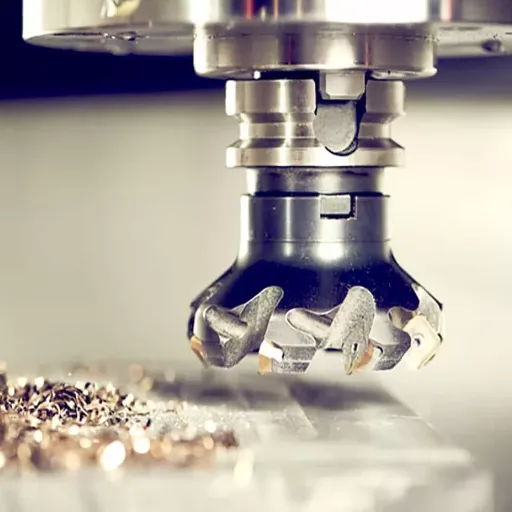
The materials for military and defense applications are continuously changing and developed to last longer and perform better even in difficult conditions. Recent developments are looking into constructing the strongest and most resilient structures while being the lightest at the same time. Advanced composites, comprising carbon fiber-reinforced polymers and ceramic matrix composites, are steadily gaining recognition for their ability to endure high temperatures, impacts, and constant wear while remaining lightweight. Such materials are crucial in manufacturing protective gear, aerospace parts, and vehicle armor.
Moreover, there has been a significant progress in the use of nanotechnology for material production at the molecular level. The application of nanotechnology includes nano-coatings that protect against corrosion, abrasion, and chemicals, and, at the same time, increase the lifetime of important operational components. Besides this, the advent of self-healing materials has brought the breakthrough solution of repairing damage without any external assistance.
| Innovation | Benefits |
| Carbon Fiber-Reinforced Polymers | High temperature resistance, impact resistance, lightweight |
| Ceramic Matrix Composites | Continuous wear resistance, durability |
| Nano-coatings | Corrosion, abrasion, and chemical protection |
| Self-healing Materials | Autonomous damage repair capability |
All of these advancements in material science mean that defense systems will always be strong, reliable, and ready for challenges even in the battlefields of the future.
CNC machining processes’ automation has been one of the main reasons why the manufacturing industry has experienced such a huge shift in its dynamics, as it has been able to both increase production rate and get products with high accuracy and uniformity. Robotic arms, sensors, and advanced control systems allow the automated CNC machines to be operated in a continuous manner with very few personnel monitoring the operation, thus resulting in a reduction of both production time and costs.
Moreover, the manufacturing process that integrates IoT and AI guarantees constant machine monitoring and that required maintenance is done even before breakdown occurs. To start with, these are not just the only improvements that have been realized in production volume, but they are also factors that have improved overall manufacturing safety since there is minimal human involvement in areas where risky procedure are done.
🤖 Industry 4.0 Impact: According to the most recent figures, the alteration has increased regarding the ability of producers to carry out additional customization in their production due to CNC machining automation. The entire process can be done in no time, and the specialized products can be brought to the market at a rate that corresponds with demand. This contemporary manufacturing technique is a key player in Industry 4.0 and symbolizes the start of a more ecological and strong industrial rivalry.
In areas where mistakes can have dire consequences, precision is a requirement. CNC machining has alleviated the concern of precision and repeatability in this application field by ensuring all parts are precisely the same as the specification. Latest reports indicate that industries such as aerospace, healthcare, and defense are adopting CNC technology for the production of their most complicated parts with tolerances no greater than a few micrometers.
Not only does this level of accuracy enhance product reliability, but it also has a positive effect on safety and efficiency, which are the main priorities in these high-risk areas. To meet the ever-increasing demand of quality and reliable solutions in mission-critical locations, manufacturers are implementing advanced technologies such as multi-axis machining and real-time quality monitoring.
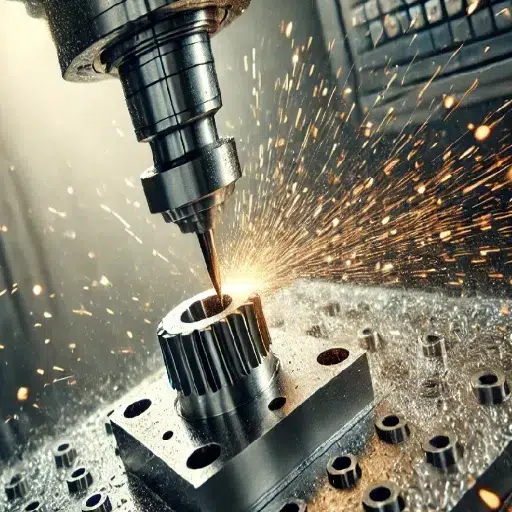
The integration of Artificial Intelligence (AI) into CNC machining processes has, among others, the outstanding manufacturing changeover which is mainly used by the military and aerospace sectors. AI systems allow the analysis of large volumes of data by CNC machines in seconds thus deciding on the best cutter movement, reducing scrap production, and keeping machine downtime to a minimum.
The application of machine learning algorithms not only empowers the system to detect and warn of potential problems but also to fix them through preventive maintenance, thus increasing the reliability and efficiency of the whole process greatly. The latest findings indicate a slowly increasing adoption of AI technology into predictive maintenance, which is a procedure involving the use of sensors to collect and analyze data relating to the functioning of a machine to ascertain the extent of wear and tear, and thus enabling timely actions to be taken.
Recent search trends highlight a growing curiosity about “smart manufacturing” and “AI in precision machining,” which in turn highlights this movement toward intelligent production workflows. Such technological advancements signal a time when AI-enabled CNC systems will become an indispensable factor in meeting the intricate needs of crucial sectors, bringing together the highest level of precision with the capability to quickly adapt to changing requirements.
Additive Manufacturing (AM), mostly known as 3D printing, is already one of the biggest innovations in the defense CNC sector because it can fabricate very complex and lightweight parts with utmost accuracy. The integration of AM with advanced CNC processes not only enhances the versatility but also reduces the time needed to produce components for defense systems. The marriage of these technologies does not just mean quick prototyping and less material wastage, but it also means the possibility of producing components when and where they are needed, even in tough conditions or emergencies—an extremely important factor in military operations.
📈 Industry Insight: The data indicates that the interest in searching and the use of additive manufacturing in the defense sector are linked to previous trends that indicate the rising demand for such smart systems that can not only meet the stringent requirements of the defense industry but also be very convincing in doing so. The findings suggest a future where not only CNC and AM technologies are there but also AI reinforcement in the shape of advancing the defense systems in adaptability, efficiency, and technology thereby gaining a strategic advantage.
The military’s shifting requirements make it necessary to adopt advanced technology continuously, in order to maintain the strategic advantage and operational efficiency. The global threats have become so intricate that the adoption of artificial intelligence (AI), robotics, and autonomous systems has turned into a necessity for the defense sector to have an effective and rapid response capability.
According to the data analyzed recently, a direction is evident which indicates a very large scale interest in the area of military machine learning applications, particularly in predictive maintenance, real-time data analysis, and decision-making systems. The military is assimilating the technological innovations for better situation awareness, shorter response times, and higher precision in engagements. Using the aforementioned technologies, militaries not only can cope with the challenges that have arisen from the changing nature of warfare but also have a great advantage over their enemies on today’s battlefield.

High-quality military parts ever have a high demand. The very nature of the military environments with their ruggedness and strictness requires organizations that are responsible for the quality controls such as the International Organization for Standardization (ISO) and the Department of Defense (DoD) to implement guidelines for example, quality management standard ISO 9001 and aerospace and defense applications standard AS9100.
Before use, the materials must undergo testing that will be of the highest grade, that is, MIL-SPEC levels, so that their survival in the very harsh environment characterized by corrosion, high pressure, and high temperature will be assured, in the meantime being very rugged and tough. Sometimes, in the course of the experiments, components get subjected to a really harsh process like Non-Destructive Evaluation (NDE), stress testing, and environmental simulations to make sure their mechanical reliability and safety.
| Standard/Specification | Purpose | Application Area |
|---|---|---|
| ISO 9001 | Quality management systems | General manufacturing quality control |
| AS9100 | Aerospace quality standards | Aerospace and defense applications |
| MIL-SPEC | Military specifications | Components for harsh military environments |
| NDE Testing | Non-destructive evaluation | Component integrity verification |
🔬 Advanced Testing: Military suppliers adopt innovative practices like additive manufacturing and AI-powered inspection systems. These technologies can produce parts faster than ever while maintaining the highest accuracy levels, thus satisfying the stringent requirements of contemporary military applications.
CNC machining services’ certification processes are crucial for keeping up with international quality standards and regulations. These processes typically involve rigorous compliance with standard regimes like ISO 9001 for quality management and the AS9100 family for aerospace manufacturing. Besides these certifications, companies also prefer certifications like ITAR (International Traffic in Arms Regulations) and MIL-STD specifications for defense-related projects to be compliant with both local and global regulations.
In addition to the standard certifications, it is also a common thing for CNC machining services to undergo audits and third-party inspections as a way to confirm that the quality standards have been reached. The modern technologies—real-time data monitoring and AI-driven quality assessments—have also been integrated into the certification processes which now include traceability and accountability with every action taken as major components.
Companies in different sectors are now focusing more on machining partners who are certified by strong certification bodies to ensure that every component manufactured has the desired long-term reliability and precision.
In terms of defense components, the reliability prerequisite is absolute. These parts are very important for national security and sometimes even endure extreme conditions where failures are simply not tolerated. A growing number of defense manufacturers are however beginning to see the certification of AS9100 and ISO standards as an indispensable part of the entire process. This not only secures melting adherence to the strictest industry regulations but also signals quality assurance commitment.
Application of cutting-edge testing techniques, AI-driven analytics, and end-to-end traceability systems has made it possible to understand how reliability can be ensured in this field, among the most important ones being these. Not only do these tactics confirm the components’ functionality but also build up the confidence in the supply chain which thus meets the strict requirements of contemporary defense technology.
Aerospace machining process and production of military parts always go somewhat hand in hand due to the fact that both demand parts of very high tolerances and strict quality assurance systems. Typically, the plants providing the precise components for the aerospace market are equipped with CNC 5-axis milling machines and sophisticated machining centers, thus these plants are the main suppliers for military production of critical components for military systems. These CNC lathes and milling machines coupled together with the skillful and experienced craftsmen often produce the finished machined parts that are later used in military operations—land, air, or sea—guaranteeing the required accuracy and precision. Defense contractors favor the manufacturers who provide the service whereby initial design, testing, and certification of parts and components are all done at one place thus ensuring the best quality and efficiency of time and resources. Reliable CNC machinery and automation are the co-workers in the production process—they increase the production rate while still making sure it is the finest quality.
Defense machining methods comprise a complete series of CNC machining process steps which, among others, include turning on CNC lathes, milling on machining centers, and secondary operations like weld finishing to supply the parts. Precise CNC machining and 5-axis milling are utilized for working with intricate geometries and mission-critical components needing extremely tight tolerances. The production process is supported with quality assurance systems and certification that the requirements of defense contractors are fulfilled along with high precision and reliability. Besides that, several machine shops are to assist with design and manufacturing to the extent of granting the parts and components of the intended application and performance in the field. What you get is top-notch machined parts that satisfy the standards of military and defense manufacturers as well as those of military manufacturing programs.
The military CNC machining services are specialists in the production of parts and components with high durability and traceability for military use. In addition to that, they can produce and deliver parts that comply with thorough specifications and certification standards. With the help of their excellent machining centers, CNC lathes, and automation, these service providers can handle even the most intricate military and defense needs by ensuring constant accuracy, precision, and quality. They can produce different military parts, like parts for armored vehicles, critical systems, and avionics, while taking care of confidentiality and secure handling problems. A good number of suppliers provide the entire line of manufacturing solutions from prototype making through testing and mass production to delivery schedules being complete. Partnering with a dependable military CNC machining service is always a good option, as they will make sure that your parts and components will be compliant with your performance and compliance expectations.
The application of CNC lathes and mills is indispensable for producing parts and components with the exacting repeatability and high quality necessary for defense systems and military operations. The lathe can produce parts that are perfectly balanced, such as shafts and bushings, while the mill, together with the 5-axis machining center, is used to create complex features and meet strict tolerances on the housings and structural components. The introduction of automation along with advanced CNC controls into the manufacturing has resulted in a significant rise in output and uniformity, thus enabling the production of high quality products in large quantities. Defense manufacturers often require very stringent quality management systems certification and audits, and they conduct them to ensure that every batch of product meets the required standards. Through the combination of machining methods and inspection, suppliers are able to deliver high-quality components for use in the field.
CNC machining suppliers catering to the defense sector usually possess certifications like ISO 9001, AS9100 for aerospace-related defense parts, and occasionally even Nadcap accreditation to legitimize the quality management system practices by those bodies. These certifications enable the manufacturing of precision parts and components to be subjected to the same standards, and they are often a prerequisite for defense contractors and military manufacturers. Among the quality controls enforced there are first article inspection, in-process monitoring, CNC machines and gauges calibration, and traceable material certifications all aiming at compliance. Moreover, military CNC machining service providers implement their own documentation and confidentiality practices to protect not only sensitive designs but also mission-critical components. The combination of stringent certification and inspection procedures guarantees that the military systems-derived parts indeed meet the performance and safety standards.
Indeed, advanced defense manufacturing could produce even the most complicated military parts and assemblies for military vehicles due to the sophisticated CNC machines and machining methods like 5-axis milling and multi-axis turning. The vendors that provide both manufacturing and design engineering help can optimize the parts for assembling, can weld and integrate the subcomponents, and can deliver complete subsystems that are already for installation. These operations concentrate on precision parts, accuracy, and dependability so as to meet the demands of field performance and mission-critical systems. It is a normal practice for the defense contractors to partner with the suppliers who provide specialized services in CNC machining and can scale from prototypes to production volumes. The appropriate project management along with quality assurance procedures is guaranteed the timely delivery and compliance with contract requirements.
Military CNC machining services deal with secrecy and confidentiality via controlled access facilities, non-disclosure agreements with defense contractors and secure handling of design files and blueprints. Numerous machine shops have constructed robust IT and physical security measures to protect sensitive data and have also enhanced documentation controls in their quality management system. Suppliers often separate programs, limit personnel access and employ encrypted communication for the transfer of drawings and specifications. The demands for certifications and audits also enhance compliance with confidentiality protocols, which, in turn, provide military and defense contractors with the ability to trust the ensuring of safe keeping of mission-critical components. With such measures in place, it is guaranteed that there is no leaking of sensitive information during the making of the parts and components for military systems.
The advanced manufacturing solutions that are used for precise CNC machining consist of contemporary equipment, which includes CNC lathes, machining centers, and automation, plus the professional engineers who determine the processes and tolerances to ensure the quality of the components. The manufacturers, using advanced tooling such as 5-axis milling, can bring themselves up to the standard of high precision that is required for the parts and precision components in the defense industries. Together with continuous monitoring, in-process inspection and quality management system compliance, precision and consistency are main attributes of the process. Regular and close intercommunication between the designer and the manufacturer helps to greatly reduce the amount of rework and at the same time to improve the performance of the parts and components by making them easier to manufacture. Ultimately, the combination of these integrated manufacturing and design methods results in CNC machined parts that are not only reliable but also possess the highest quality standards demanded by the defense and industrial CNC customers.
One of the most significant contributions that CNC machining has made to modern defense manufacturing is the provision of the needed precision, reliability, and efficiency that matched the demanding military applications. In the case of working with very delicate and intricate aerospace components, DWG explains that using CNC technology it is quite easy to assure that every part produced, even the minuscule ones, meet the most strict tolerances and thus performs excellently even in the most terrible conditions.
The use of such modern technologies-as AI, automation, and 3D printing- has led to a drastic change in the defense manufacturing landscape. Not only are these developments faster and more accurate, but they are also able to turn military requirements around quickly thereby keeping the defense forces equipped with the latest technological advancements which is one of the necessities in the modern competing security environment.
In looking ahead, the development of CNC machining technology will still, when combined with strict quality certifications and strong security measures, be the backbone of national security. The capability of delivering high-quality, dependable components in a short period of time and at a low cost, is no longer just an advantage in manufacturing— it is now a military necessity with a direct bearing on the safety and effectiveness of defense operations around the world.
Defense manufacturers who maintain the highest standards of accuracy, comply with stringent certification policies, and continuously invest in new technologies will still be the providers of the exceptional components and systems that not only protect nations but also provide the defense sector with a competitive advantage.