

Supportive, Professional, Client-Focused Service
From prototypes to full-scale production, we’ve got you covered.


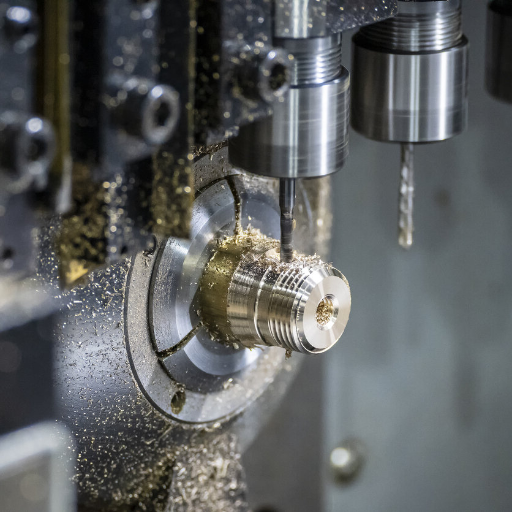
Swiss-type machinery is among the most advanced CNC machining methods used by high-tech machine shops, delivering exceptional precision, speed, and efficiency for small-quantity production of components. This comprehensive guide examines the benefits of Swiss screw machining for small aluminum parts and demonstrates how this technology helps ensure components meet demanding specifications across various applications.
From aerospace and medical instruments to electronic components and devices, Swiss screw machining continues to revolutionize small-part fabrication, offering new possibilities for precision manufacturing across industries.

Manufacturing processes involving minute, intricate components with tight tolerances require the precision of Swiss screw machining. This advanced process uses a specialized lathe that holds the workpiece in place while moving the tooling along multiple axes to create cuts and features with exceptional accuracy.
High quality—especially for geometrically complex items and high-volume production—is achieved through Swiss screw machining. Industries that require high-precision engineering, including medical equipment, aviation, and electronics, rely on this procedure for consistent, reliable results.
Swiss screw turning is a high-precision manufacturing process that employs a special-purpose lathe such as a Swiss-type lathe or Swiss automatic lathe. The technique originated in Switzerland and was used to produce tiny, complex components required for timepieces.
Compared to conventional lathes wherein the workpiece is chucked in a collet, a ‘guide bushing’ close to the tool holds the workpiece on a Swiss lathe. This design reduces the risk of twisting or bending and enables precise, detailed operations on long, thin, or fragile materials.
The workpiece rotates while multiple cutting tools move along numerous axes, producing intricate parts with exceptional accuracy. Swiss screw machines are widely used in the aerospace, medical device, automotive, and electronics industries for their reliability, repeatability, and high-quality surface finishes.
Modern Advancement: Recent CNC advancements enable Swiss machines to produce complex forms in a single setup, reducing production costs for tight-tolerance parts at high volume. Swiss Screw Machining for Small Aluminum Parts remains a significant technique in precision component manufacturing.
Achieves sub-micron tolerances, making it ideal for producing parts with exceptional precision requirements.
Capable of running at extremely high speeds, allowing production of numerous parts in minimal time.
Excels at producing small, close-tolerance components with multiple features and intricate shapes.
Advanced tools and production optimization reduce material loss and subsequent production costs.
Works with a range of materials, including metals, plastics, and composites, for diverse applications.
Swiss CNC machining differs significantly from traditional machining in precision, part size capabilities, setup complexity, tooling versatility, and production efficiency. Understanding these differences is crucial for selecting the appropriate manufacturing method.
| Key Point | Swiss CNC | Traditional Machining |
|---|---|---|
| Precision Level | High | Moderate |
| Ideal Part Size | Small | Large |
| Setup Complexity | Complex | Simple |
| Tooling Capability | Multi-use | Single-use |
| Production Efficiency | High | Moderate |
| Material Waste | Minimal Waste | More Waste |
| Best Applications | Intricate Parts | General Parts |
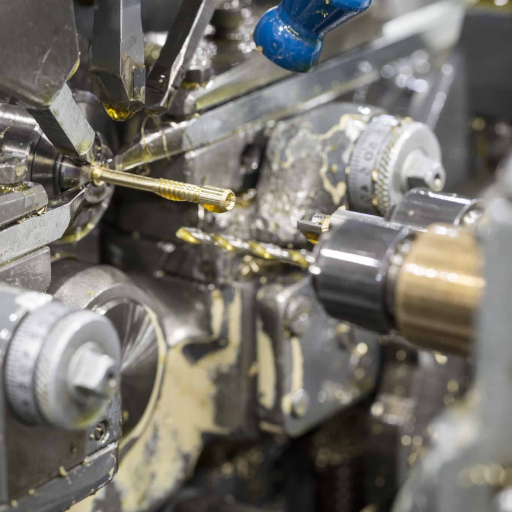
Swiss screw machines produce high accuracy necessary for designing intricate aluminum components with narrow margins or tight tolerances.
This technique enables swift and productive manufacture of aluminum parts, consequently reducing delivery timelines.
Minimal material wastage during operation makes Swiss Screw Machining cost-effective and environmentally friendly.
High-end tools and processes lead to better quality finishes, improving the overall quality of aluminum products.
Capable of machining complex features and aesthetic elements, allowing application across diverse aluminum parts industries.
The most impressive advantage of Swiss screw machining is its high precision and accuracy, which exceed those of contemporary manufacturing processes. These machines can achieve tolerances of 0.0002 inches, making them invaluable for producing highly accurate parts. Many industries—including aerospace, medical, and automotive—rely more and more on Swiss screw machining to manufacture high-tech precision components.
Precision Advantage: These processes provide results within specified limits for every single part produced in large quantities, with minimal errors. It is a process driven toward absolute precision.
Swiss screw machining is highly efficient for manufacturing small aluminum components, making it well-suited for industries that demand precision and uniformity. The efficiency of aluminum machining is further enhanced by the high speed and accuracy of Swiss screw technology, which minimizes production time without compromising quality.
This process reduces raw material usage, lowers costs, and promotes sustainability. The exceptional repeatability ensures that each aluminum part manufactured with Swiss screw machining adheres to strict dimensional requirements, even during mass production. This makes Swiss Screw Machining for Small Aluminum Parts extremely beneficial, providing precision, speed, and minimal waste.
High-volume production of aluminum parts presents numerous challenges, most of which can be effectively addressed by Swiss screw machining. This technology reduces the need for manual labor through automation while maintaining accuracy and quality. Swiss screw machines operate at impressive speeds, enabling manufacturers to produce numerous parts in short timeframes.
This method eliminates the need for rework and secondary machining, reducing overall production costs. Combined with aluminum’s low weight and high recyclability, Swiss screw machining enables production growth without sacrificing performance and quality.
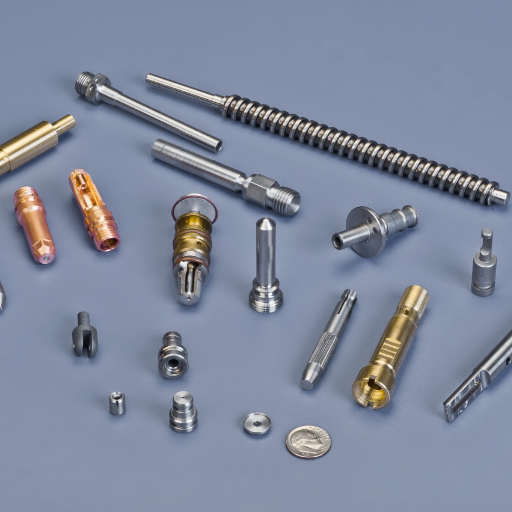
Swiss screw machining serves numerous industries requiring precision components. The following sectors benefit significantly from this advanced manufacturing technology:
Swiss screw machining is extensively applied to create precise medical device components including bone screws, dental implants, surgical instruments, and diagnostic equipment parts requiring exceptional biocompatibility and accuracy.
Essential for manufacturing small, precise components such as fasteners, connectors, joints, and specialized equipment used in aircraft and spacecraft construction, meeting stringent aerospace standards.
Enables assembly of small, intricate core parts including fuel systems, engine valves, sensor carriers, and precision connectors critical for modern automotive performance.
Critical for manufacturing miniaturized connectors, pins, and detailed electronic device components requiring precise dimensions and consistent quality.
Employed in constructing precision parts for firearms, navigation equipment, and other military resources requiring exceptional reliability and accuracy.
Participates in manufacturing complex parts for watches, jewelry, appliances, and other precision consumer goods requiring exceptional craftsmanship.
Engine mounts, heat-dissipating components, and lightweight connecting bolts improve performance and fuel efficiency.
Precision aluminum parts support mobile phones, laptops, and consumer appliances where weight and strength are critical.
Imaging equipment, prosthetics, and surgical instruments benefit from aluminum’s corrosion resistance and efficiency.
Solar collectors, wind turbines, and energy systems utilize aluminum for strength without excessive weight.
Bicycle frames, baseball bats, and hiking equipment leverage aluminum’s excellent weight-to-strength ratio.
Real-world applications demonstrate the transformative impact of Swiss screw machining across various industries. These case studies highlight successful implementations and outcomes:
A Swiss screw machining firm was tasked with producing aerospace precision parts requiring exact tolerances and materials capable of withstanding demanding environments.
Outcome: Using developed Swiss screw machining techniques, the company produced competitive performance parts that met multi-level safety systems and stringent aerospace standards.
The advancement of minimally invasive surgical procedures was made possible through Swiss machining technology, enabling production of highly detailed and miniaturized complex structures consistently.
Impact: This breakthrough improved medical devices, making them more efficient, safer, and effective—benefitting patients immensely and advancing healthcare practice.
Creating complex watch components for luxury timepieces required Swiss machinery to maintain the precision and quality hallmarks of Swiss engineering.
Achievement: Swiss machining techniques enabled production of robust, quality parts aligned with the rich history of Swiss watchmaking, combining traditional craftsmanship with advanced technology.

The Swiss screw machining industry continues to evolve with technological innovations that enhance capabilities, efficiency, and sustainability. Recent developments have centered on several key areas:
Recent advancements have focused on achieving tighter tolerances and producing increasingly smaller components. CNC systems now achieve unprecedented accuracy in realms where precision is essential, enabling manufacture of micro-components with exceptional dimensional control.
Modern Swiss screw machines work with a broad range of materials—especially advanced materials such as composites, alloys, and biocompatible metals—allowing manufacturers to specialize in applications while maintaining quality standards.
Integration of automation and smart manufacturing techniques has significantly improved efficiency. Automated tool changes, real-time monitoring, and predictive maintenance reduce downtime and waste, increasing overall productivity through proactive maintenance and process-control optimization.
Sustainability has become paramount in newer machine designs that optimize energy use and limit material waste. These improvements address the growing demand for eco-friendly manufacturing processes without compromising precision or performance.
CNC Swiss machines have seen breakthroughs that enhance operational efficiency and adaptability. Key technological improvements include:
Automation technologies are reshaping the precision machining sector, increasing efficiency, reducing costs, and improving production quality. Several remarkable trends are defining the future:
The convergence of these technologies signals a broader transition toward fully automated “smart factories,” transforming the precision machining landscape and enabling future advancements.
Software has become indispensable in modern machining, affecting precision, efficiency, and consistency. CAD-CAM systems enhance machining process documentation and calculation capabilities. Simulations predict potential defects, enabling remedial action before issues arise. System monitoring provides empirical feedback to inform corrective actions, ensuring timely maintenance and minimizing lost time.
Software Impact: These improvements have increased production rates, improved labor efficiency, and raised machining precision, revolutionizing manufacturing capabilities.
Selecting the proper Swiss screw machining shop requires careful consideration of experience, available equipment, and operational capabilities. A shop that successfully implements precision machining with high-end Swiss screw machines, ready to produce according to your requirements, should be your goal. Assess quality control, timeliness, and production scale processes. Awards and customer reviews can help understand effectiveness and adherence to standards.
Evaluate whether the machine shop has successfully handled similar projects, including experience across different industries and materials.
Check whether the shop possesses advanced, well-maintained equipment, including Swiss screw machines capable of meeting your manufacturing requirements.
Discover how the shop maintains product quality through quality assurance techniques and relevant certifications.
Consider their capacity to meet the required production volumes along with the timely delivery of items.
Check client reviews and testimonials to assess trustworthiness, professionalism, and consistent quality service.
When evaluating potential machine shops, asking the right questions helps ensure you select a partner that can meet your specific requirements. Consider these essential inquiries:
Assessing a Swiss screw machine shop’s capabilities and experience is crucial for successful partnerships. Emphasize their skills in manufacturing precision components, the materials available, and their industry experience. Determine whether the shop has worked on similar projects and can meet your low-tolerance and design requirements.
Partnership Success: Consult on certifications and quality assurance practices to ensure continuous, reliable work. A proven track record in delivering precision-machined components on time and at high quality is paramount for forming successful relationships.
Swiss screw machining of small aluminum parts is commonly used to produce components requiring high precision, including medical and aerospace components, machine connectors, and wristwatch parts. The guide bushing system and sliding headstock minimize deflection, allowing production of thin, cylindrical parts with high accuracy. This process is well-suited for industries requiring tight-tolerance machined products.
The Swiss CNC screw machine differs from conventional CNC turning in its design using a sliding headstock and guide bushing system, securely clamping barstock near the cutting zone. This reduces deflection and enables single-setup multi-operation machining. CNC control and spindle synchronization allow tight-tolerance features and shorter cycle times, providing efficiency and cost-effectiveness. Conventional CNC turning for small parts requires multiple setups and additional handling for complicated geometries, increasing production time and costs.
For Swiss-machined parts, inspection typically includes dimensional checks via CMM (Coordinate Measuring Machine), surface finish verification, and tolerance checks against ISO and customer-defined standards. Additional checks, such as in-process probes, inspection reports, and statistical process control, help ensure parts meet strict tolerance requirements. High-reliability parts in medical and aerospace applications demand extensive documentation, traceability, and certification.
Employing CNC Swiss screw technology reduces cycle times by enabling continuous bar feeding, combining multiple operations on a single machine, and reducing the need to move parts between machines. The sliding headstock and guide bushing minimize setup time, enabling higher spindle speeds and feeds on small aluminum parts, thereby increasing throughput. This streamlined workflow reduces steps in the production process while ensuring consistent quality standards for various run outputs.
Swiss screw machining represents a pinnacle achievement in precision manufacturing technology, particularly for small aluminum components requiring exceptional accuracy and efficiency. From aerospace and medical devices to automotive and consumer electronics, this advanced manufacturing method continues to revolutionize industries demanding the highest standards of quality.
By selecting experienced machine shops equipped with state-of-the-art Swiss screw machines and leveraging continuous technological advancements, manufacturers can achieve superior results while maintaining cost-effectiveness and sustainability. The future of precision component manufacturing lies in embracing these sophisticated solutions and partnering with expert providers who understand the nuances of Swiss screw machining technology.
Automated Setup Assembly Mechanisms for the Intelligent Machining Workstation
Sustainable Processes in Aluminium, Magnesium, and Multi-Materials Machining
AUG 21 1958 Signature Redacted (MIT)
Practical Pin Tooling
A study from MIT exploring advanced machining techniques, including Swiss screw machining applications.