

Supportive, Professional, Client-Focused Service
From prototypes to full-scale production, we’ve got you covered.


In CNC machining, selecting the right aluminum alloy is critical to achieving optimal performance and cost-effectiveness for your project. Whether using CNC milling or CNC turning, each process has particular requirements that determine the ideal material. With numerous aluminum alloys available, selecting one that meets your design, functional, and manufacturing requirements can be challenging. This comprehensive guide outlines key factors to help you choose the right aluminum alloy for your CNC machining method, supporting well-informed decisions and ensuring your project’s success.
Computer Numerical Control (CNC) machining is an advanced manufacturing process in which machine and tool movement is governed by pre-programmed computer software. One of the main characteristics of this technique is its precision in creating highly detailed, accurate parts from various materials, including metals, plastics, and composites. The most commonly used CNC machining methods are milling and turning, which offer distinct benefits depending on project requirements. Due to its combination of high-quality component production, efficiency, and consistency, CNC machining is widely used in the aerospace, automotive, and electronics industries.
CNC milling and turning are two essential techniques used in advanced machining today. Though these different methods serve different manufacturing purposes, they are often used together in production workflows.
Utilizes rotating cutting tools to eliminate material from a fixed workpiece. This technique has high potential for producing complex three-dimensional parts that require precision and detail. Milling machines can operate with different numbers of axes (usually 3, 4, or 5), enabling the production of more complex and refined geometries and designs. This technique is usually the best option for activities such as metal molding or prototype fabrication.
Involves rotating the workpiece while a stationary cutting tool shapes it concurrently. It is a perfect fit for producing cylindrical parts such as shafts, bolts, and rings. The turning process is characterized by its speed and ability to handle symmetrical designs, making it a go-to process in industries where high precision is required for rounded parts.
The process of combining milling and turning in a single setup is commonly known as mill-turning. The integration of these technologies enables manufacturers to leverage both advantages in a single setup, reducing time and improving productivity. Industry use of such advanced technologies delivers significant efficiency while maintaining exceptionally high component quality standards.
Understanding these terms is crucial for working efficiently with CNC machines and communicating well within the manufacturing area.
Choosing the right aluminum alloy is critical to the performance and durability of manufacturing and engineering projects. Alloys have been developed for specific applications, giving them characteristics such as strength, corrosion resistance, ease of machining, and thermal conductivity.
Workload conditions, environmental factors, and required mechanical properties should guide alloy selection. Making the proper selection will improve efficiency, lifespan, and cost-effectiveness of the final product.

CNC milling is a highly accurate, computer-controlled manufacturing process that uses rotary cutters to remove material from a workpiece. It produces highly intricate, high-accuracy components from various materials, including aluminum alloys. When selecting an aluminum alloy, the application’s specific requirements should guide the choice—such as selecting 6061 for versatility, 7075 for strength and aerospace applications, or 5052 for corrosion resistance in marine environments. It is essential to match the alloy to the workload and environmental conditions to achieve the best results.
CNC milling machines deliver highly accurate, consistent part production, enabling use in intricate designs requiring tight tolerances.
Able to process various materials such as metals, plastics, and composites, meeting the requirements of different industries.
CNC milling guarantees repeatability, ensuring similar parts are manufactured across the entire production scale.
Using sophisticated programming, CNC milling machines can produce intricate geometries and features that conventional methods may struggle to achieve.
CNC milling can be automated after operations are configured, minimizing manual labor need while increasing production speed and efficiency.
The CNC milling process can be applied to a wide range of materials, demonstrating its versatility. The primary materials commonly milled with CNC include:
Aluminum, steel, stainless steel, brass, copper, and titanium
ABS, polycarbonate, nylon, and acrylic
Softwoods, hardwoods, and engineered wood materials
Carbon fiber, fiberglass, and other reinforced materials
Every material has specific characteristics making CNC milling applicable for various industries.

CNC turning is a highly accurate machining process in which a workpiece is rotated on a lathe and a cutting tool engages it to produce the required shape. This technique is well-suited to producing round components such as shafts, bushes, or screws. The method provides remarkable precision, high-speed processing, and the production of intricate designs under stringent constraints, which is seen as a key advantage in sectors including automotive, aerospace, and medical.
CNC turning machines deliver exceptional precision, producing parts that meet the strictest tolerances with consistent quality throughout.
Process automation significantly cuts down production time needed, thereby increasing operational efficiency making it suitable for mass production.
CNC turning can process a wide range of materials, including metals, plastics, and composites, making it suitable for a variety of industrial sectors.
The method enables the creation of not only highly detailed features but also intricate designs that would be difficult or impossible to achieve through manual machining.
CNC turning with its low waste production and minimum human involvement remains the most cost-effective way of getting high-quality components.
Precision parts manufacturing including engine components, shafts, and gearboxes
Output of high-performance parts like turbine blades and structural elements
Production of surgical instruments, prosthetic implants, and intricate medical devices
Generation of miniature, accurate parts for connectors and circuit boards
Manufacturing of parts, joining devices, and components made of other materials suitable for long-lasting use

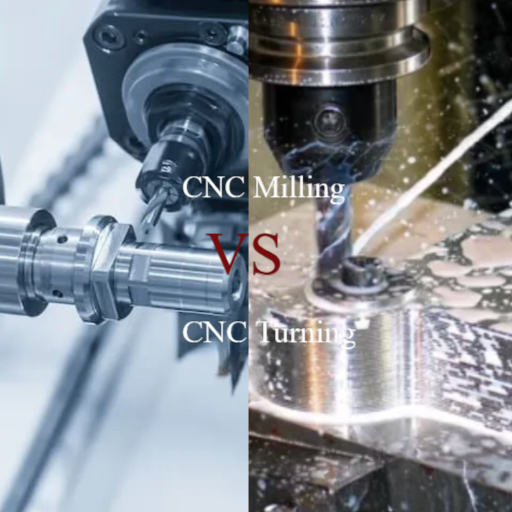
CNC Milling and CNC Turning differ in their methodologies, applications, and outputs. Milling uses multi-axis material removal with rotary cutters, while turning revolves around rotating the workpiece to shape it.
CNC milling and CNC turning differ significantly in their tooling and machinery. CNC milling machines employ rotary cutters that can move in multiple directions to create complex shapes from materials. Such machines usually require more elaborate tooling, including a variety of end mills and drill bits, to produce accurate, finely detailed results.
In contrast, CNC turning machines use a lathe in which the workpiece spins while a non-moving cutter molds it. The tooling in CNC turning is straightforward, consisting primarily of cutting inserts and boring bars, since machining is oriented toward symmetrical and cylindrical designs. Additionally, CNC turning machines are usually compact, have shorter cycle times, and are less costly than CNC milling machines. All these factors make CNC turning a better option for high-volume, less complex component production.
In CNC milling and CNC turning, the main difference lies in how the workpiece is processed, and thus in the specific product geometries obtained.
The workpiece is mounted on a spindle and rotated at a very high speed. The cutting tool remains stationary and removes material, making this method ideal for cylindrical or symmetrical parts such as shafts, bushings, and pipes.
The workpiece is held stationary (or allows limited movement along axes) while the cutter rotates and moves up and down and left and right. This versatility enables CNC milling to create much more complicated geometries and detailed designs, such as pockets, slots, and irregular shapes. Milling is often used to produce exact parts with three-dimensional features, such as brackets, gears, or custom prototypes.
For projects requiring large scope and different design possibilities, CNC milling is the process of choice, but for high-volume production of simple, cylindrical parts, CNC turning is the method used. The decision between CNC milling and turning ultimately depends on product requirements for shape, complexity, and production scale.
CNC milling and CNC turning differ in function, tooling, material removal process, complexity, production volume, and application focus:

Take into account the part’s form and difficulty. Intricate shapes and contours are better created by CNC milling, while cylindrical or symmetrical parts are easier to produce with CNC turning.
Consider production needs. CNC turning often wins the high-volume production battle, while CNC milling is more efficient for low- to moderate-volume production.
The decision can still be influenced by the material being processed. Some materials can be easily machined using one method due to their characteristics while others may require the opposite method.
Determine the required accuracy level. CNC milling has higher capability to produce very detailed and precise components.
Include setup complexity and related charges. CNC turning is faster and less costly to set up most of the time, making it the choice for non-complex parts.
The choice between CNC milling and CNC turning significantly depends on production volume, which in turn affects cost. CNC turning is often less costly for small-scale production or simple parts because it has shorter setup times and lower technical complexity. CNC milling, on the other hand, is the better choice for large-scale production, as it can achieve the required accuracy and complexity for detailed designs while spreading the setup cost across more parts.
According to recent data, industries are placing greater emphasis on trade-offs between production speed and cost, leveraging the advantages of both to meet project requirements effectively. The appropriateness of a particular machining method depends on factors such as project production volume, funding availability, and design complexity.
Milling and turning, although capable of handling varying degrees of part complexity, have distinct areas of proficiency. Milling is the method of choice for producing complex shapes and contours, as well as for adding features such as pockets, slots, and holes. It can handle multi-way motion, enabling machining of highly detailed geometries, whereas turning is well-suited to parts with rotational symmetry, such as shafts, cylinders, and cones. Turning is an efficient process for cylindrical or circular parts. When mixtures of these features are required, hybrid machining or secondary processes will be the solution. It all comes down to specific design requirements and part functionality to determine which method is appropriate.
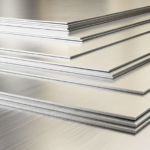
Aluminum-based metallic alloys predominate in manufacturing primarily due to their high strength-to-weight ratio, corrosion resistance, and machinability. They come in different grades, each with its own specific application. For example, 6061 aluminum is highly versatile and commonly used for structural parts, while 7075 aluminum offers greater strength, which is the primary reason for its use in aerospace applications. Alloys of this type are not only easy to machine but also selected when a combination of lightness and durability is needed, making them the material of choice in many applications. Proper material selection based on performance, environmental conditions, and cost would yield the best results.
Effect of Machining Feed on Surface Roughness in Cutting Aluminum
CNC Machining: The Complete Engineering Guide
Machining of Aluminum Alloys: A Review
A CNC lathe, or turning center, is a computer-operated turning machine that controls the workpiece’s rotation and the cutting tools’ stationary position for material removal. CNC turning is an operation in which the unit rotates around the spindle and the machinist uses a CNC program to control X and Z axis movement for operations like facing, threading, and boring. Modern CNC lathes may include live tooling for milling and can also operate in a mill-turn cell, combining milling and turning.
Milling and turning, though different in setup and motion, share similarities: both use CNC program-controlled cutting tools with high precision, require careful tool selection and speed/feed calculations, and play vital roles in today’s manufacturing industry. In both procedures, the choice between multi-point and single-point cutting tools depends on the method, and the machinist must select the operation settings precisely. CNC drilling, along with finishing passes, is used to meet specifications.
The significant distinction lies in the motion of the parts involved: in milling, the workpiece remains stationary while rotating cutters remove material; conversely, in turning, the workpiece rotates against a fixed cutting tool. This alteration dictates operations and processes—milling handles complicated surface profiles and face milling operations, while producing cylindrical features and threading is turning’s domain. The difference has also influenced tool characteristics and applications common to each.
The best time to opt for CNC turning is when part geometry is mainly cylindrical comprising shafts, pins, stepped diameters, or when turning better produces threads and bores. Single-point cutting tools are used in spinning, and the method is usually faster for concentric features, whereas milling is better suited to flat surfaces, slots, and intricate 3D contours. Parts requiring both milling and turning features are produced by manufacturers using CNC turning and milling machines in parallel.
Milling employs rotating multi-point cutting tools such as end mills, face mills, and drills, so these tools experience different wear and require different feed rates and speeds. Turning relies on single-point cutting tools that are rotated and positioned in a turret on the CNC lathe. Machining methods diverge radically along every aspect, from geometry and holders to coolant application, thus the trade-off of cutting tool selection depends on whether the work is milling, turning, or a combination of both.
To make an informed choice between CNC methods, assess the geometry, tolerances, and production volume. If the part is predominantly cylindrical with holes, diameters, and threads, CNC turning is the appropriate process. If the part has features such as slots, pockets, or intricate 3D contours, CNC milling is the proper technique. For components with mixed features or to reduce setups, a mill-turn or multi-tasking machine should be considered. Discuss your requirements with a machinist or manufacturer to determine whether turning, milling, or a combination of both best meets your needs.
Choosing the right aluminum alloy for your CNC project requires careful consideration of multiple factors including machining method, part geometry, production volume, and application requirements. Understanding the fundamental differences between CNC milling and turning enables you to make informed decisions that optimize both performance and cost-effectiveness. CNC milling excels at producing complex, three-dimensional parts with intricate features, while CNC turning is ideal for high-volume production of cylindrical components. Both processes offer unique advantages, and in many cases, combining them with mill-turn technology delivers the best results. By carefully evaluating your project’s specific needs—including material properties, tolerances, complexity, and budget constraints—you can select the optimal aluminum alloy and machining process to ensure your project’s success. Remember that working closely with experienced machinists and manufacturers will help you navigate these decisions and achieve the highest quality outcomes for your CNC machining projects.