

Supportive, Professional, Client-Focused Service
From prototypes to full-scale production, we’ve got you covered.


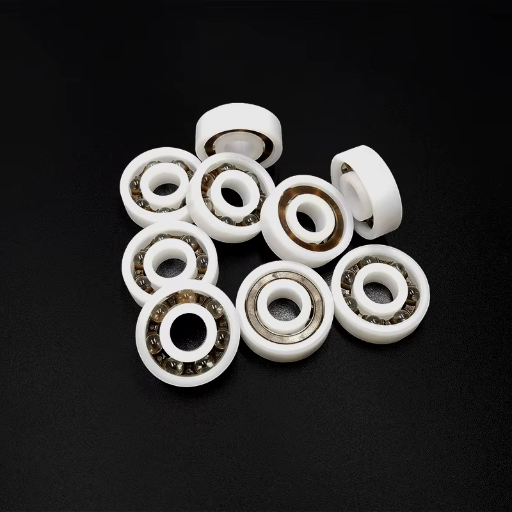
Self-lubricating solutions make an enormous difference for those looking to create efficient, low-maintenance mechanical systems. While POM (Polyoxymethylene) bearings and BUSHINGS make an outstanding showing as innovative components that work well in an extensive range of applications, the question beckons: why are they so remarkable? This blog will explore the unique characteristics and advantages of self-lubricating POM bearings and BUSHINGS that magnificently reduce wear, ensure longer life, and ease down maintenance. If you are a mechanical engineer, a designer, or simply never heard of clever material solutions, then this post will be an easy walk-through of all that you should know about this modern product.
Polyoxymethylene (POM) bearings and bushes are considered vital for many applications in mechanical engineering for their excellent properties. Those characteristics comprise never-ending durability and resistance to wear and rusting. That said, in further parameters, it is for the low friction and self-lubrication that vie for extending their use further. This is by no means the limit as to why they can survive, and yet maintain excellent quality for almost any weather type. In industries such as automotive, electronics, and industrial machines, they would prove most necessary since they would require reliable bearings and bushes for minimal maintenance. Moreover, the fact that the bearings do not require further lubrication increases their lifespan in return, and reduces maintenance to make a more streamlined, efficient, and cost-effective alternative.
Polyoxymethylene (POM), also known as acetal or polyacetal, is a typical engineering thermoplastic, especially known for its superior mechanical characteristics and durability. It is composed of high strength, stiffness, and excellent dimensional stability responsible for precision parts. At the same time, an extraordinary low-friction and superb wearing performance make POM resistive to nevertheless the most challenging environments. Another point that speaks to its advantage is that it has adequate chemical resistance, especially solvents, fuels, and lubricants, thus extending the potential use of POM over the automobile, electronics, and manufacturing machines. As both sharp (homopolymer) and tough (copolymer) affect POM, the fact that the material performs consistently throughout the range of temperature instances and stress conditions has also established its reliability status and unquestionably rated it as a top-line material.
POM is often compared to traditional materials like metals, nylon, and ABS plastic, particularly in terms of strength, durability, weight, and wear resistance.
| Parameter | POM | Metals | Nylon | ABS Plastic |
|---|---|---|---|---|
| Strength | Moderate | High | Moderate | Low |
| Durability | High | Very High | Moderate | Low |
| Weight | Light | Heavy | Light | Light |
| Wear Resistance | Excellent | Good | Good | Poor |
| Machinability | Easy | Moderate | Moderate | Easy |
| Chemical Resistance | High | Varies | Moderate | Low |
| Temperature Range | Moderate | High | Low | Low |
| Cost | Moderate | High | Low | Low |
One of the key characteristics found in POM bearings and bushings is self-lubrication. As such, they both assure consistent operations and require minimal maintenance. This means that they are engineered to function without lubrication during work, leading to lower spares supply and maintenance expenses. In particular, the self-lubricating quality of POM bearings has been found to make them extra reliable in challenging applications where lubrication may be difficult or impossible, such as where they are completely enclosed or difficult to access.
One of the greatest merits that self-lubrication offers is the reduction in friction between moving parts, hence lowering wear and tear over time. However, POM’s inherent qualities such as low frictional coefficient and excellent resistance to wear further promote efficient self-lubrication. In an increased life span, it is able to work efficiently with even moderate loads and speeds, with high toughness and resistance compared to most lubricated material. Along with this, the self-lubricating nature of the bearings eliminates the possibility of contamination due to external lubricants, thus ensuring a cleaner as well as safer environment.
It can be said that among others, POM bearings are designed to last a long time under various environmental temperatures at a moderate level as well. The chemical resistance and low moisture absorption of these bearings assure consistent performance in various applications. By doing away with the need for manual lubrication, the bearings, in addition, reduce operational costs besides offering the ease of no maintenance — a very good choice for most industries to run a long-term.
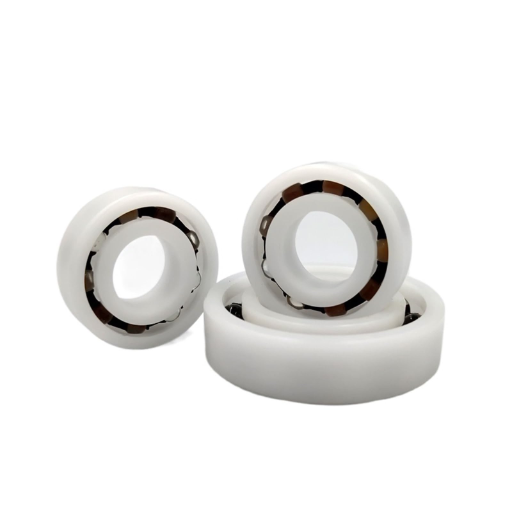
POM (Polyoxymethylene) bearings and bushings are stand-alone self-lubricating components that are specifically designed for low friction, durability, and wear resistance applications. Most of the products are made from POM which material is a thermoplastic distinguished for its excellent mechanical properties such as high stiffness, dimensional stability, and resistance to chemicals and moisture. In this regard, the POM bearings and bushings operate effectively under moderate load and speed conditions without additional lubrication. The ones often cited are in the case of automotive and transportation, industrial machinery, equipment, air-conditioning appliances, and machinery where having a maintenance-free operation is crucial. Their availability ranges from varied designs of plain bushings to flanged bearings and thrust washers which continually deliver high performance and extend life by saving system wear and tear. The flexibility, cost effectivity, and reliability make the POM bearings and bushes indispensable in the vast diversity of industrial applications, both small and large scales.
POM bushings and bronze bushings differ in material composition, durability, cost, maintenance, friction, and application suitability.
| Key Point | POM Bushings | Bronze Bushings |
|---|---|---|
| Material | Thermoplastic | Metal Alloy |
| Durability | Moderate | High |
| Cost | Affordable | Expensive |
| Maintenance | Low | High |
| Friction | Low | Moderate |
| Application | Light Duty | Heavy Duty |
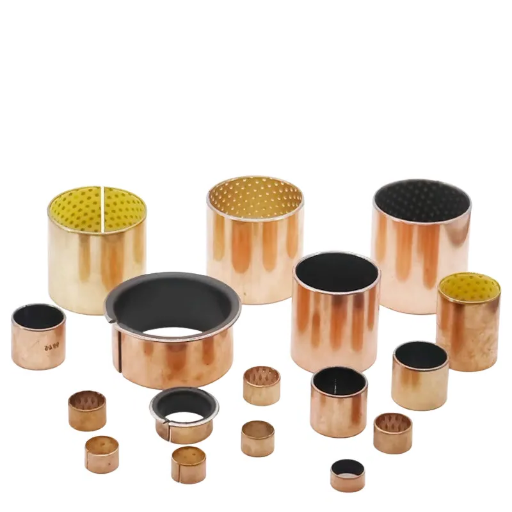
Polyacetal (POM) bushings or bearings are considered self-lubricating due to their low inherent friction coefficient and their capacity to run efficiently without additional lubrication. This condition greatly arises from the smoothness of the macromolecules of POM present, which decreases the retention limit between the surfaces. Such structure makes POM suitable for applications in which lubrication is a problem as well as the possibility of such actions.
Moreover, self-lubrication will be reinforced by sustained operations of POM parts. During in-service conditions, in these parts, with that slight transfer, a thin film of lube is formed over the surface. As a result, the material resistance will decrease, and with minimal wear and extended component life, the belts and bushings can thus be ensured to perform at full capacity in tough situations. Such skill-sets are critical for component applications, which change into moving loads the last moment.
POM bearings and bushings are commonly used when cleanliness is of utmost concern since traditional lubricants can attract dust and other debris. The absence of external agents reduces contamination risks, normally making these materials suitable for environments like those in food processing, healthcare, and precision engineering. The self-lubrication of POM is coupled with ease of maintenance, long term reliability, and high mechanical efficiency.
Self-Lubricating POM bearings feature an optimized design and are superior in parts that do not require lubricants for longer service life with the pursuit of bearing value.
The solid lubrication contained therein extends the life of the bearings by reducing the level of wear and tear under varying operating conditions.
The bearing ensures uniform reliable performance under diverse stress conditions and temperature range.
The POM bearings will be safe from moisture and most chemicals, and this is due to their great use in the harsh or rough conditions.
The POM bearings not only have a long life but also enjoy very few maintenance costs, which can render them very good value in their life cycle.
Disadvantages of self-lubricating POM bearings and bushings could be:
By fully understanding these obstacles they can make informed decisions while selecting self-lubricating bearings for POMs for specific applications.
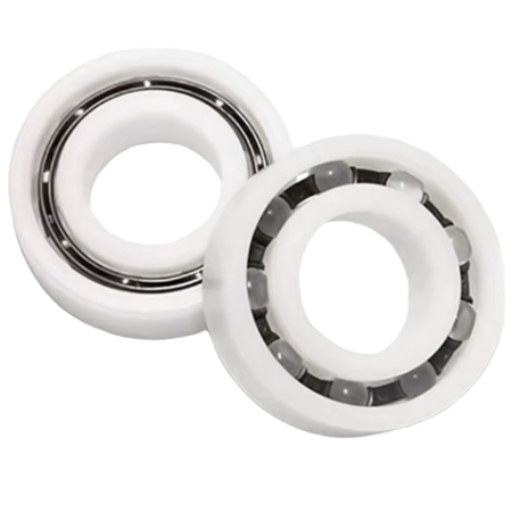
POM bearings and sleeves have to be assessed with regards to loading requirements. Hierarchy of the running parameters of speed of the load also contributes towards assurance for performance and durability. POM parts perform best under moderate loads and average to moderate speeds though they possess extreme wear resistance coupled with low friction. But any one of or both parameters in excess can expedite the rate of wear and unwanted failure.
For high-speed operations there may be a market for some type of external lubrication or some alternative material solutions, due to heat generation through friction deteriorating performance over time. Engineers must ensure the setup of proper tolerances and must also lubricate or cool the system sufficiently, all of which are especially important in applications that demand a high power that shall be optimized simultaneously with the speed. Proper reference to test conditions and a test of a given specimen in a living environment will somewhat assure the suitability of the design to fulfill engineering needs.
The choice between flanged and non-flanged versions of POM (Polyoxymethylene) must be based on the particulars of the application. Flanged bearings in POM provide enhanced support for axial loads and alignment, thus are found in applications that critically require accuracies in placing and extra stability against loads. They may also be used in members where a flange can reduce axial movement or allow improved assembly.
However, flangeless POM bearings are more compact and may be a better choice for use when axial support is not the most critical requirement and there is a need for press fitting. They are normally used in simple rotational or linear motion applications.
To make the appropriate choice, one must evaluate a number of things including the kind of load (radial or axial), space needed, and simple installation conditions. Always work with suppliers or manufacturers to specify only one bearing to meet performance and environmental requirements for the particular application. Proper testing and validation under actual working conditions are vital to ensure the reliability of the product.
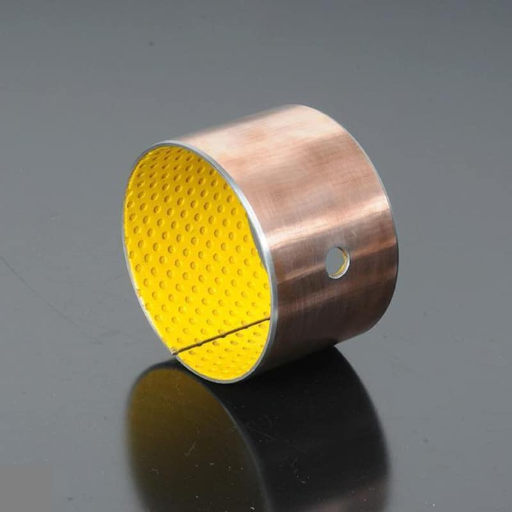
One must maintain regular inspections along with maintenance practices for the effective performance, prolonged working life and durability of POM bearings. The first most important technique here is to examine it visually and check for any wear marks, distortion, or damage to surface structures on the bearings. Vibrations or noise while the bearing operates call for considerations towards misalignments or contamination.
Schedule periodic cleaning in order to keep the bearings clean against the effectiveness of dust, fine debris, and contaminants. The cleaning should never use any chemical-based cleaners, to avoid wear on the element. Lubrication is a must, because the self-lubrication of POM Bearings is not very efficient. Perfect the lubrication regime as necessary, following the guidance of the manufacturer.
Lessening excess strain from bearings requires monitoring the operating conditions: temperature and load bearings. Also, inspect the adjacent components concerning proper bearing alignment since it is a very serious issue for the bearings’ performance and prevention of onward damages. If the problems are identified, ensure one replaces the catastrophic bearing as an immediate solution to system destruction. Incorporation of such inspection and maintenance procedures enables performance and long service life to be tackled.
The necessity of regular inspection to pinpoint wear patterns and a possibility of failure in POM bearings. Common signs of wear include: discoloration, cracks or deformation. All of which signal extreme friction or material fatigue. Uneven distribution of the wear pattern also might be observed, indicating that there are some cases of misalignments or improper load distribution within the system. Too much noise or vibration during operation also points to potential failure, which could be attributed to productions of lubrication or contamination. Keep checking for excessive heat that in itself can cause the material to deteriorate and lead to accelerated degradation of the compound performance. Regular maintenance along with timely treatments of the indicated events can extend the bearing’s lifespan while upholding the integrity of the system. Manufacturer advice should be taken as gospel in case of such events.
If the POM (polyoxymethylene) bearings are given proper maintenance and the user’s awareness is addressed in innovative occurrences, the life span will be prolonged. A routinely done clean-up will forbid particle fill-up, and the bearings will be vulnerable to abrasion. The best thing to do when dealing with lubrication is to use contemporary lubricants provided for POM-based materials since this approach is more optimum on the basis of efficiency and the ability to minimize friction. Furthermore, avoid loading bearings beyond their pre-set values or respecting outliers by temperature, as this will encourage faster fatigue and consequently rate of degradation.
In the competitive environment of the present market, increasingly high performing coatings and surface treatments are being adopted to fuel the longevity of POM bearings. These technologies provide radical resistance to wear and chemicals under highly demanding operations. Following such technologies along with inculcating innovations increases the mean time between failure and overall performance that followed with a reduced undesirable expensive equipment outages and repairs.
Plain bearing POM sliding bushings are bushings made of polyoxymethylene (POM), which are designed to run without oils. It is as was intended, very low friction for linear and rotary movement. The presence of the material is to have a minimum coefficient of friction against shafts or pins and to have the ability to slide, oscillate, or rotate with the least stick-slip. Some POM sliding bushings have recesses for lubrication and can be designed with a sintered bronze layer or porous bronze backing to minimize heat buildup and provide higher load capacity and self-lubrication, without the need for external oil in many applications.
POM bearings have numerous advantages over PTFE (polytetrafluoroethylene) bearings. First and foremost would be the improvement in dimensional stability, which is important for consistent operation under substantial changes in load and temperature. Also, water absorption is somewhat less compared to PTFE, making such use in humidity-prone or watery situations considerably more feasible. The higher tensile strength of POM and its quicker rate of abrasion indicate a much longer life for this product. While PTFE may occasionally deliver lower friction barriers, the easy machinability of POM incurs a lower price tag and is less costly to assemble and install. All these factors combine to increase the appeal of POM in diverse industrial and mechanical applications — and having sufficient resiliency, affordability, and low-maintenance demands.
POM (Polyoxymethylene) possesses incredible chemical resistance, allowing it to sustain assault from oils, fuels, solvents, mild acids, etc., without rapid deterioration. It is most important for applications where harsh chemicals could more easily destabilize even light exposure of conventional bearings. The chemical resistance saves POM bushings and bearings from the weakening development, preserving their structural integrity, and resisting swelling on the exposed surfaces in due course. Hence, parts made of POM would require much fewer replacements which gets it an advantage in terms of diminished cost of maintenance and fewer periods of production stoppage. It is a real benefit to automotive and electronics where high varieties of chemicals are involved in the process.
POMs usually function between mild to moderate high temperatures, usually up to 100°C (over 212°F) for standard grades while some grades can work within greater values. However, POM is hardly any subject to adverse effects on its stiffness and dimensional stability at such warmer temperatures and those must be observed from the manufacturer’s guidelines. A high degree of thermal expansion resistance is highlighted with POM compared to other materials, whereas aggressive heating for prolonged periods may lead to some degree of warping or decrease in the mechanical strength of the material. Should an even higher-than-expected temperature be allowed, POM copolymer grades could be considered with specific cooling systems that can optimize the whole system’s performance. The whole system’s temperature profile must be considered as well. If needed, enhanced thermal stability additives could be added for POM.
Yes, custom bears and bushes made up of POM may be provided to meet unique dimensional, engineering, or regulatory specifications. Manufacturers may completely customize a POM bearing or bushing and modify its geometry, material blends, or in other manners so as not covered within the indicated realm; this may include grooves, flanges, or even a special surface texture, as the need may warrant. Customization can be satisfactorily employed wherever there are conditions demanding specific performance or where there could be installation constraints, having something to do with high-speed conditions. In such instances, additives could also be added that serve particular purposes such as UV resistance, conductivity, or flame resistance. For custom designs, work very actively with a couple of suppliers to get what you need for your design and operations. This will provide you with an adequate amount of adaptability to drive innovative engineering projects.
The disposal or recycling of POM parts must be carried out in accordance with local environmental laws and hazardous waste management regulations. Not inherently biodegradable, POM may be shredded, and the reprocess technique would render it mechanically, resulting in new pellets that can be used in the manufacture of other products. In this regard, POM makes an immense contribution to the principles of circular economy and sustainable material use. Otherwise, POM waste has to be legally disposed of in waste disposal sites to minimize environmental contamination at all times. By supporting and practicing responsible waste management practices, the industry and users can help to save the environment sustainably while still enjoying the wonderful values of POM’s life in their systems.
Design of Special Plastic Bearings and Their Application in Renewable Energy Conversion Systems – Discusses the use of POM in bearings and bushings for renewable energy systems, highlighting wear resistance and applications.
Tribological Properties of MoS2 Nano-Balls as Filler in POM-Based Composite Bearings – Examines the self-lubricating properties of POM composites enhanced with MoS2 fillers.
Synthesis and Tribology Properties of Self-Lubricating Polyformaldehyde with Oil-Loaded Mesoporous Silica – Provides insights into advanced self-lubricating POM composites for bearing applications.
Study of the Influence of Temperature on Metal-Polymer Plain Bearings – Investigates the effects of temperature on the performance of bearings with polymer bushings, including POM.