

Supportive, Professional, Client-Focused Service
From prototypes to full-scale production, we’ve got you covered.



When you are engaged in stainless steel CNC machining, your considerations about which coolant to apply shouldn’t be limited to pressing ahead with effectiveness since it plays decisive roles such as extending the life of the cutting tools, enhancing the quality of the finished surface, and minimizing production expenditure. Stainless steel which is tougher and non-degradable makes it preferable to industries but this also comes with its own difficulties when it is being machined. This article will concentrate on Coolant Selection for Stainless Steel CNC Operations and why it is important, showing how the correct selection of machinery can increase the duration without faults, reduce costs and avoid wastages. Seeking to enhance the precision and profitability of one’s machining? One is on the best page. Take a look in the next paragraphs to see how proper coolant use can advance the manufacturing process.
CNC machines perform better with less heat produced and improved tool life when cutting fluids are utilized in machining. This is because these help in the lubrication of surfaces being cut and as well as dissipating heat caused by cutting action. CNC machining coolants are either water-based or oil-based, with the former being more popular. Due to their ability to cool more effectively than the latter, water-based coolants or factors suffice for general machining; oil-based coolants would duly be employed where lubricity is important and high accuracy and surface quality are required. Coolant used will be determined by the characteristic features of the material, the Revenge machining speed, and the work piece requirements. Coolant can unfortunately run out if not replenished or managed properly hence lowering the efficiency and lifespan of the tooling equipment. This, however, is one of the critical factors affecting the productivity and tool life of the cutting.
The function of CNC coolant is to aid the computer numerical control operations by minimizing the resistance during cutting and safeguarding the machine and the workpiece. This means that it can be used for cooling down, lubricating, or cleaning the cutting tools and the parts being machined. It also assists in removing chip formation. This is extremely important as heat generated causes the component to expand and this expansion will cause number of dimensional errors, rough surfaces and in some cases breakage of the tool. Simple cooling options are available as well e..g. water based, oil additive coolants synthetic and these all have specific applications. Coolant Selection for Stainless Steel CNC Operations is vital to ensure high quality work as there are several problems that may arise from bad coolant practices such as tool damage, part surface defects or reduced efficiency from the machine.
The choice of coolant is one of the critical factors which contribute to the quality and productivity of a given machining operation. Considering the recent developments, there have been changes made to coolant technology, which underlines the fact that it is important to choose the correct type, be it water based, oil based or synthetic, as it has a plausible and direct effect on the work achieved, finish of the surface and the cost of operations. To illustrate, the emerging practice of using synthetic coolants has gained great favor for the industries that consider themselves to be environmentally sensitive, because these products limit the amount of waste produced and are lower in the consumption of chemicals. Furthermore, modifying the coolant selection for tissue such as aluminum, titanium, and other specific materials helps avoid warm hurt and improves friction. It is worth the time to research with coolants and find the best practices to improve machining performance while prolonging the shelf life of tool use by decreasing cycle time, thus cutting expenses over time.
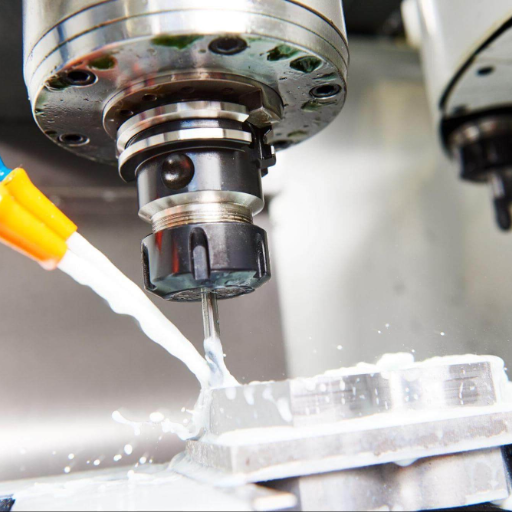
Regarding machining operations on stainless steel, the available types of coolants include water-based, synthetic, semi-synthetic, and neat oils, among others.
| Type | Advantages | Disadvantages | Best Use |
|---|---|---|---|
| Water-soluble | Excellent cooling | Lower lubrication | High-speed ops |
| Synthetic | Clean, long-lasting | Reduced lubrication | Finishing work |
| Semi-synthetic | Balanced benefits | Costs more | Versatile ops |
| Straight oils | Superior lubrication | Poor heat removal | Low-speed cuts |
Thanks to their impeccable cooling features, water-soluble refrigerants are common for use in CNC machining. They are mainly of great use in dissipating the heat that builds up at high machining speeds to prevent overheating and shrinkage of parts. They have inferior lubrication properties when compared to straight oils, but they are still the preferred choice in industries that require more cooling than lubrication. Timely cleaning and vigilant examination of the condition of water-soluble coolants in use are ways to guard against contamination and to ensure long service life. Their range of usability and functionality makes them one of the most ubique products for commercial uses with machining.
Synthetic coolants signify a significant leap in the machining world. The synthetic coolants are developed without any oil-based component. They are complete chemicals made from all sorts of compositions imaginable in the name of cooling means; their most noteworthy assets are their cooling capacity, enhanced cleanliness, and reduced attrition on tool bits. Moreover, they are tailored to avoid bacterial contamination and musty smells that are always a possibility with oil-based or semi-synthetic coolants.
Synthetic coolants offer great advantages in high-speed machining, where heat build-up is significant. With their excellent heat equilibrium capability, they will regulate the machining temperature well, upholding higher dimensional precision of the machined work. Again, as these coolants are oil-based, chances are that there will be no build-up of any particular residue during operation, thereby resulting in the latter’s multiple cleanliness-increasing properties.
Decisive factors while choosing synthetic coolants are material compatibility, machining speed, and all-encompassing environmental impact. Synthetic coolants are usually biodegradable. These are less harming for the environment. Making it an environment-friendly selection. Since synthetic coolants can be the solution for the sustainably-minded CNC machinist, this formulaic approach could be the answer, which is equipped to compete amidst the modern challenges of manufacturing.
Straight oils are a kind of cutting fluids utilized in CNC machining and primarily containing petroleum and mineral oils (the void of water). In general, these fluids are better suited for provision of lubrication. They do so by minimizing friction and heat between the workpiece and the cutting tool. Their use is well-suited for high-pressure machinability and a cutting operation on heavy materials like stainless steel or titanium.
Further improvement in the performance can be achieved by the use of additive packages in the oil. Additives like antiwear and corrosion inhibitors, extreme pressure (EP) agents may be added at various levels to impart extra machinability. While the lubricity and the surface finish directly ensuing from the use of straight oils and intact edgetool life make them the best bet, they tend to smoke a little bit more and some extra ventilation for the workplace is necessary. Despite this requirement for extra venting, these are still very high on the list if one cannot afford to have the above-mentioned decencies left unturned for his/her ultra-precision machine requirements.
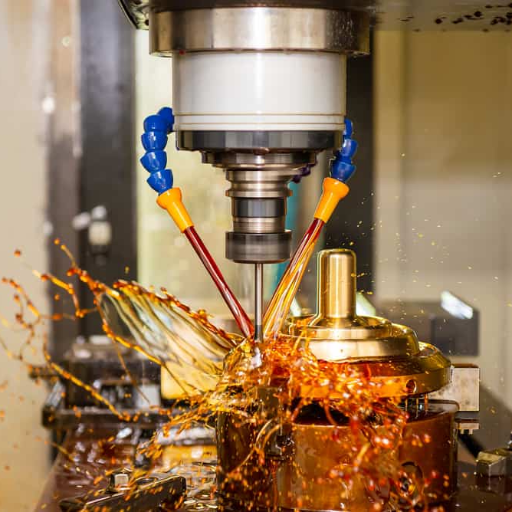
The first consideration for the appropriate coolant for machining stainless steel CNC operations is choosing a product that will possess excellent lubricating properties and excellent heat dissipation. Water-soluble, synthetic, or semi-synthetic coolants are usually preferred because they are perfect for cooling with diminished friction preventing deformation on the things being manufactured. Choosing a coolant with additives, say antiwear additives, pressure additives, or extra-pressure (EP) agents, also boosts their performance on machining stainless steel by reducing tool wear and ensuring smooth cuts. But the maintenance of coolant concentration and cleanliness extraction is equally important for the best results.
The choice of coolant for machining stainless steel in CNC (Computer Numerical Control) requires a coolant specifically formulated with direct regard to prevention of corrosion and compatibility with chemical properties of stainless steel. Expect pH-neutral coolants to contain corrosion inhibitors to help protect the material so that it retains its form during machining. The coolants should be chloride-free, as chlorides can lead to pitting corrosion on stainless steel, in favor of a high-end water-soluble coolant or one that is specifically designed for working in stainless steel, as these will enhance the performances while keeping the material intact.
While appraising the performance of coolant in the mechanical operation of stainless steel, some important factors need to be checked. Cooling, lubricating, and corrosion-resistant properties are quite crucial. The cooling property involved is required to slow down the onset of thermal energy that can distort or damage stainless steel workpieces. The lubrication is also done to ensure a smooth flow of the tool over the workpiece and subsequent safeguarding of the life of the tool. Protection of the material from corrosion caused by the coolant is a third consideration throughout and after machining. It is of paramount importance to keep a strict watch on the control of coolant concentration, rate of coolant flow, and cleanliness. Such controls must be exercised regularly to uphold a uniform level of performance as well as to serve preemptive measures to prevent the consequent contamination of the machined product due to improper coolant behavior. Assessing such factors in itself contributes to the possibility of achieving the best results, thereby increasing the life of both- the tools and materials.
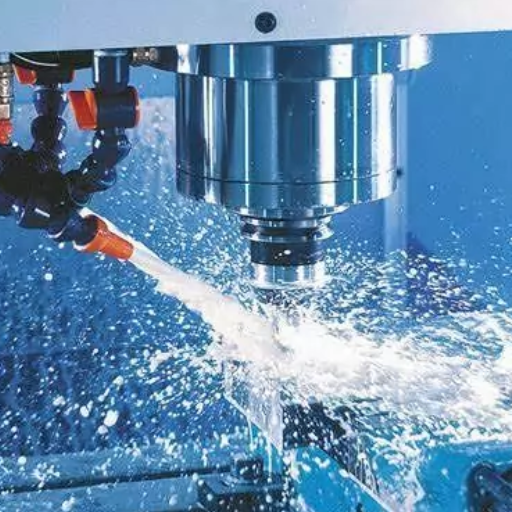
The correct application of coolant to stainless steel CNC operations translates into a number of good things. A good coolant will increase tool life through less wear and heat, making a cut sooner or generating heat and wearing the tool much sooner. The right coolant also limits friction for smoother machining, prevents thermal machining problems, and makes reducing tolerance more rigorous. Also, it provides a film of protection against corrosion-offering a final protection to workpiece and machinery. The best possible repellent/rejection, facilitation of heat removal speedily, and cleanliness by appropriate coolants will increase the quality of the finish by demanding more productivity out of the machine and lasting longer.
Choosing an appropriate coolant is a key requirement for the progress of CNC machining on stainless steel, where it is crucial to curb the accumulation of heat. Stainless steels have low thermal conductivity, which means rapid heat buildup during machining. Without effective businesses toward heat balance, it is very likely to wear out the tool, warp the work, and make the surface finish poor.
Coolants of high quality specially designed for stainless steel have one purpose, efficient heat reduction; Coolants such as these generally are of a numerous properties of evolutionary conductivity and evaporation dynamics that help it keep extraordinary temperature conditions while using high or long-speed machining operations. Therefore, this way, they minimize friction at the cutting point, which considerably minimizes the generation of heat in the whole.
At the proposal of the properly chosen coolant, the machine life of CNC tools used for turning stainless steels will increase. These good coolants continuously lubricate and cool processes therefore prevent high temperature and friction. Through keeping proper cutting conditions it cuts down the number of tool replacements; thereby saving costs and improving efficiency. In addition, they keep the tool in place for a longer time as there gains are extended to the cutting force used during its proper use.
Coolant selection is critical to the attainment of a decent finish when machining stainless steel in CNC machining. Coolants limit friction between the tool and the workpiece, thereby reducing surface irregularities and ensuring a smoother finish. Besides, proper heat dispersal by coolant guards against any thermal expansion or discoloration on the stainless steel surface that might otherwise render precision and appearance vulnerable. In addition, the coolants for stainless steel are specially formulated to avoid the development of alloy at the cutting edge, a problem common in surface finishing.
Proper cooling application helps to remove chips and other debris from the cutting area and offers protection against surface scuffing and damage. Evidence shows that manufacturers consistently report longer tool life and better machining efficiency when using coolants. Proper application of coolants is very crucial in CNC machining. Specifically coolant viscosity, and selection of proper additives in line with the machining requirements mean better cast and machined surfaces.

In short, these steps would assist in relishing the smooth functioning process and keeping in good shape the equipment used.
Precision machining allows for delicate cuts of the metal. This requires the austenitic concentrations to be kept under 7%-10%, more or less, that is entirely dependent on the specifics of the operation and the type of coolant. Consistency and failure proofs can be assured by constant control of the coolant concentration with a refractor. By using the above guidelines, one is facilitating effective machining with high-quality end products.
In CNC machining, the type of coolant delivery affects how the machine will perform, the service life of cutting tools and the surface finish produced. Flood cooling, mist cooling and through-spindle cooling are the most common methods. Flood cooling is the most popular and entails the flooding of copious amounts of coolant over the cutting zone. The greatest merit of such a cooling system lies in its quick chip removal and great heat mitigation, but the system also consumes coolant at a rapid clip.
By contrast, mist cooling injects a fine mist of coolant directly onto the cutting zone. Mist cooling can be applied effectively when the quantity of coolant required is small or for the machining operation where other conventional cooling techniques would create bigger problems. The last method, through-spindle cooling, sends the coolant through the tool fully created to thoroughly cool and lubricate the cutting edge. This is more important in drilling deep pores or machine sessions where very high speeds are used.
The cutting fluids have to be maintained carefully, with regular checking and adjustment to their concentration; in such a way, the fluids might work more efficiently, while giving the opportunity to prevent problems such as corrosion and bacterial growth. I try to clean and replace the old fluids with fresh supplies at times, especially when I realize that it is contaminated and is likely to spoil the machining quality—this eventually resulting in harm to the precision machinery. Keeping them sealed safely in the container is one key way to ensure these fluids stay effective.
In case the fluids are to be disposed of, I put some importance on adhering to regarding what local regulations lay out for the responsibility disposal of used cutting fluids. The usual trend is that I separate water-and oil-based fluids, so as to treat each kind according to its apparent requirements for disposal. It is also nice for all processes involving disposal to happen with waste disposal agencies that bear service area certifications for chemical waste handling; in this sense, wastes are reduced and environmental impacts with machining.
Experimental Investigations and Optimization of Machining Parameters in CNC Turning of SS304 Using Coolant at 0°C – This study explores the impact of coolant temperature on machining parameters for SS304 stainless steel.
Multi-Objective Optimization on the Machining Parameters for Bio-Inspired Nanocoolant – This paper examines the effectiveness of nanofluid coolants in CNC machining, providing insights into advanced coolant technologies.
Effect of Coolant Temperature on Machining Characteristics of High Carbon Steel – While focused on high carbon steel, this study highlights the role of coolant temperature in CNC machining processes.
Evaluation of Cryogenic Cooling in CNC Machining of Martensitic Stainless Steel AISI 440C – This research evaluates the use of liquid nitrogen as a coolant for machining martensitic stainless steel, offering insights into cryogenic cooling methods.