

Supportive, Professional, Client-Focused Service
From prototypes to full-scale production, we’ve got you covered.


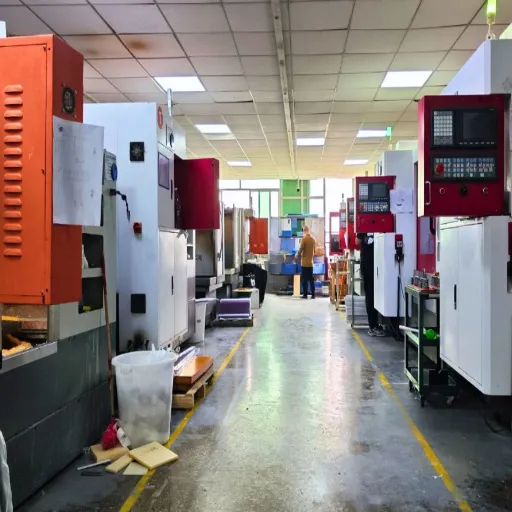
There are abundant numbers of CNC machine shops open for picking among where making the right choice lets the decision makers to ponder well. Such other important aspects will form part of the decision: the dosage provision, quality, prompt delivery according to specific needs, and congruence with the process needs towards the production of your articles. This guide will present all possible items of consideration for the furtherance of your possible choice in CNC work shop.
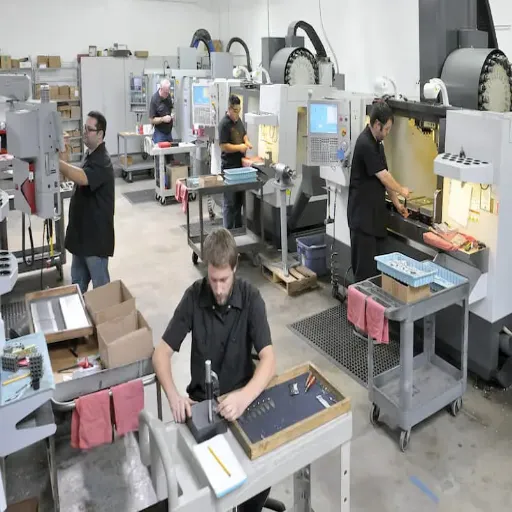
Once a prediction is all done, it is all about the CNC machine shop that is the clear element in any good completion job within manufacturing assignments. As the successful mismatching of data keeps evolving regarding precision manufacturing, productivity, and CNC shop reliability, the outsourcing strategy becomes extremely important. Any renowned CNC machine shop ensures the creation of good-quality products with the abilities and information that directly enhance the shop’s production effectiveness and cost-saving scheme.
The competition is intensive, and the chosen CNC supplier would, admittedly, deliver the most profitable outlay with the exacting and finely completed projects. One must be prepared to delve deep into the shop’s abilities, certifications, and projects, of course-mark my words; it really makes the greatest difference to the outcome of the project.
Computer Numerical Control (CNC) Machining is a manufacturing method in which pre-programmed software dictates the movements of tools and machines. The process is automated and allows for the control of a range of complex mechanical devices that include lathes, mills, grinders, and routers for the production of precise component parts, with little to no human intervention.
Pro-active communication channels, regular project status reports, and super-fast feedback mechanisms enhance customer relationships to the skills. Good subordinates really do attract the superstar team of loyal customers who bring all kinds of referrals from the present channel.
Since the majority of industrial communication approaches involve business entities mainly but not exclusively in precision manufacturing, CRM methodologies are becoming more relevant as the study of consumer insights influences decision-making. There is a majority of clients who see their priority needs as focusing on real-time or punctually delivered information and prompt access to communication media. This preference therefore creates an opportunity to enable CRM systems and AI-improved chatbots to accelerate response times and enforce response consistency. By using information to design their communication strategies, businesses might fitly seek to ensure that interest and trust are developed among clients.
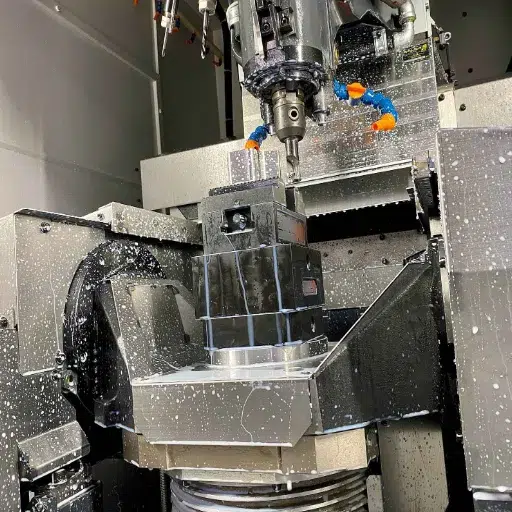
Evaluating the CNC capability entails a big consideration onto itself. A machine shop with modern capabilities would come equipped with machines intended to work on various precision cutting operations. The engines would range from 5-axis CNC to the most complex geometries. Real-time monitoring, predictive maintenance, and obvious shop floor optimization along with process workflows could be achieved using AI and IoT.
The workshop undoubtedly needs to handle an effective range of materials sent by various suppliers: metals, plastics, and composites. The shop should offer a combination of prototyping and manufacturing, particularly of small specialized features. As for energetic technicians and good production engineers, essential finishes are one of the advantages. They focus on quality product offerings given its limitations for beneficial oral communication. Paving its way through a strong regime and always on track. The workshop is its very embodiment, as far as the compliant body is constantly engaged in enhancing industrial progress. This is where its long term existence is guaranteed amongst its competitors and for its curious clients.
Implementation of a special approach used in linear production that is usually completed with certain processes is vital for all companies concentrating on customer feed-back. In the stock exchange, some customary methods are used, such as measures of a specified standard or guarantees given by a dealership or intermediary. Unused order flows are eliminated totally by applying assorted methods useful during a fiscal year.
It is essential for businesses to follow international benchmarks like ISO (International Organization for Standardization) 9001 for good quality practices. Those companies that emphasize the stringent practice of quality control and assurance have seen significant improvements with respect to operational efficiency and customer satisfaction. Thus with the necessity, implementation of up-to-date technology and trained personnel do manage to produce high quality output in competitive market.
Organizations must manage lead times in production in a way that meets demand while maintaining quality. Several strategies can revolutionize lead time and production schedule management:
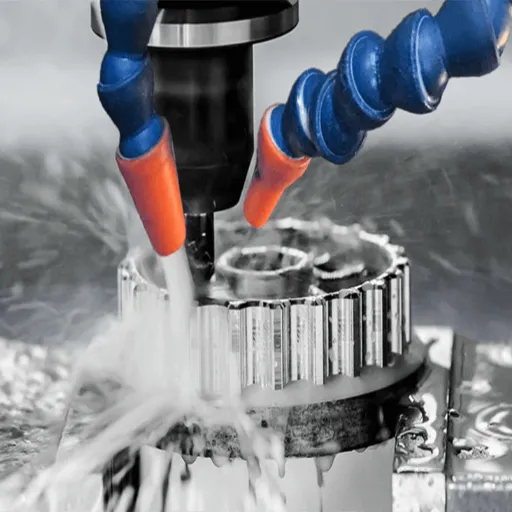
For close tolerance and high-efficiency manufacturing advanced CNC machine tools require being correctly calibrated and maintained. Upon being calibrated, mechanical parts are aligned best to eliminate the mechanical and human-made tolerances. The machine should to be frequently checked or inspected in-use to calibrate the machine axis, tool offset, and the spindle alignment and maintain the high level of product quality. The software programming tools and the laser calibration systems which are available can help improve the accuracy of making adjustments.
Maintenance considers the broader health of the machine and encompasses an air of periodic checks on fluids, technical bearing, and lubrication of moving parts, as well as any repairs in proper time so as to avoid unexpected machine breakdown and increase service life at the same time. The prevalence of real-time data is indescribable and so must be predictive maintenance in its own right in order to promise a reduced cost and increased productivity. The case of perfect calibration of CNC machines alongside well-maintained machines is dominantly an enabler in carrying over the needed precision, which is a must for any cutting-edge demanding manufacturing process.
CNC machinery utilizes a large number of tools and in their work, major machining tasks are achieved with these tools. Components that are used in machining tasks like these include wheels that are able to perform weight clipping, drills, and in special cases, lathe tools that are able to work upon the part precisely; these tools employ high-speed steel (HSS) or carbide as materials for tools since they support long-life and machining performance. Necessary to locate components during operation, they are worked upon by work-holding devices such as vises, clamps, and fixtures, which clamp the stock/material firmly during machining operations to avert safety and maintain work accuracy.
End mills, drills, lathe tools (HSS/carbide)
Work-Holding Devices
Vises, clamps, fixtures
Measurement Tools
Calipers, micrometers, CNC probing systems
Advanced Equipment
Automatic tool changers, intelligent sensors
Tooling, being the first ingredient, can never be productive without calipers, micrometers, and CNC probing systems for measuring dimensions and quality control. Due to the modern CNC machines being equipped with automatic tool changers and intelligent sensors, uninterrupted tool changes together with measuring machine performance in real time are available to the operator; it helps in maintaining a stable level for work output. These are combined with technological advancements that leverage the IoT to boost maximum production during high-speed machining, blending better productivity with increased quality.
Material compatibility is the first notable concern in the CNC machining process. As for material compatibility, some key factors associated with the component material-relating to hardness, melting point, and ductility-will significantly affect the way it reacts to fabrication.
Processing techniques can be based on material properties for optimization of results. For instance, in the machining of materials such as titanium that undergo thermal expansion, a practice necessitated the application of directed coolants, an action to avert overheating and the resultant deformation. Adjustment of cutting speeds, feed rates and tool selection in respect to wear resistance and cost considerations for the particular material being machined are required. Yet, using the newest CNC technology and supporting data-driven insights can help manufacturers to optimize their first-time quality toward the specific materials and processes within the limits of material wastage.
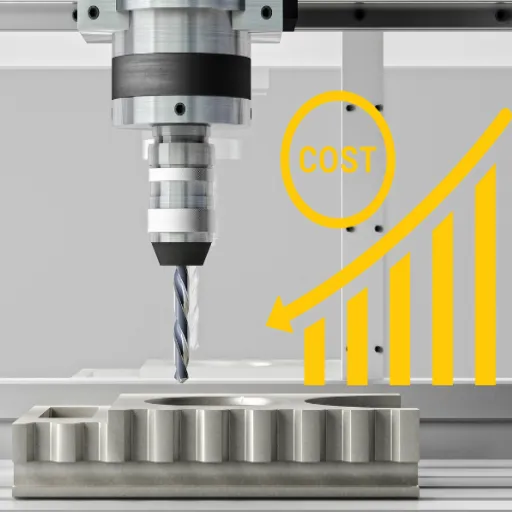
When considering quotes and estimates, it is necessary to consider how transparent the price breakdown is and to consider the reasons for the pricing. Quotes show a fixed price for goods or services, whereas an estimate is, for the most part, an approximate value subject to change with changes in the scope or facts that previously were little known.
Developing cost estimates for market-churning scenarios is where a company shines its flashlight beam upon waves and surges of all market and technological considerations: changes in raw materials, labor cost patterns, and competing technologies, and their remarkable price shift patterns. The use of these data allows the company to get into better spend forecasting and resource allocation for adaptation. Proactively looking from afar may only minimize abruptly diverse expenses so that such long-term investments are in themselves drawing a near-perfect alignment for contingent operation in the face of an ever-changing environment.
When evaluating CNC machining services, one needs to provide advantage over the cost expenditure for profit. This advantage generally includes precision, the speed of production, material quality and the product’s long life; the cost generally means the funds spent on making the product.
The major factors that distinguish CNC machining in the eyes of its buyers are precision and promptitude, and they are the ones that customers pay top dollar for. This would have watered down to the loading of in-house competencies in the process chain, which may prompt certain advanced business status and liable performance of the processing chain in positively increased market developments favoring companies in-situ. For identification of customer expectations with high levels of market forces, heavy tips could help CNC machining service providers for an increasing thrust of new contractual provisions to crisis and the genesis of cost-lowering entry barriers in delivering higher customer benefits.
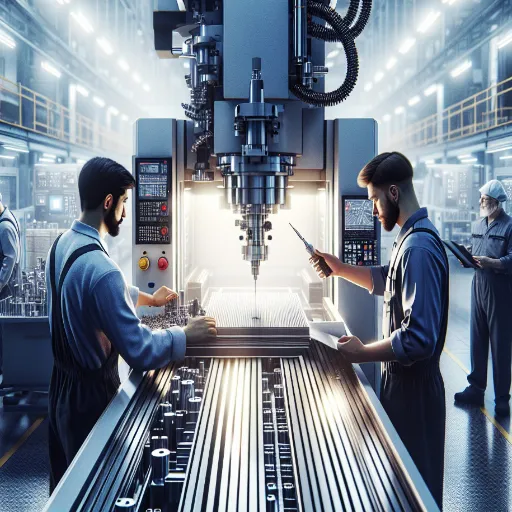
Responsive customer care is the appreciable part in building trust with CNC machined part clientele. Reaction time is the first recognized main factor that customers essentially attribute to the provider to be able to select. Questions such as “How responsive is your service provider?” and “What quality of customer service can you offer for my precision parts?” echo possibilities that quick and consistent help would gain customer loyalty and transmit switching costs where competitive battles have increased to saturation.
Post-production service and support is important for ensuring the long-term satisfaction of clients as well as maintaining the ongoing operations of the product or solution. It is apparent that consumers now highly value 24/7 support and self-service options—FAQs, online tutorials, and troubleshooting guides, for example.
Support Availability
Self-Service Resources
Troubleshooting Guides
Proactive Service
Usage and application of advanced technology helps firms address issues proactively while responding to customer needs and expectations. This technological augmentation reduces downtime and maintains loyalty by ensuring extended care for the customer.
The purpose of the evaluation checklist is to provide a structured reference system for identifying the characteristics of the CNC machining operations according to the current industry standards and technological advancements. It is observed that in the industry, precision, accessibility to artificial intelligence and the internet of things structures, and capability for customization serve as the top priorities. The checklist affords critical scrutiny of essential aspects in the processes of CNC machining: equipment validation, process efficiencies, and riding high on the new technologies to offer innovative and mutually rewarding competitive advantages.s.