

Supportive, Professional, Client-Focused Service
From prototypes to full-scale production, we’ve got you covered.


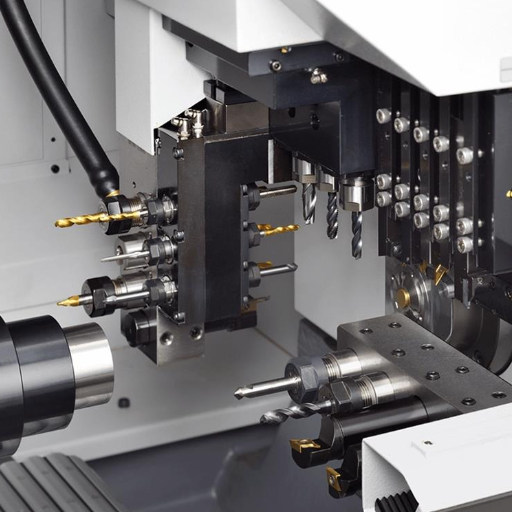
Swiss CNC machining is gradually spreading its wings as a precision manufacturing miracle offering the highest accuracy and speed in the production of intricate parts. But how do you tell if it is the exact remedy for your specific job? No matter if you are making pieces for medical industry, airplanes, or high-tech electronics, the ability to pinpoint the best moment and the reasons for the usage of Swiss CNC machining will place you ahead of your competitors. This article will reveal the special advantages of Swiss CNC machining, its benefits over the traditional machining processes, and the scenarios where it is most beneficial. If you want to be able to make the right decisions regarding your production techniques, then you are in the perfect place—just keep reading to learn how Swiss CNC machining can elevate your project.
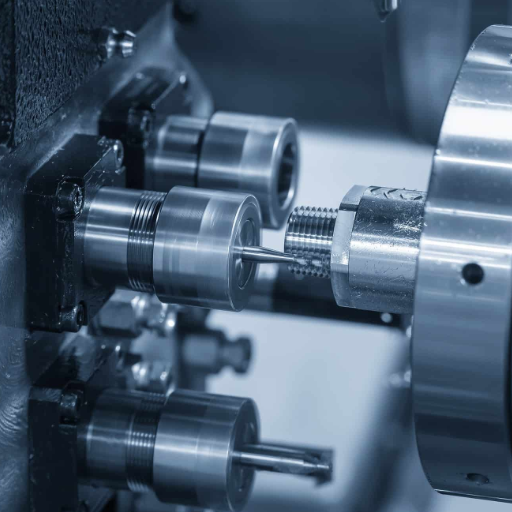
Swiss CNC machining is an extremely precise manufacturing technique that was developed primarily for the production of very complex and sensitive parts. In particular, the Swiss machine which is the central part of this procedure is a kind of CNC (Computer Numerical Control) machine that the material and the cutter move at the same time thus producing a very accurate piece of work with very fine details. This method is mainly applied where tiny, complex parts with very close tolerances are required.
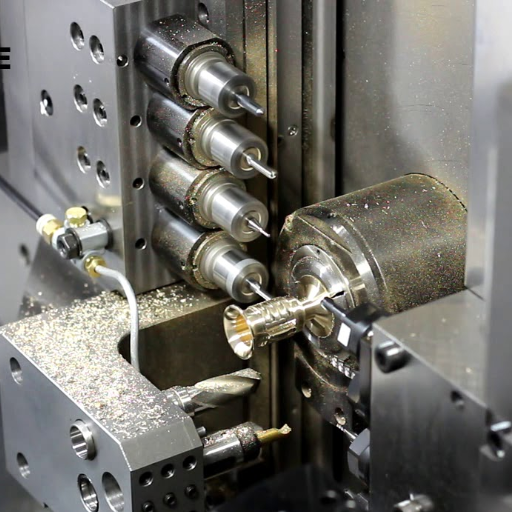
The cutting edge feature that sets Swiss CNC machining apart from others is the use of a guide bushing. The guide bushing is supporting the workpiece through its whole machining process and that leads to lowered vibration and steady accuracy even during the working with long or slender parts. Furthermore, Swiss CNC machines are indeed recognized for their capability of performing multiple operations such as turning, milling, and drilling within only one setup, resulting in a considerable time saving and better efficiency.
Due to its capability to manufacture components with remarkable quality and very good detailing, this process can rightly be called ‘indispensable’ for parts that have to meet some accuracy and durability requirements. Swiss CNC machining is not only versatile but also a safe process that has no risk of non-conformance regardless of whether it is used in the production of surgical instruments, aerospace parts, or electronic connectors.
The guide bushing supports the material close to the cutting tool and provides almost no vibration, which automatically means perfect accuracy even for very small or intricate parts.
The machines can do multiple operations like milling, drilling, and turning in just one setting, which dramatically cuts down the process time and moving parts between machines.
Can work with an extensive range of materials from metals such as stainless steel and titanium to plastics, maintaining consistent precision.
The precision of today’s manufacturing processes is the primary factor that allows for the production of high-quality components and goods that meet the exact specifications. Precise manufacturing processes not only make it possible to reduce errors significantly but also keep the material waste at a minimum, thus leading to increased efficiency which is one of the factors that the industry relies on to gain and maintain its competitive advantages. Furthermore, precision becomes a must-have tool in the aerospace, medical devices, and electronics industries, where even the smallest deviation from the requirement can pose a safety risk or result in a defective product.
Technological advancements like computer numerical control (CNC) machining and automation have played a significant role in making precision manufacturing possible. Such advancements enable manufacturers to make identical products in large numbers with very little difference and thus maintain the same quality across all products even in mass production. In addition, the application of design and simulation software has become a critical aspect of the production process where manufacturers can not only enhance their processes but also identify potential problems before actual production, hence making the production more accurate and reliable.

The major application of Swiss CNC machining in the medical sector is the manufacturing of very accurate and complex components. The medical devices that are used during the procedures and treatments get exact specifications very often because of their essential role. Orthopedic screws, surgical instruments, dental implants, and pacemaker parts are some of the applications where Swiss CNC machines demonstrate excellent accuracy. This precision ensures the functioning and reliability of medical instruments, which, in turn, is directly linked to the patients’ health.
Swiss CNC machining is extremely suitable for the medical field, as it can manufacture intricate designs and exceedingly tight tolerances. A perfect example of this is the ask for tiny sizes and odd forms for the device used in less invasive operations. Swiss CNC machining not only easily meets these conditions, but it also does it at a low cost. These machines can also operate with different kinds of materials including biocompatible metals (titanium and stainless steel) which is crucial for patient safety.
The aerospace industry is heavily reliant on innovations, quality, and trustworthiness, thus the Swiss CNC machining process becomes a vital contributor to its development. The accurate components which are needed in both the aircraft’s construction and the upkeep are made possible through the use of this technology. The Swiss CNC Machining method is a great aid to the performance and safety of aeronautical engineers by providing such high precision in parts like turbine blades and fuel systems.
There is no doubt that Swiss CNC machining has silently but strongly established itself as a significant player in the electronics industry, particularly in the production of precise and intricate parts. This technology is central to the manufacturing of tiny, complex components that are used in the making of electronic devices and that have to be fabricated to strict tolerances, and it is among these demanding conditions that Swiss CNC machining demonstrates its great potential.
This machining process is the most suitable when there is a necessity for consistent repeatability, particularly in case of high-volume production runs. The Swiss CNC machines can work non-stop for a long time with minimal human intervention and thus are highly suited for cases where the mass production is to be done not only rapidly but also at a low cost. Furthermore, this capability allows them to work with a wide range of materials, including metals and special plastics, which gives them the additional advantage of being able to meet the requirements of electronic components.
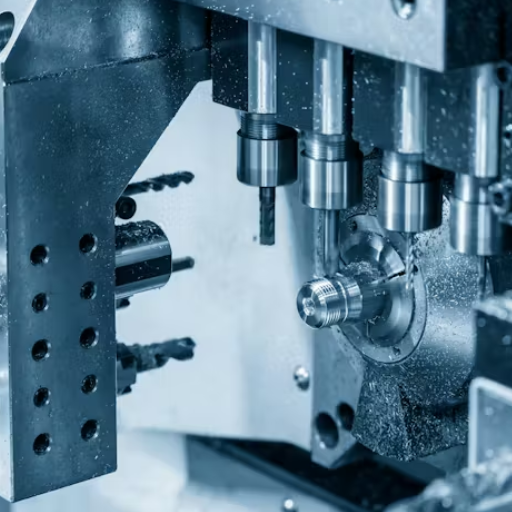
Swiss CNC machining has become famous throughout the industry mainly due to its outstanding accuracy, which is especially true for complicated designs. The precision, in fact, is just a by-product of the machine’s particular features, whose singularity makes it possible to maintain extremely tight tolerances, which most of the time are a few microns. Such accuracy could only be applied in sectors like aerospace, medical, and electronics where even the slightest errors could greatly compromise either functionality or safety.
The Swiss CNC machine’s multi-axis feature is another factor that boosts the precision. A complex part can be done on these machines by simultaneously manipulating many cutting tools which in turn reduces secondary operations. This not only ensures a higher degree of accuracy but also saves time and resources. The process’s high efficiency makes it suitable for the manufacture of tiny, intricate parts that require extremely high levels of consistency and repeatability.
Essentially, the Swiss CNC machines have eliminated production line inefficiencies almost completely with their introduction to the market. The rapid creation of highly intricate designs by the manufacturers has become a reality thanks to the machines. Because the machines are manufactured with such a level of accuracy, it is guaranteed that no rework will be required and that the same quality will be maintained throughout the production process since every single part will be made to exact specifications.
When it comes to accuracy, performance, and cost, Swiss CNC machining is definitely the best choice for production. This method is especially good for industries that need to make either a lot of or a few high-class, intricate parts. The Swiss CNC technology, by merging high-end automation with small and versatile capabilities, eliminates the need for several setups and installations, therefore reducing the labor and costs related to it manually.
| Cost Factor | Traditional Machining | Swiss CNC Machining |
|---|---|---|
| Setup Requirements | Multiple setups needed | Single setup |
| Material Waste | Higher waste | Minimal waste |
| Labor Costs | Higher manual intervention | Automated, reduced labor |
| Production Speed | Moderate | Fast |
| Scalability | Limited | Excellent |
A key benefit of Swiss CNC machining is that it is capable of processing fragile or complicated pieces with extraordinary precision. This is of utmost importance in sectors such as aerospace, medical devices, and electronics, where even the slightest deviation can cause a product’s performance to decline. Moreover, these machines cut down on material wastage to a large extent by using accurate cutting techniques which in turn brings down the overall operating costs and supports the environment as well.
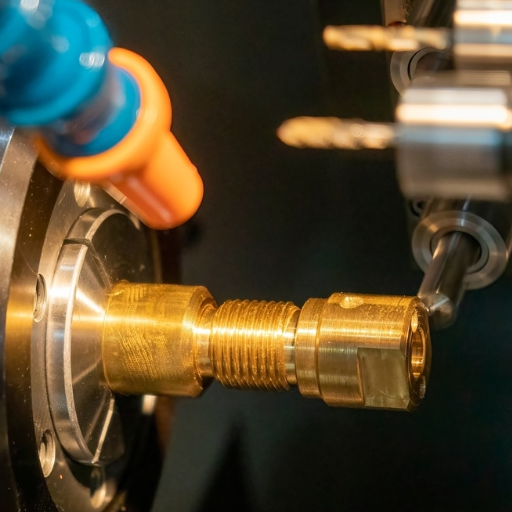
The unique capability of Swiss CNC machining, highlighting its accuracy and the handling of small tolerances, makes it a very good option for the production of tiny, complex parts. The process of Swiss CNC machining employs cutting-edge technology and professional tools to create intricate designs and specifications with exactness, and thus, it is the prime choice for the aerospace, medical, and electronic industries. Its repeatability in the production of high-quality components ensures that the products are consistent even when the runs are large.
Securely holds material beside cutting tool, reducing vibration and raising precision for delicate materials.
Creates complicated geometries in a single operation, essential for tiny-diameter components.
Simultaneous turning, milling, and drilling reduces production time and waste significantly.
Swiss CNC machining is the most suitable technology for specialty materials due to its high precision and adaptability. The use of titanium, stainless steel, aluminum, and certain high-performance plastics as specialty materials is common in industries where physical properties or durability is paramount. Swiss machines are more apt to perform these materials due to their exceptional controls over the machining process, thus ensuring a constant quality even for very detailed parts.
One major benefit of Swiss CNC machines is their ability to keep high precision while at the same time reducing material waste to the lowest level. Specialty materials usually have high prices, and the Swiss machining precision guarantees their effective use. This is highly important in the aerospace, medical, and electronics industries where materials like titanium or advanced alloys can be quite costly.
When evaluating a partner for Swiss CNC machining, one of the main factors to consider is expertise. One with a broad background in materials and shapes that are complex is to be chosen. A knowledgeable partner will be aware of machining tolerances, industry standards, and be able to avoid the usual production issues that others struggle with, thus ensuring good and reliable output.
The assessment of production needs and capacities implies that the first action to be taken is to scrutinize the project regarding its scale and difficulty. Initially, you should set the product specifications, the schedule, and the budget constraints very explicitly. Careful planning assures that the production process is in line with the goals and that there is no confusion with the provider or the producer.
Establish product specifications, timeframe, and budget limitations clearly to avoid misunderstandings.
Assess facilities’ instruments, technology, and manpower to determine project fit. Request samples or factory visits.
Review production time, supply chain management, and shipping arrangements for timely delivery.
Two main aspects of project success are customer support and turnaround time. Excellent customer support provides the basis for communication, trust and relationship-building which are essential for problem-solving and meeting client expectations. On the other hand, high turnaround time assures that the maintenance of products or parts is done within the timeframe, hence, not losing the market or the reputation of being reliable.
Effective Communication
Ensures smooth operational flow and problem resolution
Reliable Turnaround
Maintains production schedules without interruption
Optimized Processes
Well-staffed with proactive problem-solving approach
A: Swiss CNC machining (also referred to as swiss turning) is a very accurate machining process whereby the rod material is passed through a guide bushing and cut very virtually at the support point such that the latter gives stability and accuracy to the little details. On the contrary, conventional lathes and traditional lathe setups utilize less precision. The swiss lathe structure and non-moving headstock arrangement significantly reduce the exerting forces on the piece and also eliminate any deflection, thus why coming out from the swiss machines are high-precision parts that are not even possible to be produced with conventional turning or standard CNC-turned lathes.
A: Go for swiss if your job entails producing tiny and complicated parts like accuracy oriented components (precision parts) or aerospace parts in particular with very small diameters and extremely tight tolerances. Swiss turning centers are perfect for single machining cycle operations, better still, they can turn and mill complex components from the bar stock through a guide bushing almost simultaneously. If you desire to work within extremely tight limits regarding precision, benefit from short cycle times for small parts, and alongside get the screw machine quality together with CNC flexibility, swiss machining is then the finest option for producing such types of components.
A: The small and delicate parts enlisted for use with swiss machines include medical devices, watch parts (swiss watchmaker-style precision), connectors of electronics, and components of precision aerospace. They are at their best when they produce long, narrow parts from bar stock that contain several features—threads, drilled holes, and intricate shapes—all in a single machining cycle. When the volume of demand for high-precision parts with repeatability arises, swiss machining will always be the best choice due to its super precision and stability as compared to conventional turning.
A: The guide bushing keeps the rod very close to the cutting zone thus deflection and vibration are minimized. The fixed headstock together with the bar support providing stability and precision makes it possible for swiss machines to keep very tight tolerances while working with small diameters. This configuration results in reduced forces on the workpiece and the tools leading to quality and precision characteristics of screw machines being maintained across thousands of cycles and also leading to repeatability.
A: The current swiss CNC machines commonly referred to as swiss turning centers are capable of doing both turning and milling operations in a single machining cycle. Thanks to live tooling and multi-axis capability, swiss machines can produce complex components that in the past required multiple operations on different machines like taking them back and forth between turning machines and machining centers. The blending of CNC turning machines and milling reduces handling, improves precision of swiss machining’s multi-feature parts, and shortens cycle times.
A: Initial setup and programming for swiss machining can be higher than for conventional turning, but the long-term benefits include less primary operations, shorter cycle times, and higher throughput for small parts. Quite often, swiss machining services offer lower per-part costs for high volume runs of precision parts due to the fact that swiss machines produce parts from bar stock that are consistent and repeatable. Prototype work may require evaluating the machining shop capabilities, as conventional lathes or machining centers might prove to be more economical for low volumes.
A: For sure. Swiss machines can only process bar-fed parts; thus, they are not the perfect solution for large, heavy, or short-run one-off components. The designer is expected to deal with the bar stock being through the guide bushing, the minimum workable diameters, and tool access for complex geometries. In case of Complex features that require large tool forces or deep cavities, machining centers may be a better alternative. Discuss your design with the machining shop to better understand how swiss machining can be used and to pick swiss when its strengths match the part’s necessities.
A: The manufacturer of Swiss machines claims that they achieve first-rate quality by always supporting the bar stock, keeping it at a very small distance, and having a very fine control over the cutting forces that culminate in almost nonexistent machining stresses and no deformation at all. The combination of CNC control, high-precision spindles, and superior tool management ensures consistent quality across production runs, making it ideal for aerospace and other critical applications where precision is paramount.
CNC Swiss Multi-Axis Machining
This program provides insights into Swiss CNC machining, focusing on in-demand skills for machine tool operations and multi-axis machining.
Learn more here
Intro to Swiss CNC Machining
This course introduces Swiss CNC machining, including the production of complex parts, setup, and operation using materials like brass and aluminum.
Access the course details here
CNC Machining
This resource covers essential machining processes, including CNC mills and lathes, which are foundational to understanding Swiss CNC machining.
View the program here