

Supportive, Professional, Client-Focused Service
From prototypes to full-scale production, we’ve got you covered.


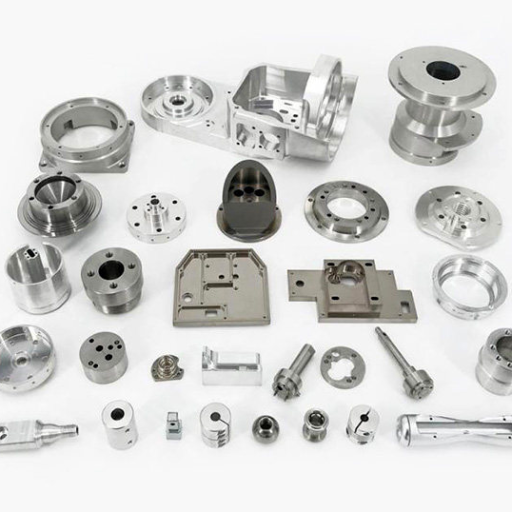
Industries require a high-performance aerospace bearing for operation in various configurations within extreme environments. The operating temperature of aerospace bearing parts in bearings having low loads can range between -195°C to +450°C or lower. Other factors like pressure, vacuum, chemical exposure, electromagnetic interference (EMI), and all from interacting elements also weigh heavily on bearing part consideration for aerospace applications. Magnesium is a good choice for aerospace applications because it is very light. magnesium, furthermore, can be easily transformed into an alloy or die-cast with high dimensional accuracy. When thinking of best practices for bearing lubrication, different specialists within the bearing division in aerospace may rely on many critical factors such as bearing lubrication, bearing design, and materials in relation to the lubricants used. The future of these bearings will emphasize green aircraft from advancements in UHN environment-friendly lubricants that have long lives from aerospace applications to bearing lubrication.
Design for Manufacturability (DFM) is an area involved in designing products for simplification and optimization during their manufacturing process. A successful DFM project will incur lower production costs, reduce waste, and improve efficiency while satisfying the functional and quality requirements of the product. Taking factors such as tolerance; material selection, and manufacturing processes into account early in the design phase enables a DFM design to represent smart designs that can actually be manufactured at a lower cost. Thus, it means less possibility for manufacturing problems and a smoother transition from design to production.
Pertaining to DFM, designing for manufacture principally entails considering the manufacture of products whereby one achieves efficiency, cost effectiveness, and ease of production. In recent times, owing to the industrial trends and data, the worldview subscribed by the DFM principles has become an added imperative with respect to the major developments in the market. This viewpoint applies most in the form of optimizing the workflow of manufacturing together with industry itself, aiming towards a perfect agility and sustainability. Adopting DFM can be rendered a weapon for the purpose of shortening product development cycles, of course, for quicker feedback to market demand. DFM help reduce waste of materials, wherein overall reduced costs may thereby transpire. It is these ways and means that demonstrate that DFM forms a crucial strategy for product development in modern times to bind innovation with practical manufacturable systems.
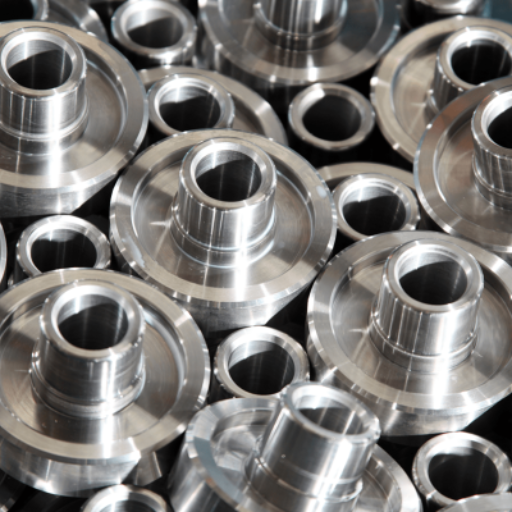
The choice of appropriate aluminum alloy is dependent on the specific requirements of the application. Consider the following parameters:
| Parameter | Description |
|---|---|
| Strength Requirements | For applications demanding high strengths, alloys such as 6061 and 2024 are suitable. |
| Corrosion Resistance | For situations where wetness and chemical atmosphere are harbored, choose favorable corrosion-resistant alloys such as 5052 or 6063. |
| Machinability | Raw forms in machinable designs have forms such as 2011 and 6262. |
| Weight Considerations | Go for 7075; use may be reduced on some counts but will maintain high performance in other scenarios. |
| Cost Efficiency | Compare important properties of the selected alloys against all the major alloys to ascertain the price. |
As long as these factors are taken into consideration, the aluminum alloy under selection will always abide by the traffic when functioning satisfactorily and cost-effectively.
The key for achieving a superior Design for Manufacturability (DFM) consequently lies in focusing on simplifying, enhancing functionality, and optimizing material usage in the design process itself. When Google gives rising trends and data on inquiries, some of the key design considerations for DFM are:
Complex designs tend to increase machining time and related costs. Much enhancement of production time and cheapening-processing processes such as CNC machining or injection molding are thereby obtained by eliminating or greatly reducing over-specifying the number of necessary shapes.
Completely avoiding the design of fully customized components and using off-the-shelf or readily available parts has a significant influence on reducing lead times and lowering costs. Searches show a rising demand for standardized fasteners, fittings, and connectors implying the preference of manufacturers for systems in which cost, scalability, and design adjusting could be weighed together.
Considering that the compaction of functions into fewer parts minimizes numbers of the assembly, illustrating this concept is akin to the new shift in regard to lean manufacturing strategies.
Fussing over green and recyclable materials reflects the downturn toward environmental awareness. The selection of high-machining material of metals and plastics, which stand out in getting minimal environmental impact, can ensure both performance and sustainability.
Thus, designers can be taught to design products not only for functional and cost-effective performance yet also for better and more responsible manufacturing methods.
When designing parts with aluminum, one of the repeated important steps that is never to be overlooked is the precision of tolerances and surface finishes to ensure the proper simplistic function and accurate working of the parts. Tolerance decisions are made based on parts’ final applications, wherein, the closer tolerances should be used for parts with more creativity because the application of any wrong kind of misalignment may cause poor performance. Standard tolerance range combinations meant for aluminum parts generally align with the standard set in the industry unless the project has specific requirements.
Given the benefit of increased corrosion resistance and enhanced look, smooth textures are better than rough. Various finishes can be employed with aluminum to support the engineering or taste. Anodizing is the desirred process for prolonging life. Bead blasting brings a mean and uniform surface to receive a quick finish. Polishing causes a particularly fine surface for reflecting upon. It will change with performance exposed to environment issues or any appearance standard whatsoever. This judicious trade-off shall allow great dwell-time production to fabricate benefitably some serious hard-wearing components.
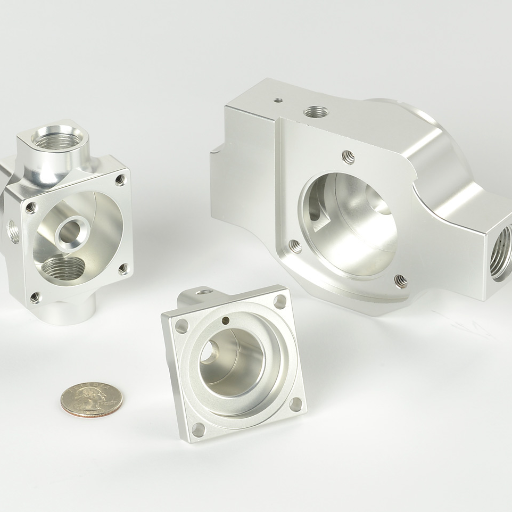
The production of aluminum parts is fraught with more than a few difficulties. The first challenge lies in understanding the characteristics of the alloy and its limitations. Aluminum possesses uncanny characteristics- light and easily malleable-however, it is very prone to cracking and warping whenever a huge load is exerted. It may also crack when improper machining is done on it. Proper tooling and correct processes ensure a reduction in problems, such as surface defects or dimensional inaccuracies. Thermal expansion, coupled with inadequate retention of tolerances, are also taken into account by concerned manufacturers. Process optimization and adherence to best practices are the necessary tools for overcoming all of these constraints and ensuring the supply of high-quality aluminum products.
Designing complex geometrical aluminum pieces goes hand in hand with a bunch of challenges. This is mainly because of the material and industry trends. Aluminum is ductile and easily malleable, and this is its advantage and disadvantage for machining when dealing with complex designs for shapes that might easily be deformed or drift off from the original designs. It is easy to understand how important it is for the wall thickness to be maintained evenly and that the presence of manufacturing anomalies could make such intricate structures bulge or warp in production.
With the CAD and simulation workbench tools, one causes the form to come into being in the process of painstaking scrutiny, even well before the onset of any real production process. Modern manufacturing already set up in the background, 5-axis CNC milling and additive manufacturing are the available options, standing until proved otherwise. These processes relieve the creation of parts with complex undercuts or internal channels which would remain mechanically infeasible if made through the use of conventional methods.
So it is true to say that an understanding of thermal and mechanical stresses that arise during the formation of aluminum components could work wonders in terms of boosting performance and reliability. By means of up-to-date technology and proper design principles, manufacturers become justified in doing away with difficulties that may be directly caused by sophisticated geometrical configurations without compromising quality or productivity.
Achieving lower machining costs in the processing of aluminum parts comprises process optimization, waste minimization, and enhanced efficiency. One important strategy is to design parts for makability by making part geometer simpler to reduce the need for complicated machining operations. In addition, the use of standard tools and processes would favor cost reduction. On another note, for proper tool life while being machined, appropriate selection of an aluminum alloy by the manufacturer renders machining easier. Lastly, the use of advanced techniques such as automation and preprogrammed machining paths could streamline the procedure significantly and enhance cost efficiency, reducing labor costs and manufacturing expenses while ensuring quality.

Go for genuine carbide tipped tools meant for aluminum applications. Regular maintenance on cutting implements ensures good performance and avoids downtime.
Adjust the spindle speed settings and feed rates for aluminum characteristics. Higher cutting speeds with appropriate lubrication help to take a significant chunk out of the chips and smoothen the surface finish.
Bear in mind that there is a high volume of chips generated during aluminum machining. They need to be removed so that the cutting tool does not get damage on account of heat.
Help control temperature and friction with special coolants and lubricants during machining. This helps keep the tools in immaculate condition, and with dimensions held to specification.
Employ custom CNC programming that is tuned to the design requirements and properties of the particular material. These programs cut off unused movements and thus save time and reduce wear.
Through the employment of these practices, it is possible for manufacturers to optimize CNC machines for the purpose of machining aluminum parts with maximum precision and cost-effectiveness.
Die casting stands as an efficient production technique for aluminum alloy parts marking high accuracy and surface finish. In this process, molten aluminum alloy is injected into a steel die under pressure. The technique ensures the rapid production of components with precise dimensions and intricate geometries rendering in precision.
The major types of die casting aluminum alloys are as follows:
Modern die casting technology is appealing to AI, using machine learning to enhance mold design, defect prediction, and quality control. These developments, in conjunction with the fact that aluminum alloys are light and corrosion-resistant, keep die casting at the forefront of related industries such as automotive, aerospace, and the world of consumer electronics.
The aluminum parts manufacturing process involves using easier and more advanced methods for reducing production time and waste. Machining techniques with high speed involving proper tools make the most accurate precision machining with the material lost the least. Automated processes, which include robotic arms handling parts and assembly, improve productivity for obvious reasons that they’re consistent; management software should therefore also support the same. Moreover, the simulation software justifies how mindful do decisions then become when working on aluminum product definitions that correctly identify potential flaws before production. A combination of these can lead to improved efficiency while delivering quality and durability to aluminum components.

Securing manufacturers’ loyalty is a vital ingredient to ensuring a smooth partnership and delivering quality results. So imperative is communication, being open and transparent; there is needed to be updated regularly and clear communication of what is expected of all parties. Feedback is helpful enough for questions to be dealt with in the interest of more trust and fewer misunderstandings. Besides, common ground shared by mutual understanding and goals, leading to uniting their respective interests, is always preferred. Experience and good references in the required discipline, from the manufacturing side, will also move the partnership to higher levels through continuous engagement with them-moving from the traditional handshake oriented toward in-person visits or virtual meetings. Transparency and reliability form the ground to stability and success evermore.
It will also be immensely vital to ensure that the results we desire can be achieved if we opt for aluminum alloys by integrating an implicit communication about the design intent. A comprehensive proposal containing technical drawings along with necessary specifications that would cover dimensional tolerances, surface finishes, and some performance aspects. Additionally, simulations or 3D models, if possible, might further provide a comprehensive insight into the visual appearance of the product for all interested parties.
Further, clear specifications should be introduced on how the desired aluminum alloy grade will meet their material performance requirements. This can be usefully done with the close cooperation of some manufacturing parties at the initial stages of the project, where their suggestions regarding feasibility and areas that might likely call for modifications during production are likely to be helpful.
Faithful adherence to project schedules and budget would certainly ameliorate this unwanted situation. Strange though this may sound, doing what one always does is one’s fundamental responsibility. Every project manager assiduously monitors their assigned projects, fully comprehends the limitations of change order processing by drawing up an exaggerated number of change orders, and works intimately with the owner to deliver a successful project.
Propagation mechanisms should be seen as a key factor in fine-tuning and continuously improving processes by attending to feedback from various stakeholders, be they engineers, manufacturers, or end-users. Performance appraisals, which must include prescriptive suggestions, can serve as well the necessary triggers for minor adapting changes enabling launching an entire set of improved processes! Regularly auditing them and also sometimes sitting back to reconsider the procedures themselves are crucial to keeping the process alive and relevant, always up-to-date to ever-changing needs, rendering the sector fertile for innovation and quality.
Process Selection for the Design of Aluminum Components
Forming Techniques for Lightweight Complex Aluminum Panels
Analysis and Design for Aluminum Forging Process
Design for manufacturing mitigates manufacturing costs by simplification of design requirements, minimization or elimination of machining operations, and optimum draft angle and thin walls for aluminum die cast products. Choosing the right material: either 6061 aluminum or an aluminum die with minimal complex cores be essential in order to lower the die cost and duration of the cycle. Companies should think about setting up, tooling, and design for assembly early on in the design iterations to obviate secondary operations such as extensive machining or powder coating and get the products to market capacity more rapidly and reduce the number of design costs.
Other things along this line would be the techniques of making parts simple with reasonable round corners, avoiding the up-and-down walls, and clamping tight tolerances into areas where it is absolutely necessary for the working of the part. Also preferred are features conducive to ease in machining, use of standard aluminum profiles in extrusion wherever possible, and minimization of the use of complex geometric structures that tend to be extraor-dinarily challenging for manufacturing. GD & T has to be used to reflect the critical part-to-part mating requirements, and the production and design costs can be reduced further by planning jigs and tooling that would, in turn, reduce machining time.
For reducing tolerance issues, specify looser tolerances where possible and apply tighter tolerances only to functional interfaces. Use datums and GD&T to control critical relationships. Design choices include incorporating alignment features, using standard fastener patterns, and designing parts and components for design for assembly. Early prototyping helps validate tolerances for mating parts and minimize design iterations and manufacturing challenges on production later.
For the aluminum chassis and high-strength parts, the criteria should include the choice of alloys and processes that meet the physical properties needed for mechanical applications. Increase the wall thickness segmentally where necessary to avoid thin walls that are hard to machine; rather, incorporate ribs into the design to increase stiffness without needing to increase their overall thickness. Generally, see that the design allows critical features to be machined or finished even if that creates some possibility of risk; think about the possibility of powder coating or other surface treatments to save on rework time later and think of design-for-assembly on parts to avoid unnecessary welding and fasteners.
One of the potential results is weight sparing with thin walls but in danger from warpage that may be due to ribs and shrinkage, air entrapment, or other porosity, making it difficult to be machined. Balancing thin walls with ribs keeps the part straight and maintains stiffness for machinability. In some cases, depending on manual methods, special surface enhancements may also be required, adding to that obvious expense. In the assembly stage, learn to design for ease of later finish, i.e., possibly for color- or even picture-coatings or finish as necessary, without further-handling concerns. On the balance between aesthetics and manufacturability, one may find more feasible choices, some of which may be permitted by choosing among processes as found best for both visual and functional demands, cast parts as opposed to machined or plastic parts.