


Supportive, Professional, Client-Focused Service
From prototypes to full-scale production, we’ve got you covered.


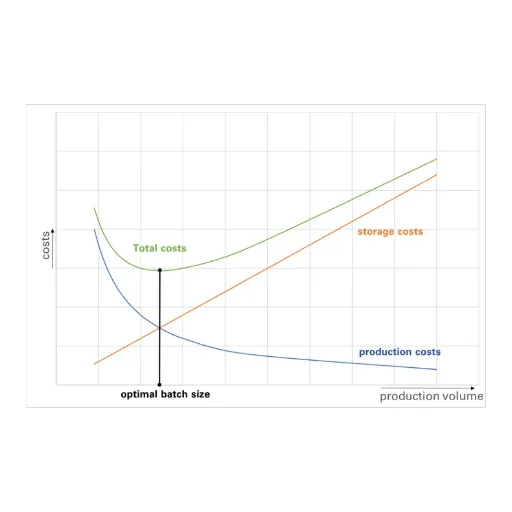
The primary method that every wholesale business should implement to maximize cost savings and keep profitability up is having a good grasp of batch size economics. The volume pricing, which is the mainstay of the whole plan, underlines that bigger orders give rise to savings that are more substantial. But the question is when to raise the batch size and how to recognize the moment when volume pricing really starts to be a benefit? This detailed manual will dive deep into the batch size economics, discuss the elements influencing price changes, find the operational efficiency “sweet spot,” and indicate when volume increase means more profit.
Whether you’re a purchasing manager, supply chain professional, or business owner, this guide provides the essential insights needed to make educated and strategic decisions that enhance your bottom line.

Batch size is the number of products usually manufactured in a particular production process simultaneously. This concept is essential in production as it greatly influences production efficiency, costs of large-scale production, and control of stocks. Finding the right batch size guarantees the best trade-off between production expenses and operational flexibility.
Larger Batch Sizes:
Smaller Batch Sizes:
Current data points out that companies are increasingly resorting to operational strategies to reduce the impact of the changing market requirement thus making the production smoothing more important. Firms are aware of the necessity of the cost-effective resources alongside the need for providing the flexibility that is required for both tactical and strategic adjustments without losing their competitive position and operational agility.
An Economic Order Quantity (EOQ) model that includes total ordering costs (which consist of procurement, administrative, and setup costs) and holding costs (which consist of storage, insurance, and damage) is one of the basic principles that each company aiming at cost-cutting in inventory management must follow. The EOQ model obliges companies to take measures while carefully managing their inventory so as not to end up with too much or too little stock at any given time.
Search trends indicate increasing interest in how EOQ can be used when supply chains face disruptions or when customer demands become unstable. Key questions include whether EOQ can assist in streamlining operations in dynamic environments.
The answer lies in real-time data availability and analytics. Incorporating such analytics makes it possible to modify order cycles and sizes in relation to demand changes, preventing excessive costs. This method reduces unnecessary expenses while promoting functional flexibility, allowing firms to easily adapt to radical business environment transformations.
The optimization of batch sizes is heavily influenced by efficient supply chain operations, which are capable of balancing production effectiveness, time management, and cost control. As per the existing trends, companies are trying to maintain the fine line between flexibility and cost-saving through the application of strategic and state-of-the-art supply chain methods.
Just-In-Time (JIT) inventory systems gradually become more and more popular because they allow the production of smaller batch sizes as needed at the moment, thus solving problems of excess production and inventory holding and adjusting to fast and unpredictable market changes.
The application of advanced forecasting methods can lead to a precise prediction of market necessities which n turn allows the planning of batch sizes more effectively, hence reducing the amount of waste created through overproduction or costs incurred through underproduction.
The use of integrated digital tools like predictive analytics and machine learning benefits the decision-making process and at the same time enables the managers to detect trends and handle risks in a competent way.
Ultimately, these methodologies build more responsive, economical, and environmentally sustainable production systems that shield supply chain functions from disruption.
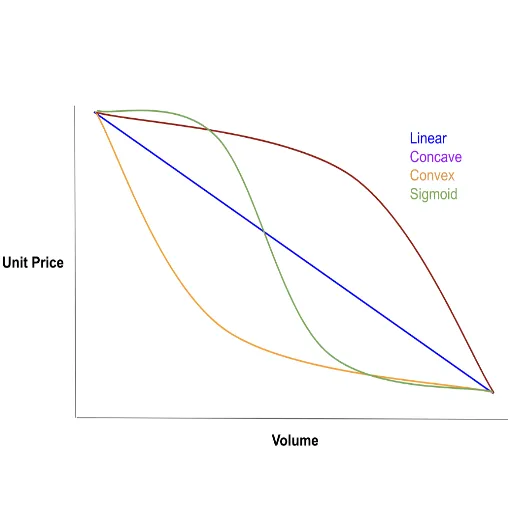
The phenomenon that directly links output levels to the cost rate per unit is usually called the economies of scale. The output increase brings about changes in the costs of the product considering—the costs of production facilities and equipment and the costs of the initial setup—so that the price per unit is lower. Consequently, it is the case that high volumes of production can be sold at rates per unit which are at the same time, profitable.
Recent search statistics show remarkable growth in businesses’ desire to lower production costs in unstable markets. However, excess production or activity expansion without equal demand increases may result in higher stockpiling costs and unnecessary waste, ultimately defeating the price reduction effects associated with optimal unit prices.
Discount pricing models are durable yet sophisticated approaches that invite customers to order multiple units at reduced prices. Statistics show that terms like “bulk order discounts” and “wholesale pricing strategies” have seen increased usage over recent years, indicating buoyant demand for implementing such tactics. Introducing bulk discounts helps businesses concentrate on price-sensitive customers and business buyers.
To calculate the point at which volume discounts become viable, the critical task is determining an optimal minimum sales level that compensates for decreasing margins caused by discounted prices. This requires analyzing both fixed and variable costs, and identifying the price point at which excess unit sales compensate for margin reduction.
Search engine trends can be utilized in pinpointing to businesses the times when customers are most eager to buy their products, thus allowing them to plan their promotions in line with the customers’ interests. The shifts in customer searches related to marketing or sales terms might indicate the presence of unexploited market areas where large-scale sales could be made.
Such an approach not only guarantees the best prices in the market but also contributes to the firm’s profit increase through the application of data-driven choices.

Production expenses occupy an important position when analyzing capacity and possibilities for various scale pricing levels. These costs include materials, labor, fabrication, and delivery—all crucial to production.
Base costs that fluctuate with market conditions and supplier relationships
Direct and indirect workforce expenses affecting per-unit production
Fabrication machinery costs and setup time expenses per production run
Delivery, logistics, and transportation costs affecting final pricing
It is possible to increase the accuracy of price structuring by looking into the consumer behavior and demand patterns. In case of data mentioning the higher interest in products at certain periods, the companies might consider the cost of raising their capacity to fulfill the demand created by such interest. It becomes easier to reduce production costs when analyzing customer needs and trends, which, in turn, makes it possible to construct the very beneficial volume discount offers that will bring profit while catering to the intended markets.
The costs associated with inventory are a major concern for the majority of companies and directly impact the setting of the optimal batch size. The mentioned costs include payments for storage locations, coverage for insurance, loss of value, and risk of outdatedness—all of which can easily blow up with wrong inventory handling.
One of the main advantages of analyzing online user activity and search trends is the possibility to predict demand and therefore to reduce both production and storage costs. If the trends indicate that a lot of customers will need a particular product at a specific time, the manufacturers can increase or decrease their production gradually, thus incurring less carrying cost and avoiding stockout problems. The use of data to determine production size leads to efficient utilization of resources while at the same time maintaining the flexibility of market dynamics.
Demand in the market is the primary factor which leads to complex situations that are initially perceived as consequences of the laws of supply and demand. A nd batch size economics and volume pricing implementation are factors that businesses must consider while navigating several weird developments in today’s competition, political framework, and global trading environment.

Enhancement of batch size optimization is well-served when real-time data is factored into decision-making. Businesses can dictate production scheduling to meet expected demand based on prevailing search interests and market indicators.
When search interests toward seasonal products occur, adjust batch production to prevent shortages or waste. During lean demand periods, reduce batch sizes to avoid overproduction costs.
Overlay data insights with predictive model functions to anticipate changes, helping reduce costs while raising operational effectiveness.
Use this approach to match demand and supply through sophisticated information integration in the production process.
Using contemporary technology and firm data on the most recent search trends, businesses are able to make their operational planning for economies of scale more effective. The information gleaned from the search engine market not only helps to clarify the consumer’s behavior, the seasonal activity patterns and the shifts in the product expectations, but also facilitates companies in identifying the pricing trends and thus being able to set prices accordingly and in a timely manner.
| Technology | Application | Benefits |
|---|---|---|
| Predictive Analytics | Forecasting demand patterns | Improved accuracy in batch size planning |
| Machine Learning | Pattern recognition and optimization | Automated pricing adjustments |
| Real-Time Monitoring | Tracking market conditions | Responsive pricing strategies |
| Inventory Management Systems | Automated stock level optimization | Reduced holding costs and stockouts |
If search volume rises indicating customers purchase certain goods more during specific months, firms can exploit these opportunities by deploying segmented pricing strategies. Through effective application of predictive analytics and machine learning algorithms, demand estimation significantly enhances as inventory-matching pricing systems implement responses to current shop conditions. This combination of technology and data makes volume pricing not only an efficient sales engine but also a marketing weapon meeting ongoing management vision.
Tailoring discounts to increase revenue requires properly examining external information sources to understand consumer demand and preferences. Using search data about most sought-after items and seasonal patterns, companies can adjust discounting and marketing strategies to push products or services in highest demand.

Retailing has often relied on one of the main ways to give discounts based on the amount purchased, as a way to raise sales and promote customer loyalty through purchases. The use of search engines gives retailers a chance to get to know the customers’ preferences regarding the information and the ways they want to buy the products.
Question: Does volume pricing improve revenue efficiency in retail?
Answer: Overwhelmingly yes, according to the data. Retailers applying volume-based discount systems have expressed considerable improvements in volumes and average orders on highly sought-after items.
Key Insight: Businesses taking advantage of data analytics stand a better chance of matching pricing strategies to appropriate audiences within optimal timeframes, meaning increased sales and customer satisfaction.
To understand how batch size choices relate to manufacturing efficiency and resulting profit, we can examine search engine trend data analysis. By studying customer search trends and patterns, manufacturers can adjust production levels accordingly.
Scenario 1 – High Demand Indicators:
When trends suggest increased demand for certain products, management can produce larger batches. Average cost of producing units decreases due to economies of scale, resulting in higher profitability.
Scenario 2 – Low Interest Signals:
Indicators of low interest in particular products justify smaller production batches to avoid excess stocking and waste, protecting profit margins.
By following a data-driven approach, businesses guarantee that the decisions taken are in line with the market needs and at the same time, are made using less resource, thus leading to an efficient operation. This deliberate usage of data enables producers to stay ahead of their competitors while making sure the customers are happy.
The companies that manage to optimize their discounts and, consequently, raise their profits usually combine the state-of-the-art analytical instruments and algorithms with the search engine data to have a good planning and execution. Monitoring trends and analyzing consumer behaviors will eventually point out the products with the highest demand and the seasonal surge patterns for structured discounting.
An office supplies company observed an increase in queries for “bulk printer paper discounts” during school commencement activities. By adjusting bulk discount structures accordingly, the firm successfully:
Critical Question for Businesses: How can we use volume discounts in the best way possible?
The key lies in aligning reduction strategies to practical knowledge derived from accurate ground-level information. This ensures companies not only sell goods in large batches but also serve customer needs in the market at optimal moments.
The companies realize the tiered pricing when they see through the analyses of the order size and the quantity of flow rates that there will be a prolonged scenario allowing such arrangements. Most of the time, larger batch sizes come with cheaper unit prices due to the reduction of costs associated with the order logistics, raw materials, production, and packaging. Tiered pricing is considered to be a popular way for businesses to boost sales and cut down on production costs at the same time. One of the challenges that companies face is finding ways to increase sales without putting their operations at risk – that is, the bigger orders should always be cheaper in terms of per unit cost as it is planned.
Optimally, price discount schedules change with demand, batch size economics, or sales increases. Longer order cycles require economically justified larger batch sizes, which offer consumers sufficiently lower prices through discounts for larger order quantities.
The discount efficiency associated with bulk buying must be captured in optimization pricing strategies that account for manufacturing costs, manufacturing capacity, and order sizes. For every increase in customer order size, quantity discounts simplify purchasing for customers while helping vendors save on overheads like processing and administration, ensuring long-term profitability. Businesses must determine the effective cycle at which price changes should be applied—the ideal point beyond which lower price discounts diminish profit levels without increasing sales volumes. Managing product characteristics and complementary goods/services allows firms to increase average order value without reducing profit margins.
Practitioners can use store-level techniques such as tier names and signs, tiered pricing (lower cost per more units), and savings per unit displays. Displaying both per-unit prices and reduced prices guarantees pricing simplification and encourages increased consumption, translating to more profits when bulk prices prevail.
Businesses can also employ behavioral change tactics like product bundling or time-limited sharp price declines to encourage immediate purchases without modifying fixed retail prices. These tactics ensure quicker order cycle times and easier customer comprehension, as customers regard their transactions as reward schemes when buying larger quantities. Understanding how each price category performs for crucial segments over time—particularly when measuring strategy effectiveness and preventing potential cannibalization from over-optimized orders—is also important.
To attract more price-conscious customers, enterprise contracts usually involve three key features:
This strategy allows companies to sell larger quantities at reduced prices and at the same time, they are able to assure revenues due to the customer’s commitment to order certain amounts of products. It is based on periodic ordering and production planning which leads to lower marginal costs. Suppliers will cooperate with customers by reducing the price per product unit and taking the money they save in this way.
These kinds of partnerships, along with the sharing of information along the supply chain, make it less likely that orders will not be fulfilled because of the lack of components. By having the conditions laid out in contracts, the needs for prioritizing supply risk situations are reduced, thus bringing in line the interests of the supplier and the customer. This provides the enterprise customers with a better procurement value and at the same time gives the supplier an easier way to schedule his production batches among manufacturing systems—essentially the suppliers get rewarded because the larger orders allow them to reduce their fixed cost per unit.
Firms need to determine optimal discount rates that illustrate falling per-unit costs when goods quantities increase, considering:
The micro-economics model of the pricing department should take into consideration these variables and also provide diagrams indicating the connection between VC and MC. The elasticity of demand in conjunction with the corresponding cost estimates serves to indicate the performance of discounts within the respective ranges of having been declared limits, as it is not possible to give a final pronouncement without looking at the two factors intertwined. This all-embracing method is used to secure discount rates that yield the highest sales volume but at the same time keep the profit margins nice and healthy.
This paper explores the determination of optimal batch sizes for multi-product scheduling, focusing on cost minimization and rate of return optimization in complex manufacturing environments.
This research addresses lot sizing and process sequencing in manufacturing systems, providing valuable insights into optimizing batch sizes in flexible production environments with multiple routing options.
This study compares volume discount pricing strategies with single wholesale price strategies, analyzing their impact on supply chain profitability and customer response in vendor-managed inventory systems.
The ability to comprehend batch size economics and to know when volume pricing is to the advantage of a business has become an essential skill for contemporary enterprises. The connection of production volume, unit costs, and pricing strategies is the very foundation of every sector – manufacturing, retail, and wholesale – making their operations profitable.
Large-scale price strategy is a matter of success only when all the factors surrounding it are analyzed properly: the cost of production, the expense of storing goods, the customers’ needs, and the activities of competitors. The Economic Order Quantity (EOQ) model acts as a basic reference point, but to be competitive today, businesses need to support this with real-time data analytics, predictive modeling, and machine learning capabilities.
Many instances have proved that companies which succeed in getting data-driven insights to regularize their batch-size and pricing strategies have the following benefits: lower per-unit costs, better inventory control, happier customers, and greater profit. It is all about locating just that point of balance where the extra volume gives real cost savings that can be transferred to the customer, and at the same time, the profit margin is not decreased.
In the long run, it would be wise to adopt the practice of combining the powerful new technologies with the age-old economic rules, keeping Market trends always under surveillance, and strategizing accordingly to cater to new demands. The future is for those businesses that could quickly change their volume and prices according to the prevailing market conditions, thus guaranteeing efficiency and a longtime sustaining competitive edge.