

Supportive, Professional, Client-Focused Service
From prototypes to full-scale production, we’ve got you covered.


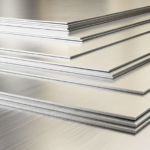
Aluminum’s lightness and versatility made it an excellent material choice in many different industries, but its softness in relation to other metals brought about an entirely different set of obstacles that had to be addressed mainly by the selection of thread and insert type. The thread design and insert selection process is one of the major factors that the soft characteristic of aluminum raised doubts and risks, and hence this article is to direct you through the major points that every designer should think of when working with aluminum; the obstacles and the means of enhancing the parts’ durability and performance. Thus, you can be sure that these suggestions will equip you with the necessary skills for successful working and avoiding money costing mistakes whether you are an experienced engineer or a novice. Keep reading to see what the key elements are that will elevate your designs to a higher level.

Screw threads that are produced or machined into aluminum pieces are known as aluminum threads. They allow the parts to be strongly locked together. Because of their low weight and high versatility, aluminum threads are frequently used in the aerospace, automotive, and building industries owing to the fact that these sectors require low weights and high strengths at the same time. However, aluminum threads are not as strong as those made of steel or other hard metals, which means that they are more prone to wearing away, stripping, and galling over time than their counterparts.
In order to extend the life of the threads, the use of inserts is very common, including helicoils and other types of threaded bushings, which provide the harder materials that can withstand the repeated use. Inserts also distribute the load over a larger area and thereby reduce the likelihood of the threads failing. If the measures are applied correctly, they can significantly prolong the lifespan of aluminum parts with thread engagements and also improve their mechanical performance.
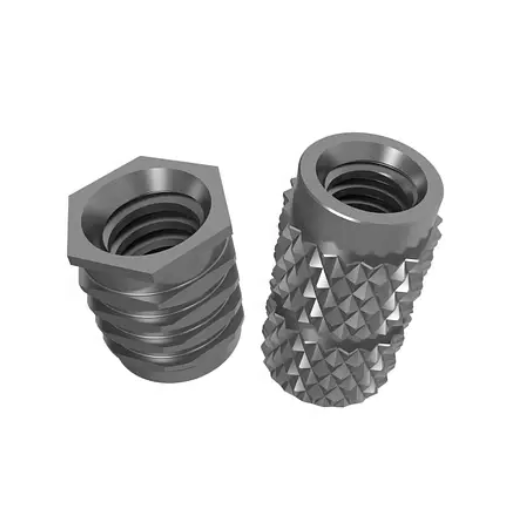
Proper selection of threaded inserts during aluminum application is crucial to ensuring their long-term and excellent performance. The usual types of helical inserts, knurled inserts, and key-locking inserts have their respective advantages depending on the application. These inserts are specifically designed to reinforce the threads in aluminum, which is a material that can be easily worn and stripped when subjected to excessive loads or frequent use.
Helical inserts, or coil inserts as they are often called, are made out of coiled wire and are the best option when it comes to making threads that are strong and resistant to wear. The application of these inserts guarantees the equal distribution of the forces which results in the aluminum experiencing reduced stress and the thread lasting longer. They are widely used in aerospace, automotive and manufacturing industries since they can deliver high performance even in dynamic conditions.
Knurled inserts have an outer knurled surface which is the one that ensures a firm grip inside the aluminum, particularly in situations characterized by high torques. On the contrary, key-locking inserts use a mechanical locking mechanism with keys to provide the strength and therefore become suitable for heavy duty or critical applications. In this way, these kinds of inserts offer a good solution for reinforcing aluminum threads while at the same time reducing chances of stripping or failures.
| Enhanced Durability | Threaded inserts resist wear and tear, providing a strong aluminum joint that distributes stress over a larger area with a hardened surface, enhancing the joint’s load-bearing capacity. |
| Vibration Resistance | Self-locking or mechanical locking features significantly lessen the risk of connections getting loose due to dynamic force application, ensuring securement even under heavy or fluctuating loads. |
| Cost-Effectiveness | Enable combination of aluminum components with different fasteners without additional machining or costly alterations, providing flexible solutions for lightweight but strong assembly designs. |

Threaded inserts are crucial elements for assembly overload prevention and, consequently, their load capacity is dependent to a great extent on the material of the insert, the material of the host and the installation method. Metal inserts for aluminum or steel, for instance, offer very high tensile and shear strength support thus allowing the assembly to absorb substantial mechanical stress.
The material of the host component is one of the most critical factors of the assembly. The installation of hardened inserts is imperative for soft materials, like aluminum, as it prolongs the life of the component and also prevents the thread from being damaged during the stressing cycle. Proper installation distributes the load in that particular way, i.e., where it is necessary, and naturally, it shelters the structure of the component.
Stress distribution on the entire surface of the threads is one of the crucial factors determining the fate of threaded connections, and the amount of thread engagement is a major factor in that. Properly set thread engagement will not only secure the even spreading of the stress but also prevent the connection from failing due to the creation of any concentrated stress points. Engagement length is indeed a very significant factor in this aspect because a longer engagement implies a larger area for stress distribution which, in turn, ultimately results in a longer lifespan for the joint.
The manner in which the stress gets distributed in the threaded connections depends on the material properties, thread geometry, and load applied. Well-designed threads will not only keep the material from being stripped or deformed but also ensure that the load is shared among the threads evenly. Thus it is better to produce the threads with the highest possible accuracy in order to eliminate any imperfections that could cause uneven loading and, ultimately, system failures.
The engineers have to take into account not just the mechanical conditions but also the environmental conditions of the application in order to guarantee the most effective thread engagement and stress distribution. The major factors influencing this are evaluating the load requirements, selecting compatible materials and designing the threaded parts in conformity with the prescribed safety and performance standards.
When designing with aluminum flanked by threads and inserts, durability and compatibility should be the foremost factors, as they guarantee long-lasting performance. The metal used is aluminum usually chosen due to its light weight and ability to resist corrosion. Nonetheless, when compared with metals, it is soft, which means it quickly gets worn out and deformed when exposed to repeated stresses. The application of helicoils or solid threaded inserts, which are in a way bolts, can not only increase the joint’s compatibility and the overall load-carrying ability but also keep the aluminum’s structural integrity unaffected.

Thread stripping takes place when high torque is applied, and the strength of the threads fails to carry the load. Aluminum threads can easily get stripped due to their lower hardness compared to other materials. Such a situation can result in the threads be altered in shape or even completely failed which will in turn lead to the malfunctioning of the entire system.
| Prevention Method | Implementation | Benefit |
|---|---|---|
| Proper Torque Control | Use calibrated torque wrenches and follow recommended torque values | Prevents over-tightening and ensures accurate force application |
| Thread Reinforcement | Install threaded inserts stronger than aluminum | Even load distribution and reduced failure risk |
| Design Optimization | Ensure sufficient thread depth and proper engagement | Extended thread life and improved durability |
| Lubrication | Apply lubricant or anti-seize compounds | Reduces friction and prevents galling |
Aluminum has a coefficient of thermal expansion that is higher than other metals, meaning that the metal’s process of expansion and contraction due to temperature changes is more significant. One of the thermal expansion-related problems is the loosening and deformation of threaded inserts, which leads to difficulties in ensuring mechanical stability and alignment in some applications. The influence of this effect will be greater in areas with large and frequent temperature variations.
Select inserts made from materials with thermal expansion rates close to aluminum’s to reduce stress and loosening over time.
Implement oversized or elongated slots to accommodate expansion without risking assembly integrity.
Use thread-locking compounds or adhesives and add thicker wall sections or reinforcement in critical areas for extra stability.
The main reason that threaded connections and inserts have different performance and life spans is that the materials used are hard or soft. It is quite common to have two materials with hardness levels that differ by more than a mile and yet the wear would still not be even, and the connection could get loose or even fail in the end. In the case of aluminum, which is a soft material, it is very likely to be deformed when paired with a hard material, particularly when the conditions of repetitive stress or high loads are applied.

With respect to aluminum components, it is imperative to select the right thread size with precision in order to create a strong joint and ensure its long-lasting nature. The threads need to be configured such that they properly grip the aluminum metal to spread the weight and prevent stripping. In most cases, larger threads with coarse pitch are the priority since they allow for better load distribution and provide soft materials like aluminum more resistance to extraction. Make the thread depth calculation very accurately so that the maximum efficiency is achieved and avoid making it exceptionally deep which may result in the surrounding material getting weak.
| Thread Size | Choose appropriate diameter based on load requirements |
| Thread Pitch | Coarse pitch threads generally preferred for aluminum |
| Thread Depth | Calculate accurately to maximize efficiency without weakening material |
| Load Analysis | Forecast forces under normal and peak conditions |
| Insert Selection | Use helicoils or threaded bushings for high-stress applications |
| Environmental Factors | Consider corrosion resistance and temperature variations |
First and foremost, there torques specifications shall be trustworthy which they are for the correctness and the longevity of the threaded connections also. The proper torque application assures that the fastening process is carried out in a way that the joint gets tight and the fastening device is not braked which is actually the main reason for the aluminum assemblies’ failure. Exact torque values do not allow in the occurrence of such problems as loosening owing to vibrations or thermal expansions, which are very much common in a large number of applications.
When dealing with aluminum threads and inserts, the design best practices should be at the very top of the list. They not only ensure the performance of the part for a long time, but also keep it away from damage or collapse. The alloy’s soft nature makes it essential for threads to be made in a way that they can bear the load and endure the use repeatedly without being compromised. Selecting the right insert, for example, a helical or solid insert, not only provides strengthening but also assures that the threads will not be stripped or distorted due to the stress applied to them.

The safety, performance, and reliability of the components are all governed by the industry standards for threaded connections that set the guidelines. They indicate the dimensions, materials, thread types, and torque requirements that are very important for the normal functioning of the components in various applications. Among the standards that are so widely recognized that of the American National Standards Institute (ANSI) or the International Organization for Standardization (ISO) are the most predominant ones that by specifying the thread geometry and tolerances of the components manufactured by different companies, strive for compatibility and interchangeability.
The aerospace, automotive, and construction industries, to mention just a few, have made the most obvious use of these standards in practice; therefore, the components have been integrated smoothly which resulted in a very low risk of failures. The observance of the standards was and still is the primary means of obtaining a steady quality, and at the same time, minimizing the errors in manufacturing and meeting the safety requirements of different engineering sectors.
Enhanced Automotive Frame Structure: Vehicle frames are reinforced with aluminum inserts taking advantage of the metal’s properties of being strong and light. The car manufacturers have built up that the cars are not only stronger and more fuel-efficient but also greatly lessened the risk of vibrations and consequently wear, thus giving rise to safer and longer-serving vehicles.
Higher Performance in Aerospace: The use of aluminum inserts allows for high accuracy in fastening and even load distribution in important places such as wing bodies and fuselage assemblies. Aluminum’s corrosion resistance linked with its high strength-to-weight ratio has enabled the designers to meet the strictest safety and efficiency standards while at the same time maintaining a range of design options.
Improved Performance of Wind Turbines: The use of aluminum inserts in turbine blade fixtures increases the stability of the joints and helps in resisting the dynamic forces of wind. This technology not only prolongs the lifespan of the turbines but also maintains the efficiency of the turbines in harsh conditions, which is a part of the development of strong and sustainable energy systems.
A: Selection of the right materials, length of thread engagement, load distribution, and thermal and galvanic compatibility are the primary considerations in Aluminum Threads and Inserts: Design Best Practices. Engineers working on a lightweight setting and aluminum as the base material exclude the chances of pull-out and thread stripping by dictating the correct hole preparation, torque limits, and insert types.
A: The best-inserts option that can fit aluminum components are helicoils, knurled press-fit inserts, threaded bushings, and self-tapping threaded inserts. Each type has its own unique characteristics: helicoils allow for restoring or strengthen the existing threading, knurled inserts bring about very strong resistance to pull-out, and self-tapping inserts are very quick to install. Making a choice depends on the application load, cyclic stresses, and assembly method.
A: About Aluminum Threads and Inserts: Design Best Practices, the minimum engagement of the threads is usually determined by the strength of the material; standard practice is to have 1.5 to 2 times the diameter of the screw in aluminum for full-strength joints, but when working with inserts for threaded engagements, shorter effective lengths can actually be allowed while performance is kept. More conservative values might be needed for specific situations.
A: The use of different metals can lead to galvanic corrosion. In order to comply with Aluminum Threads and Inserts: Design Best Practices, apply corrosion-resistant coatings, use insulating washers or choose stainless steel or plated fasteners that match with aluminum. While making steel fasteners compatible, many inserts use materials that are selected to reduce the effect of galvanic corrosion.
A: Yes. The metric sizes that correspond to the inserts include m2 and beyond. The designers should confirm what sizes of inserts and what hole preparations are suggested for the metric threads. The use of inserts for fine-pitch applications can help gain both thread strength and repeatability compared to directly tapping into aluminum.
A: There are several ways of inserting like press-fit, heat-set, ultrasonic, or screw-in. The most common hole preparation includes drilling the hole to the final diameter, deburring the edges, and sometimes countersinking or tapping depending on the type of insert. When it comes to supplying threaded inserts for aluminum, manufacturers provide hole size and installation torque needed to ensure that proper fit and performance are achieved.
A: The major failure modes are thread stripping, pull-out, fatigue cracking, and corrosion. Prevention strategies include selecting the right type of insert, offering adequate thread engagement, employing locking features against vibrations, controlling torque during assembly and masking or coating surfaces to limit wear and corrosion.
A: Use inserts in cases of repeated assemblies/disassemblies, or when load capacity enhancement is necessary, or if repairing damaged threads. Threaded inserts are made to redistribute loads in a more effective manner and increase the lifetime of aluminum parts. They offer great advantage in thin-walled pieces, soft alloys, or high-cycling areas where native aluminum threads would erode.
Fastener Design Manual (NASA)
This manual provides comprehensive data on bolt and rivet materials, finishes, torques, and thread lubricants, offering valuable insights for designing aluminum threads and inserts.
Read the manual here
Threaded Drill Guide Bushings
This document discusses best practices for threaded inserts, including cleaning and maintenance, which are applicable to aluminum threads and inserts.
Access the guide here
Design of a Mold Insert Alignment System for Double-Sided Molding
This study explores the design of mold inserts and their alignment systems, providing insights into precision and best practices in insert design.
View the study here