

Supportive, Professional, Client-Focused Service
From prototypes to full-scale production, we’ve got you covered.



Many industries as well as individual users have taken to acrylic cnc machining, as it offers an effective, precise and high-quality method of machining parts. Industrial processes are turn to make custom pieces with fine details as well as strong components; this article provides the necessary knowledge and ways to do this. All aspects of acrylics, from their properties to the equipment and the best practices for producing exceptional results, will be addressed in this guide. Programming the CNC to acrylic machining will change the game, as such finishing changes not only the technique but also the quality of the work as well as the creative aspect of the project.
Foundation

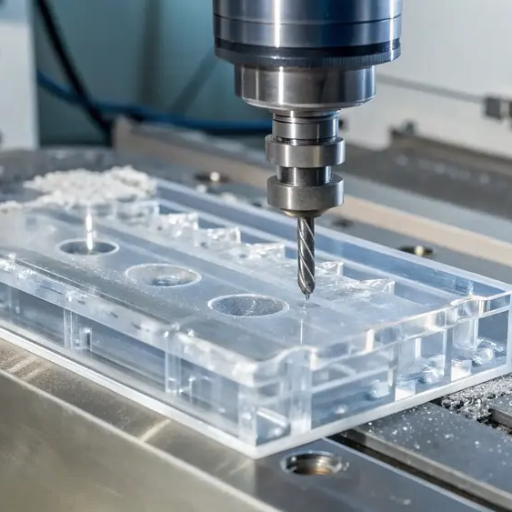
Acrylic CNC machining, in its simplest form, is cutting, shaping and thinning acrylic materials using computer-managed tools. Acrylic is clear and multi-purpose making it a suitable choice in various uses like signs, showcases and ornamental crafts. cnc machining gives a precise cut, good edge finish and the flexibility of design thus beauty and/ or utility oriented projects are guaranteed. Appropriate tooling, speed, and techniques are employed to achieve very good looking machined acrylic products with the least wastage and a very short lead time.
Acrylic, alternatively known as PMMA (Polymethyl methacrylate), is a mechanically versatile thermoplastic prized for its scratch-resistant, lightweight, smooth, and transparent nature. Like this, it can be formulated to be clear and smoke or heat-tinted. A color or a visit of maximum transmission curves may even be added to the one-toward emission speciation. Acrylic resins are renowned for their infinite outdoor life expectancy, and their impact performance in glass applications is constantly dominant.
Commonly used, this material often finds application in industries that cater to buildings, automobiles, and advertising, such in signage, point-of-purchase displays, lenses, aquariums, safety-protective screens, and building materials. Easy-to-do acrylic formation includes cutting, drilling, injection molds, or thermoforming. It may be recycled, in addition to other clear finishes, and is available in a variety of aesthetic options from water-clear appearance if filtration is required to leak-colored-glass colored outdoor photos. Environmental considerations are not central to a designer or engine.
There may need to be protective finishes applied, due to some susceptibility to scratching under certain circumstances. Although one of the least expensive materials available in the industry, it is still used widely by various industries considering the wide range of applications it serves.
In the production of acrylic materials, CNC machining stands out in its precise and cost-effective approach. With this hi-tech computer-designed system, intricate designs can be manufactured with precision, without any possible errors; an approach that might pose either severe challenge or time constraints if manual techniques were applied. Reduced wastage, as well as maintaining an even keel on quality outputs at the same time, is only part of the benefits derived from CNC machining.
Another significant CNC machining contribution in the CNC forefront is the increased demand for customization and high-quality finish for automotive, signs, and consumer electronics. The trend in search tendencies regarding “custom acrylic CNC machining” almost portrays precision with tailored solutions in manufacturing procedures. CNC technology remains a popular choice when it comes to clean formations, sharp engravings, and precise divisions in guaranteeing the quality of their acrylic goods as modern pieces in form and function.
Advantages
Materials
Acrylic and polycarbonate differ in strength, cost, clarity, weight, flexibility, durability, thermal resistance, and ease of machining.
| Parameter | Acrylic | Polycarbonate |
|---|---|---|
| Strength | Moderate | High |
| Cost | Low | Moderate |
| Clarity | Excellent | Good |
| Weight | Lightweight | Lightweight |
| Flexibility | Low | High |
| Durability | Moderate | High |
| Thermal Res. | Moderate | High |
| Machining Ease | Easy | Challenging |
← Scroll to view full table on mobile
The right acrylic for machining purposes should depend on the specific requirements of the project. Acrylic can easily be machined, thus providing ease for projects needing precision cutting, molding, or shaping. Thus, acrylic gives a clearer finish and less expensive material, thus secondary prices come over preferred, mostly like acrylic is used on display cases, signage, and decorative elements. For the tradeoff with polycarbonate, though: it is clear that acrylic does crack under extreme stress and is not favored under mechanical abuse. Such challenging conditions, therefore, might suggest that other materials be considered otherwise.
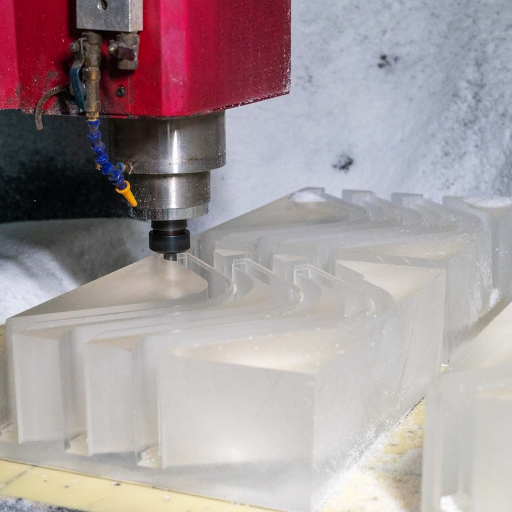
There is the clear preference for cast materials for machining acrylic in terms of easy removal of chips. With respect to the machining, extruded acrylic is a softer material and tends to gum up, making it appear somewhat inaccurate. Proper tool selection and feeds and speeds should be critical choices required to hone the machining process.
Technical Specs
Finishing
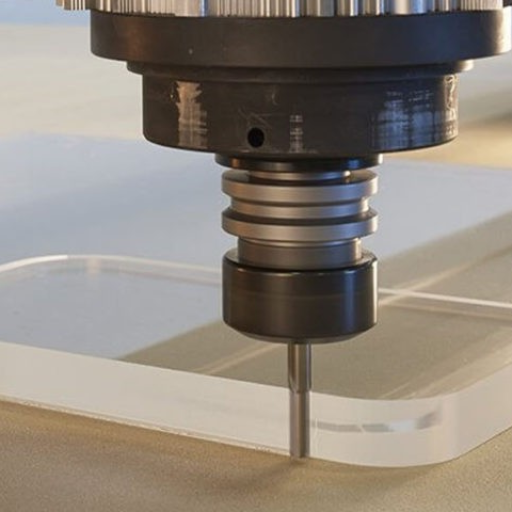
To defy the dilemma of obtaining a parallel surface finish, machine-polished acrylic utilizes a combination of mechanical and chemical methods by which texture and brightness can be significantly enhanced. The fabric of the pre-fine grits, to which acrylates generally boast, is mainly fine sandpaper or polishing pads meant to whittle away the pockmarks, pick-off marks, and the like. Going from one coarser grit to the other will finally obtain a plane view on the surface instead of independently undulating micromarkings. The facade that takes fire-polished endurance using the flame in the air is considered to have greater clarity.
Chemical polishing, utilizing solvents such as vapor polishing, is used to improve the surface finish, therefore enhancing light transmittance. This proves advantageous when it comes to the job of the complex geometry and unique patterns, where mechanical polishing may not be beneficial. Besides this, high-technology methods such as diamond polishing give a high-class finish for purposes that require perfection. The most critical practice is cleaning the surface thereby polishing it to avoid having any polish related residues or debris stored inside its surface structure. Applying both methods simultaneously is bound to give fabulous clarity and a silicate shine to meet the best standards available for acrylic machining.
Flame polishing produces a smooth, high-clarity finish best for edges and curves, while mechanical polishing excels in precise flat surfaces and uniformity.
| Key Point | Flame Polishing | Mechanical Polishing |
|---|---|---|
| Surface Finish | Glossy, clear | Matte to clear |
| Application | Edges, curves | Flat surfaces |
| Speed | Faster | Slower |
| Precision | Moderate | High |
| Equipment Cost | Low | Moderate to high |
| Skill Required | High | Moderate |
| Material Suit. | Thin, delicate | Thick, robust |
| Process Control | Moderate difficult | Easier |
← Scroll to view full table on mobile
This comparison highlights the strengths and limitations of each method, assisting users in selecting the most suitable polishing technique for their acrylic machining project.
When machining acrylic, the finishing process is crucial for the enhancement of our aesthetic satisfaction. Here are some surfacing processes:
This is the most common process to obtain that crystal clear smooth finish after acrylic machining. Methods available are Flame polishing, Buffing, or Vapor Polishing. Flame polishing with controlled flames smoothes edges, while buffing provides a uniform finish with special finishing compounds, wheels, and liquid polish. Vapor polishing uses a chemical vapor to bring out the material’s clarity. Selections of methods rely on the complexity of the surface and the required finish.
Sanding can be seen as a preparatory process to ensure the removal of scratches and imperfections. The sanding should start with very rough grit and should work from coarser to finer grit sandpapers, thus leaving the surface ready for further finishing. Wet sanding is recommended as it reduces the heat, so lowering frictional force while polishing and trims out the possibility of damage.
The carry-on protective lacquers or coatings would boost both aesthetic and functional aspects, in the sense that coated objects are more resistant to scratches and environmental forces, ultimately contributing to a long-lasting, beautiful appearance of acrylic. Today, anti-glare, UV-resistant, fashionable, or any other coatings can be applied depending on the specific nature of the use.
The application of lasers for cutting and finishing provides even trimming and extremely even edges. This almost negligible finishing practically avoids all post-production effort because the finished edges are produced during cutting.
This amalgamated methodology is the key for giving an aesthetically enhanced view of machined acrylic, striking the balance between performance and style thereby making it a broad selection for various alternatives.
Common Questions