

Supportive, Professional, Client-Focused Service
From prototypes to full-scale production, we’ve got you covered.



The wall thickness design of a CNC part plays an important role in ensuring that it will have enough strength and be able to withstand machining without deformation. The modern requirements of the parts production are such that it is very important to make them not only strong enough but also as lightweight as possible in order to consider the requirements of the customer and meet the standards of production. This article explains the optimal wall thickness design of a CNC part and considers all the aspects that are important in understanding how thickness directly affects every aspect of a structure, its ease in making and finally its effectiveness. Regardless of whether you are an experienced engineer or a novice designer about to experiment with CNC cutting, this course contains affluence of precautions and methodologies toward designing parts aesthetically as well as functionally.
CNC Machining is highly dependent on proper wall thickness of the part for its, durability, applicability, and manufacturability. The material of the part and the intended function or use of the part can often govern the recommended wall thickness. Ideally, very thin walls (less than 0.8 mm in metals and 1.5 mm in plastics) are not advised as they tend to cause reduction in strength as well as difficulty in manufacturing the part because of vibration or bending of the tools. However, walls which are too thick may lead to loss of material and hence, delayed processes. It is usually recommended to keep the metal walls at least 1.0mm and the plastic walls at least 1.5mm, though the wall thickness design will depend on the material characteristics and the complications involved in the design. These measures can be assessed by trying out small samples and carrying out the specific process with a machinist to optimize the dimensions.
Essential wall thickness is required for maintaining the stability, appropriate production and performance of any element. It is often asked by designers, “So what if the wall thickness is wrong?” When part’s walls are thinned too much then issues such as warping, decreased toughness as well as manufacturing difficulties such as vibration or material variation arise. On the other extreme, excessive walls compromise materials make, excessive costs while still causing plastic parts to warp during cooling. Hence control of wall thickness becomes imperative for stabilization and easy production in case of limited resources.
Different engineering considerations go into the definition of minimum as opposed to practical wall thickness design; a material, the function of the part, and a processing method. For example for a plastic component, the minimum wall thickness has to make economical sense while still being structurally sound. Simple recommendations are that for injection molded parts the wall thickness be between 0.04″ (1 mm) and 0.08″ (2 mm) depending on the used material. Metals on the other hand will mostly have thicker walls due to their densities and also such requirements as strength which mostly fall within the range of 0.04 inches (1 mm), and thicker in cases of structural uses.
The practical thickness must also be taken into account to prevent warping, shrinkage or uneven cooling. Such issues depend heavily on moldability decisions, the type of polymer being processed, flow behavior moldings and general complexity of the model. There is another side effect, higher material costs and increased cycle times in the presence of thicker walls. To effectively define the optimal wall thickness design regarding the present stress concentration, material peculiarities and economic benefits, it is necessary to systematically examine such issues before the end performance is reached.
The thickness of the walls is a very important factor because it is what determines the strength of any CNC machined part, how easy it is to make it, and how it functions. Milled components with thin walls can save on materials and the time of machining, but they can also bring along other problems, for instances, vibration can occur while cutting, which can result in loss of dimension or scratches. Alternatively, very thick walls this may lengthen the process of machining, raise the cost of materials, and may give rise to compressive or tensile stresses that cannot be accounted for during the operation stage. Therefore, it is critical to maintain a balance between how strong a part must be to carry the loads that may be applied and the cost of making that part. Based on the study performed and the reviewed literature, adequate wall thickness design of parts in CNC manufacturing is done in a way that the parts not only last the intended service duration but also have the ability to perform the intended functions.
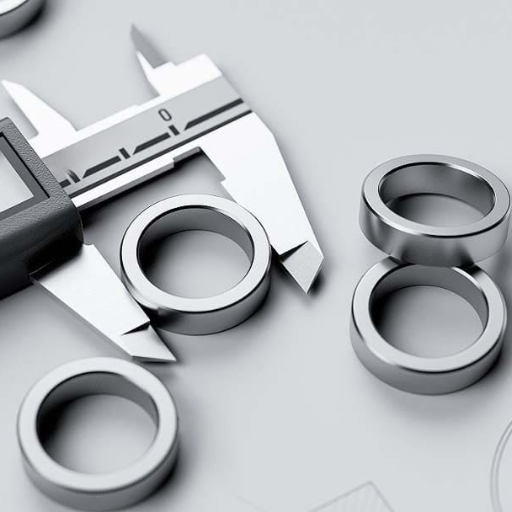
When creating parts intended for CNC machining, the appropriate wall thickness design mostly falls between 0.8 mm and 1.5 mm in the case of metals, but may differ based on the strength of the material and also how much load is to be supported. Plastic, on the other hand, has wider tolerances, usually from 1.0 mm to 3.0 mm, as these require more robust wall structures in most pertinent situations. Sticking to these standards protects against distortion, protracts the design’s performance, and minimizes any incidents during the period of functionality.
In CNC machining, it is important not to undermine the structural strength while making the design manufacturable by applying the correct wall thickness design. The use of thin walls helps in lowering the consumption of material, however such walls might be unstable and might warp particularly when operating under high speeds. Thickness of 0.8 mm to 1.5 mm for metals is recommended with other specific material strength, tensile ultimate strength, thickness and purpose application being taken into consideration. In contrast, walls of plastics are usually at a range from 1.0 mm to 3.0 mm due to less rigidity of the material to avoid cracking, as well as self-deformation.
In addition, assessing the data sheets of materials and making use of modern simulation techniques, the performance can be forecasted and weak points identified at an early stage before the actual production starts. Do not forget to get in touch with the CNC machining supplier to determine the possibility of manufacture as the minor detail as well as the equipment available and expertise of manufacturers may also positively affect the suggestion on the conventions of the machining. Following this approach prevents wastes and high costs while also producing high quality final products.

To determine optimal wall thickness, part geometry is supremely important. For instance, structures with complex shapes have corners colliding or intricate features colliding that would magnify stress concentrations and necessitate thicker structural walls to result in keeping the integrity of the structure. Thus, oversized flat surfaces should be given necessary supports, particularly to resist warp or sag during fabrication or use. When designing the thickness for best results, the functional requirements and the desired material efficiency must balance to maximize the strength, durability, and manufacturability of the design.
Loading conditions heavily influence how to establish the proper thickness for a designed structure. Thus, the type, direction, and magnitude of the loads that each design will be exposed to must be carefully considered to grant the safety of the components, ensuring they will function properly. Fabrications with high compressive or tensile loading demand more wall thickness so that they can resist deformation or failure. Similarly, dynamic or cyclic loading conditions with fluctuations in high pressures or vibration need iteration in designs by increasing the thickness of the wall; thus, the component life is over.
The most recent data suggests that anisotropic properties (e.g., composites) may be required for materials with variable wall thickness, in specific stress distribution areas, for applications under uneven or multi-axial loads such as in the aerospace or automotive industries. Also, vital strides have been taken in simulation technology, using finite element analysis (FEA) that would permit engineers to predict stress concentration much more accurately, instance the optimization of wall thickness from the material conservation point of view. With a proper load condition analysis that has integrated the two ingredients, designers can equate and balance the issues of structural integrity and material efficiency as demanded by modern engineering requirements.
For machining processes, having the correct wall thickness is quite important to sustain structural integrity and ensure efficient manufacturing. Several factors influence a decent compromise between the materials machined, the specific process being used, and the intended service of the component. For example, softer materials, such as aluminum, can bear a thin wall when being machined without losing stability, whereas harder materials, say medical steel, would require a thicker wall to avoid bending or tool damage.
The current machining advancements, like CNC machining, have enabled highly controlled and small tolerances to be achieved that lead to being able to make thinner-wall components without sacrificing the quality. Nevertheless, it remains necessary to consider issues like tool vibrations, deflection, and thermal expansion which will impair the processes of machining accuracy and final product performance. Methods straightforwardly coupling simulation tools – for say, Finite Element Analysis (FEA) – to real-world testing data can let engineers tailor wall thickness parameters to maintain structural soundness while accommodating manufacturing constraints.

When processing plastics, the proper thickness of a wall must be observed to get the best part performance and manufacturing efficiency. Normally, for most plastics, a minimum wall thickness of 0.030 inches (0.76 mm) is suggested to keep the part structurally intact without any warping issue. This may change depending upon the kind of plastic in question and its properties such as strength or flexibility. More flexible plastics might need thicker wall sections to prevent any deformation while machining, whereas other materials might keep a thin wall without compromising stability.
For designs with thin walls, it is paramount to ensure that internal stresses are eliminated using lower cutting speeds and minimal tool pressure. In addition, there are definite advantages for maintaining uniform wall thickness across the part because it lessens potential weak points and ensures that the part retains a consistent strength throughout this part. What these guidelines relate to are guaranteeing long service life in plastics parts by attaining precision, while retaining CNC machinability in processes.
Designing metal components with adequate wall thickness is crucial, as this consideration contributes to strength and manufacturability. Portions of the walls being very thin in metal pieces sometimes cause those areas to warp, produce a less robust structure, or be undesirable during machining.
To obtain the most successful outcome:
The practice of these principles during metal parts manufacturing shall assure the best in reliability and product quality.
Conclusively, the wall thickness that is machineble is way too dramatic and of critical importance and will profoundly impact the bottom-line products performance based on the newer lightweight materials combined with relevant manufacturing constraints. Different materials act differently during the machining process as shown by the below table of wall thickness.
| Material | Characteristics & Considerations |
|---|---|
| Aluminum | Since aluminium is freely machinable and light in weight, tempered by thin walls relative to multiple other kinds of material. Attention must be paid to prevent warping through machining, particularly large or intricate parts. |
| Steel | With a traditional reputation of being particularly sturdy and long-lived, steel can yield thin walls; but care should be taken since the inherent rigidity of thin walls can cause rapid tool wear, particularly for steel grades, which necessitates unique cutting speed schedules and techniques. |
| Titanium | The major obstructor to production is that Titanium: it is very tough, with almost no corrosion, but it is hard to machine. This is so mainly because of its low thermal conductivity and high strength. To minimize part distortion and heat dissipation during production, thicker walls need to maintain under the industrial situation. |
| Copper and Brass | These materials show good machinability; however, their ductility nature raises high risk to very thin walled surfaces-they are therefore more prone to deformation-composite materials never to this reason exist on very precise-critical applications. |
The understanding of wall thicknesses and material stability in accordance with the machining processing conditions will lead to fast productions, sustainable cost effective solutions, and the maintenance of structural integrity in manufacturing operations. Comprehending these aspects will reduce the manufacturing risks and product non-conformity.
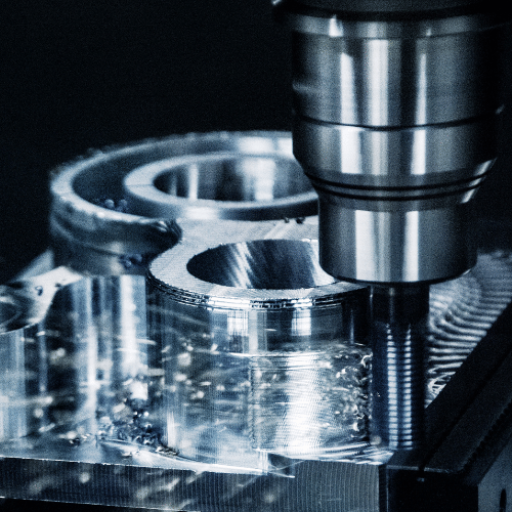
A balance between strength and thickness of the material has to be struck because the latter is fundamental to desired material properties. Materials with high strength-to-weight ratios such as aluminium alloys or carbon-fibre composites are most appropriate for this. Weight reduction is achieved by means of the withdrawal of unnecessary material in non-load-bearing areas without compromising durability and performance. Alternatives that can likewise enhance material strength in thin sections with still being lightweight include ribbing or curvature (and a manifold of design strategies). These principles improve structural strength amidst significant weight reduction.
Achieving an optimized wall thickness becomes an almost sacred goal in product design and requires subtle adjustments to balance between functionality and ease of manufacture. In this pursuit, the newly leading-edge technology of simulation combined with data processing allows one to perform stress analysis, manipulate thermal divergence, and discuss walk-through manufacturability. This highly advanced technique has been transformed into the computer model that can analyze beforehand the most dangerous parts of the structure, allowing the designer to increase or diminish the wall thickness to optimize it.
Even at the prototyping phase, everything belonging to 3D printing primitives can make diverse design evaluations far more quickly to recognize the most prompt and efficient design. Other industry-standard practices include maintaining uniform wall thicknesses, when possible, to minimize problems like warping or sink marks during the manufacturing process. Recent search trends shed more light on the integration of AI-guided tools in tracking performance outcomes and manifacturability should ensure cost-effective and reliable production along with assurance of quality.
On-Machine Ultrasonic Thickness Measurement and Compensation of Thin-Walled Parts Machining on a CNC Lathe – This study discusses methods to measure and compensate for wall thickness errors in CNC machining, providing insights into precision and recommendations.
Wall Thickness Error Prediction and Compensation in End Milling of Thin-Plate Parts – This paper focuses on predicting and compensating for wall thickness errors in thin-plate CNC machining, which is highly relevant to your topic.
Wall Thickness Variations in Single-Point Incremental Forming – This research explores wall thickness profiles in CNC machining, offering valuable data for design and manufacturing.
Shape-Adaptive CNC Milling for Complex Contours on Deformed Thin-Walled Revolution Surface Parts – This paper examines CNC milling techniques for thin-walled parts, addressing challenges like deformation and wall thickness control.
Typically, wall thickness depends on material and geometry, considering different tables of data. 0.8-1.0mm thickness for a short wall in 6061 Aluminum would be common, whereas brass might require more than this. Thinner walls than 0.5-0.8 mm often give troubled machining results that could result in bending from clamping or anodize. Always consider the machining design, consider stiffness, and definite width of your part. When in doubt, prefer a slightly wider thickness to increase rigidity or think about adding ribs.
Tool diameter, its length and long reach of flutes affect the achievable thinness for walls. Smaller tools enable the machining of finer features and deep pockets but also increase machining time and costs as well as the risk of chatter. Using the correct tool and feed rates could mean that walls can be made very thin at the expense of a good surface finish; however, long reach tooling is also expensive and causes a bad finish with a marginal setup.
Guidelines for CNC suggest avoiding very deep pockets with thin surrounding walls as much as possible, i.e. unless the CNC employing small-diameter, rigid cutters with and multiple light passes. Deep pockets could increase machining time, tool deflection, and bad surface finish. Increasing the internal corner radii and stepping down the depths may help. It is always good to redesign such cases and make them simpler-to-machine features to reduce CAM time and hence save on machining costs.
Sheet metal lets for lessening walls and folding to achieve stiffness, while solid-stock CNC parts must be many more times over thickness in order to maintain stiffness over and through the deflection. That will all be together supported when bending sheet-metal designs into machined parts. Considerable heavier thicknesses or the addition of ribs might be added. Consider trade-offs in fabrication, weight, cost, and whether or not the right process for parts may be CNC if the geometry requirement of CNC may be craved.
Tighter tolerances and a surface-treat process, such as anodize, require additional material for processing or can require higher minimum width requirements. Furthermore, anodize may uncover the potential for over-etched or inorganic-abrasive machined thin spots, or it could even guarantee that only the first two hundred parts come out just fine. The time taken to machine a wall is longer when it is thin because feed rates are slower and pass loads are lighter. Plan on some finishing allows and tell your machinist to consider the trade-offs between the finish and tolerance and the cost.