

Supportive, Professional, Client-Focused Service
From prototypes to full-scale production, we’ve got you covered.


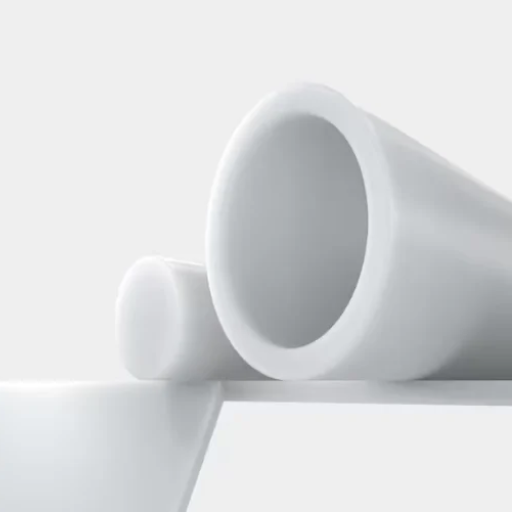
Choosing the right material can make or break the success of your application, especially in industries where precision and performance are non-negotiable. When it comes to polyoxymethylene (POM), two grades often stand out: POM-H and POM-C. But how do you determine which one is best for your needs? This blog post will guide you through the critical differences between these two POM grades, exploring their unique properties, benefits, and ideal use cases. By the end, you’ll have the insights needed to make an informed decision that ensures optimal performance and reliability for your specific application.
While both are high-performance acetals, POM-H (Homopolymer) offers superior mechanical strength and hardness, whereas POM-C (Copolymer) provides better dimensional stability and chemical resistance in high-moisture environments.

Acetal plastics exist as engineering thermoplastics that engineers use for their strong properties and their ability to create low friction surfaces and protect against wear. Their performance capacity under mechanical stress combined with their ability to withstand industrial solvents, oils, and fuels makes them essential materials for multiple industries. Acetal serves as a material for precise manufacturing because it maintains its shape effectively.
POM-H, or homopolymer acetal, offers better mechanical strength, stiffness, and hardness compared to POM-C. The material features lower thermal expansion properties while displaying strong chemical resistance, although it shows slightly reduced impact resistance compared to different material grades. POM-C, or copolymer acetal, delivers superior dimensional stability and protection against thermal degradation and hot water damage, which makes it ideal for applications that need enhanced performance in multiple settings.
The selection between POM-H and POM-C requires an evaluation of your application needs. POM-H serves as the best option for applications that need maximum rigidity and surface hardness. When an application requires equipment testing under high temperatures and high humidity, or needs protection against chemical substances, POM-C will deliver better results. You can achieve optimal project results by understanding how each material grade functions in your specific project requirements.
Homopolymer Acetal (POM-H) functions as a high-performance thermoplastic material which exhibits high crystalline properties. The material exhibits outstanding mechanical strength together with excellent stiffness and hardness properties, which enable its use in applications that demand both strength and exact specifications. POM-H maintains its exceptional toughness and abrasion-resistant properties, which enable the material to endure extreme operational conditions throughout its lifespan because of its compact molecular design.
POM-H stands out because it maintains its shape and strength properties under extreme pressure conditions. The material demonstrates outstanding performance in situations that require both high mechanical strength and accurate operation of components, including gears, bearings, and parts for industrial machinery. The material maintains its original shape through low moisture absorption, which helps to maintain its operational performance throughout extended periods.
POM-H offers strong protection against various chemical substances and solvent materials, which makes it suitable for multiple applications. The system functions across multiple temperature extremes, yet it achieves optimum performance within mid-range temperature settings. The POM-H material functions as the optimal solution for projects which require maximum material strength together with material stiffness and surface protection to achieve project success. The selection of POM-H material for your application requirements depends on your understanding of specific application needs.
The term POM-C refers to Polyoxymethylene Copolymer, which functions as an engineering plastic that demonstrates excellent dimensional stability together with good wear resistance and low friction characteristics. The material functions in precision component applications which need high stiffness and strength for parts such as gears, bearings, and conveyor belts. The chemical resistance of POM-C, together with its ability to maintain performance through various temperature ranges, makes it suitable for multiple industrial uses.
The chemical resistance and toughness of POM-C surpass those of POM-H because POM-C performs better in environments with high humidity and specific solvent exposure. The automotive, medical, and electrical manufacturing industries choose POM-C because its properties meet their needs for durability and reliable performance.
POM-C enables manufacturers to produce highly accurate components because it machines more easily than most plastics while reducing material waste. The material displays strong resistance against wear and fatigue, which makes it suitable for applications that experience continuous mechanical pressure. POM-C offers a reliable and efficient solution that serves both regular applications and specialized needs.
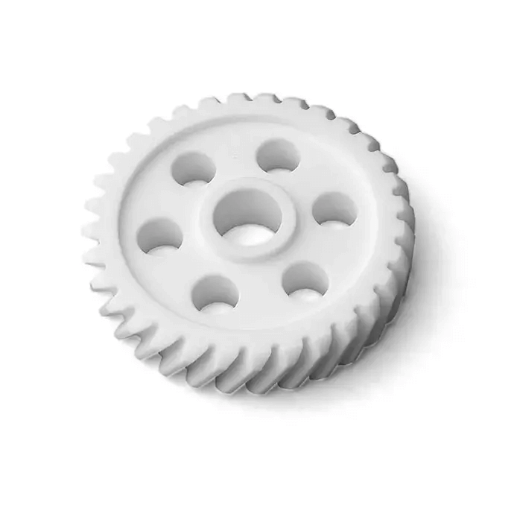
POM-H and POM-C display multiple advantageous mechanical characteristics, yet their performance under stress tests shows major differences in specific mechanical properties. POM-H offers higher tensile strength and stiffness. The material proves ideal for applications which require maximum structural stability through precision gears and structural elements that must handle extreme mechanical stress.
POM-C excels in toughness and resilience under dynamic loads. The material shows an improved ability to resist impact while showing a lower risk of developing stress cracks, which makes it essential for systems that need to undergo continuous mechanical movement and experience varying pressure levels. The improved dimensional stability of POM-C creates advantages for components which need to maintain exact measurements while operating in environments that experience both humidity and moisture.
| Property | POM-H (Homopolymer) | POM-C (Copolymer) |
|---|---|---|
| Tensile Strength | Higher | Moderate |
| Impact Resistance | Lower | Higher |
| Stiffness/Rigidity | Excellent | Good |
The two materials provide superior chemical resistance which allows their application in various environmental conditions. However, they show distinct properties that separate them. POM-H provides superior protection against strong alkalis, which makes it the best choice for industrial environments that require handling of caustic materials. The material exhibits higher resistance which allows its use in environments with dangerous chemical substances.
POM-C provides better protection against organic solvents and other mild chemical substances. The material performs better in situations where it comes into contact with oils, fuels, and alcohols because it keeps its functions intact without major damage. POM-C shows better resistance to hydrolysis in hot water than POM-H, which makes it suitable for environments that require extended contact with water or steam.
The evaluation process requires testing POM-H and POM-C against standard chemicals because both materials show chemical resistance. Operating condition assessment is vital to achieve maximum performance and decrease failure chances.
Materials used in demanding environments need thermal stability because this property determines their ability to maintain mechanical and chemical functions when exposed to high temperatures. The thermal resistance of POM-H and POM-C shows significant capabilities, but their performance depends on their particular operating conditions. POM-H demonstrates better temperature performance than POM-C because its crystalline structure provides superior thermal protection for specific temperature ranges.
POM-H: 347°F (175°C) | POM-C: 329°F (165°C)
The long-term stability of these materials relies on both the specific heat treatment they receive and the total duration of that treatment. When materials undergo extended exposure to temperatures approaching or exceeding established limits, thermal degradation results, decreasing the material’s strength and shape retention. Testing needs to occur under simulated operating conditions to achieve the best possible performance results by assessing how mechanical characteristics change at peak temperatures.
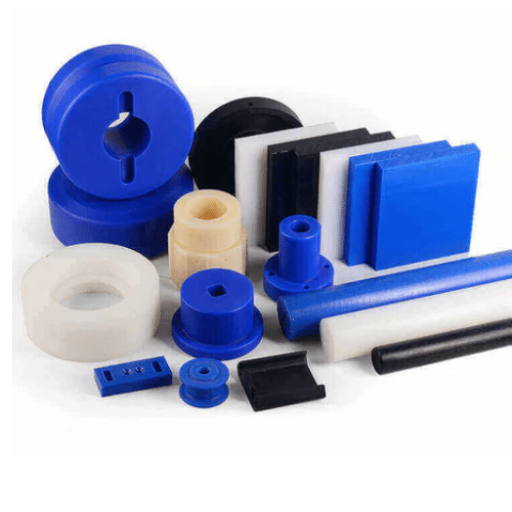
The industrial market uses Polyoxymethylene (POM) because it delivers outstanding mechanical performance. These materials thrive in environments requiring high strength, low friction, and resistance to wear, making them invaluable in advanced manufacturing processes.
POM-H and POM-C are used to make precise plastic parts including gears, bearings, and rollers because these materials retain their original form under mechanical load. Their resistance to moisture and chemicals allows them to perform effectively in equipment for industries like automotive, electronics, and food processing. For example, they are critical in creating fuel system components in vehicles where durability and corrosion resistance are vital.
The material’s superior dimensional stability together with its minimal friction coefficient makes it essential for operating machinery that needs both energy efficiency and silent functioning. The industrial sector uses these materials for everything from conveyor systems to medical device components, solidifying their role as a preferred choice in engineering.
The automotive industry depends on POM because it provides exceptional mechanical and thermal performance. It serves as the main resource for manufacturing essential components requiring strength, accurate operation, and resistance to damage, such as gears, fuel system parts, and door lock mechanisms.
POM’s low friction coefficient is a key benefit in automotive design, enabling moving parts to operate smoothly without the need for excessive lubrication.
POM provides enhanced protection against fuel, oil, and chemical substances, extending its life in corrosive spaces. Furthermore, its strength-to-weight properties help decrease vehicle mass, enhancing fuel efficiency. POM serves as an essential material driving both technological development and performance improvements in vehicles.
POM is an essential material for consumer products due to its strength, durability, and processing ease. It serves common household purposes in zippers, buckles, toothbrush handles, and kitchen utensils. Its ability to maintain shape while enduring physical damage makes it suitable for daily personal hygiene routines and home products.
In electronics, POM is used for connectors and gear wheels. The material operates mechanical systems efficiently because of its low friction and high dimensional stability. Additionally, it possesses biocompatibility and resistance to chemicals, enabling its use in manufacturing accurate medical devices and laboratory instruments. These various uses demonstrate POM’s importance across sectors for dependable performance.
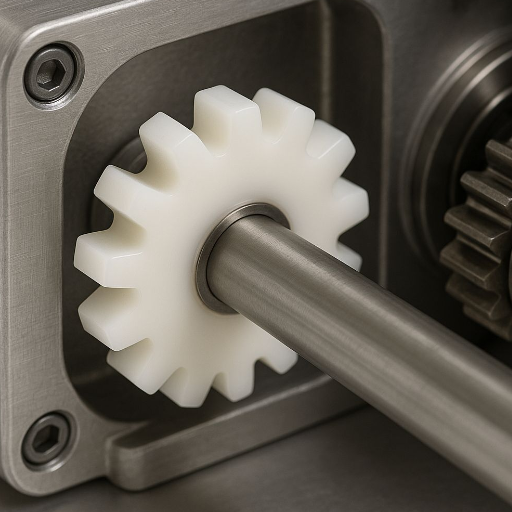
While POM-C offers many advantages, it has limits. It can withstand high temperatures only up to a certain point, proving less effective than some advanced polymers. Under extended high-heat contact, its shape may change, leading to decreased strength. Additionally, POM-C can only withstand short UV exposure, making it unsuitable for outdoor use without stabilization.
POM-H provides better strength but is more brittle. This makes it unsuitable for functions requiring impact resistance combined with flexibility. While its low water absorption is usually a benefit, it can create challenges regarding material stability during rapid humidity fluctuations.
Both grades share a sensitivity to harsh chemicals like strong acids and alkalis, which can damage their structure through gradual weakening. Engineers must assess actual usage conditions to determine the best material for optimal performance.

The evaluation of POM-H and POM-C starts with application needs. POM-C enables more flexible applications because it maintains better chemical resistance and dimensional accuracy. It is perfect for operations requiring components to handle different temperature ranges and moisture levels. Conversely, POM-H provides superior mechanical strength and stiffness, making it appropriate for heavy loads and extreme stress conditions.
Operating environments must be analyzed because both grades can be damaged by strong chemicals. POM-C provides better performance where aggressive chemicals and water exist, while POM-H shows its strength in dry, stable areas. Manufacturing methods also matter; the lower shrinkage rate of POM-C enables better dimensional accuracy, resulting in fewer defects.
Budgeting for a project requires balancing performance and financial limits. POM-C typically has a higher initial cost than POM-H because its advanced characteristics provide better shrinkage reduction. However, for complex applications, it improves reliability and reduces defects, offering better long-term economic advantages.
POM-H offers better value for basic designs needing stiffness without exact measurement requirements. It is an excellent, affordable solution for budget-restricted projects. While both materials are widely available, POM-C may sometimes require longer delivery times due to high demand. Early collaboration with suppliers is recommended to match costs and availability with project schedules.
A: The difference between POM-H and POM-C (also phrased as difference between POM-C and POM-H) exists because POM-H refers to polyoxymethylene homopolymer which manufacturers create through anionic polymerization of formaldehyde whereas POM-C consists of polyoxymethylene copolymer which manufacturers create through cationic polymerization of trioxane combined with a comonomer. POM-H (homopolymers) typically has higher crystallinity and a higher melting point, whereas POM-C (acetal copolymer) offers better chemical properties and reduced centerline porosity.
A: The molecular structure differs because POM-H is a repeating formaldehyde unit which anionic polymerization of formaldehyde produced while POM-C contains comonomer units that emerge from trioxane cationic polymerization which disrupts the regular chain structure. This affects crystallization and porosity: POM-H is more semi-crystalline with higher crystallinity which leads to its increased stiffness and abrasion resistance while POM-C displays improved chemical resistance through its copolymer structure which creates fewer defects than homopolymer sequences and produces less outgassing.
A: Both materials have excellent physical and mechanical characteristics, but POM-H shows better performance because of its higher operating temperature limits and melting point and superior resistance to wear and material deformation. POM-C shows superior chemical characteristics and decreased centerline porosity and improved structural strength in thin-walled components and molded snap-fit joints because of its lower internal void content and enhanced molding consistency.
A: POM-C demonstrates lower outgassing and lesser centerline porosity risk than POM-H because its copolymerization with trioxane cationic polymerization comonomer breaks long homopolymer chains into shorter segments which leads to reduced volatile degradation and internal void formation during processing. That makes POM-C preferable for applications sensitive to porosity, such as food processing applications or fluid-handling components.
A: Both POM-H and POM-C exhibit a low coefficient of friction and are often described as self-lubricating with excellent wear and abrasion resistance. POM-H provides excellent sliding wear protection because its higher crystallinity enables extended wear durations. POM-C delivers better long-term performance in chemically hostile and humid conditions because of its greater chemical resistance and lower porosity. The selection process needs to consider three factors which include specific operational requirements, environmental conditions, and product durability requirements.
A: Yes — POM-C generally offers better chemical resistance (better chemical properties) and is therefore often chosen for components in chemical pumps or in certain food processing applications where exposure to cleaning agents, moisture, or harsh chemicals is expected. POM-H can be used in many of the same roles where mechanical strength, higher melting point, and abrasion resistance are prioritized, but POM-C’s copolymer structure gives it better protection against hydrolysis and chemical damages.
A: POM-H is produced by anionic polymerization of formaldehyde and exhibits greater sensitivity to processing conditions which results in increased centerline porosity and outgassing when molding processes fail to achieve optimal conditions for large or thick-section parts. POM-C, produced by cationic polymerization of trioxane with a comonomer, tends to have more forgiving molding behavior, less outgassing, and fewer internal voids. The two materials require proper drying and temperature control to achieve defect reduction and physical property preservation.
A: Engineers should compare the physical properties relevant to the design according to POM-H which provides high crystallinity and high melting point as optimal material properties for components that require high wear resistance and extreme stiffness, while POM-C establishes itself as perfect material for snap-fit designs and thin-walled components and chemical contact applications because of its superior chemical resistance and reduced porosity and enhanced molding dimensional stability. The selection process should focus on three factors which include creep resistance and the material’s frictional behavior and the different environmental factors which include temperature and chemical exposure and moisture content.
Mississippi State University: A case study on HWRF-HYCOM and HWRF-POM, which includes comparisons and evaluations. Read the study here.
Auburn University: Research on the preparation and characterization of Polyoxometalate (POM) layers. Access the document here.
New Mexico State University: A study on soil carbon storage informed by particulate and mineral-associated organic matter (POM). View the paper here.