

Supportive, Professional, Client-Focused Service
From prototypes to full-scale production, we’ve got you covered.



Manufacturing parts for the healthcare sector demands accuracy, dependability, and going by stringent criteria. Medical grade polyoxymethylene (POM), commonly referred to as acetal, is increasingly preferred given its superior characteristics, which include increased resistance to wear and tear, low friction, as well as reduced warping. However, processing of this material involves more than just skills and technology, there is a requirement to follow all internal standards and handle that material in a manner that meets all of the requirements regarding safety and performance. The article focuses on Medical Grade POM Machining highlighting specific issues that come with the process and preferred methods. This is for people who are keen in the medical device industry or want to understand some of the processes that involve very high levels of comestible precision.
Acetal, commonly known as POM, is a very strong and accurate thermoplastic which is found in multiple uses in the field of medicine due to its excellent mechanical characteristics and safe interaction with biological matter. Medical Grade POM is prepared in such a manner to adhere to high quality standards thus; it is acceptable in the manufacture of medical devices like surgical grade instruments, prosthetic parts or orthopaedic instruments. Because of its very high strength, low frictional characteristics, and wear resistance, it can produce accurate machinery parts which are defect-free. Another advantage of Medical Grade POM Machining is the ability to sterilize it, which is practical in such aggressive working conditions as hospitals.
POM is another designation for Polyacetal or Polyformaldehyde. POM is generally used in identifying the high chemical resistance and hardness engineered plastic at improved mechanical properties. POM combines with comprehensive strength, rigidity and dimensional stability suitable for parts with precision in applications such as automobiles/navigational, electronic in biomedical industry as well as in mechanical systems. In movement quantity applications, there exist lower deformation or friction and they are commonly ideal for wear. It is almost non-solvent and moisture resistant, high in chemical resistance, retains its shape, the specified mechanical properties, despite all working scenarios making it suitable for users’ purposes in the field. To complete these characteristics, POM remains easy to machine and easy to form. At a lower cost, these different properties equate to reliability.
Healthcare is one of the foremost areas of application where medical grade POM is utilized. Because of its excellent biocompatibility, it has been recommended for use in such cases with humans because it does not react with tissues and fluids causing unwanted reactions. The low coefficient of friction makes the surgical instruments easy to use and manipulations are performed accurately. Furthermore, high dimension stability makes it favorable in applications where the performance of medical instruments and equipment is dictated by close tolerance limits.
Another study shows that it can withstand multiple cycles of sterilizing techniques such as autoclaves and chemical methods and remain safe for use over a long period of time. With its high fragility or high fatigue, thermal characteristics, and resistance in aggressive media, medical grade POM will forever remain the best material for use in ultramodern and sophisticated medical technologies.

While a useful method on the shaping of POM (Polyoxymethylene) provides precise components, CNC machining is employed across diverse industries — like medical and industrial applications. Computer-controlled tools, such as turning operations and drilling, are used to cut, mill, or drill POM; these operations’ ultimate goal is to meet requirements for fit and precision. Techniques like high-speed machining are used to meet extreme tolerances while simultaneously ensuring compliance in drilling for precision holes. Proper tool choice is crucial, with sharp carbide-tipped tools especially important to ensure cool cutting and smooth surface finish by avoiding undue heat buildup.
For enhancing CNC machining of POM, the machinability properties have to be taken into consideration so that low heat conductivity and high dimensional stability are common characteristics. Methods such as enhancement of coolant system and bringing down spindle speed control heat transfer means hence great care has to be taken to avoid deformation of materials or any other harmful effect on the surface. The other important characteristic to be derived from low cutting force is not to stress the material or tooling.
Efficiency is the key in metal cutting operation keeping in mind that Delrin creates long and continuous chips that can disallow a clear tool path. Coolants or air blasters are the measures adopted for keeping the workspace tidy, as it will add at the same time or may improve both the efficiency and finish of the work. This means that, in general, the CNC machining allows for the making of specialized POM parts in any conceivable demand required in terms of weight and strength.
How POM (Polyoxymethylene) plastic part material is machined will largely determine how well manufactured it is. Key strategies and guidelines, fresh for today, reflect the following insights:
Obeying to the methodologies above ensures that parts manufactured would be of high quality and durability for various industrial applications of POM. Again, with promptness, the manufacturer would be able to climb a spiral of modern technology in tooling and machining levels sufficient to speed up their effectiveness of production line along with product and quality.
The high thermal expansion of POM constitutes one of the primary challenges in machining. Without adequate cooling, a nozzle can induce discrepancies in dimensions as the material evolves. Furthermore, heat buildup can promote workpiece warping or tool wear since POM has very low thermal transfer rates. This quality requirement makes POM difficult to machine with the proper control of temperature. In terms of hardness and stiffness, it is in the highest class of engineering plastics. This transfer of power calls for care — to externally provide a means of avoiding taker wear and breakage. It is not an easy task to cut POM smoothly as it is prone to chipping during cutting. Finally, the assembly is critical since POM’s slippery surface makes holding the workpiece difficult during machining.
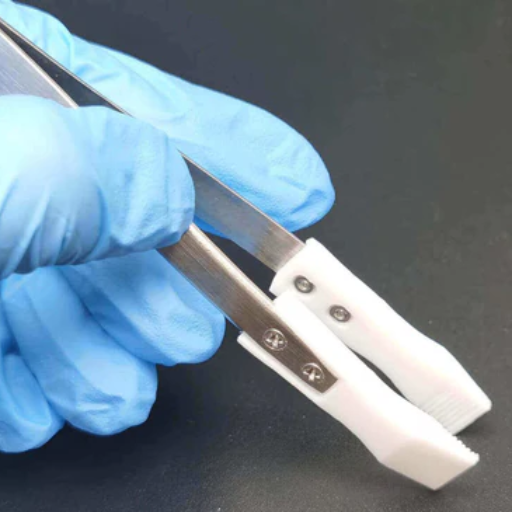
In various surgical instruments and tools, POM (Polyoxymethylene) has proved to be an important constituent due to its mechanical properties and resistance against chemicals. This material is perfect for the construction of components like handles, housings, or precision instruments due to high strength-to-weight ratio, excellent dimensional stability, and resistance to processes of sterilization.
Polyoxymethylene (POM) sees great use in the manufacturing of disposable surgical instruments, as its cheap cost, alias the ability to cheaply maintain and sterilize, make it possible to use, but for long periods of repeated cleaning and disinfecting, it considerably remains tolerant to repeated chemical exposures. This, in addition to its ability to be machined exquisitely into complex shapes, allows for its employment in intricate surgical systems, like robotic tools and endoscopes, viable for minimally invasive procedures. Its multiple forms of usage are ascribed to the long-standing reputation of POM for efficiency under extreme environments in modern medical applications.
The Polyoxymethylene (POM) tends to be increasingly employed in medical technology for implants and prosthetics due to the provision of remarkable mechanical properties and biocompatibility. With an extensive range of high strength, durability, and incredible wear resistance, it is best suited for applications that accumulate high stress and vulnerable to fatigue like joints replacements and orthopedic screws. Besides an insignificant absorption of water, there is further untouched biostability, which will prevent decomposition over the years of implantation. The plastic is too light for elderly and ailing prosthetic users and this results in even more comfortable and functional designs. Being machinable for customization of precision to design, it provides tailored implants that cater to individual patient requirements. These products are indispensable for upgrading medical devices used in prostheses.
Polyoxymethylene (POM) is being widely used in several medical fields other than the traditional implants and prosthetic applications. The common application in these is the manufacturing of precision components including surgical devices, drug-delivery devices, and dental equipment. In this case, the biocompatibility and strength attributes of POM make it useful for parts requiring high mechanical toughness and resistance to wear, such as inhalers and insulin injection pens. The high sterilization resistance of POM, boosting its use in reusable design, further highlights its attrition resistance and toughness in severe medical environments. These are among the many reasons for why POM is acceptable in the healthcare industry.

Making medical devices requires strict adherence to internationally recognized standards and certifications for safety, quality, and regulatory compliance, the prime standard being ISO 13485, which sets forth the standard to have in place a quality management system that provides requirements for the design and manufacture of such devices. This includes requiring risk management, traceability, and proper documentation for every phase of the manufacturing process.
In addition to those, the U.S. Food and Drug Administration (FDA) enforces the Quality System Regulation (QSR) under 21 CFR 820 and adopts it for manufacturers distributing devices in the United States. In the world of the European Union, the Medical Device Regulation (EU MDR) is required and its enforcement is attached to very detailed technical documentation as well as to conformity assessments.
Such are the decisive documentation comprising an ISO 10993 guide on biocompatibility testing to ensure that materials medical devices that may touch humans are compliant with health standards, and IEC 60601 for electrical safety in the medical devices context. In order to make sure good quality and consistency are maintained, Good Manufacturing Practices (GMP) are global. All these standards together protect the integrity of medical devices, emphasizing patient safety and trust.
Ensuring machined POM (Polyoxymethylene) parts conform to the required directives and standards is imperative. Widely applied in highly precise situations, thus subjected to control over dimensions to ascertain whether the respective measurements satisfy the tolerance requirements for the design. This requires the use of calibrated measuring tools that may include micrometers, callipers, or Coordinate Measuring Machines (CMM). When the proper dimensions are verified, this ensures that the parts will serve efficiently in the typical working environment without any problems.
Furthermore, machine key tests with physical and mechanical properties of manufactured POM products are discussed. They include tests on stress test, impact resistance, and thermal stability to guarantee the performance of the part as expected under set working conditions. Inspection of the product surface furthermore includes detection of any deficiencies on the surface that could be either scratches, voids, or irregularities to affect the durability or aesthetics of the part. Methods of non-destructive inspection are used for inspecting internal defects without damaging the product.
Verifying compliance with regulations and standard formats framed for specific applications form part and parcel of quality-assurance procedures. Materially one can conclude that supporting certifications and reports are necessary as well. Through these, it could be demonstrated that parts ought to conform closely to the safety and quality standards of a particular manufacturing process. Testing and inspection is hence the most reliable matter of ensuring immaculate and useful POM parts that can meet individual industry requirements and client demands, gives birth to a better source of enterprise-specific data for production.
Perfection is a necessary standard for the production of medical-grade POM (Polyoxymethylene) components given strict regulatory systems and unparalleled wealth of safety standards specific to every medical application. This is achieved through precise machining processes, routine inspections, and compliance with rigid manufacturing standards. Factors, such as material selection, tight tolerances, and technologically competent CNC machining, are equally instrumental. It becomes a matter of course that having sensitive work conditions with cleanroom set-ups, process validation, and traceability for each and every item are the huge norms in this sector. Comprehensive audits, conformance with ISO 13485 standards, and, if necessary, biocompatibility testing further add to the quality guarantee and reliability, assuring industry and patient safety requirements are met.

POM (Polyoxymethylene) is often compared with other medical-grade plastics like HDPE, PTFE, PEI, and PEEK, each offering unique properties suited for specific medical applications.
| Plastic | Strength | Temp. Res. | Chemical Res. | Flexibility | Cost |
|---|---|---|---|---|---|
| POM | High | Moderate | High | Medium | Moderate |
| HDPE | Low | Low | High | High | Low |
| PTFE | Low | High | Excellent | Medium | High |
| PEI | Very High | High | High | Low | Very High |
| PEEK | Very High | Very High | Excellent | Medium | Very High |
This table highlights critical comparisons in strength, temperature resistance, chemical resistance, flexibility, and cost, enabling a clear understanding of the trade-offs in selecting the ideal material for medical applications.
The primordiality of the looming question of tight tolerances in the medical-grade formation of POM (Polyoxymethylene) stands, mainly due to the rather deep seeped requirements for precision and functional operation for medical devices. These tolerance bits and pieces used in healthcare applications must be kept within an interference fit and should more than certainly and adequately function safely to bring about the least possible unnecessity of threat to patient safety or potential failure. The achievement of tight tolerances ensures the maintenance of accurate dimensions needed for consistent and reliable service, particularly, in equipment of tolerance sensitive areas where small group deviations can spell operational woe.
The perfection of a surface finish is of paramount importance since it not only influences the functionality but also determines to a very significant extent the cleanliness vis-à-vis hygiene of the biocompatible medical materials being used. A smooth surface makes it easy for moving parts to slide with little or no friction, adding to the functionality of the product and decreasing wear for longevity. Second, cleanliness is known within medical systems as a direct advocacy tool, as the finished surface resists accumulation of contaminants and thus is easy to sterilize. Patient safety and global medical industry compliance are affected here as well.
Wide tolerances and clean surface finishes are the essentials needed to ensure the reliability, safety, and longevity of medical POM parts. Emphasis on these two factors during processes guarantees that parts manufactured are made to stringent standards required by the medical industry with expectations from clinicians and patients for device dependability.
Choosing the best machining service for POM (Polyoxymethylene) components in medical-grade applications demands you evaluate the expertise, technology, and quality standards. Perform a search on the service provider who has a decent track record only in medical applications and is preferably willing to welcome the ISO 13485 healthcare-aligning certification which ensures medical device manufacturing regulation compliance. Companies using advanced CNC machining techniques in tandem with precision measurement systems are frequently cited for their proficiency in cutting close tolerances and surface finishing demanded in this field.
Furthermore, give precedence to companies that give you the ability to trace the location of a particular material, assign hydrocephalus to protect it, and document a system by which the control quality is recognized as sanitary to meet all the regulatory requirements and to protect patients. Reading customer comments and case studies could also help you to get some idea of the reputation and credibility of the machining vendor. In turn, the well-combined mix of deep technical know-how and industry-specific experience ensures the company’s POM prosthetic components’ high performance, clinical, and regulatory demands.
Delrin, a type of acetal, often known as polyoxymethylene or homopolymer POM, is being utilized widely in the medical industry owing to the ensemble of low friction coefficient, good mechanical properties, and excellent electrical insulation properties with a specialty in medical grade plastic machining with Delrin and acetal copolymer leaves the controlled medical CNC machining process, and CNC precision machinery tool to form medical components in biocompatible grades, high wear resistance, and withstand a very large number of cycles for standard medical industry sterilisations.
POM CNC machining seems more trump than whipping injection molding for many medical-grade parts, with very narrow tolerances and intricate geometries, as it can produce very accurate precision POM parts without any up-front costs for tooling. But, CNC machining and injection molding have their uses: injection molding suits popular plastic parts for high-volume production, while the CNC machining process works splendidly for prototype parts, low-mid volume runs, tight-tolerance machined parts or components with precision CNC machining centers/machining project flexibility.
Acetals encompass the range of engineering plastic materials that include homopolymer POM, usually referred to as acetal or Delrin plastic, and acetal copolymer. Acetal machining and acetal copolymer processing both carry excellent machinability with impact milling and fine finishing to produce the more intricate POM parts. The material properties of dimensional stability, low friction, and better electrical characteristics thus make acetal machining direct for precision CNC machining centers when tight tolerance parts are made.
POM material is utilized to produce numerous medical CNC machining products which include components for detection devices, surgical instruments, high-wear and high-tolerance precision parts and electricity-impervious machines, among others. Therefore, a set of POM-made medical components, when precision-machined, withstood sterilization, and had power insulation properties and the required strength, represents their application in medical gadgetry.
The concerns of the standards of the medical industry revolve around material choice, traceability, cleanliness, and validation for medical-grade plastic machining. Medical CNC machining projects undergo validated processes in CNC machining and use certified raw materials (like medical-grade Delrin or acetal), often requiring paperwork concerned with biocompatibility and sterilization resistance. Precision CNC machining and quality control procedures are adhered to so that the plastic components conform to regulatory demands satisfactorily for utilization in diagnostic equipment and other medical devices.
In many ways. Acetal or Delrin plastics offer excellent electrical insulation properties and low friction, giving them an excellent home to moving components in medical devices and those engineering materials which need electrical insulating properties. Its excellent mechanical components and ability to take repeated use make it very suitable for precision parts in devices that require both electrical insulation and a surface resistant to wear.
Comparative Analysis of Surface Finishing for Different Cutting Strategies of Parts Made from POM C – Explores machining techniques and surface finishing for POM C, relevant to medical-grade applications.
Predictive Modeling and Multi-Response Optimization of Cutting Parameters for POM-C GF 25% Composite Polymer – Provides insights into the machinability and optimization of POM-C composites, which are used in medical-grade components.
Design and Manufacturing of Microscale Textured Polymer Surfaces for Non-Lubricated Applications in Medical Devices – Focuses on manufacturing guidelines and design frameworks for POM in medical devices.
Machining of Medical Device Components – Covers machining methods and standards for materials used in medical device manufacturing, including polymers like POM.