

Supportive, Professional, Client-Focused Service
From prototypes to full-scale production, we’ve got you covered.


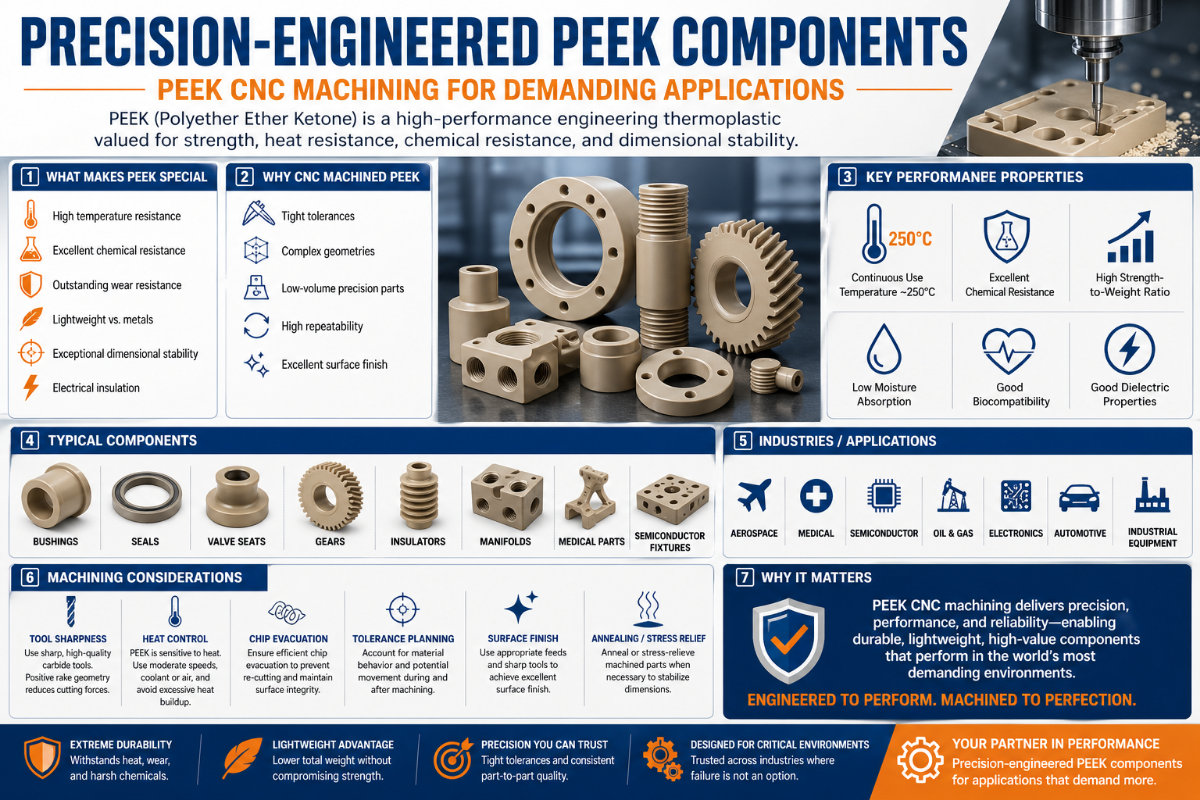
Precision-Engineered PEEK Components: PEEK CNC Machining for Demanding Applications
PEEK machining is usually considered when commodity plastic, PTFE, Delrin, aluminum, or titanium creates a failure risk the drawing cannot ignore. With precision-engineered PEEK components, the real question is not only whether polyether ether ketone can be machined. The better question is which operating stress should control the grade, tolerance, surface finish, inspection plan, and supplier conversation.
This guide is written for engineers and sourcing teams preparing custom PEEK parts for medical devices, aerospace assemblies, semiconductor equipment, oil and gas hardware, automotive systems, and industrial machinery. If you already have a drawing, use it as a pre-RFQ checklist before sending the file for PEEK CNC machining review.
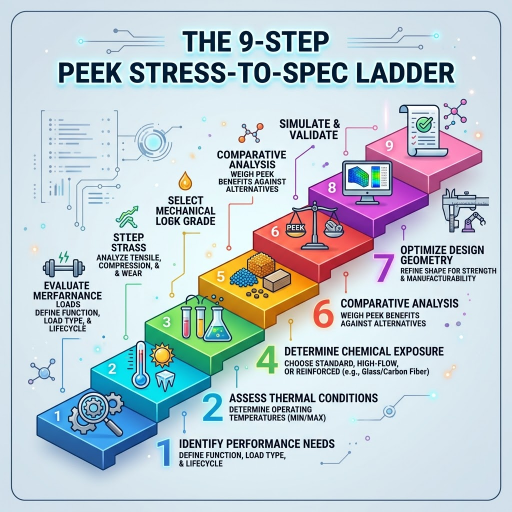
The PEEK parts most likely to fail in sourcing are the ones where the quote starts with a material name but never defines the operating environment. This 9-step ladder turns the application into manufacturing instructions.
| Step | Operating stress | Specification question | Buyer-safe direction |
|---|---|---|---|
| 1 | Continuous heat | Will the component see long exposure near 200-260 deg C? | Ask for grade data and a machining plan that limits heat distortion. |
| 2 | Short heat spikes | Are spikes brief, repeated, or paired with load? | Define duration and load instead of only listing a peak temperature. |
| 3 | Chemical contact | Which solvent, acid, fuel, cleaning agent, or fluid touches the part? | List concentration, temperature, and exposure time. |
| 4 | Sliding wear | Is it a bushing, wear ring, valve seat, gear, or thrust washer? | Consider bearing-grade PEEK rather than virgin PEEK. |
| 5 | Sterilization or cleanliness | Will the part contact tissue, fluids, wafers, optics, or vacuum chambers? | Define cleaning, packaging, inspection, and documentation needs. |
| 6 | Weight target | Is PEEK replacing aluminum, stainless steel, or titanium? | Compare weight, stiffness, temperature, and fastening method together. |
| 7 | Dimensional stability | Are there thin walls, flatness callouts, deep pockets, or tight bores? | Plan roughing, stress relief, and finish machining before final inspection. |
| 8 | Surface finish | Does Ra matter on a seal, sliding face, lens seat, or cosmetic surface? | Call out finish only where it changes function. |
| 9 | Documentation | Do you need material traceability, inspection records, or biocompatibility support? | Put document requirements in the RFQ, not after the first article ships. |
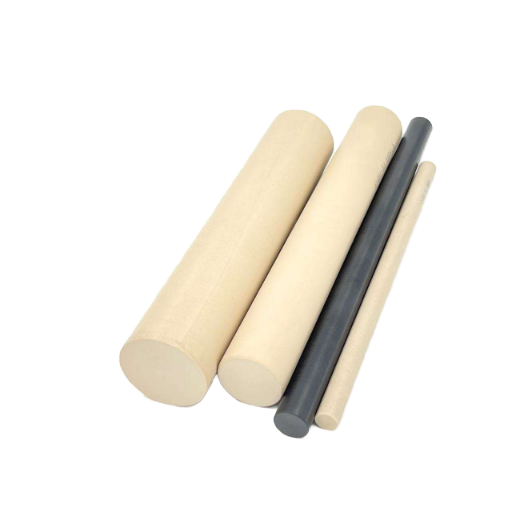
Virgin PEEK is often the starting point when the part needs chemical resistance, stable mechanical properties, and cleaner machining behavior. It is usually easier to machine than reinforced variants and can be a good choice for prototypes, insulators, and general precision plastic parts.
Glass filled PEEK and carbon fiber PEEK are different conversations. Glass reinforcement can raise stiffness and dimensional stability, but it also makes the material more abrasive. Carbon fiber reinforcement can support strength-to-weight and wear-sensitive components, yet it often pushes the shop toward diamond tools or PCD tooling. Bearing grades, including PEEK blends with low-friction fillers, belong in bushings, wear rings, valve seats, and sliding components.
Medical-grade PEEK should be treated with extra care. The current ISO 10993-1:2025 page frames biological evaluation as a risk management process based on intended use, material composition, tissue contact, and exposure duration. FDA recognized consensus standard records also connect ISO 10993-1 with biological evaluation for medical devices. That does not mean any machined PEEK part is automatically ready for a medical application. It means the grade, machining environment, cleaning, packaging, and documentation have to match the device risk.
| PEEK grade | Use when | Watch before ordering |
|---|---|---|
| Virgin PEEK | Balanced strength, chemical resistance, and machinability are needed. | May not be stiff enough for high static load or sliding wear. |
| 30% glass filled PEEK | Stiffness and dimensional stability are more important than sliding contact. | Glass fibers increase abrasion on tools and mating surfaces. |
| 30% carbon fiber PEEK | Strength-to-weight, stiffness, and wear behavior matter. | Tooling strategy and edge quality need closer review. |
| Bearing-grade PEEK | Your part slides, rotates, seals, or supports repeated friction. | Confirm the filler package and mating surface. |
| Medical-grade PEEK | Biological evaluation, sterilization planning, or medical documentation is required. | Do not substitute industrial stock without approval from the device owner. |
Plastic machining experience matters because a machined PEEK component behaves differently from an injection molded part or a generic composite plastic. Industrial-grade PEEK can be right for fixtures, insulators, and wear parts, but it should not be substituted for medical-grade PEEK without approval. When high temperatures, high chemical resistance, abrasion resistance, and high-temperature resistance appear in one part, the grade choice should be paired with machining review rather than handled as a raw-material substitution.
Use the drawing to make the grade decision, not the other way around. If the part has a 2 mm wall, a 0.8 mm groove, a 6 mm deep pocket, a 3 mm bore, or a +/-0.001 in datum relationship, choose the grade after checking tool access and stress movement. If the part is a 25 mm bushing, a 12 mm valve seat, a 50 mm insulator, or a 100 mm plate, the better decision may be different even when the resin name is the same.
PEEK plastic cuts cleanly only when the process controls heat and stress. PEEK doesn’t dissipate heat the way many metals do, so a dull tool, too much clamp pressure, long contact time, or rubbing can create dimensional drift, surface cracks, and scrap. One Practical Machinist shop-floor thread about PEEK warping points to the same root causes: heat, one-sided stock removal, clamping, sharp tools, and stress relief. During RFQ review, flag any 1 mm ribs, 2 mm slots, 5 mm deep drilled holes, 0.4 mm edge breaks, or 32 Ra sealing faces before the supplier fixes the route.
Engineering Note: For thin, flat and tight-tolerance PEEK items consider a three stage plan: rough machine, stress relieve as condition warrants, semi-finishing to minimize extra hand work then finish parts to critical dimensions. Le-creator’s PEEK page explains a roughing/annealing/mid-stage/annealing/finish method for dimensional stability where sharp tooling, coolant strategy, and cooling options are tailored to the selected PEEK grade.
The other concern is fiber abrasion. Unfilled PEEK may machine with carbide tooling, but unlubricated, glass filled and carbon fibre reinforced grades may scuff cutting tools quickly and dramatically reduce tool life. That does not mean reinforced PEEK is a poor choice; instead the supplier will prefer to plan tooling, feeding, edge condition and inspection points differently for each grade than for a generic plastic.
One practical decision rule is to reserve diamond tools or PCD tooling for abrasive glass-filled or carbon-fiber PEEK, keep carbide tooling in the discussion for unfilled PEEK, and ask whether coolant, air blast, or dry machining is appropriate for the grade and cleaning requirement. Prototype quantity also changes the decision: 5 parts, 50 validation parts, and a 500-part production release can justify different risk balances.
Contamination is the third risk. Medical, semiconductor, electronics, and vacuum applications often need more than dimensional accuracy. They may need controlled cleaning, separated tooling, packaging control, or inspection records. NASA Goddard’s outgassing database explains that ASTM E595 testing is used to measure total mass loss and collected volatile condensable materials in a vacuum environment, data that can support material suitability decisions for spaceflight environments. Semiconductor or vacuum components should trigger an early question about outgassing data or a similar cleanliness standard.
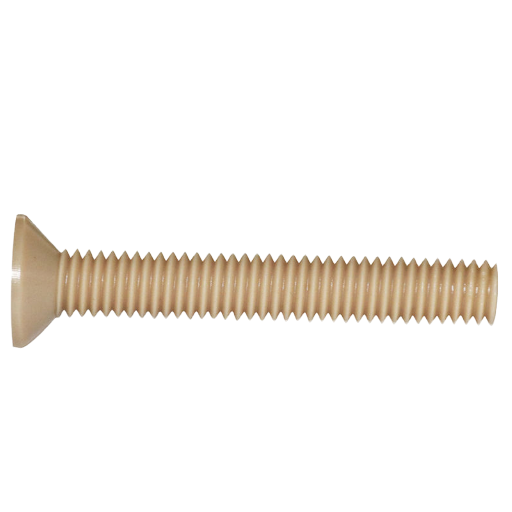
Tolerance planning follows the same logic. A general +/-0.005 in tolerance may be enough for most PEEK structures, while tight tolerances such as +/-0.001 in may be reserved for critical bores, sealing faces, optical-adjacent seats, alignment features, or mating tooling. Le-creator’s PEEK page states PEEK machining capability down to +/-0.001 in; the correct quote still depends on geometry, grade, wall thickness, inspection method, and lead-time expectations.
Surface finish works the same way. A decorative Ra callout on every face can add time without adding value. A sealing face, sliding bore, medical-contact surface, or wafer-handling contact point is different. Put finish requirements where the function demands them, then leave noncritical surfaces as-machined if that is acceptable.
Inspection should follow risk. A prototype bracket may need only a basic dimensional report. Medical, aerospace, or semiconductor components may require material traceability, first-article inspection, CMM data, cleaning notes, or packaging requirements. Le-creator’s about page states 100% outgoing quality inspection, 80+ advanced machines, 100+ professionals, and 98%+ first-pass yield; treat those as supplier capability signals, then confirm the exact inspection package for the job. For production outcome review, ask how rework rate, inspection hold points, and first article feedback will be handled before release.
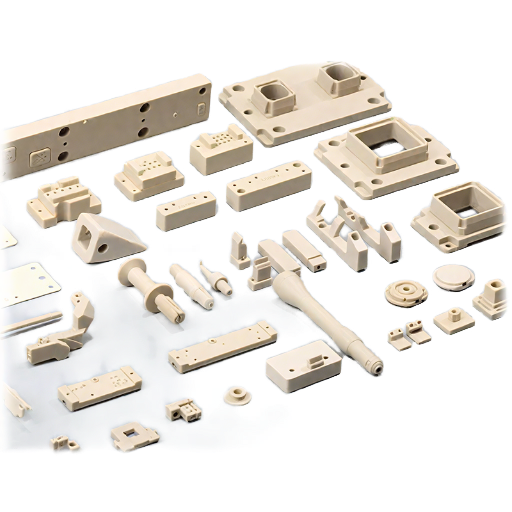
Medical and life-science parts often use PEEK because the design may need radiolucency, sterilization compatibility, controlled documentation, or a polymer alternative to metal. A review in PMC notes that PEEK is chemically stable, radiolucent, and biocompatible, while also warning that untreated PEEK is biologically inert in bone-interface applications. Buyers should treat medical-grade PEEK as a material, process, cleanliness, and risk-evaluation package, not just a resin name.
Aerospace and defense projects often care about heat exposure, weight reduction, chemical contact, and electrical insulation. Semiconductor and electronics projects may add low contamination, low outgassing, and flatness stability after thermal cycling. Oil and gas applications tend to focus on chemical contact, temperature, valve seats, seals, backup rings, and long-term creep resistance. Automotive and industrial machinery projects usually evaluate PEEK against wear, noise, weight, oil exposure, and sliding contact.
Food and beverage equipment should not rely on a generic “FDA grade” claim. Title 21 Part 177 lists indirect food additive polymer rules, including polyaryletherketone resin sections. If food contact is part of the application, the material grade, additive package, finished article, and use condition all need review. In practice, a 10 mm spacer in dry packaging, a 20 mm valve insert in hot washdown, and a 40 mm guide rail exposed to cleaner should not receive the same compliance answer.
PEEK is not “better” in every direction. It is better when the application needs a particular mix of heat resistance, chemical resistance, strength, wear control, dimensional stability, or weight reduction. PTFE is often chosen for very low friction, but it is not a structural substitute for PEEK. Delrin or acetal is easier and cheaper for many precision plastic parts, but it does not live in the same high-temperature or chemical-resistance envelope. Aluminum is easier to machine and often cheaper, but it may fail the weight, corrosion, insulation, or galvanic-corrosion target. Titanium is strong and medical-friendly in many settings, but it brings different imaging, stiffness, weight, and cost tradeoffs.
| Alternative | Use the alternative when | Move toward PEEK when |
|---|---|---|
| PTFE | Lowest friction matters more than stiffness or load. | Strength, dimensional stability, and temperature resistance matter together. |
| Delrin / acetal | Cost, machinability, and moderate-duty precision are enough. | Heat, chemicals, or sterilization push beyond acetal’s comfort zone. |
| Aluminum | Metal stiffness, thermal conductivity, or low part cost wins. | Weight, corrosion, insulation, or nonmetallic contact is the constraint. |
| Titanium | Metal strength and proven implant use are required. | Radiolucency, lower stiffness, lower weight, or polymer chemistry is desired. |

A better RFQ accelerates the transition from “can this be machined?” to “how much inspection, stress-relief, surface-finish, and cleaning will it require?”.
Drawing review prompt: If the part has thin walls, deep pockets, tight bores, reinforced PEEK, or contamination requirements, ask for manufacturability feedback before locking the tolerance block.
Send the drawing through Le-creator’s custom PEEK CNC machining service page for grade, tolerance, and process review.

Search demand shows two layers of intent. Broad PEEK material searches attract early research, while terms such as PEEK machining, PEEK CNC machining, and PEEK machined parts carry stronger sourcing intent. That split matters. A buyer who only asks for “PEEK instead of metal” may miss the real risk: stress relief, tooling, surface finish, cleanliness, and documentation.
In practice, sourcing is shifting from material substitution to risk control. Supplier conversations should move from “Can you machine PEEK?” to “How will you control heat, stress, tool wear, burrs, inspection, and cleaning for this geometry?”

PEEK can be machined, but it is less forgiving than many commodity plastics. Excessive heat, residual stress, deep drilling, and reinforced fibers can lead to warping, cracking, burrs, or short tool life. Good PEEK machining practice uses sharp tooling, controlled heat, stable fixturing, and a stress-management plan. Flat, thin-wall, or deep-pocket parts often need balanced roughing, stress relief, and finishing only after movement is controlled.
Yes. CNC machining is suitable for custom PEEK parts, prototypes, pilot builds, and lower-volume production. The machining plan should account for grade, feature depth, wall thickness, heat control, deburring, and inspection.
A realistic tolerance depends on geometry, grade, wall thickness, inspection method, and operating temperature. Often a general tolerance such as +/-0.005 in is more practical than demanding every feature to +/-0.001 in. Very tight callouts should be reserved for features that control function, such as bores, sealing faces, bearing fits, datum surfaces, or mating assembly locations.
PEEK is usually better when the part needs higher strength, stiffness, heat resistance, and dimensional stability. PTFE may be better when low friction is the priority and the mechanical load is lower. For parts that need strength plus resistance to heat or chemical exposure, PEEK is often the stronger candidate.
No single PEEK grade is best for every medical or aerospace component. Start with the application conditions, then choose the grade around strength, stiffness, chemical exposure, sterilization, vacuum behavior, biocompatibility expectations, documentation needs, and traceability requirements.
Glass and carbon fiber reinforcement can improve stiffness or wear behavior, but the fibers abrade cutting tools and can affect edge finish. Cost often comes from tooling, process control, inspection, and higher scrap risk. Small grooves, thin ribs, and sealing edges need early edge-quality review.