

Supportive, Professional, Client-Focused Service
From prototypes to full-scale production, we’ve got you covered.


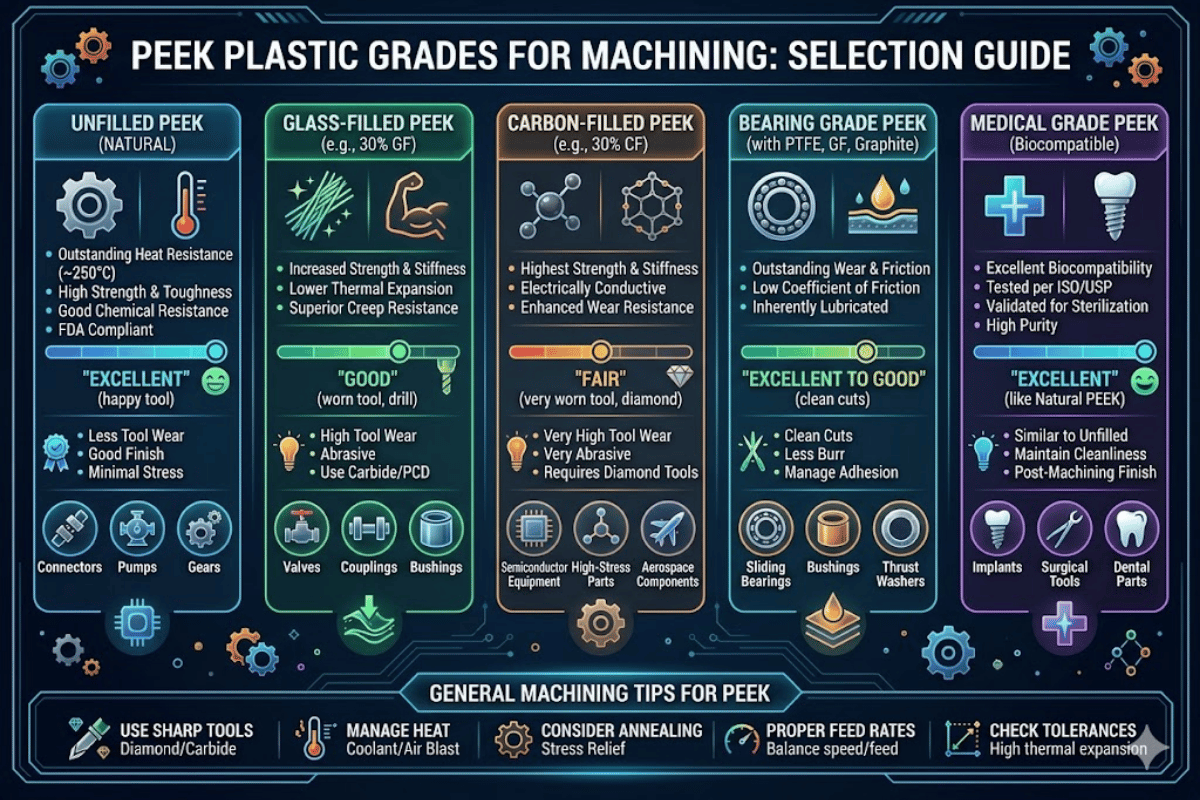
| Chemical Name | Polyetheretherketone (PEEK) |
| Polymer Family | Polyaryletherketone (PAEK) — semi-crystalline thermoplastic |
| Continuous Service Temperature | 250°C (482°F) |
| Melting Point | 343°C (649°F) |
| Tensile Strength (Unfilled) | 90–100 MPa (13,000–14,500 psi) |
| Elastic Modulus | 3–4 GPa |
| Common Machined Forms | Rod, sheet, tube, injection molded blanks |
| Key Grades for Machining | Unfilled (450G), GF30, CF30, Bearing, Medical (PEEK-OPTIMA) |
| Achievable CNC Tolerance | ±0.025 mm (±0.001 in) standard; ±0.02 mm with annealing |
Selecting the wrong PEEK grade for a CNC project can multiply costs tenfold — or yield parts that fail under service conditions. PEEK (polyetheretherketone) is a high-performance thermoplastic offering strong mechanical properties, chemical resistance, and heat tolerance. But the material comes in at least six distinct grades, each with different machining behavior, cost structure, and regulatory standing.
This guide briefly compares unfilled, glass-filled, carbon fiber reinforced, bearing-grade, and medical-grade peek on a side by side basis – including real property data, machining parameters, tool wear rates, and a grade selection matrix that maps the differentials in each variant against the specific application requirements. No matter whether you require precision PEEK CNC machining for aerospace bushings or semiconductor fixturing, or critical surgical implants, the right grade decision path starts here.
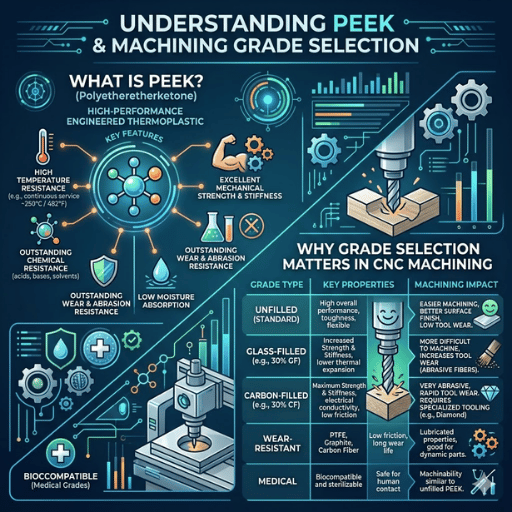
peek is a semi-crystalline, thermoplastic polymer made from repeating ether-ether-ketone units optimized for stiffness, strength and chemical stability. Developed by Imperial Chemical Industries in the early 1980s, A 2024 review published in the National Institutes of Health database shows an elastic modulus of 3-4 GPa, a strength averaging 80-97 MPa, and a Tg of 143C — figures that place it well above most engineering plastics like nylon, acetal and polycarbonate.
What makes PEEK plastic properties unusual among thermoplastics is the combined heat resistance (steady service at 250°C), broad chemical resistance (survives hydrocarbons, ketones, and dilute acids), and dimensional stability under sustained mechanical loads. These properties make it a common metal replacement in harsh environments — but choosing the wrong grade leads to problems from excessive cost to outright part failure.
Specifically for machining, grade choice is an important factor as each PEEK variant has its own machining profile. Unfilled PEEK machines smoothly with standard carbide tooling. Mix in 30% glass fiber to the mix and the tool life is 50-70% shorter. Add carbon fiber reinforcement and the conductivity changes, affecting flow, chip formation and dimensional control. Medical grades impose special regulatory considerations and constraints, affecting everything from raw material to shop floor cleanliness.
Your PEEK grade choice affects not just part properties, but tooling strategy, machining costs, and compliance pathway. $40 a kilo industrial-grade and $500 kilo medical-grade rods may appear to be identical – but getting this wrong is an expensive mistake.
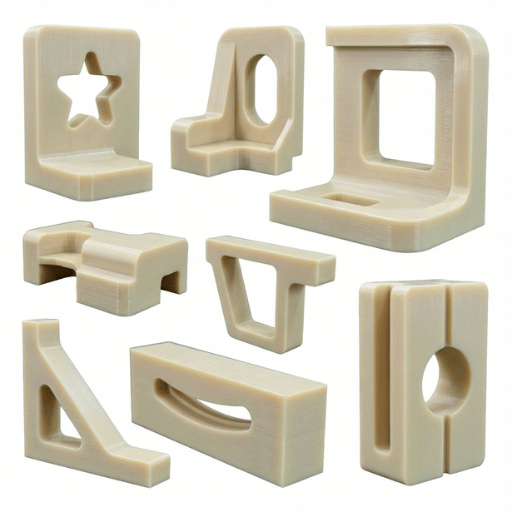
peek material grades can broadly be split into three families: unfilled (neat), fiber-reinforced and specialties. Below, a comparison matrix puts specific numbers where the theory belongs – because we need actual values to make informed material choices, not just generic descriptions.
| Grade | Filler | Tensile Strength | Max Service Temp | Typical Application | Raw Cost (USD/kg) |
|---|---|---|---|---|---|
| Unfilled (450G) | None | 90–100 MPa | 250°C | Seals, insulators, general structural | $40–90 |
| GF30 | 30% glass fiber | 130–160 MPa | 250°C | Pump housings, semiconductor fixtures | $60–120 |
| CF30 | 30% carbon fiber | 140–210 MPa | 250°C | Aerospace brackets, high-precision shafts | $80–150 |
| Bearing Grade | PTFE + carbon + graphite | 70–90 MPa | 250°C | Bushings, thrust washers, sliding seals | $70–130 |
| Medical (PEEK-OPTIMA) | None (ultra-pure) | 100 MPa | 250°C | Spinal cages, dental abutments, implants | $500–800 |
| ESD/Conductive | Carbon black or carbon fiber | 85–100 MPa | 250°C | Wafer handling, electronics test sockets | $90–160 |
From the cost perspective, the key to understanding most PEEK machining guides is that medical-grade peek-OPTIMA costs 6-10x more than industrial-grade unfilled PEEK. According to the NIH-published biomedical materials review, the typical price of raw medical grade PEEK (any brand) is 500-800 /kg, and that dictates the costs to the end project, machining and all.
Each grade of PEEK plastic is characterized according to ASTM standards– ASTM D6262 covers general peek classification for molding and extrusion grade materials, whereas ASTM F2026 governs peek polymers for intended surgical implant use. Understanding which specification relates to your process specifies everything from traceability of custom PEEK machined parts to incoming material inspection procedures.
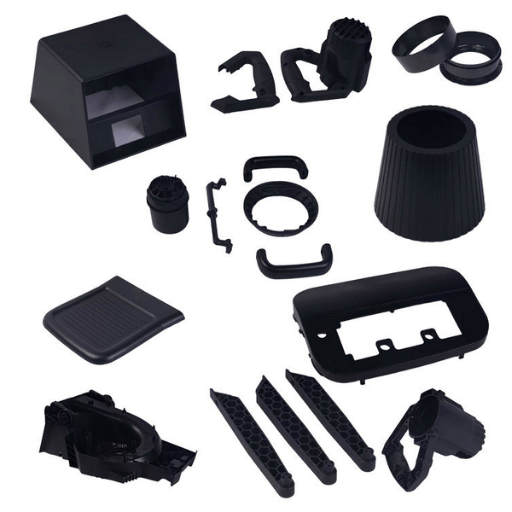
Unfilled peek is most often the starting point for most plastic machining projects that do not demand fiber reinforcement or regulatory compliance. Granular extruded rod, sheet, and tube offerings- equivalents to 450G- grades- provide tensile strengths at 90-100 MPa with an elongation at break near 30%, and having crystallinity characterized in the 30-40% range as validated through peer-reviewed material analytical studies marketed through the U.S. National Institutes of Health.
Machining unfilled peek with typical carbide tooling is well-understood relative to reinforced PEEK grades- tooling life remains predictable and the material produces chips cleanly without the heavy load associated with carbon fibers or glass reinforced material. Typical CNC turning speeds are in the range of 300-800 surface feet per minute (SFM), with face milling at 500-800 SFM and end milling at 270-450 SFM.
✔ Advantages
⚠ Limitations
📐 Engineering Note
For unfilled peek portions requiring tolerances tighter than 0.05 mm, stress-relief annealing should occur prior to precise final machining. Slowly increase temperature of oven to 200-220 Celsius, maintain for 1-2 hours (roughly 30 minutes per 10 mm of stock being processed), then allow oven to cool gradually. This heats to relieve residual stresses from extrusion or rough machining which would lead to dimensional movement after final cuts.
Many industry engineers discourage the use of flood coolant while machining peek as thermal shock- the rapid rate of temperature change caused by coolant application- can induce micro-cracking of the material. It is safer to use air jets or light water-soluble coolant mists. If cooling is invoked, do not bring the coolant stream into contact with the material intermittently; sustain the force once begun.
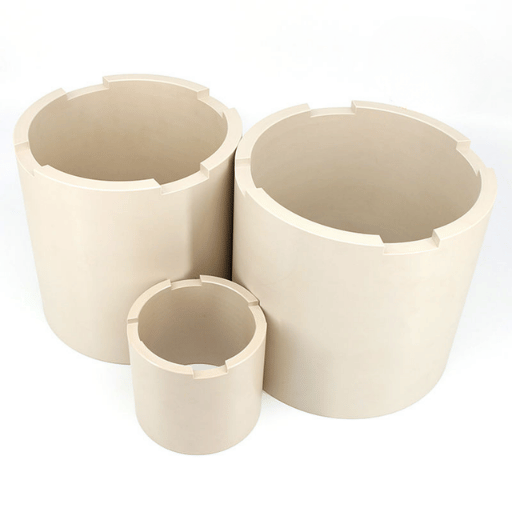
Adding 30% glass reinforcement to the PEEK matrix greatly improves stiffness and compressive strength while additionally reducing thermal expansion- this is why GF30 is the standard choice when parts must locate dimensional stability under mechanical strain at elevated temperature. Equipment seats, valve components, and wafer-handling tooling found in the semiconductors world often specify glass filled PEEK machining for this reason.
Tool wear is the trade-off. Glass fibers are abrasive on cutting edges, and industry machining data consistently shows that reinforced PEEK grades reduce tool life by 50–70% compared to unfilled PEEK. Standard carbide end mills that last through a full production run on 450G stock may dull halfway through the same program on GF30. Polycrystalline diamond (PCD) or diamond-coated carbide tooling is the recommended choice for production volumes.
📐 Engineering Note
When machining GF30 peek, expect a 20-30% reduction in cutting speeds when compared to the recommended parameters for unfilled material. Feed rates can often be similar, as can the declared depth of cut, but for end milling it is advisable to limit depth to a maximum of 50% of tooling diameter to limit the chip load and heat generation. Surface finish should be observed – as the tool dulls fiber pull-out results in a roughness value that can cause rejection before dimensional tolerances drift. Tool inspection can be scheduled at half the normal frequent intervals for unfilled PEEK.
GF30 also has different characteristics with respect to thin section machining. Internal stress concentrations introduced by the glass fibers heighten the chance of warping induced by aggressive machining. A gentle, multi-stage process of roughly removing 0.2-0.5 mm oversize stock, allowing the part to rest and stabilize then finishing produces more predictable results than aggressive single stage strategies.
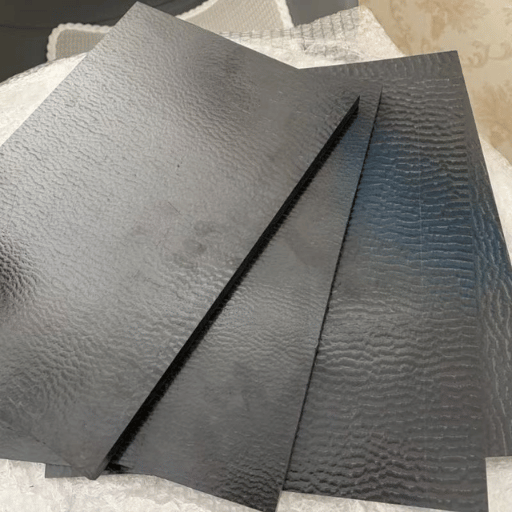
Carbon fiber reinforced peek (CF30) offers the highest specific strength of the PEEK series combined with athermal properties, with a conductivity about 3.5 times that of unfilled PEEK. That elevated conductivity enhances heat flow over the cutting zone during CNC machining, which in some conditions may actually improve the surface quality – albeit with the carbon fibers being more abrasive on tooling.
Where CF30 truly excels in precision CNC work comes from dimensional stability, since the carbon fiber reinforcement attenuates the coefficient of thermal expansion forces. PEEK components such as aerospace brackets, satellite assembly panels and instrument enclosures are commonly specified CF30 for this characteristic.
Machining attributes of CF30 peek are unchanged relative to GF30 – PCD tooling is recommended because carbon fibers cause comparable tool wear rates. However, the elevated thermal conductivity of CF30 can permits slightly increased cutting speeds relative to GF30 in a few common configurations, because the heat is more easily conducted away. Practical variation is not substantial enough to justify different screen values between these grades in most cases.
CF30 is the PEEK grade to select when mechanical strength and dimensional stability both matter — particularly for structural applications in aerospace and medical devices where parts must maintain precise geometry across a wide temperature range. The cost premium over GF30 ($80–150 vs $60–120 per kg) is moderate, and the machining behavior is similar enough that tooling investment carries over between grades.
Beyond the performance benefits of reinforcing PEEK, additional proprietary grades of peek can be developed to meet specific functional needs. Bearing-grade PEEK incorporates PTFE as well as ground carbon and graphite flakes to obtain low coefficient of friction and high wear resistance for use in sliding contact applications. Literature has cited dry operation at 120, 000 PV (pressure velocity) limits for bearing-grade derivatives – approaching expected service limits for unfilled or fiber-reinforced material in some cases.
Conductive PEEK grades incorporate carbon black or carbon fiber to achieve low surface resistivity, making them suitable for semiconductor wafer handling, ESD-safe test sockets, and cleanroom fixtures where static discharge would damage components. Machining behavior is comparable to standard filled PEEK, though the carbon loading can affect chip characteristics.
Food-grade peek formulations meet all approvals required for direct food contact from the FDA; specialty high-temperature variants extend continuous-use grades far beyond the standard 250C limit in oil and gas downhole tools or autoclave environments.
| Specialty Grade | Key Property | Typical Value | Primary Application |
|---|---|---|---|
| Bearing (PTFE-filled) | PV Limit (dry) | 120,000 psi·ft/min | Bushings, thrust washers |
| ESD/Conductive | Surface Resistivity | 10⁶–10⁹ ohm/sq | Wafer handling, test sockets |
| Food-Grade | FDA Compliance | 21 CFR-compliant | Processing equipment, conveyors |
| High-Temperature | Continuous Service | 260°C+ | Downhole seals, autoclave parts |
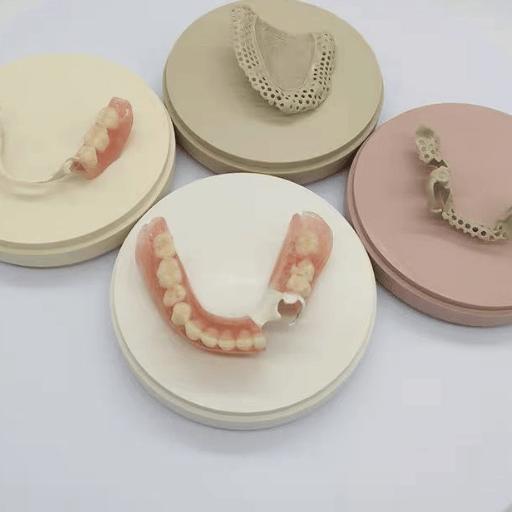
Medical-grade PEEK occupies a category separate from industrial grades — not because the base polymer chemistry differs fundamentally, but because the purity, traceability, and regulatory documentation are on another level. PEEK-OPTIMA, produced by Invibio (a Victrex subsidiary), is the most widely used implantable-grade PEEK. Published clinical data from Invibio shows approximately 15 million implanted devices worldwide with zero material-related recalls over a 20-year track record.
Compliance covers ASTM F2026 (Standard Specification for PEEK Polymers for Surgical Implant Applications) and meets ISO 10993 biocompatibility requirements including cytotoxicity, sensitization, and implantation testing. Manufacturing takes place under ISO 13485:2016 certified quality systems with full supply chain control from monomer to finished polymer.
In processing cnc machining of medical-grade peek components like spinal fusion cages, dental abutments, trauma fixation plates and other applications, the processing environment is just as relevant as the cutting conditions applied. Good practice requires dedicated tooling (not shared with other polymers), nitrile gloves when handling special peek and HEPA-filtered laminar flow chambers above the processing area to avoid contamination. The implant-grade material itself behaves just like unfilled industrial PEEK in terms of feeds, speeds and chip formation; the challenge is in process control and documentation.
📐 Engineering Note
PEEK’s elastic modulus (3–4 GPa) is similar to that of human cortical bone. This fact directly translates into its application in load-bearing implants, as it can reduce the effects of stress shielding compared to titanium (modulus ~110 GPa). It is for this biomechanical reason that surgeons and device designers specify PEEK over metal for spinal interbody cages and craniomaxillofacial plates, even if their machining process is more complex and ultimately more expensive.
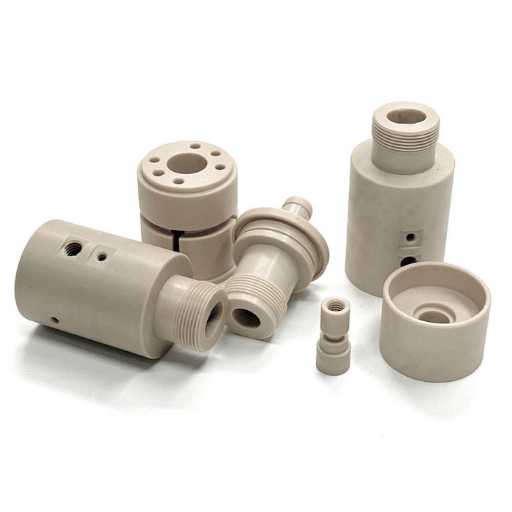
Selection of grade for peek machining applications should follow an evaluation process rather than take a chosen grade as the default. By following the checklist below, you can clearly identify the grade best suited to your application – and eliminate unsuitable options early.
PEEK Grade Selection Checklist
Where special relevance to an application does not clearly dictate a dedicated reinforced grade, which are much more costly for CNC machining than unfilled or standard grades, unfilled peek (450G) generally provides the most cost-effective, reliable solution in the vast majority of industrial aerospace CNC processes. Design upgrades to GF30, CF30 or even bearing-grade PEEK therefore should be used for dramatic performance improvements only where justified by the precise application performance case.
For projects requiring precision tolerances on PEEK machined components across multiple grades, working with a machining partner experienced with PEEK reduces lead time and limits grade-related machining issues.
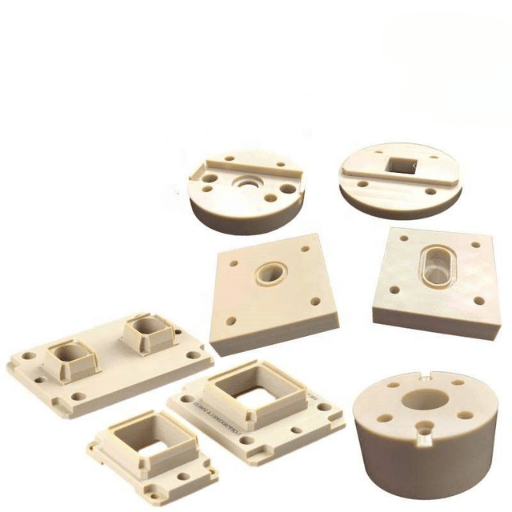
Lecreator machines unfilled, glass-filled, carbon-filled, and bearing-grade PEEK with 17+ years of precision manufacturing experience. Send your drawings for a quote.
This guide was compiled by the engineering team at Lecreator, a Shenzhen-based CNC machining facility that processes multiple PEEK grades across aerospace, medical device, and semiconductor applications. The material property data cited here draws from peer-reviewed NIH publications, ASTM standard specifications, and manufacturer technical documentation — cross-referenced against machining outcomes observed across thousands of PEEK parts produced since 2008.