

Supportive, Professional, Client-Focused Service
From prototypes to full-scale production, we’ve got you covered.


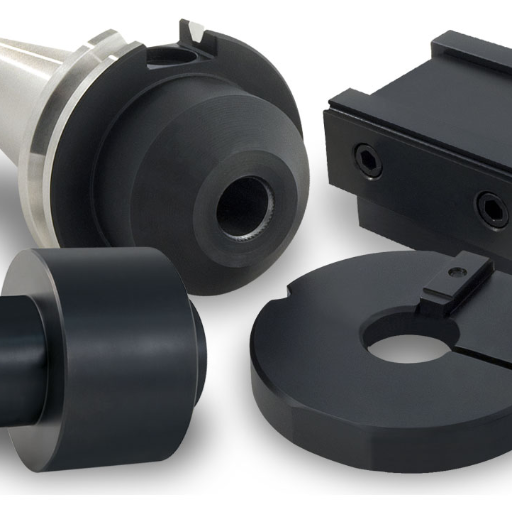
Stainless steel has earned a good reputation of being a strong, sturdy and corrosion-resistant material in many industries. However, doing a better aesthetic and performance enhancement to it can mean other possibilities. Here comes black oxide coating; standing out in a class of its own, black oxide coating is a procedure used for coloring the surface of stainless steel, giving it an elegant black finish and many other functions. This article examines the concept of black oxide coating in detail by analyzing its strategic uses, myriad varieties and complicated procedures. Therefore, whether one is a producer or a creator or simply fascinated by new age metal treatments, this article is definitely going to help in understanding how far stainless steel can be taken with black oxide coating.
Black oxide coating is an exterior finish characterised by a very thin, and black colored surface that enhances the corrosion resistance of stainless steel. Unlike other coatings that alter the surface of metals, black oxide provides a more attractive and non-glare finish to the metal without changing its thickness or size. The procedure involves a series of baths in which the metal is submerged to provide a good attachment of the paint and a uniform look of the finished product. Black oxide has been popular and embraced in most items where strength, aesthetics, and less shiny surfaces are desired, such as tools, cars, and heavy machinery.
Black oxide coating is a conversion coating applied to ferrous materials, stainless steel, and other types of alloys on the other hand for the purpose of enhancing corrosion resistance, reducing reflection, and beautifying surface aesthetics, which becomes resistant to ambient air. They may undergo some kind of a conversion reaction under chemical intervention to form a constant layer of magnetite (Fe3O4) covering the metal without affecting its composition. As a rule, they are applied via an immersion in heated baths filled with a series of chemicals; the black oxide further improves wear resistance when post-treated with an oil, wax, or sealer. Such a coating is widely used for the automotive, aerospace, and manufacturing industries because it makes a shiny non-reflective finish that holds intrinsic material integrity.
Most of the black oxide is made up of magnetite (Fe₃O₄), which is a form of iron oxide that is the product of a chemical interaction between the base metal and alkaline compounds while coating the base metal. The reaction occurs in an environmentally oxidizing at high temperatures. This results in hard, bound, corrosion- and wear-resistant surface deposits.
A significant property of black oxide is the fact that it has the capacity to absorb the light, which is of particular value for applications intended to end matte and free of reflections. Processed in combination with post-treatments including oils, waxes, or sealants, the black oxide coatings are given an improved lubricity that affords a further reduction of friction as well as surface wear on moving parts. The coating’s texture is also thin and dimensionally stable, making it an excellent choice for precision components essentially demanding tight tolerances.
The recent advances in black oxide treatment with the help of several modern research studies have developed better environmental-friendly formulations that reduce toxic material intake. Industrialists with interests in this area are further coming up with innovative approaches, like the inclusion of energy-efficient processing methods, thus helping to fuel the capabilities and sustainability of black oxide coating. These slowly build black oxide’s relevance in its valuable application in high-end military-grade equipment all the way down to simple-day consumer-end up products.
Black oxide differs from other coatings in terms of application process, finish appearance, corrosion resistance, durability, thickness, and environmental impact.
| Parameter | Black Oxide | Other Coatings |
|---|---|---|
| Process | Chemical-based | Varies (e.g., spray, electroplating) |
| Finish | Matte/Dark | Glossy or Colored |
| Corrosion | Moderate | Higher (varies by type) |
| Durability | Moderate | High (e.g., hard chrome) |
| Thickness | Thin (<1 micron) | Thicker (varies) |
| Eco Impact | Low (modern) | Varies (can include chemicals) |

The black oxide coating finds its applications in several industries because of their both functional and aesthetic qualities. Here are some of the major industries:
These industries are using black oxide coatings to combine performance with aesthetics despite the relative inner-counter productiveness.
Black oxide fasteners and washers possess great versatility with reactivity against durability and resistance to corrosion and deliver an attractive appeal. Renowned fields can be headquartered with:
Clearly, it comes as a representation of the black oxide coated fasteners and washers at the various levels of reliance and a broad look into its embraces for different industries.
A major car manufacturing company started to use black-coated fasteners in their engine assembly, which carried the hallmark of being corrosion-resistant even with increasing temperatures. Products were tried for a five-year period, of which evaluations showed that till the end of the trial, components were functioning without any rust under harsh thermal treatment, leading to considerable maintenance savings.
An aerospace manufacturer used black-oxide finished washers in the landing gear mechanism of aircraft. The finishing gives wear resistance and tough, glare-free surface needed for high pressure and mechanical stress under all aerospace operational systems. This increased safety and life of the equipment.
The firm opted for black oxide-coated fasteners to get a heavy line-up of machinery nullified by a supposedly fricative type of operating environment, resulting in less wear and tear and premature failure. With less downtime and lesser expenditure incurred for item reordering, the overall operation became efficient.
Case studies show the paramount utility and heavy-duty performance of black oxide coated products under various difficult conditions.

Black oxide coatings offer corrosion resistance to moderate extent, mainly because of the black oxide layer and the application of post-treatment sealants like oil or wax. It acts as a conversion-type coating modifying the topmost level of the material to resist moisture and oxidation. It is not feasible for black oxide coatings to withstand constant exposure to corrosive media for an indefinite period.
Regular maintenance must be maintained along with usage of good sealing materials to increase the lifespan of corrosion resistance of the black oxide-coated parts. They are excellent in uses demanding aesthetics or with moderate environmental protection but not so well suited to say demanding conditions like marine environments or exposure to heavy chemicals.
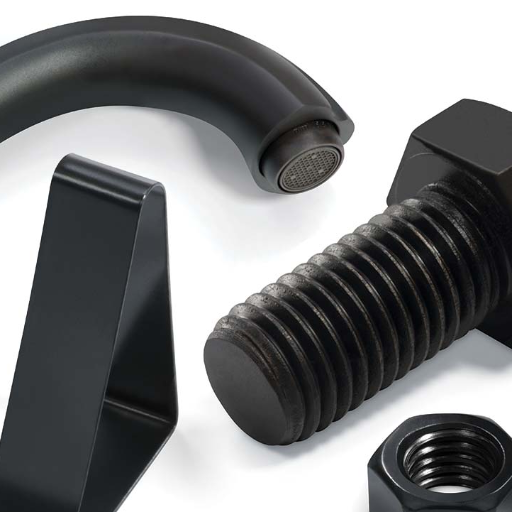
The blackening process of stainless steel is a chemical reaction performed on a metal surface by treating it with an alkaline oxide solution; the end process yields a thin, uniform layer of magnetite-the corrosion resistance remains enhanced and so does the cosmetic appearance. Operations involved in this kind of surface processing work include cleaning the stainless steel to finally remove oil or fines, dipping in the black oxide solution, and rinsing and sealing it with an oil or wax. This case is suitable for decorative applications and where minimal corrosion protection can fulfill the requirements.
Proper cleaning and pre-treatment of the stainless steel surface is of utmost importance. Dirt, grease or any other contaminant should be removed from the surface to make adhesion easy.
A well-balanced black oxide solution is chemically the best solution, ensuring uniform and faithful blackening.
The correct temperature of the solution is as competent for the solution’s appearance and, more importantly, for the coating’s durability over time.
The required time for blackening the stainless steel with a black oxide solution provides for a very even application, with a coating to a smaller thickness than another.
It is very important to apply the sealing treatment to the blackened surface-an additional benefit to metallic corrosion and wear prevention-prolonging the life of the coating.
Always maintain the capacity of the grease and oil to insulate critical parts from undesirable elements, which they can handle only to a certain extent. To extend the life of this seal, it is necessary to apply or otherwise re-apply it at intervals, depending on the time of use and the severity of wear. Palms or hands should not openly touch stainless steel parts because leaving behind sweat and other oils that cause rusting would undo the polymers’ efficiency. In addition to the usual daily cleaning, greasing occasional cleaning and maintenance will ensure that stainless steel parts last longer.
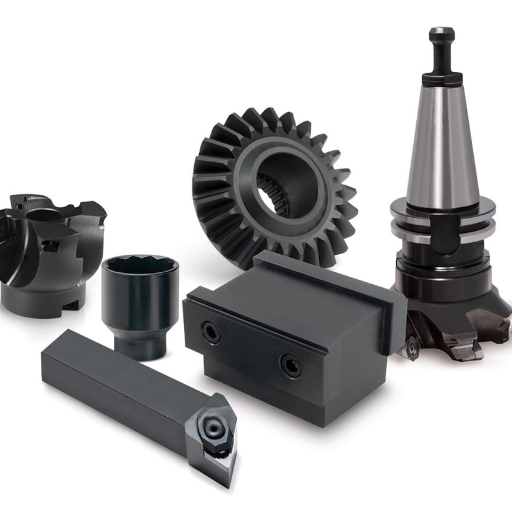
Passivation and black oxide coating differ in purpose, process, appearance, protection, and application.
| Parameter | Passivation | Black Oxide |
|---|---|---|
| Purpose | Corrosion | Aesthetic |
| Process | Chem. | Oxidation |
| Appearance | None | Dark Matte |
| Protection | Moderate | Low |
| Application | Precision | General |
Painting and black oxide finishing differ in durability, appearance, protection, thickness, cost, and applications.
| Parameter | Painting | Black Oxide |
|---|---|---|
| Durability | High | Moderate |
| Appearance | Glossy | Matte |
| Protection | Strong | Basic |
| Thickness | Thick | Thin |
| Cost | Higher | Lower |
| Applications | Broad | Specific |
The choice of coating method applied to a stainless steel surface is frequently dictated by the particular requirements of the application system. Paint is an option if you value resistance. A painted coating imparts high resistance and corrosion that will be able to stand in the most challenging places with its robust film that withstands the abuse of harsh conditions. However, if you are leaning down the cost line with a thin layer in mostly black matte finish, black oxide finishing is an economical one. It is therefore advisable that you assess the environment, functional properties, and the limitations of your budget so as to facilitate the felicitous selection of a coating process.
Black Oxide Conversion Coating on Metals: A Review of Coating Techniques and Adaptation for SAE 420A Surgical Grade Stainless Steel – This study reviews black oxide coating techniques and their application to surgical-grade stainless steel.
Relative Improvements in Anti-Reflection Property of Black Coating Produced on Stainless Steel 310 Using Conversion Coating Techniques – This research explores process parameters for black oxide coating on 310-grade stainless steel, focusing on anti-reflective properties.
A Review – Black Oxide Coating on Metal Substrates of Steels, Aluminium, Magnesium, and Copper – A comprehensive review of black oxide coatings on various metals, including stainless steel.
The Tribological Performance of Black Oxide Coating in Rolling/Sliding Contacts – This paper highlights the benefits and limitations of black oxide coatings, particularly in bearing applications.
Black oxiding is a chemical conversion process that reacts a blackening solution with the stainless steel surface and grows an oxide or conversion layer on it. Black oxide does not work like a simple coated appearance; it is a chemical conversion. A thin, rough layer is produced, from sub-micron to approximately 1 micron. The finish is generally dull to satin, and when combined with oil or lacquer, the appearance along with this corrosion resistance is improved. A different and rather rare formulation or pre-treatment usually has to be given for stainless steel, such as 17-4 PH; because of this, the process and chemistry of the steel and iron vary.
There are two blackening processes. One involves high temperatures, while another involves mid-temperatures. In regard to the black oxide treatment of stainless steel, the specific chemistries needed are markedly different. Most of the time, heat black oxide is used (higher temperature) for steel and iron. The oxides produced give a better coverage and dimensional stability; the mid-temp or cold black oxide method is used for more temperature-sensitive products. It could be best for stainless steel as it has an impact on their appearance and performance. While Hot black oxide processes are often deeper in color, mid-temp or cold processes could be gentle enough for more complicated stainless steel parts while easily maintaining tight tolerances.
From a general perspective, black oxide coating is used on a number of alloys. This, however, might differ from one case to another. As a result, stainless steel alloys like 17-4 PH and low-carbon steels can end up having a variance in the performance. Regarding 17-4 PH and the other parameters, it is possible that the various pretreatments or coatings may be able to make the blackening process better. This initiative has also undergone enzyme-catalyzed maling in different beautification exercises. The black oxide treatments are way smaller. The process itself of Black Oxide is a conversion process and there is very little dimensional change, only on the order of micrometers, making it ideal for many tight-tolerance parts. However, if the environment is harsh, anything needing extra corrosion resistance above that of a conversion coating requires physical protection to it-lacquers, oils, successive platings.
The black oxide treatment imparts only moderate corrosion resistance and reduces light reflection; in itself, it is porous and therefore provides limited protective quality, thus, there is a need for sealing with oils, waxes, or lacquers to obtain functional properties. The protection level will depend on the exact post-treatment and sealing procedures: properly sealed black oxide coatings can demonstrate good adherence to industry standards at times (for some applications, class 4 performance when sealed), but may need extra layers in real harsh or dynamic situations. The finish is very thin (with about 1 micron average), and this does not affect dimensional changes very much.
Black oxide fasteners and blackened stainless parts find general usage in architectural finishing as well as aesthetic hardware products wherever glossy blackness is required. Immersion blackening with room-temperature procedures can be applied on steel and stainless steel parts, including fasteners, provided the chemistry is suitable for the given alloy. Consider applying sealing or lacquer and/or specific sealants on the parts to prevent the unwanted fingerprint and weathering, avoiding the risk of surface corrosion.
Black oxide coatings are the cost-efficient and versatile surface treatment solution offered for stainless steel components in various industries. Ranging from applications in the automotive and aerospace industries to the medical sector and the military, the chemical conversion method describes a feature set that combines aesthetics with a modest acidic resistance to the reflection of light and retention of dimensional stability. Although the black oxide coating provides certain advantages such as improved looks, robustness, and economical application, these require particular surface preparation, cautious control of the process cycle, and after-cut sealing to show their best possible attributes. Outlook at step-wise procedure, quality compromise point, and workability can yet take some initiative at the end concerning the best choice of black oxide coatings when compared with alternative finishes such as painted coils or passivation. Herein lies another plus for black oxide coatings with the advent of eco-friendliness and greater technological awareness in the realm of metal finishing that have molded the outlook of the application of black oxide coatings to stainless steel components in the most demanding areas that one can think of.