

Supportive, Professional, Client-Focused Service
From prototypes to full-scale production, we’ve got you covered.


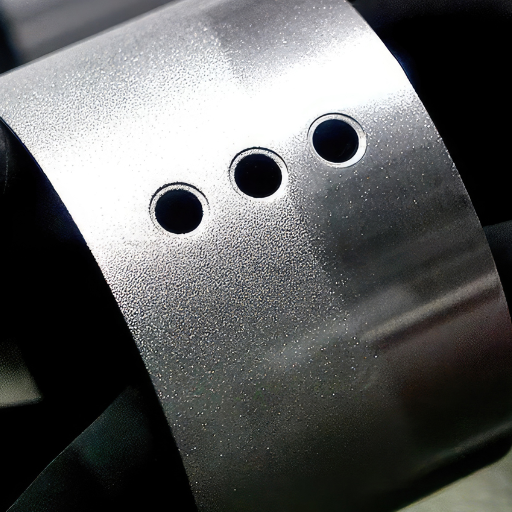
The surface finish is essential. In stainless steel CNC parts, it defines durability as well as appearance and practicality. Correct finish can significantly contribute to performance and aesthetics of your parts, whether you are designing parts for industrial machinery, medical devices, or consumer products. This document is your comprehensive guide to learning about various surface finishing techniques available for stainless steel CNC machining. Finishing techniques include alterations in such aspects as corrosion resistance and achieving a great polished look. You will be given options that you can comply with while keeping the needs of your project in mind. Said and made and finished- perfect words came out wide awake!
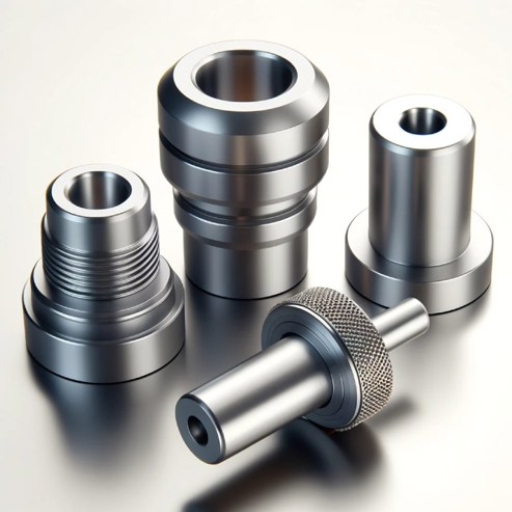
For CNC machining, surface finishing is a most critical step that imparts functionality and appearance to the product. Leading to the processing of the surface to fulfill specific requirements, such as for better corrosion resistance, appearance or durability. The chemical-treatment, grinding-polishing, and other various processes are very useful for stainless steel’s versatile usage in finishing to attend the set goal, still conserving the inherent property of material strength and durability.
Finishing generally begins with application analysis in view of use. For instance, a mirr or Polish finish may be chosen when applied for decorative purposes while a textured or brushed finish can be more suitable for industrial applications where durability and wear resistance are mandatory factors. Each one of these processes-mechanical-polishing, abrasive-blasting, or chemical treatments-is well suited to some applications depending on the need.
In finishing, maintaining that protective covering must be the least complicated issue when finishing stainless steel, as it will hinder corrosion and thereby the occurrence of rust. If the work is done properly, the chromium oxide layer must not be damaged. In fact, with its precise detailing, creating its finishing exactly from the material’s surface is the crucial concern by following best practices in the choice of finishing modes.
Stainless steel finishes serve a blend of aesthetic and subjective concerns, as well as serving as a treatment barrier for the material such that it is less costly. Different types of finishes provide options for you to select the one that will best suit your applications.
Finishes that are produced during initial processing include the basic finishes — 2B, 2D, and BA. 2B is smooth, reflective, and virtually non-directional, making it particularly well-suited to applications within the food and industrial-custom manufacturing sector. Balancing that, the 2D finish has a dull but more-than-acceptable matte finish that is quite commonly applied for structural applications in stainless steel. The BA finish, when provided, is an option that is somewhat bright, having a mirror-like quality, and is employed in aesthetic applications.
A brushed finish, sometimes called a No. 4 finish, usually dates back to an original grain line created by a blend of mechanical action and abrasion. These finishes and their final glossy quality can be seen in almost every piece in a kitchen, elevators, and architectural designs-installing beauty and utility. Even apart from beauty, care and maintenance are some of the things that must be taken care of when you deal with highly polished finishes to prevent a finish being marred by fingerprints and scratches.
Polished finishes give a highly glossy, mirror finish in fresh, blank stainless steel. These are achieved using a very fine abrasives or buffing compounds; the finish, however, is used for high-class applications such as decorative wall panels, automotive chrome, or high-quality home appliances specifically. The mirror finish enhances the visual appearance of the material but requires regular maintenance so as to maintain it shiny.
Selecting the correct finish ensures that the stainless steel meets the performance requirements while suiting the desired aesthetic in the project.
The finish of CNC parts needs to be done to ensure good looks and functioning. The finish should improve the surface texture of the part, making it look even better and easier, while at the same time protecting against corrosion and erosion. This kind of finish is very important when the part is intended to be used in harsh environments or may come into physical contact with precision components.
On the other hand, finishing can enhance the appeal of CNC parts so that they may be used in full or partial visible parts. A finish to anodize, brighten, vaccinate, and go for extra finishing of very smooth and carefully polished parts for either automobile, aerospace, or consumer products looks just great. The finishing of CNC parts shall eliminate any kind of imperfection from the surface, like tooling, machining marks, etc., which can otherwise reduce the performance or appearance of the part.
Lastly, to extent the lifespan of CNC parts by preventing it from wear and tear, the type of finish selected is significant. Anodizing, powder coating, or polishing help prevent the material from corrosion and mechanical damage, ensuring that the part remains functioning and visually appealing over time. Hence, finishing becomes crucial not only for refining the appearance of the part but also for enhancing the operational capabilities and endurance in time.
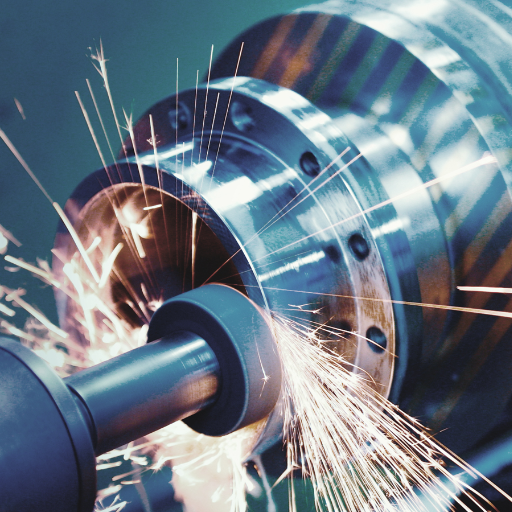
Brushed finish and polished finish are two common mechanical finishing methods employed to improve the surface quality of the machined parts. A brushed finish techinique involves the creation of fine, linear scratches or lines on the surface using abrasive tools. This technique also introduces texture or a matte look to the material due to the reduction of reflectivity and enhances a clean and uniform aspect that is also highly practical and aesthetic.
On the other hand, the purpose of a polished finish is to make the surface levelled out and shiny by removal of all imperfections of the material. It is a method consisting of several steps of an abrasive and polishing compound to ensure an improved brilliancy of the material. Polishing is mostly employed for things for which an attractive appearance or a very high mirrored surface is endorsed, as in decorative devices or machinery with particular functional requirements.
Polished and brushed finishes are both great ways to make CNC parts look and perform better by addressing surface flaws and improving resistance to wear and corrosion. The choice in this case is largely affected by the looks, functionality and possible environment the part will encounter.
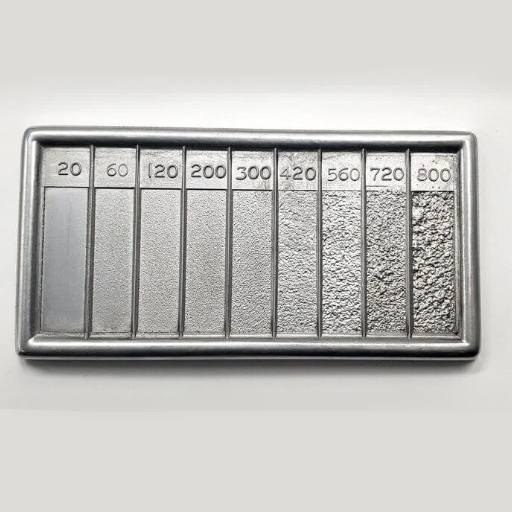
The surface must be prepared methodically to a high polish to achieve a polished and reflective finish. In order to remove imperfections from the surface, there must be a deep cleaning done, which means any scratch, bump, or mark must be polished out. At this point the material is molded by a system of sanding with increasingly fine grit sandpaper or other abrasive materials, creating a slightly rougher initial surface suitable for the first stage of polishing.
This is then followed by the polishing of the surface using compounds or pastes so as to get smoothness and shine. This is usually done on a buffing wheel or by hand, with progressively increasing pressure to increase the shiny properties of the material. It is important that there be many passes, using coarse compounds at first and then finer ones to truly get the shiny finish desired.
Finally, the final touch gives the mirror finish: residual polishing compounds are removed and if necessary, a protective coating is applied. This protective coating helps to keep the gloss on the surface while protecting it from oxidation, corrosion, or wear in any environment. Continuous monitoring of the mirror may be done by routine cleaning and touch-ups for effective and complete maintenance so that the light would always shine on an unspoiled reflection.
Thus, mechanical finishing highly depends upon all sorts of tools and techniques designed for the formation or modification of surface finishes on workpieces. Grading machines, also known as grinding machines, and polishing wheels and abrasive pads are just a few examples of such tools. These tools are ideal for smoothing and elimination of imperfections and are applied to materials such as metal, plastic, and wood, giving them a wider application in industries. Each tool and technique is used for specific tasks, ranging from medium to high material removal to achieving a mirror-like finish.
In mechanical finishing, grinding is a discharge operation that prepares the surface by removing large blemishes and providing a uniform texture. During the operation, abrasive belts or abrasive discs are used, based on the surface’s hardness and nature. After grinding, the next step is polishing, where smaller abrasives and tools are used in order to create a smoother and shinier surface. The process is indispensable for getting decorative finishes or producing surfaces for being coated in succeeding steps.
Barrel finishing is yet another mechanical finishing method that uses a tumbling machine or drum, usually having a drive mechanism, to polish or deburr batch quantities of parts through the fixed rotation lapses of the barrel or drums. Horse cookies—small materials like ceramic, stainless steel, plastics, or the like—are introduced into the barrel along with the parts, saponifying intensifying action that transforms the objects to be finished into sparkling clean parts. Occasionally, abrasive media, such as sawdust or corn-cob media, are introduced into the barrel to serve as a carrier medium for the polishing compounds and deburring agents. At the end of the process, successful centrifugal drying is adopted.
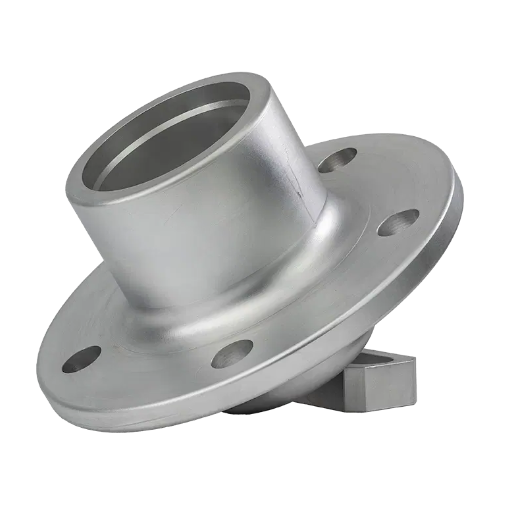
Chemical finishing processes involve utilisation of chemical solutions or reactions to enhance the surface properties of materials such as appearance, durability, and corrosion resistance. These techniques allow the very exact control of material properties so that they can be very effective in any particular application where a particular surface type is desired. Already proven as some of the best in their field, they are quite commonly used in many industries including the automotive, aerospace, and manufacturing sectors in improving the performance and aesthetics of parts.
There is a chemical finishing technique widely used called electroplating which deposits a thin film of metal on top of the surface of a substrate. This happens through an electrochemical reaction wherein the variation of the metal from that of the substrate is very useful in resisting corrosion, providing wear resistance for the more less hard material, and serves as a decorative finish. Anodizing aluminum gives the aluminum an oxide layer on the surface, making a hard barrier that prevents chemical attack, wear, and gives options for colour.
Still another important method is chemical polishing, where surface material is dissolved for a smoother and more reflective finish. It is of particular use in making components with complicated shapes for which mechanical polishing is virtually impossible. Together, these techniques show the path they have taken of adaptability by meeting the varied system needs of industrialization, while simultaneously maximizing the performance and appearance of materials.
Chemical finishing stocks several assets for stainless steel, and that is why it is largely taking over public choice for industries. First and foremost is the outstanding improvement in the resistance of stainless steel to corrosion. By eliminating impurities and forming a not-so-rough surface, this kind of finishing works fine against rusting and deterioration especially for metals sitting in tough environments or braving the air heavy with chemicals and moisture.
Another of its key benefits lies in the improvement of surface appearance. In providing the first step: creating mirror-smooth, brilliantly reflective surfaces, it seems to become the manicure for the metal.apt for several applications requiring adherence to hygiene practices; in a food processing factory, an apart looking radiant surface could be a point of contrast to mes compagnons raisonne; if hygiene were an issue, medical equipment and kitchenware too would have to benefit.
The chemical treatment is indeed the paramount means of defining the treatment of the variety, although simple, in the production of pains and mining of employment. In contrast to other forms of the polishing mechanism, the process might work around programmed design and sectional limitations, ensure expertise and resolve the problem by breathing. The consistency in performance and durability will only be produced if the product design is considered by this technique. Such chemical treatments are, therefore, considered to provide functional and aesthetic benefits-relatively perfect and very valuable for the modern manufacturing process.

Electro-polishing is a process of metal finishing that removes a thin layer of material from the surface of a metal object. This process is an electrochemical reaction where the metal part is immersed in a solution composed of Electrolyte and subjected to an electric current. The process allows the metal to be smoothed and polished by preferentially dissolving surface irregularities, leaving an ultra-clean and reflective finish.
This method has several advantages, including superior corrosion resistance, enhanced surface cleanliness, and overall better appearance. By eliminating microscopic defects and contaminants at the surface, the improvement in the performance of the metal is made possible by the process. It is usually applied to stainless steel, aluminum, and other industry alloys for medical, aerospace, and food processing purposes where precision and cleanliness are important.
The electric polishing process is extremely appreciated due to its capability to confer a uniform and smooth finish for complex geometries one would find almost impossible to achieve with any mechanical polishing techniques. Not only do the treated metals not look sophisticated or increased in their durability, but they also exhibit less bacterial adhesion ensuring that they are preferred in applications where cleanliness is of importance.
Electro-polishing imparts significant benefits to stainless steel for a number of applications. The most foremost benefit is its markedly increased protection against corrosion. The process eliminates contaminants and irregular surface topography, which would otherwise provide surface appendage to encourage wetting by corrosive liquid, in turn enhancing surface corrosion resistance, especially in cases where the material is continually exposed to harsh environments.
Another significant benefit is the enhanced cleanliness and hygiene. The smooth surface minimizes irregularities on which organic or inorganic contaminants or bacteria can attach, therefore making this type of steel easy to wash and sanitize. All in all, this makes electropolished stainless steel perfect for processes with very strict sanitary standards, such as the manufacture of food, pharmaceuticals, and medical equipment.
Last but not least shine! Electro-polished stainless steel looks kinda cool when attached to the lid. The surface looks reflective polished with a very bright result, adding lately, and it definitely is. For many reasons such as endurance, sanitation, and beauty, electro-polished stainless steel is considered the best choice among different types of uses in the various different industries.
A lot depends on the condition of preparation in getting the parts electro-polished. Cleaning, cleaning, and more cleaning before the operation is mandatory. In other words, cleaning removes oily residues, greasy smears and dirt — all capable of interfering with the subsequent electrolytic process, prompting unapt conductivity, and the likeliest resultant non-uniform finish. Thus, ensure that the parts are well prepped by use of a suitable liquid cleaner, rinsed thereafter with deionized water.
The composition of the electrolyte solution along with the current setting makes a great difference for optimized effect. The choice of electrolyte solution to use is governed by the nature of the CNC part to be coated; anything else may, at any given point, mar the outlook of the surface. The averted over-polishing, pitting or, possibly, a removal of extraneous hard substance would hinge on the delicacy of the current, especially if it is not carefully monitored. Occasionally, work through the manufacturer’s guidelines on temperature and time to preserve constancy in performance.
Righteous finalization, rinsing, and drying also require high attention. After electrolytic polishing, it is vitally important to rinse CNC parts thoroughly to clear any electrolyte residues which prevent any corrosion or discoloring from ever occurring. Rinsing removed the substances attacking the passivation layer, but drying the part entirely is necessary to smoothen the accordion-like appearance that the liquid or water marks give. Electro-polished materials will thankfully benefit a longer life, enjoy proper cleanliness, and maintain necessary esthetics in storage in a clean, moisture-free accordingly. By so doing, you will witness this final procedure levigate your CNC parts greatly.
Sustainable finishing practices seek to minimize the environmental impact and to increase the quality and resistance of stainless steel finishes, as lessening the wastes produced, catalyzing lesser use of hazardous chemicals, and applying energy-efficient options. For example, use of innovative technologies with water-based finishing require much lesser strain on chemicals involved, bettering the modes of production to be eco-safe and making working conditions sparkly clean.
Among the key concerns with respect to finishering stainless steel is the issue of recycling and reduction scooped toward the conservation of resources. Stainless steel is itself highly recyclable and is, to a significant extent, valuable in ecologically-oriented manufacturing. The use of closed-loop systems with regard to cleaning and finishing processes could avert unwarranted waste while safeguarding the cause of resource conservation. These systems enable manufacturers to recycle water or reuse chemicals, thereby reducing their carbon footprint.
To strengthen longevity, material protecting technologies such as advance-phase polishing and eco-certified coatings further boost environmental sustainability by enabling low energy usage, eventually meaning lesser material usage from constant replenishing to someone’s end. One must secure healing spaces and a variety of known yet, not-so-common facts for the aged population amidst terming this field of age-friendly architecture.
Modern technology has radically evolved finishing by enhancing efficiency, consistency, and accuracy. Automated processes have eliminated activities that involved monotonous labor like sanding, polishing, or application of coatings; this has markedly reduced errors while improving quality. These systems are also typically associated with sensor and control components that make automated generalization obtainable and moreover profitable in areas including construction, automotive, and manufacturing.
Completing automation brings the merits, among other aids, of reducing the need for manual resources, reducing the level of fatigue and severity; moreover, the exposure of the worker to the perils of working in hazardous environments is reduced. Based on the type of application required, complex or precision-focused machinery along with robots might take care of these tasks, and their performance is normally swifter and more economic. Lastly, safety is further taken to mark when there is no human need for participation in extreme conditions.
Furthermore, automation sustains the environmental cause by using resources most judiciously and minimizing waste. Many automation systems are designed to operate very efficiently in terms of the amount of resource and material, naturally leading to systems that have very low levels of waste from coating and finishing applications. This saves the environment while reducing the costs for the organizations,also making automation a worthwhile and ecological method of accomplishing modern finishing processes.
Helping to cut costs and save resources, robotics and streamlined automation will be the catalysts for faster, precise finishing processes. The primary advantage of these developments is enhanced surface smoothness. The outcomes are thus consistent, while less human intervention is requiredדגג Moreover, cutting-edge AI-based units render these operational parameters more user-adjustable, enabling continuous enhancement of process operation.
Another important area is green finishing methods. These are aimed at reducing the use of hazardous chemicals and energy, which is duly in sync with global sustainable objectives. Water-based coatings offer a major potential alternative to solvent-based finishes. It is in itself a significant difference and would certainly go a long way to lessen environmental insults. Sustainable practices from stainless steel to a finished product would protect the environment for generations to come. Environmentally-conscious consumers are equally attracted to this, which makes these practices top priority for companies in the industry.
Lastly, creativity and high levels of finishing are starting to take pride of place owing in line with the demand from the designers and manufacturers for unique solutions tailored to their respective application purposes. By following new advancements into their proper usage, tailor-made finishes are brought forth, keeping in line with the strict specifications of aesthetics and functionalities. The research and development wing has upped the usage of new technology in extending the application of stainless steel finish. This points to sterling future for the industry, as it attempts to address efficiency, sustainability and adaptability to design changes.