

Supportive, Professional, Client-Focused Service
From prototypes to full-scale production, we’ve got you covered.



The process selection is such that the appropriate process can be the decisive factor in the precision manufacturing results you expect. EDM and Traditional CNC Machining are among the most effective and preferred methods. These two techniques offer varying advantages and potentials, but the final decision of the best process is made considering the specific requirements of your project. The guide below will give you a thorough comparison of EDM versus Conventional CNC Machining revealing details of their strengths, disadvantages, and applications. This article will help you to choose wisely and demonstrate the full potential of your manufacturing process, irrespective of whether it is complicated shapes, very small tolerances, or specific materials involved.

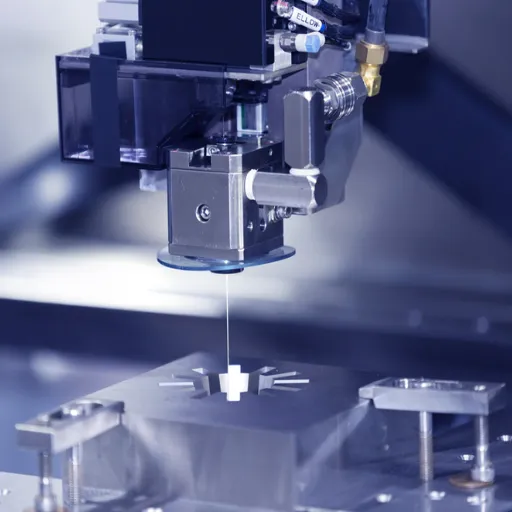
Electrical Discharge Machining (EDM) is a complex and non-traditional manufacturing process that uses electrical energy to change the material properties. It is also often called spark machining or spark eroding, and it is performed by the generation of controlled electrical discharges between the conductive workpiece and the electrode that is immersed in a dielectric fluid. The process is so precise that the heat produced by each discharge is enough to evaporate and melt a tiny part of the workpiece material.
This process is particularly effective in various situations such as making complicated shapes, very closely toleranced materials, and using superhard materials like titanium, carbide, and hardened steel that are difficult to cut with conventional tools. EDM or Electrical Discharge Machining is used in many applications like molding for injection, aerospace, medical devices, and very complex die shapes. EDM is still a significant manufacturing process, especially with the introduction of technology and process breakthroughs, since it achieves the same degree of precision and flexibility to easily cope with hard designs.
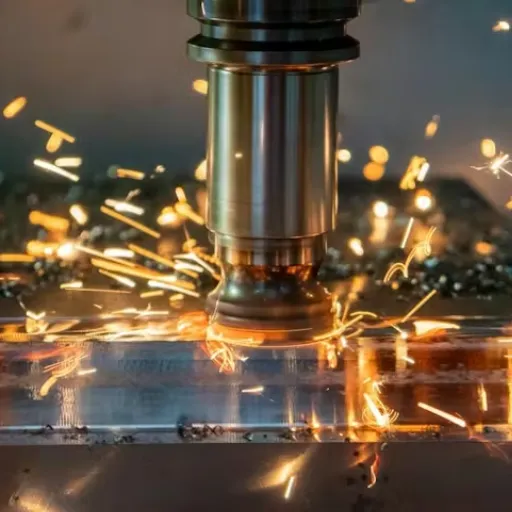
Mostly, traditional CNC (Computer Numerical Control) machining is a subtractive manufacturing process and by following predetermined software commands, it controls the movement of the tools and machines in a very precise manner to change raw materials into finished products. This method is marked by the characteristics of high precision, very good repeatability, and a large variety of materials (metals, plastics, and wood) being used. Among the different types of CNC machining processes, milling, turning, drilling, and grinding constitute the major ones—the automation in these processes is very high, resulting in only a few human operators being involved.
This cutting-edge technology is quickly being embraced and is now prevalent in such sectors as aerospace, automotive, medical, and electronics that need to meet quality and scaling challenges.
Both Electrical Discharge Machining (EDM) and Computer Numerical Control (CNC) machining are present-day manufacturing processes that offer precision and productivity, but there are notable differences between them mainly in the way they operate and their applications. EDM, for instance, creates very small particles out of the metal through electrical discharges and thus enables hard metals to be cut, and at the same time, it allows making complex molds and dies. On the other hand, conventional machining methods may find it very difficult to produce such molds and dies. Additionally, if one is working with conductive materials and has ultimate precision in the case of complicated shapes, then EDM is the process to consider.
On the other hand, CNC machining is the process of a computer programming control of cutting tools that are taking away the material. Computerized numerical control (CNC) is the most versatile of all the manufacturing processes, and that it can be applied to almost any kind of material, such as metals, plastics, and composites. Generally, CNC machining is faster, making it suitable for high production rates and scalability in applications where such features are required, hence its popularity in the automotive and aerospace manufacturing sectors.
💡 Key Insight: Precision is very high in both the techniques, but it is the project-specific characteristics that mainly determine which one is better. EDM is the best option for very complex and delicate designs, especially for hard materials, while on the other hand, CNC is the one that produces parts with less complexity and larger size and at even a faster rate, therefore, being the more economical choice.

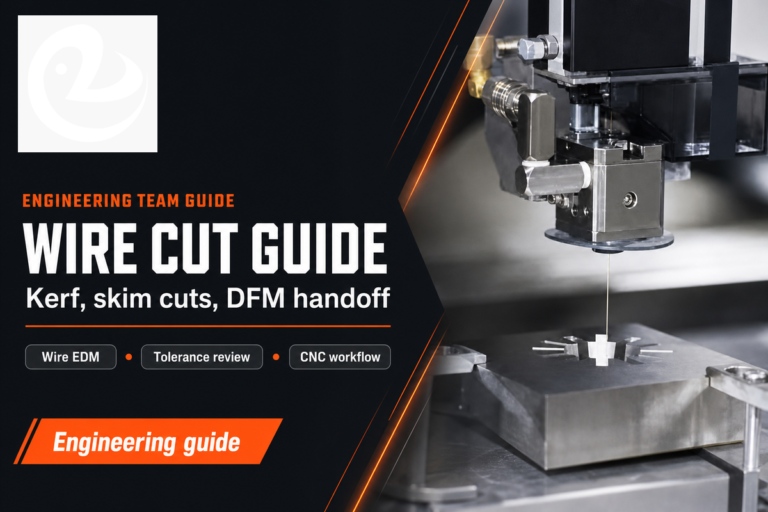
Wire EDM (Electrical Discharge Machining) is a manufacturing process of high precision and quality that uses a very thin and electrically charged wire as a cutting tool to cut metals and other conductive materials. Almost all manufacturing processes in modern technology are heavily influenced by the use of the latest data and trends in industries and materials, which is why Wire EDM is still one of the technologies most widely accepted in the aerospace, medical device, and automotive industries that demand precision without sacrificing material integrity. The ability of the technology to work with the most difficult materials, like titanium and carbide, during the finishing process while retaining the smoothness has made it a necessity in modern manufacturing projects.
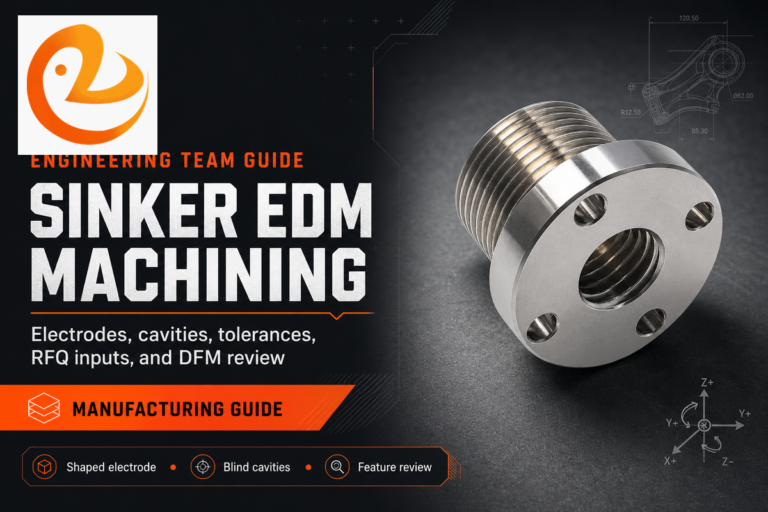
Sinker EDM (Electrical Discharge Machining) is one more latest manufacturing process that utilizes electrical discharges to shape the workpiece. Unlike Wire EDM that employs a thin wire as an electrode, Sinker EDM employs a specially shaped electrode that is entirely immersed in a dielectric fluid. The dielectric fluid not only enables control over the sparks but also cools the workpiece thus making the process very accurate for forming intricate cavities and details.
The Sinker EDM technology is used in aerospace, automotive, and medical manufacturing where components often need molds or dies with very high detail and precision. Further, its ability to create deep, complicated shapes with hard materials such as tungsten carbide or stainless steel adds to its application in the production of injection, turbine parts, and medical instruments.
Different types of EDM (Electrical Discharge Machining) have different applications and when talking about their applications, it is mandatory to judge their special abilities and industry importance.
| EDM Type | Key Applications | Primary Industries |
|---|---|---|
| Wire EDM | Machining of hard metals, making molds for castings, producing components like gears, extrusion dies, and prototypes where precision and smooth finish are crucial | Aerospace, Tool Manufacturing |
| Sinker EDM | Production of complex cavities and shapes, injection molding, turbine component generation with deep, detailed features | Medical Instrument Manufacturing, Aerospace Engineering |
| Hole-Drilling EDM | Making small, accurate holes in hard materials, cooling holes in turbine blades, components of circuit boards | Aerospace, Electronics |
📈 Industry Trend: Based on the present data trends, it is apparent that the concern of the users regarding EDM for advanced precision technologies is shifting towards wind energy and semiconductor manufacturing. The techniques mentioned above are highly dependent on the factors of durability, miniaturization, and functionality that are becoming more and more demanding, which means that EDM technologies will not only be applied in the sectors that they are traditionally used in but also in the new ones.

The EDM process which is considered a modern manufacturing among others is distinguished by its accuracy and precision to the extent that it can produce very minute and intricate components which are otherwise impossible to produce. Current figures indicate that different industries are often referring to EDM’s ability to meet the needs of such strict precision that even ±0.0001 inches can be considered the norm. This kind of accuracy is not an by-product of the electrical discharge machining process alone, but rather it is an answer to the problems that exist in the material like titanium or tungsten carbide that are among the most difficult ones to work with.
In addition to the preciseness, EDM comes up with a super smooth surface finish, which sometimes completely does away with the need for any further polishing or finishing processes. By directly turning the material into vapor without creating any mechanical stress, it supports the production of exceptionally smooth and impeccable surfaces that are vital for such industries as aerospace, medical devices, and electronics manufacturing. It is said that the securing of impeccable finishes together with the meeting of the stringent standards are the very things that have fueled the acceptance of EDM in the futuristic innovations due to its precision capabilities.
Electric Discharge Machining (EDM) is the only process that can cut through hard materials like tungsten carbide that cannot be easily processed with conventional methods. Besides, the area where the manufacturers working with titanium, cemented carbide, and hardened metals that are not only hard but also extremely costly, and the manufacture of aerospace, automobiles, and tools is primarily done using this technique. The process’s fundamental concept is that it uses electrical discharge, which is very precisely controlled, and through this, very high temperatures are created to melt the material, no matter how hard or brittle it is.
In recent years, developments in data analysis have indicated that the increasing demand of industries for precise and efficient ways to shape components for high-tech applications, has been the primary reason behind the growing interest of EDM techniques for hard materials. The precision, together with the ability to work with intricate geometries, makes EDM the only feasible option for tough, high-performance materials.
Electrical Discharge Machining (EDM) is not only a precision technique but also a very fast and efficient method especially in very hard materials machining, which is the most favorable area. The today’s advancements in the EDM technology, which have been caused by increasing automation and software optimization as the main factors, have resulted in a significant decrease in machining times possibly coupled with an increase in accuracy.
According to the latest figures, the fourfold increase in searches for the terms “faster EDM processes” and “efficient machining techniques” can be seen as an indication of the fact that manufacturing time-saving methods are becoming more of a priority. The trend that is the manufacturing industry pushing for adopting processes that integrate high efficiency with minimal wastage is also quite inherent here. By the use of adaptive controls and superior electrode technologies, EDM has been able to prove itself as a process that fulfills the speed and precision requirements of the aerospace, automotive, and medical device industries, thus, becoming an indispensable tool.
When we consider the factors, the first one would be the the total cost of ownership of the equipment, which can be up to the operational costs and the efficiency of handling complicated shapes. The costs of the EDM machine are generally higher, starting with its specialized capabilities and exacting design. However, this initial cost can be compensated in situations where complicated features or very tight tolerances are needed since the time and resources spent in refining the parts after machining are mostly saved by EDM.
Machining with EDM is less juicy in terms of the equipment and operating costs though with the necessary quality maintained. Yet, the tool paths for complex jobs can be managed quite inefficiently, which may cause the increased setup time and material waste that will end up driving cost up per unit for particular applications. Conversely, if the design’s complexity would allow a longer run time on the CNC machine than the setup time usually required for EDM, then perhaps the cost of CNC could be more justified.
In the end, the choice between EDM and traditional CNC machining should be dictated by project-specific requirements. For projects requiring extreme precision or dealing with difficult-to-machine materials, those expensive costs of EDM can readily justify themselves. On the other hand, traditional CNC machining is the budget-friendly and practical way out for simpler designs and greater production volumes. Having considered these cost aspects along with the production goals, manufacturers are in a position to determine the most effective and economical method.
Compatibility of materials is the main factor that determines the choice of either EDM (Electrical Discharge Machining) or CNC (Computer Numerical Control) as the machining method. EDM really can be described as a very effective method to get rid of and, at the same time, to work with very hard or tough materials, such as tungsten carbide, titanium, and hardened steels, which would normally tear apart and ruin the cutting tools. The electrical discharges are the reason why EDM is not limited only to this area of materials, which would otherwise be the complete loss of the usage of conventional machining tools.
On the other hand, CNC machining is the most rapid and economical way when applied to soft metals like aluminum and brass or non-metals like plastics, as the working of the cutting tools is faster and better on these materials. The trend analysis of the current data suggests that there are more and more manufacturers who are opting for a combination of EDM and CNC depending on the production phase and the material requirement. Knowing the characteristics of the material to be used—hardness, conductivity, and heat resistance—will ensure the proper selection of the machining method and thus obtaining the desired results when choosing the machining method for a specific project.
In the instances where simplicity, low cost, and quick performance are the primary factors, conventional machining is the one that is always chosen. As per the latest news regarding industrial trends, it appears that industries are still going for the most plenty conventional ways of milling, turning, and drilling, particularly when using easy to machine, soft metals like aluminum or mild steel.
By taking into account both the material properties and the project requirements, manufacturers would be able to efficiently unleash the potential of conventional methods to deliver accurate and timely results.
Selecting a machining process requires knowledge of the material properties in relation to the design requirements. Hard or heat-resistant materials are the ones that require special cutting tools or techniques, whereas soft materials can be easily worked with traditional machining processes. However, the intricacy of the design is a determining factor that plays a major role in the whole situation—complex shapes or tight tolerances often demand the use of high-tech processes such as CNC machining or EDM to achieve the desired accuracy.
| Factor | Considerations | Recommended Process |
|---|---|---|
| Material Hardness | Hard materials (titanium, tungsten carbide, hardened steel) | EDM |
| Material Softness | Softer metals (aluminum, brass) and plastics | CNC Machining |
| Design Complexity | Intricate shapes, sharp internal corners, tight tolerances | EDM |
| Surface Finish | Superior surface finish without post-processing | EDM |
| Production Volume | Large-scale, high-volume production | CNC Machining |
As soon as the input for material type, dimensional complexity, and surface finish requirements is done and combined with resources such as the latest industry insights, manufacturers are in position to make decisions that are not only well-informed but also a good mix of cost, efficiency, and quality resulting in optimal outcomes.
It is common to approach the issue of cost and accuracy through a data-centric and solid-methods approach, that is, a data-driven approach will be a company’s key to survive the manufacturers’ competition in case of today’s world. The most recent data becomes the manufacturers’ support mechanism and provides them with vital knowledge about the industry’s requirements, new technologies, and the consumer’s likes and dislikes.
For instance, analyzing trends may signal the demand for high-precision machining in some applications to be increasing or vice versa have the economic situation making low-cost solutions the quicker acceptance. By having these insights, companies can not only define the areas where high precision is a must but also the areas where they can cut costs without affecting the quality. In the end, having these data integrative insights provides the manufacturers with the means to find the balance point that is the same as the market’s need and the best utilization of resources allocated.
By utilizing the latest trends and data insights, it becomes very clear that both EDM (Electrical Discharge Machining) as well as CNC (Computer Numerical Control) machining have very specific cases for use depending on the project.
In case CAD (Computer-Aided Design) allows it, hybridization of the methodology by manufacturers is a must, where CNC gets the principal shaping done and then EDM is used for the areas that require precision and are hard to be shaped by CNC. This setup not only reduces the time consumed in production but also guarantees the quality of the product so that it becomes the winning factor in the market and at the same time has the ability to satisfy different customers’ needs.
An EDM machine is the desirable choice if you want to machine hard alloys and create sharp internal corners that cannot be reached by standard CNC. The non-contact process, which is very precise and produces wire cuts among other things, is the one that manufacturers looking for an EDM process to attract the most. The combination of CNC milling and end-milling, and EDM is always the preferred route where a lot of material removal is not the main focus but high-hardness materials or complicated internal geometries are. The wire or sinker EDM process for molds and hardening dies is as efficient as the traditional machining processes cannot provide. Therefore, when the tightest tolerances are required and sharp internal corners have to be created, the EDM shops come to the rescue.
EDM, or electrical discharge machining, is a non-contact and non-wear tool process, which means that the end mills and other cutting tools are not affected by the working of the EDM machine. Non-Conventional machining methods are thus the key to the design of complex features on hardened alloy parts that would otherwise be the cause of very rapid easing up or even breaking of the CNC tools. To put it differently, it is the nature of EDM to usually evaporate or liquefy very small amounts of material that makes it the perfect choice for the creation of very small slots, very thin parts, and very complex internal shapes. If one takes mold making and hard surface machining as the applications for EDM then the EDM process would yield the same finish and tolerance as conventional machining but without the tool wear and replacement frequency. Therefore, electrical discharge machining and wire EDM are the main ones selected for intricate shapes and high-hardness materials over the traditional CNC.
EDM is able to directly machine hardened materials since the process itself is the removal of material by controlled electrical discharges and it does not matter in this case how hard or soft the tool and the workpiece are. As a result, the EDM process will maintain the same level of accuracy in hard alloy parts and could even be regarded as having the potential of producing detail that might be impossible for a conventional CNC machine to produce. Traditional machining using mechanical cutting forces can lead to wear and damage of the surface of hardened parts, but EDM avoids these problems by using non-physical contact. In situations where cutting of hardened dies, molds, or stamped tooling is required, wire EDM and sinker EDM technologies offer capabilities beyond those of CNC machines. The ability to produce very fine internal corners and very small slots is one of the exceptional features of EDM that make it a preferred choice for precision applications in certain fields.
EDM, compared to CNC milling and end-milling, is the best technology for internal corners, tiny holes, and complex shapes in hardened alloys machining. The EDM process and sinker EDM in particular are based on non-contact principle thus allowing them to produce extremely fine features while keeping tolerant dimensions in the hardest materials. Although EDM operations might be longer than conventional machining in case of removal of large volumes of material, the excellent control and finish offered by EDM on complex parts make EDM services a viable option in mold making and precision tooling. The use of wire EDM is a perfect choice over mechanical cutting in parts with thin walls or narrow grooves where the thin metal wire acts as the cutting electrode. There are numerous EDM shops that combine CNC machining and EDM applying the quicker conventional CNC for roughing and the precision of EDM for finishing.
When it comes to cutting, Wire EDM is the premier selection for a workpiece to contour or profile or to make a continuous cut from one side to the other as the wire used runs between that of the workpiece to create the cut. Wire EDM is the most effective method for parts with extremely narrow kerf widths, very complex internal features, and when it comes to sharp internal corners or notches that cannot be done with classical cutting tools. Wire EDM is widely applied in the production of molds and for parts that have thin sections or small hole patterns where the interaction of wire and workpiece is precision controlled. While sinker EDM uses shaped electrodes for cavities and ram EDM is confined to limited die works, wire EDM still holds the persuasion of the greatest flexibility as far as through-cuts and intricate profiles are concerned. In addition to the fact that wire EDM isolates the tool from wear during contact, it also makes EDM a reasonable option for hardened alloys and operations where EDM outshines others in terms of surface quality and accuracy.
Choosing between EDM and Traditional CNC Machining is not truly a battle where one is the winner and the other is a loser. It is more about knowing which technology fits your exact project needs. The two processes have developed their own areas of application in modern manufacturing, with each one working best in different situations.
EDM is the king of the mountain when it comes to precision, complexity, and hard materials, giving excellent power to create even the most intricate shapes and smoothest finishes. On the contrary, the traditional CNC machine offers a faster, more versatile, and cheaper service, albeit mainly for a larger variety of materials and production volumes.
The major factors that will help you decide on the best option are the careful consideration of your material traits, design complexity, tolerance requirements, production volume, and budget limits. Oftentimes, a hybrid strategy that takes advantage of the strengths of both technologies will be the best solution, merging the speed of CNC for bulk material removal with the accuracy of EDM for fine details.
As the advanced manufacturing technology is continuously improving, it will be your knowledge of the capabilities and limitations of each process that will allow you to make the right decisions that will lead to high quality products, low costs, and keeping your business ahead of the competition in a market that is getting more challenging by the day.