

Supportive, Professional, Client-Focused Service
From prototypes to full-scale production, we’ve got you covered.


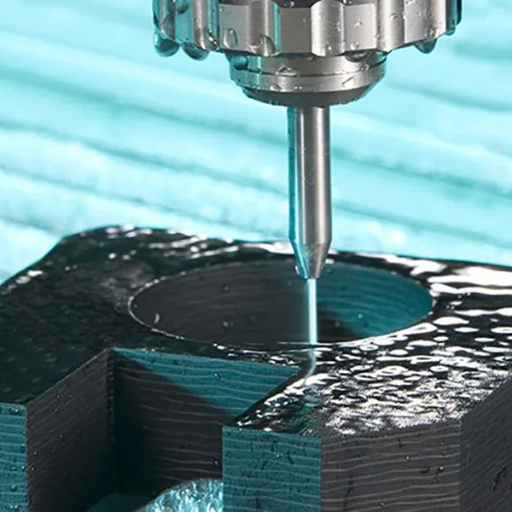
The process of cutting carbon fiber requires scientific expertise because it needs technicians to use specialized methods which they must implement with extreme accuracy. Waterjet cutting has established itself as an essential breakthrough solution which delivers exceptional cutting accuracy and operational performance because it functions as the most precise method. What specific properties of waterjet cutting make it suitable for cutting this particular composite material?
This guide provides everything needed to understand cutting-edge techniques used in aerospace and automotive and sporting goods sectors. The presentation will begin with an explanation of waterjet technology followed by practical advice on achieving optimal results which will help us identify the most suitable tools and techniques to achieve precise and efficient carbon fiber cutting. Get ready to discover how waterjet technology is shaping the future of cutting processes for carbon fiber and beyond!

Waterjet cutting serves as a precise cutting technique which enables operators to cut carbon fiber materials without producing any damage to their structural strength. The process uses high-pressure water streams which operators combine with abrasive materials to cut through carbon fiber while producing low heat levels. Traditional cutting methods create excessive heat which results in two common problems of material fraying and warping. Waterjet cutting delivers both clean results and precise measurements which make it the preferred method for industries that need exact results such as aerospace and automotive and sporting goods manufacturing. The process provides an efficient and effective method to cut through carbon fiber because of its ability to handle different shapes and its versatile cutting capabilities.
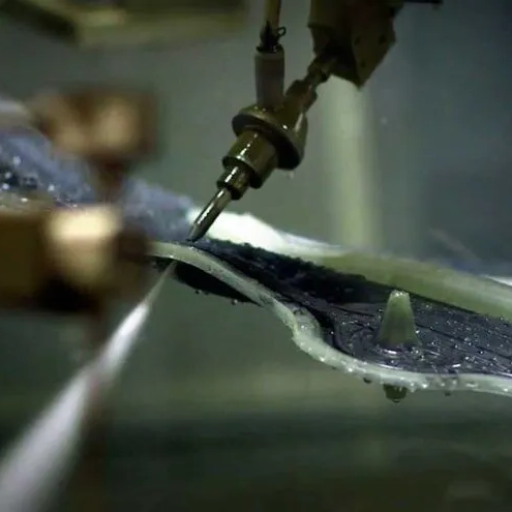
The cutting method known as waterjet cutting achieves precise results from its ability to cut various materials using a water stream that operates under high pressure. The process requires pressurized water which operates at a pressure of 60000 PSI or higher to move through a narrow nozzle that generates a concentrated stream capable of cutting through metals, stone, glass, carbon fiber, and even composites. This technique is highly valued because it enables material cutting while maintaining the original material shape through a heat-free cutting process. Waterjet cutting is an environmentally friendly technology because it generates minimal waste while remaining free from harmful fume emissions. The aerospace and automotive and construction and manufacturing industries prefer waterjet cutting because it provides accurate results and flexible material applications.
60,000+
PSI Operating
Pressure
Pressurized water at 60,000 PSI or higher moves through a narrow nozzle, generating a concentrated stream capable of cutting through metals, stone, glass, carbon fiber, and composites — all without thermal damage to the material.
Carbon fiber is a lightweight material that has great strength due to thin fibers made largely of carbon atoms deposition. This excellent strength-to-weight ratio lets the carbon fiber exceed steel’s performance properties against lower weight requirements, which makes it suitable for those applications that demand high performance and long-term strength. Its resistance to corrosive and high temperature conditions while still holding its shape permits the carbon fiber to be employed in a host of other industrial applications.
Carbon fibers are generally produced by heating carbon-rich polymers, for instance, polyacrylonitrile (PAN), to high temperatures in an oxygen-free atmosphere resulting in the generation of fibers having higher crystalline structure. The unique features of carbon fiber make it key for use in aerospace, automotive, sport equipment, and renewable energy applications needing both strength and reduced weight. Its ability to maintain structural integrity while offering the possibility of intricate shaped components has established this material as a good choice for modern engineering apps.
The manufacturing process and the practical use of composite materials depend on the effective implementation of cutting methods. The composite material maintains its original structure through waterjet cutting and laser cutting and CNC machining because these techniques provide precise cutting methods. When cutting materials through improper methods, the resulting damage causes fraying and structural loss together with surface faults which lead to product performance failure. Recent research shows that industries have achieved high efficiency levels through advanced cutting techniques which use automated systems to decrease material waste. Manufacturers use advanced technology to improve composite material quality and durability and reliability which makes these materials suitable for use in demanding conditions found in aerospace and automotive and renewable energy industries. The selection of the appropriate cutting method needs to consider two factors, which include achieving precise results and controlling production expenses together with operational time.
Advantage 01
Precision and Close to Perfect
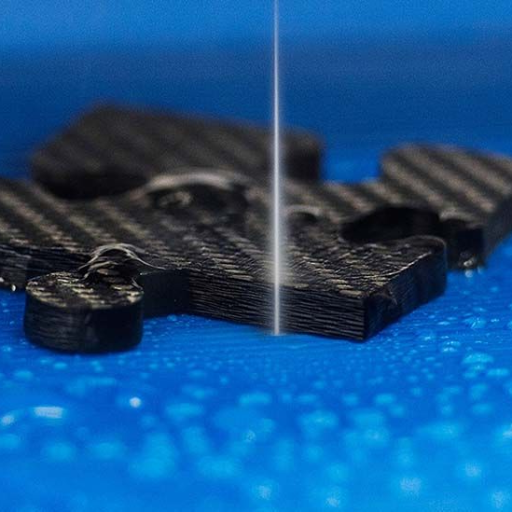
Waterjet cutting can achieve outrageous accuracy with dimensional accuracy within a few microns — the nature of the technology guarantees very clean and precise thermoplastic and alloy sheet cutting.
Advantage 02
HAZ-Free
Unlike machining, there is no heat that would alter the physiochemical and electrical properties of carbon fiber.
Advantage 03
Versatile
Intents, logos, and interestingly continuous circular piece patterns can be cut with ease through waterjet machining; which makes this technology usable in just about every sphere of industries and professions.
Advantage 04
Minimum Material Wastage
Such systems are the most efficient in reducing kerf and ensuring the efficient raw material utilization, which is one of the ways to properly utilize costly materials.
Advantage 05
A Safe Working Environment
Waterjet cutting doesn’t produce any hazardous fumes, and no dust would be formed — a cleaner environment is quite obviously a safer one.
Waterjet cutting process works very well in preserving the integrity of carbon fiber materials. Traditional cutting methods require heat, waterjet cutting is cold. By its nature of not applying heat during cutting, it does not cause thermal damage such as material warping or burning thereby preserving the strength and efficiency of the carbon fiber. The waterjet cutting process keep the structural properties of the material in view of ensuring that the carbon fiber is in its best shape for such applications.
A further important benefit is the lowered probability of delamination hazard occurrence. Delamination refers to folded layers’ separation as the process takes place in materials such as carbon fiber and is mostly noticeable in mechanical processing. Waterjet punctures — the main point of process — are obtained by directing focused streams of abrasive water, which are clean, sharp and do not impose external loads on the layers of material. Such actions not only lessen the tension exerted on the material but also avoid situations in which layers would peel off or break apart after undergoing such stress, thus resulting in a neat surface accompanied by a durable material.
Moreover, waterjet cutting being controllable in such remarkable details, as opposed to other methods, allows more advanced structures to be constructed within few constraints on the material. High edge quality is achieved by this technique, thereby obviating the need of any further enhancements that may encourage the possibility of introduction damage or defects. For these reasons, waterjet cutting carbon fiber components is regarded as the best technology for achieving precision and consistency in production.
Any type of carbon fiber, regardless of the thickness, is easy to work with when using waterjet cutting and there are numerous industries which choose the technology due to this aspect. Waterjet cutting employs a stream of water at very high pressure, and in most cases combined with an abrasive and its ability to cut very thin carbon fiber composite sheets, as well as very thick layers of carbon fiber composites, is beyond commendation. Applying waterjet cutting to carbon fiber, no heat-affected zones are caused since, unlike thermal methods, each cut can be made without burning the material and hence, ensuring no distortion irrespective of how thick it is. Sectors divided by fields such as aerospace, automotive or green energy, count more and more on waterjet techniques, whose low load carbon fiber parts are rather thick and easing the designs of many more products. This quality not only advocates for the process but also helps maintain every family of waterjet cutting carbon fiber heightened.
Preparation of the Workpiece
Position the carbon fiber material firmly on the cutting bed to ensure adequate stability for cutting. Proper alignment of the material helps to achieve a precise cut.
Setting Up the Waterjet Cutter
The waterjet cutter typically requires an adequate custom setting, such as water pressure, nozzle, and abrasive material to suit the carbon fiber’s particular weight and thickness.
Algorithm Programming Gets Prepared
The cutting path or pattern required gets loaded onto the machine, which is then being engineered with the help of computer-aided design software (CAD). This grants high accuracy and consistency to the process of cutting.
Commencing the Cutting Operation
The instrument is turned on, and the use of the waterjet with high-pressure stream that mixes with grit to hit onto the carbon fiber leads to cutting.
Monitoring During Cutting
Monitoring the process serves a dual purpose: It enables us to maintain the highest levels of performance and accuracy, while at the same time allows fine-tuning the processes such that minor adjustments can be performed to ensure that the highest quality of cut is maintained or any anomalies are plucked at.
Finishing and Cleaning
The part is soon freed from the cutting jaws and taken away from the machine lest it should be damaged aside from say some debris or slivers from it or from probably the abrasive still holding tightly onto it. Stylishly and slickly in this way, edges are cut-to-fit meticulously such that no further treatment for the blade cutting is indeed needed.
Precision, efficiency, and material wastage are some of the top considerations when purchasing a waterjet cutting machine used on carbon fiber. Ensure that the machine is fitted with an abrasive waterjet, which can cut through hard and each layer of the carbon fiber cleanly. A pressure adjustment should be possible in the machine to prevent unwanted fraying or assisting the material. Also, take into account, advanced software controlled machines are preferable for precise operations and the complex shapes. There are other considerations which include the durability degree and the ease of use over long periods of time.
In order to improve the performance and surface finish of carbon fiber parts produced through waterjet cutting, post-processing is significant. Depending on the amount or degree of roughness or cutting frayed fibers edges, they may need attention by smoothing. The best common practice to achieve clean and smooth finishes is by wet sanding as against dry sanding using finer grain sandpaper. Some of the high precision finishing, which may make it difficult to use other methods, can be carried out using computer controlled (CNC) edge polishing or milling machines.
Some coatings with resin on the finished edges of the components help in the strengthening of the structure and prevent them from fraying when subjected to creep or pry forces due to usage for longer durations. Cut designs are multi complicated shapes, so security measures are to be taken. There are other cleaning methods, including water jet-cut or dust contaminated surfaces which may be used prior to taking action such as gluing or painting.
In cases where carbon fiber structures are used in high-performance applications, they may be treated thermally or chemically for the purposes of enhancing heat or shock resistance and other such properties. This is to guarantee certain levels of quality and performance of the waterjet cut carbon fiber products, whenever extra or post-processing is applied, such as some of the methods mentioned above.

| Challenge | Root Cause | Recommended Solution |
|---|---|---|
| Fraying or Delamination | Due to the possibility of carbon fibers delaminating or fraying during cutting, the edge quality will deteriorate. | Proper fixturing could be done to reduce this. Also, the high-pressure water jet must be finely tuned with the help of an ideal distance to secure the material and reduce movement. |
| Excessive Nozzle Wear | The cutting nozzle will be worn rapidly due to the highly abrasive nature of the carbon fiber. | Nozzles must be inspected and replaced regularly for precise cuts and the overall longevity of the equipment. |
| Heat-Related Damage | Heat generated during cutting might weaken the resin that binds the fibers. | Pure waterjet cutting (no abrasive) or lesser pressure confines that reduce heat damage might be preferable. |
| Dust and Particle Management | An exhalation of deadly fibrous materials and/or creation of any deadly dust particles may occur when carbon fibers are being chopped. | Deploy a working environment rich in proper extractor and dust collection framework appropriate for a healthy and hygienic working environment position. |
Ideally, it will solve this issue with apt solutions and cause precise and high-quality waterjet cutting with carbon fiber.
Avoiding delamination is necessary in waterjet cutting of carbon fiber to maintain the structural quality and material quality. Delamination occurs in a situation where the layers of carbon fibers end up dividing due to the exertion of the cutting process or poor settings. There are multiple ways to counteract this:
Method 01
Optimize Water Pressure and Abrasive Concentration
By fine-tuning water pressure and the proper flow of abrasive so that the working pressure on the material decreases in a manner that no more separations between the laminated layers of the carbon fabric occur. Balancing these two parameters assures a neat and precise cut without causing damage to the fiber structure.
Method 02
Use Support Material
Introduce a supporting material (backing) under the carbon fiber during cutting to hold the workpiece firmly in position and provide a little resistance against the separation of layers. A soft but tough supporting material like foam or a sacrificial board commonly proves effective.
Method 03
Use an Adequate Cutting Speed
Speed mastering plays an important role — too fast, and destruction of edges becomes a problem; too slow, and increasing pressure causes burn-up and generation of heat between the layers. Some recommendations suggest beginning at moderate speeds and adjust according to the visual results.
Method 04
Material and Quality of Abrasives
Material, dimension, and type of abrasive used in the waterjet system are also one of the factors that affect the results of cutting. Soft abrasives help to diminish the force of impact; ensuring all abrasive flow is uniform, with uniform cuts further ensures that there are no weaker sections that can break away or get frayed.
Method 05
Sample Part-Based Testing
Carrying out sample testing with sibling members of the definite carbon-fiber materials aid in settings, such as pressure, speed, abrasive-flow setting. This will help to eliminate errors and guarantee the correct parameters before initiating work on the final workpiece.
The implementation of these measures will lead to high expectations of preventing delamination, such as aesthetic cuts, and the preservation of carbon fibers’ performance characteristics. The use of high-tech equipment, together with the comprehension of the behavior of materials, results in refined cutting outcomes appropriate for high-performance uses.

Industry 01
The Aerospace Sector
Carbon-fiber components cut by water jet find usage in aircraft structures and the components for making lightweight and laser sharp products for enhancing their performance and fuelling efficiency.
Industry 02
The Automobile Sector
Precipitated carbon fiber panels, chassis, and interior components from carbon fiber are providing the strength required, in addition to accumulating weight-to-performance ratios for high-speed vehicles.
Industry 03
Water Vessels
Carbon fibers are good choices for the hulls, masts, and other components away from the strength and reduced weight required by high-end luxury boats and yachts.
Industry 04
Sport
Carbon Fibers are a crucial material in developing high-end sports equipment like carbon bicycles, tennis racquets, and golf clubs.
Industry 05
Medical Equipment
Carbon fiber finds use in prosthetic limbs, imaging equipment, and surgical equipment owing to its lightweight, extremely strong tensile strength, wear-resistant structure, and radiolucency.
Waterjet cutting differs from laser cutting, plasma cutting, and mechanical cutting in precision, material compatibility, heat effects, and environmental impact.
| Method | Precision | Materials | Heat Effect | Eco-Friendly |
|---|---|---|---|---|
| Waterjet | HIGH | Most | NONE | Yes |
| Laser | MEDIUM | Limited | HIGH | No |
| Plasma | LOW | Limited | HIGH | No |
| Mechanical | MEDIUM | Limited | NONE | Yes |
This comparison highlights that waterjet cutting excels in precision and material versatility while avoiding heat damage, making it a more eco-friendly option relative to several other methods.
Water jet cutting technology is looking for the future of precise, efficient, and sustainable methods. Future possibilities include automation and artificial intelligence being applied to enhance cutting accuracy and decrease human error. Regarding developments concerning nozzle design innovations and developments in abrasive design, the aim is to enhance efficiency by reducing resource consumption. On sustainability, the manufacture is actively pursuing such eco-friendly activities as water recycling and utilizing environmentally friendly abrasives. So, it is believed that these initiatives will go a long way to making water-jet cutting more affordable, cost-effective, and environmentally friendly in many sectors.
Trend A
AI-Enhanced Automation
Trend B
Nozzle Design Innovation
Trend C
Water Recycling Systems
Trend D
Eco-Friendly Abrasives
08
Experimental Investigation and Optimization of Abrasive Water Jet Cutting Parameters: This study focuses on optimizing process parameters to improve cut quality in carbon fiber reinforced plastic laminates. Access the study here.
Quality Prediction and Process Optimization in Abrasive Waterjet Cutting of Ultra-Thick Carbon Fiber Reinforced Polymer: This research explores surface quality and process optimization for cutting ultra-thick carbon fiber materials. Read the article here.
The Abrasive Water Jet Cutting Process of Carbon-Fiber-Reinforced Polylactic Acid Samples Obtained by Additive Manufacturing: This comparative analysis investigates the application of abrasive waterjet machining for post-processing 3D-printed carbon fiber-reinforced parts. Access the study here.
Studying the Performance of Cutting Carbon Fibre-Reinforced Plastic Using an Abrasive Water Jet Technique: This research evaluates the performance of abrasive waterjet cutting on carbon fiber-reinforced plastics at various orientation angles. Read the article here.