

Supportive, Professional, Client-Focused Service
From prototypes to full-scale production, we’ve got you covered.


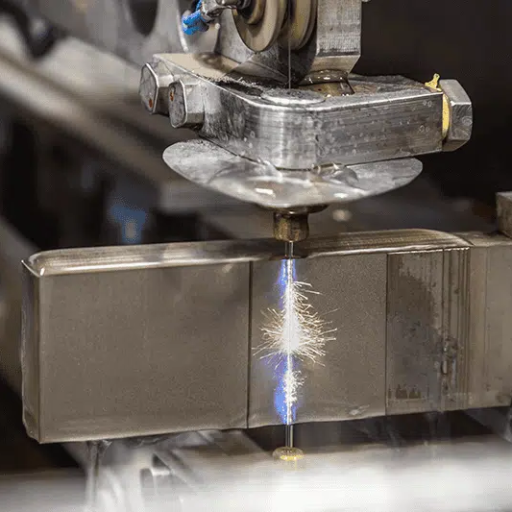
EDM was first invented for the manufacturing process to locate the macroscopic domain of the workpiece and has since radically altered the manufacturing industry as well as modern machine tools. Of all the materials that EDM can machine, this application is especially useful with such metals as stainless steel due to its movement ease and a completed article bringing beauty. The article further focuses on the respective techniques applied in those cases, the advantages of employing each of these techniques and serviceable range of application in case of cutting with EDM stainless steel as that material is modified to be more aggressive for strong acids corrosive to other materials. Both beginner and advanced machinists will enjoy this article detailing the various tools EDM refers to in the case of stainless steel. Share this page to learn about practical training examples, experts recommended courses and futuristic thinking brought in by the technology.

By using Electrical Discharge Machining (EDM) process the shape of the work material is formed using sparking techniques. This method (EDM) is necessarily significant in dealing with hard materials like stainless steel. This is brought about by the fact that materials do not come in contact with a working tool which eliminates deformability and allows such machining. The effectiveness of EDM is especially appreciated in branches such as aviation, car, medical industry, etc., because quite complicated figures and even tiny details are achieved, which in most cases are impossible to achieve with conventional methods.
Electric Discharge Machining (or EDM) is a form of manufacturing that is considered non-conventional. It employs electrical sparks or discharges for material substitution and/or shaping. A conductive work piece along with an electrode submerged in a dielectric fluid is utilized in the progression of the process. When the voltage gets switched on, there is a periodic breakdown of the electrode and work piece that results in controlled sparking. This in turn causes material removal at a microscopic level only. EDM comes in handy when dealing with hard and heat resistant materials, such as titanium and stainless steel or carbide, which lends the process to high precision purposes. The practical aspect of EDM gives an opportunity for complex mold shapes, presses and also shaped airfoils among others to be manufactured, these including certain medical components. However, EDM is unique in this sense where the finished part comprises elaborate shapes which are not produced by physically cutting off the material. In other machining processes, such does not occur as the cutting elements are fitted with the cutting blade after the removal of the materials.
With respect to the making of the stainless steel components, EDM (electrical discharge machining) will produce tight tolerances and a detailed pattern which is very necessary.
In order to remove any potential problems for the spring structure as a result of machining by cutting tools physically, EDM would not be using any tools but discharging electricity.
EDM process can overcome hardness in the stainless steel, as it will easily cut such hard metals.
A soft surface flattened by an EDM also cuts out any excessive machining that must be done.
It is possible to produce advanced and complex patterns through EDM compared to forming them by using typical machine tools.
In EDM Stainless Steel, along with various typical metals, this process is enlisted for the production of elements such as fuel-related components for aircraft wings and particularly the more complex blades and other highly demanding precision parts needed in such applications.
Studies of various factors, from controlled injection to instruments, implant, or micro machine parts within the human body, at the place where precision and gloss matter, without readiness, would look into the specifics of these.
DIM is heavily involved in making consistent various design segments including engine parts, dies and complicated components needed for today’s transportation devices.
Among others, the process has applications in the components, their respective microstructure and devices, in this case, connectors, microchips, semiconductor molds, etc.
EDM is a significant part of this industry with regards to molds, dies or punches fabrication where all manufacturing requires precised and complicated forms.
One of the common methods of cutting engineered materials such as stainless steel alloy is EDM, also known as electrical discharge machining in full. It commences by covering the tool as well as the stainless steel workpiece by a dielectric fluid. An electrode (tool) and the material sent in between them are crossed with electric current frequency so high that it generates heat to sublimate and remove the unwanted part. Due to the hardness of stainless steel and its difficult cutting properties without wearing the cutting tools, electrical discharge machining is efficient for cutting or crafting such material. Most importantly, EDM stainless steel application is highly accurate, and allows the creation of complex shapes without distorting the material’s strong thermal resistance.
The electrical discharge machine (EDM) is explained by the use of controlled electrical discharges, or sparks, to remove a material. This tool, folded workpiece is kept submerged in the dielectric fluid. A high-frequency electrical field is applied between the part and the workpiece, which creates a powerful opposing electrical field. This field initiates a spark once the voltage exceeds the dielectric breakdown strength of the fluid. This sparks off a little bit of material that vaporizes and erodes from the workpiece. Thousands of times per second, the cycle is employed until the material is shaped with precision.
It is now an important consideration to improve efficiency and accuracy is the use of sophisticated software and automation, which allows for making highly complex geometries for many versatile applications in the fields of aerospace, medical, and automotive manufacturing. Different kinds of dielectric fluids prevent corrosion by pooling onto the workpiece to provide the necessary cooling, drainage of debris, and contaminant material. The selected process parameters are reliable and repeatable to ensure good results while at the same time preserving the integrity of the base material.
The brass wire is one of the popular wires which are confined to the EDM fields. It can be used for most of the general machining works. It offers the advantage of a good compromise between cost and performance.
They fall under such categories of wires which arent coated with different materials including zinc or copper to improve the cutting speed. It is inappropriate in most cases, but for extremely complicated and very precise machining, the use of coated wires is believed to be appreciable.
Commonly recognized for its high conductivity, copper wires are usually used for very fine details, especially for ultra-precision machining or on anything that requires detailed work. They provide reliability to wear and are quite relevant to more demanding cutting conditions.
Multilayered and technically classified, diffused wires cut faster with lesser wire breaks and are used in tough situations for cutting tougher or thicker materials.
In choosing the wire, it is highly dependent on their specific project needs, like the desirable finish, geometry complexity, and material type among many other factors.
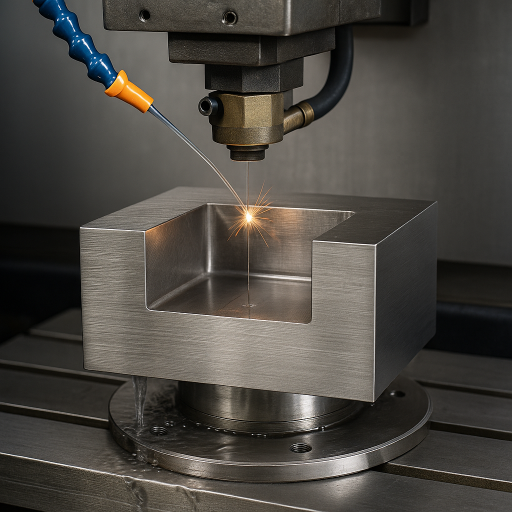
The stainless steels utilized for EDM are generally divided into some classes, the most common types being austenitic (e.g., grades 304 and 316), martensitic (e.g., grades 410 and 420), and precipitation-hardened grades (e.g., grade 17-4 PH). Austenitic grades offer exceptional resistance to corrosion and are non-magnetic, and hence ideally suited for precision work. Martensitic grades provide greater strength and hardness, resulting in good wear resistance for their applications. The precipitation-hardened grades combine these two most sought-after characteristics-resistance to corrosion and strength-which make them one of the most versatile members of the family among demanding applications. The choice of grade depends on several factors, including the properties of the material desired, the kind of application, and management efficiency.
304 is very robust in corrosion resistance and ductility. 304 is used in EDM machining for its machinability and application abilities.
316, superior in its corrosion class, especially due to the molybdenum content, presents an option for the picky chloride environment.
This hardenable corrosion-resistant stainless steel can be heat-treated for maximum corrosion resistance and high strength, making it perfect for the toughest applications.
Martensitic in structure, it features outstanding hardness along with moderate corrosion resistance, suitable for wear-resistant applications.
The mentioned materials are nice for the EDM process because they can be treated without compromising the characteristic properties of the they have.
In selecting a grade of stainless steel for a given application, several important factors will be considered:
Electrical and thermal properties of materials are crucial in deciding the performance of materials during Electrical Discharge Machining. High-conductivity materials, such as copper and graphite, are favoured as electrodes due to their capacity of effectively transmitting energy during machining. Graphite is especially favoured due to its high melting point and machining ease, which makes drilling small details quite effortlessly.
Array tools made of tool steel or carbide grades are also frequently selected for various components for their ability to resist wear and mechanical strength. However, the tool grade, for instance, carbide, might require longer machining times due to its lower machinability in comparison to softer grades. Balancing material performance with actual EDM efficiency is highly essential for ensuring design accuracy and cost-effectiveness in varying applications.

The use of EDM vises and clamps helps hold things securely for an electric discharge machining process. These solid fixtures ensure minimal movement and, by extension, misalignment of the workpiece, which are required for components to emerge in repeatable precision. This implies, in short, that the vises and clamps chosen for the application are governed by the size, shape, and material of the workpiece, in addition to the particular machining requirements of the job. For a tight grip, the implementation of clamping units must allow minimum interference to the surface being machined.
High-precision vices and clamping systems are a must when you are translating modern machining requirements into reality. Specifically designed to withstand the high temperatures and intensive electric currents in electrical discharge machining without distorting the workpiece, they ensure that the position, orientation, and dimensioning of any material the operator loads stays where it should. Suppression of any degrees of freedom allows for strict tolerance controls on any interactive part of a piece, a key requirement in industries like aerospace, automotive, and medical device production. The advancements in vice technology in form of modular designs and quick-change systems have greatly improved the efficiency and flexibility of setups. This eventually results in flexibility in the operator’s workpiece setup with minimal delay, which means the adaptability to changed workpiece configurations is reduced. This altogether plays a crucial role in production time, repeatability and the most important factor-holding towards quality of precision manufacturing, while maintenance continues.
Commonly used on general EDM machining applications, popular vises possess a simple and strong design appropriate for grasping a wide range of work pieces securely during any machining process.
Magnetic vises are used to keep ferrous materials fixed in place by the force of the magnet. Ideal for work pieces that are intricate and with a variety of shapes as they help to eliminate the risk of deformation by using non-mechanical clamping methods.
These vises allow the work piece to turn about one or more axes during the machining operation. Such vises are employed in applications requiring precise angular repositioning, particularly those characterized by complex configurations.
This vises category includes vises that are tailored towards holding down non-metallic or lightweight objects-for example, plastic or composite parts. A vacuum pressure system must always be used to hold the work piece, making them especially good for thin and flat objects.
Quick-change vises are designed for high volume applications that require rapid setup changes. They allow operators to rapidly interchange workpieces, as well as full setups, resulting in lower downtime and increased productivity.
Each type of EDM vices has its own unique position to serve, serving precision and adaptability purposes across different machining tasks.
In any EDM setup, choosing the right clamp is contingent upon the requirements of the job. The following are things you should consider:
Clamps can only be considered effective if they are compatible with the material and shape of the workpiece. Other clamps for use with irregular shapes are magnetic and flexible clamping systems.
Clamps play a significant role in positioning, and zeroing is very much essential. Therefore, vacuum clamping and orthometric vise are the best options for precision work.
Where frequent changes are expected of the workpiece, go in for clamps that are swift and adjustable, being comfortable to place and adjust such as quick-set vises.
Ensure to check that the desired clamping device is compatible with your EDM machine’s table dimension or slot configuration.
By questioning these issues, you can enhance machining efficiency and results. Always remember that durability and reliability are a precedence when purchasing clamping methods.

Exploring cryogenic EDM techniques is critical if one wants to improve accuracy and efficiency. This may involve, for example, fine-tuning many factors to allow for smoother finish and lower tool wear. Adaptive control systems cannot be overemphasized because of their adaptiveness according to the partitions of the actual manufacturing conditions. Naturally, multi-axis EDM systems enable the shaping of complex geometries, breaking design boundaries. Advanced clamping technologies assure stable and reliable workability during complex operations. These advanced techniques combined serve to enhance the productivity and limitations of EDM.
In such applications involving high levels of precision and fine detailing, EDM produced drilling does make for an excellent choice, exploiting the non-contact method of workpiece cutting processes of the EDM. Deep but narrowed bores, whose depths are quite uneven, could have torsion cutting by wire EDM verily cutting out months of production time that other forms of methodology could take to build. These types of workpieces share one common end argument, which ranges from aeronautics, automotive, and medical manufacturing, and the demand from every sector is simply pure precision as well as non-killing of trim material. As for the applications operated by EDM, which involve specialized drilling; imported above articles operate to high standards regarding material killing, wear of the wire electrode, or even unwanted burrs.
Most recent advancements in EDM technology have focused on precision improvement, efficiency, and material compatibility. With the best in class control systems, the ability to machine with even greater accuracy and finer detail, tighter tolerances can be achieved even on complex parts. Developments in dielectrics to enhance their performance have not only provided their ability in cooling but also have lessened electrode wear. Furthermore, by incorporating automation and AI into the work, the processes have been made slick and consequently faster in productivity and less in expenses. These particular advancements are geared toward making EDM a yet more versatile and competent system in dealing with industries needing exact and fine machining solutions.
The future of the EDM process of stainless steel will experience a considerable change based on precision, efficiency, and sustainability. Better and more rapid automation will provide better synchronization of machining parameters, real-time modifications, and errors will be removed, making way for streamlined production. Implementation of environmentally-friendly dielectric fluids will answer ecological worries by keeping high performance steady. Also, advancements in the field of electrode materials and design are geared at reducing wear and prolonging tool lifetime. In this way, the trajectory will secure EDM as a primordial solution for the production of high-quality stainless steel components.
Optimization of Process Parameters on EDM Milling of Stainless Steel AISI 304 – This study investigates the optimization of EDM milling processes for stainless steel AISI 304, focusing on process parameters.
Optimization of Machining Parameters in Electrical Discharge Machining (EDM) of 304 Stainless Steel – This research uses the Taguchi method to optimize EDM parameters for machining stainless steel 304.
Experimental Investigation of Surface Roughness and Material Removal Rate in Wire EDM of Stainless Steel 304 – This paper examines the effects of wire EDM on surface roughness and material removal rates for stainless steel 304.
Optimization of EDM Process Parameter for Stainless Steel D3 – This research focuses on optimizing EDM parameters for stainless steel D3 using experimental designs.
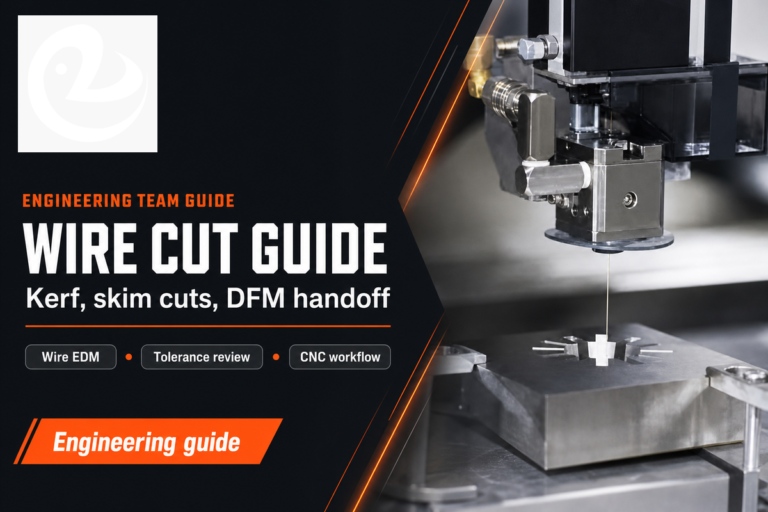
Wire EDM (wire-cut EDM) is a material-removal process where an electrically conductive workpiece is machined using high-voltage (with pulses) electricity flowing through a fine wire electrode that, here, is continuously fed or moved longitudinally to the workpiece. The spark erosion is the actual process of the work, where a small piece of the material is removed by the high temperature applied into the melting and vaporizing of the more conductive material. Since technology allows one to work with hard materials, highly complex geometries, or very small critical contours in height, they use neither any of the stresses nor morphological impairment. In this process, the dielectric fluid is deionized water, injected across the wire and workpiece bore as the debris carrying medium and making the electrical potential force between them constant.
EDM tooling requirement differs most in fundamental compared to machining tooling traditionally, as it does not involve cutting mechanisms back under the tool hardness or back under them. There is no need for a “hardened” tool; we use a certain electrode material (for instance, a copper electrode or a wire electrode, which may be either brass or steel and can be coated) and specifically regulate the electrical parameters. The EDM method allows us to control machining characteristics such as surface hardness and residual stresses by merely adjusting pulse energy, duration, and gap settings; as a result, when dealing with hardened stainless alloys such as certain austenitic and all martensitic grades, including 440C, where cutting through traditional means is problematic, the EDM process is preferred.
WEDM are being used in making precision parts as they indeed give good dimensional precision and surface finish, regardless of other considerations during optimization. Some of the key performance parameters to be addressed in the process are pulse on/off time, peak current application, wire tension, wire run speeds, dielectric fluid conductivity (quality of deionized water), as well as the sparking gap. These parameters affect surface finish, material removal rate, inclination, and residual stresses. Proper setup and selection of wire EDM machines stand us in good stead for a better finish and gives a repeatability potential, particularly with stainless steel and other alloys.
Wire-cut EDM is increasingly perfect for cutting hard material and hardened tool steel because the process is decoupled from material hardness. The technology can cut irrespective of tensile strength and surface hardness, thus allowing intricate geometries to be cut even on hardened tool steel, Stavax-like mold steels, and other tough alloys. Among the benefits are low mechanical stresses on the workpiece, burr-free cutting of complex geometries, and the ability to obtain high-aspect-ratio cuts and extremely fine features which would otherwise have to be abandoned through conventional machining.
In ED milling drilling (also known as EDM Boring), differing from the conventional drilling methods, a shaped electrode, mostly a tube or rod copper electrode, uses spark erosion for yet deeper holes in conducting materials. The biggest divergence in both drilling is that EDM spindles can actually machinize a high aspect ratio, deeper holes with good accuracy, and then perforate holes with high accuracy in harsh or heat treated materials, without imposing any cutting forces. Interestingly, this method can be augmented with EDM milling or wire EDM in order to establish complex internal geometries; not only this, but it can also assist where access is restricted or where damage from heat and deformation is supposed to be limited.