

Supportive, Professional, Client-Focused Service
From prototypes to full-scale production, we’ve got you covered.


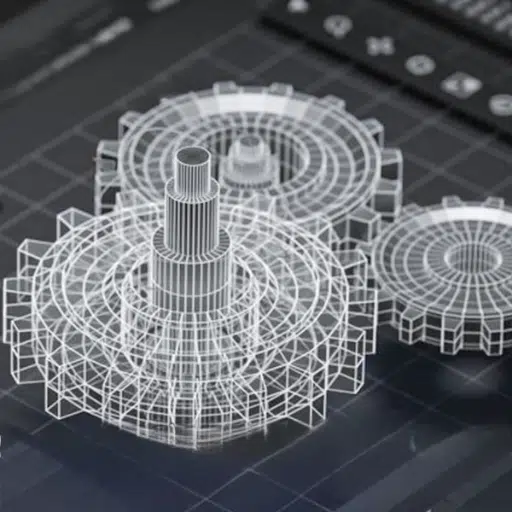
Titanium is widely renowned as one of the materials that are favorite among both engineers and manufacturers in the world of high-precision engineering. Its significance owes itself to a high strength-to-weight ratio, resistance to corrosion, and its repetitive properties that have given the element a substantial existence from airplanes to implants. Yet another challenge with its potential strength is when we present the beast within such talented machines. The titanic material must be extensively known concerning its properties, machine capabilities, and methods of production from CNC. This is a very interesting read — from the basic DFM knowledge about titanium to some good design tips for making the design process faster with the fewest mistakes and corrections. Do not despair if you are a junior or have been working on titanium machining for a long time – it is all useful information for you to consider.
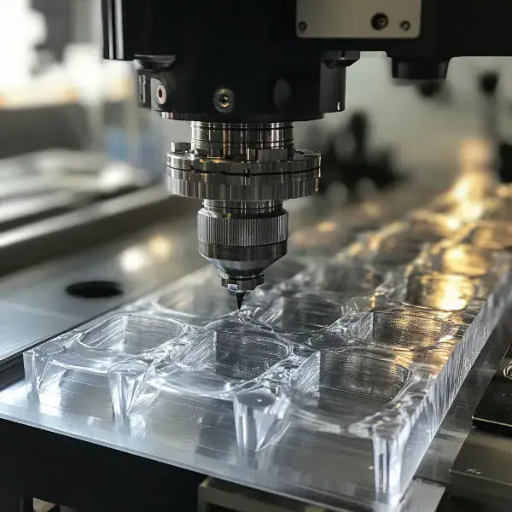
The characteristics of titanium DFM (Design for Manufacturability) present certain critical issues when it comes to machining:
Heat Disposal
Titanium does not have good thermal conductance resulting in heat localization in the cutting edge. This contributes towards faster tool wear and possibly breakage. Apply cutting edges that withstand high temperatures and make sure active lubrication is applied.
Tool Life
The factor of hardness and strength of titanium contributes to an increase in the cut force which results in faster wear of the cutter. Avoid the use of ordinary high-speed steels as they have a short shelf life and instead go for carbide based types which are known to be tough and wear resistive.
Chatter and Vibration
Titanium has one of its elasticity amounting to excessive “springiness” of the workpiece leading to unsteadiness during machining operations. Utilize stable setups and adjust the optimal cutting speeds and feeds in order to control chatter.
Material Removal Rates
The strength of titanium makes it difficult to perform high-speed material cutting in a short time. Use slower rotating cutting wheels, thicker cutters and greater depth of cut to improve the cutting performance.
Approaching these concerns requires the appropriate proverbial armamentado, followed by the reported tooling and strategies to achieve titanium DFM and its resilience.
There are many aspects that make titanium and its alloys appealing, especially thanks to the fact that they combine light weight and high mechanical properties, durability, resistance to corrosion and ease in fabrication. In line with their structure, the alloys are primarily of three major types. This includes Alpha, Beta and Alpha-Beta alloys. Alpha alloys have a good creep resistance and are extensively utilized in high temperature conditions. Beta alloys however, are deformable and are more robust and hence, good for load bearing structures. These traits are integrated into the alpha-beta alloys, where they demonstrate multi-axial properties thus tying in lots of functions without compromising the integrity of the structure for use.
Recent development in material science as well as the use of advanced technology for machining has increased the potential of using titanium alloys. Additive manufacturing, as an example, has greatly enabled the realization of complicated, lightweight geometries that were impossible. As much as these advances are helpful, machining titanium alloys still poses a significant challenge due to their poor conduction of heat and high tendency to stick to tool surfaces. These last aspects compromise the machining process. It is, therefore, important for firms wishing to exploit titanium DFM and their advantages to understand the behavior of the newly developed titanium alloys and apply new DFM principles and other practices.
| Alloy Type | Key Property | Primary Use |
|---|---|---|
| Alpha | Good creep resistance | High temperature conditions |
| Beta | Deformable and robust | Load bearing structures |
| Alpha-Beta | Multi-axial properties | Diverse industrial applications |
During the DFM process of for titanium, material selection is carried out with a primary focus on the optimal combination of machinability, expected performance and cost-effectiveness. Different alloys of titanium exhibit characteristic properties in terms of weight to strength ratio and corrosion resistance e.g., the most used alloys Grade 2 (pure titanium) or Grade 5 (Ti-6Al-4V). The first grade is easier to work with when it comes to machining, whereas the Grade 5 is more advantageous for mechanical applications thanks to the increased strength of its structure.
The choice of material must also be in line with the type of use and where it will function. In the realm of aerospace, where components undergo high stresses and extreme operating temperatures, grade 5 or better versions of the alloys are generally considered. This, in comparison, is contrary to implants examples in medicine which aim at biocompatibility with the body and hence the use of commercially pure titanium or selected medical grade alloys is mainly used. It is critical in this sense to know where and how the product would work in order to select an appropriate option.
Moreover, certain factors such as thickness, form and raw material availability should fit well with the design aspects and machine capability as well. Adopting a material that complies with DFM ensures that unwanted complexities are eradicated while the required tolerances and performance is achieved. There is also an advantage in engaging material suppliers and machinists at the beginning of the processes to enhance material and machine efficiency.
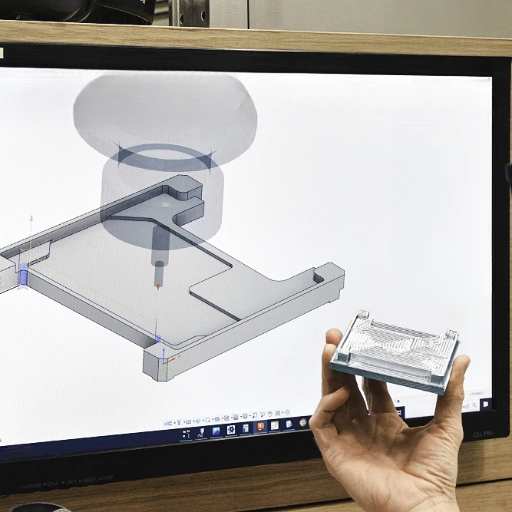
| Consideration | Guidance |
|---|---|
| Material Properties | High-performance efficiency of titanium is due to its lightness, strength, and tendency to resist corrosion. Nevertheless, its machineability is difficult since it is quite hard and is characterized by poor thermal conductivity hence problems during machining. |
| Machining Techniques | Run the machine at a lower speed, decrease the rate at which the tool is fed and lubricate sufficiently in order to minimize damage to the tool and heat build-up during the machining operations. |
| Tool Selection | Prioritize cutting inserts assembled using carbide inserts or tougher tool materials because these more often than not withstand titanium’s toughness and abrasive nature without much strain. |
| Part Geometry | Avoid complex designs that increase the manufacturing difficulty of a part since they will demand high machining efforts and costs. |
| Heat Management | Make sure that cooling methods are in place to machining to prevent deformation due to the heating effect and to maintain the structural stability of the part. |
With this direction in mind, that is to help the manufacturers make titanium structures easier and cheaper to manufacture while still meeting the standard requirements of quality, these guidelines help restrain the design engineers in titanium DFM.
The part geometry constitutes the keystone of titanium machining efficiency, as it directly robs against production time, tool life, and the cost-reducing factors. Handling intricate characteristics further complicates trimming down on several operations, use of high-end tools, or slow spindle rotation, hence increasing the duration and labor costs. Simplification of the design where feasible would lead toward ease in machining and also assure no inefficiency is shown during the machining cycle.
Another pivotal aspect is the heat produced in machining processes, with particular relation to geometry. For titanium components, properties such as slim walls or sharp edges induce uneven temperature distribution coupled with susceptibilities to thermal distortion or significant damage. Building in the design with some semblance of area uniformity, i.e., through maintaining uniform wall thicknesses and avoiding sharp transitions, can help cut down thermal stresses and enhance part integrity during machining.
The geometry for the characters also affects how much tool wear that a tool experiences and how long it lasts while machining titanium. Some designs contain extra pockets, small radii and deep cavities; all those severely stress the cutting tool because they are not easy to reach by the cutting edges and generate excessive cutting resistance. Therefore, tools must be frequently replaced. But with optimized geometries in terms of easy-to-access tools and reduced cutting forces, wear on tools would be minimal, and anyway efficiency and frugality get enhanced.
In any titanium part design, manufacturability is of utmost consideration along with performance. A few important points of consideration could be discussed as follows:
Incorporating these principles will aid to enhance titanium machining efficiency while extending tool life, delivering outstanding results.
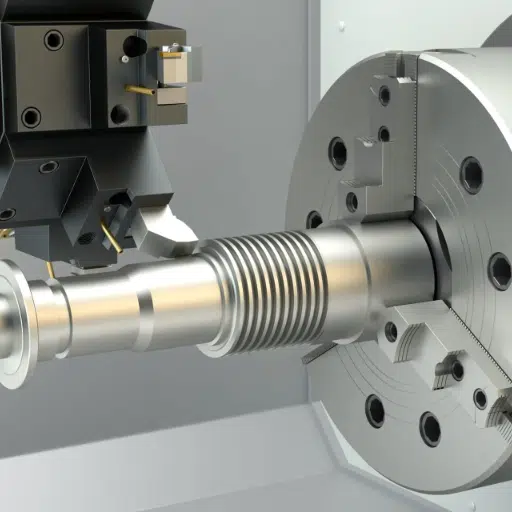
5-axis CNC machining technology revolutionized the manufacturing of titanium components, with superior precision and efficiency. By utilizing this cutting-edge technique, the tools are actually being controlled to move in five distinct axes at the same time, i.e., X, Y, Z, and rotational movements around X and Y, giving more flexibility in cutting complex geometries. In milling titanium, 5-axis rebelliously acts towards less tool deflection. This is because surface finishing is improved with tools that manage to stay in an optimal position and perform comparatively shorter cutting strokes.
This is the main advantage — higher accuracy is possible with 5-axis CNC machines for titanium, also faster than conventional systems, capable of producing finished parts with tight tolerances, thereby making these parts highly useful in quality-conscious sectors such as aerospace, medicine, and automotive, specially for titanium as its strength-to-appliance ratio stands gloriously beyond all reason and its extremely high corrosion resistance subserves grey market and other eligible groups. Thus, while working with titanium, the utmost importance involves the use of excellent cutting tools with appropriate coatings to help minimize tool wear further, feed as quickly as possible without harming the tool, and dissipate heat effectively.
The employment of 5-axis CNC machining helps manufacturers overcome the difficult aspects experience with titanium machining, such as susceptibility at high temperature and the creation of machining-induced stresses, to achieve an improved level of performance and precision.
Choice of cutting tools is crucial in achieving the best surface finish on titanium parts. Titanium has low thermal conductivity and great strength as a material, resulting in a massive heat energy production that leads to high-temperature wear and poor surface finishes. Thus, cutting tools are fabricated from carbide or coated with carbide and are heat-resistant, hence their hardness is retained with their exposure to high temperatures. This in turn results in low wear and higher precision.
Aside from process parameters, cutting speed equipment has an essential role to play. With low cutting speeds, plus high feed rates further reducing heat buildup and limited tool and workpiece wear. Also, the use of sharp tools with suitable geometry, such as a positive rake angle, will cancel out cutting forces, bringing up good surface quality finishes on titanium components. On the other hand, consistent finishes tend to occur when they stick to cuts of equal depth throughout each machining process, thereby keeping reduced interruptions during the machining process.
For a successful result in machining the titanium, efficient lubrication and cooling are important for the operating heat during cutting. This approach, along with conventional methods to ensure proper thermal management, minimized friction and improved surface finish. It was quite often difficult initially for titanium machining. These challenges may be resolved by proper cutting tool selection, appropriate machining parameters, and good cooling methods, which may offer better surface finish conforming to industry standards.
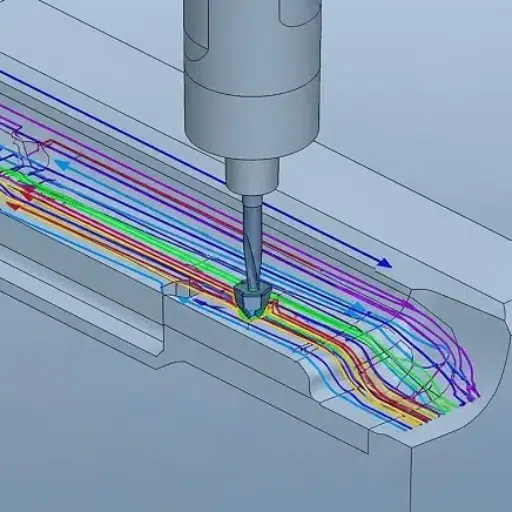
The most suitable titanium alloy will entirely depend on the needs of the particular application, such as hardness, weight, corrosion resistance, and thermal properties. Most aircraft structural applications will use Ti-6Al-4V. This is to exploit its marvelously high strength-to-weight ratio and fatigue resistance. In the medical sector, the alloys of medical grade (pure commercial titanium, with no alloys) which is believed to be suitable for Grade 1 or 2 due to its biocompatibility, whereas other sectors of chemical industry rejoice in Grade 7, which aids in the giving of greater corrosion resistance. More of everything, the task is balancing cost-performance to ensure operational efficiency and reliability.
| Grade | Alloy | Key Advantage | Industry |
|---|---|---|---|
| Grade 1 / 2 | Commercially pure Ti | Biocompatibility, ease of machining | Medical |
| Grade 5 | Ti-6Al-4V | High strength-to-weight & fatigue resistance | Aerospace |
| Grade 7 | Ti-0.2Pd | Superior corrosion resistance | Chemical Industry |
For titanium machining to be cost-effective, it is necessary to address measures to improve efficiency while conserving material wastage and reducing tool wear. The use of cutters that have been specifically designed for titanium machining is one very effective way of addressing this problem. Often such tools are made from carbide or similarly tough materials that can hold up well against heavy heat build-up and wear-and-tear brought forward by machining. Accurate cutting speeds and feed rates have to be maintained to minimize any high heat due to tool damage and a lost material integrity.
Another strategy to put into practice is the enhanced cooling method. Given the huge heat generated during the titanium milling process, it is necessary to use a high-pressure coolant system or cryogenic cooling, which will keep the tools in good condition, thereby increasing tool life and enabling high machining accuracy. It should further be kept in mind to avoid creating too much vibration during machining, to see to it that the work setup is stiff; and the vibration dampening technology on the machine itself would even improve accuracy, throughput, and the reduction of overall cost.
The key to balancing performance and cost lies in selecting the appropriate machining process. Processes like high-speed cutting or multi-axis machining can inform further removal materials and the reduction of lead times. In addition, once computer-controlled systems are implemented, tool conditioning can be monitored, increasing efficiency, therefore avoiding costly errors. Planning must be involved, so wise tool and methods make sure the machining of titanium is carried out with a final touch satisfactorily and at a reduced cost.
Design efficiency is a factor that very greatly affects titanium component costs to a very high extent. Streamlining design processes and further minimizing material waste imply an extremely lucrative cost-saving option. State-of-the-art CAD designs would well spawn optimized geometries to admit that they must bear the load with processing material, significantly cutting down the excess of useful material. Supporting lightweight design makes for an overall reduction in material consumption and significantly cut down on costs without losing performance. It is surprising that many industries are taking up generative design and topology optimization to achieve an overall better utilization of materials. This new realm seeks to maximize the least amount possible from given materials while ensuring product integrity, making them even much sought after in industries such as the one related to aerospace and automotive. Bringing in complimentary design strategies with groundbreaking technological innovations will, therefore, do extraordinarily well in cutting down on titanium part costs, ensuring financial and performance viability.
One fine illustration of the successful installation of Design for Manufacturability (DFM) in aerospace is the production of lightweight aircraft components. Companies have been capable to achieve significant cost savings and a reduction in production times by designing principal ways to decrease material wastage and simplify manufacturing. It was also demonstrated that jet engine component design with DFM principles enabled manufacturers to apply new techniques such as 3D printing, further reducing part weights and improving durability. Such innovations have implications not only toward reduction in production cost but also an enhancement by further increasing fuel efficiency. This once again proves the value of DFM in aerospace innovation.
One of the most advantageous methods to deal with challenging geometries of titanium is the application of 3D printing along with additive manufacturing (AM). AM allows for one to create high specific-complexity designs almost impossible or would cost too much in the traditional subtractive ways. The designs are such that the designers can minimize material wastage by placing optimal weights at the required places and attain complex internal structures like lattice bodies crucial for aerospace applications.
Additionally, strategies like topology optimization, which work on advanced software and algorithms, are some methods that refine the geometry of the titanium components to the highest possible performance-to-weight ratio. They lean onto better simulation for best distribution of materials, to ensure the end-design meets the required structural and performance criteria without excess material.
Advancements in machining processes, such as high-speed milling and laser-assisted machining, finally aid in the more efficient management of titanium’s hard-to-handle properties such as its hardness and low thermal conductivity. These advancements are redrawing the boundaries and the limits of use in certain sectors where titanium’s high strength-to-weight ratio and resistance against corrosion are essential, such as aerospace and medical technology.
The case studies on this subject suggest that successful titanium machining mandates very good equipment, very fine parameter selection, and sufficient cooling.
What is the procedure for titanium CNC machining? Which are the reasons behind the processes?
Titanium CNC machining is the art and science of making precision metal pieces, especially titanium alloy components that are made using milling and turning CNC machines. It is popular in applications requiring high tensile strength, light weight, good corrosion resistance, and biocompatibility, thereby highly demanded by aerospace and medical professions. While the challenge includes the high reactivity of titanium, making it difficult to cut, there are other drawbacks in that titanium is uncooperative in a range of subsequent processes once it is made into raw bars. Conforming to such difficulties arising from machining tie, CNC machining parts the present part must be ideal from the beginning with the best implemented CAM, or machining scenarios involve fretting about quality shifts and tool breakages.
What wall thickness guidelines should I follow in part design in titanium?
Uniform wall thickness in part design will help prevent distortion, minimize internal residual strains and eliminate poor surface finishes. Very thin walls might lead to chatters, vibrations, and bad surfaces; on the other hand, overly thick parts can create too many stress residues and increase the machining time. Design introduces a machine- and tooling-livable design for surfaces and walls, avoiding sharp internal corners and specifying wall thicknesses that are manageable in practice compared to feature size; provision of internal radii and support features improves machinability and minimizes the tendency for the material to work harden while cutting.
Could you provide a brief elaboration of the suggestion that titanium alloys promote CNC parts production?
In the manufacturing industry, titanium materials are available as CP (Commercially Pure) titanium and Ti-6Al-4V. Their tensile strength, chemical reactivity and hardness collectively contribute to various ways to consider the strategies and techniques adopted for cutting operation: Ti-6Al-4V, which is the stronger concrete, poses a challenge in work hardening and necessitates conservative feeds, the use of special coatings, and cutting tips, while CP titanium is capable of being machined efficiently and will require heat-concentration measures. The decision on material properties determines struggle with respect to tool life, burred creation, and discretionary decisions for welding or treatment of the workpiece in question.
What parameters in NC machining titanium should be of concern to carry out without tool failure?
Machining parameters such as cutting speeds, feed rates, depths of cut, coolant application, and optimized tool paths are such crucial parameters. When cut with lower cutting speeds and higher feed rates will typically reduce the heat that formulates due to cutting. Trochoidal milling, with optimized entry and exit moves, will decrease the load by ensuring it will reduce tool wear and tool failure. Using proper tool materials and coatings, having a coolant or air blast in proper position, and avoiding sudden engagements can prevent tool damage and provide an excellent machined finish.
Are there any special welding and finishing necessaries for machined titanium DFMs?
Titanium is very reactive to oxygen and nitrogen under high-temperature welding, so handling care must be taken to ensure a welding protective atmosphere, including both natural gas and filling atmosphere composition. Once the above processes are accomplished, the part may require passivation, surface treatments, or precision finishes based on surface roughness specifications. Design for welding and finish should be done when designing a part to fabricate a titanium part so as to not lose mechanical properties and integrity on surfaces.
Towards Automated Guidance for Helping Novices Design for Sustainable Additive Manufacturing and CNC Machining
Link to source
This paper discusses DFM guidelines for CNC machining, including sustainable practices and feedback mechanisms for design optimization.
Optimizing 3-Axis CNC Router Design: Using QFD and DFM for Enhanced Precision and Efficiency
Link to source
Explores the application of DFM principles to improve precision and efficiency in CNC machining, with a focus on minimizing complex machining requirements.
Performance Improvement Studies for Cutting Tools with Perforated Surface in Turning of Titanium Alloy
Link to source
Examines machining conditions and tool performance for titanium alloys, providing insights into best practices for CNC machining of titanium.