

Supportive, Professional, Client-Focused Service
From prototypes to full-scale production, we’ve got you covered.



Ensuring the quality and accuracy of manufactured products is an imperative step towards the success of any production endeavor, in which the First Article Inspection (FAI) Process forms the superglue binding all loose ends together. FAI might be qualified as the introduction to the unit-level quality control process, rendering its regularization first-run assurance check meant for the assessment partner, while striving to meet all stipulated particulars, guided by industry standards. While a manufacturing producer must want consistent outcome deliveries, with having such an assurance for the buyer’s power to let trust in the supplier; the only key point is the knowledge of what the detailed FAI process offers in respect to wastage reduction, trust build-up, and product top performance. This article intends to provide operational overviews about the FAI, its importance in the production life-cycle, and best introduced practices to its engagement for obtaining effective results. It implies that through the exercise, the process is again the enhancement to the reliability and accuracy for production-initiated project steps.

A process of first article inspection (FAI) is a detailed, systematic verification and validation process to ensure that a product conforms to the specified design and production standards before mass production could begin. It is an inspection of the first article, which is normally the initial sample or prototype, to ascertain conformance against touchstone specifications, drawings, or contractual requirements.
The aim of an FAI is to prove that the requirements are understood and are achievable under the prevailing manufacturing conditions. Early-stage detection and remediation of possible defects, hence prevention thereof, reduces production delays and guarantees about the total quality. It also acts as a channel for communication between the suppliers and customers for ensuring that the product will fulfill the intended service.
FAI is quite significant in sectors where precision and reliability have significant importance e.g., aerospace, automobile, and the manufacture of medical devices. It includes dimensional check, material test, and document review. A detailed and conclusive examination during FAI assures the cast defini-te foundation for production since the product and the production process must conform to legiti-mate quality and safety standards.
FAI is critical in quality assurance as it ensures that all fabricated parts are meeting blueprint specifications as well as compliance standards, even before mass production starts. This anticipatory tactic minimizes the threat of errors, renders elimination of waste, and promises consistent quality of production between its different batches. Early detection of potential issues helps to negate costly remediations down the line.
Furthermore, FAI goes a long way to stand to support the claim that the production processes are indeed capable of delivering the intended results. It is instrumental in checking the final product, beside the production set-up duly equipped with tools, machines, and workflows. This assures that production would go on and on without disturbance of any sort.
The Full Article Inspection process concludes the process of trust-building since it is a way of backing up their claims compared to the previous word of surgeons. And, this trust once achieved lays the groundwork for long-term partnership. In general, it is a critical safeguard in keeping the standards of reliability, accuracy, and safety upheld by real-life factories.
The first articles are basic components in the manufacturing process because they act as marks for the quality and uniformity that the full product ought to show. Therefore, when a first article is made, it undergoes comprehensive inspection to ensure conformity with the drawings, engineering requirements, and customer expectations. If this stage is passed successfully, future production runs should produce parts-to-spec, thus minimizing the chances of producing error-prone or defective components.
Developing a first-article inspection protocol demands meticulous blueprint reading and verification of every part dimension as noted against various tolerances. Naturally, before the problem grows or may pose an ideal threat to consistent production standards, potential issues needing attention would have to get solved to perfection. This earlier intervention system would ensure less cost of rework, delay of work, and wastage of material and subsiding overall efficiency simultaneously.
An analysis of the first article is an important basis for trust between producers and clients. First-article inspection reinforces a commitment to quality and transparency, engendering trust in the production process. Expectations must be met display trust in the sub-suppliers. In addition to issues of quality and manufacturing, this further assists in building trust. Reduced costs in the long run are also another benefit of this sort of foundation.

One of the very first details focused on in the First Article Inspection process is preparation. Preparation involves collecting all documentation, such as engineering drawings, specifications, and quality requirements. The manufacturer must identify the characteristics that are key and necessitated to be checked and then make sure that all equipment and instruments are properly calibrated and ready for use.
During this part of the process, the first article is manufactured and is extensively reviewed against the stated criteria. Each characteristic regarding dimensions, materials, and features will be either measured or informally reviewed to ascertain compliance with requirements. Any deviation is documented, directed for whole consideration.
The FAI report is compiled covering all dimensional and visual measurements, observations, and non-conformance issues that may have been found. The report is then reviewed by both the manufacturer and the client to confirm that the product is in agreed-upon compliance; any discrepanicies are addressed with corrective action prior to transitioning into mass production.
These steps ensure a systematic and dependable FAI process, which supports product quality and elevates client trust.
Indeed, AS9102 was more important for the entire aerospace manufacturing framework; it spells out the requirements for the First Article Inspection (FAI). Also, it lays down a general format for documentation consenting to both documenting and reporting processes. This way one gets to certify that no part of the component structure is in agreement with the blueprint, making the feeling about product compliance with industry regulations strong. AS9102 has, therefore, been widely adopted in the aerospace sector because the standard lays great emphasis on safety, quality, and uniformity.
Aside from AS9102, other standards are implemented by other industries to maintain strict quality controls. ISO 9001 is one such industry standard for the general quality management system for several industries, including the ISO/IEC 17025 standard for required regulations pertaining to laboratories’ use for testing and calibration. Both standards underscore principles of continuous improvement, process efficiency, and customer satisfaction. Together they create robust quality support for the technology-intensive industries of automotive, defense, and electronics beyond the ones in aerospace.
To be in compliance with these business benchmarks, there is rigorous documentation, a lot of audits, and a commitment to quality. Manufacturers get more than just the ability to verify individual components upon meeting AS9102 and what not. In terms of ethics and innovation, this mandated compliance can itself inculcate a sense of constructive accountability. These sorts of comprehensive checks give the companies best cover for operational success in meeting rigid regulations vis-à-vis maintenance of client trust.
Where insufficient reigns over inspectional relatability, verification serves as the embodiment. Dimensional verification is the predominant practice that assures the geometrical accuracy of the mooring components. The quantitative-technical quality will have to be proved by measurement. In addition, the true point of this verification process is to identify and correct any items before they have any adverse effects upon the performance and reliability of the final product.
Manufacturers can guarantee that components meet strict tolerance limits by employing precise measurement tools and techniques. This is of the utmost importance in some industries such as aerospace, automotive, and medical, where any deviations in physical features can even lead to enormous risks. Regular inspections along the production process also help spot problems early, avoiding errors that may result in expensive native repairs, even the faulty repeated manufacturing of parts.
Dimensional inspection and verification act as a fundamental device undeniably bearing the customer trust and consistency of product quality. Through adherence to industry standards and guidelines, greater reliability may be achieved with consistency among built-to-consistent-need products in safety and requirements, creating confidence with clients and stakeholders.
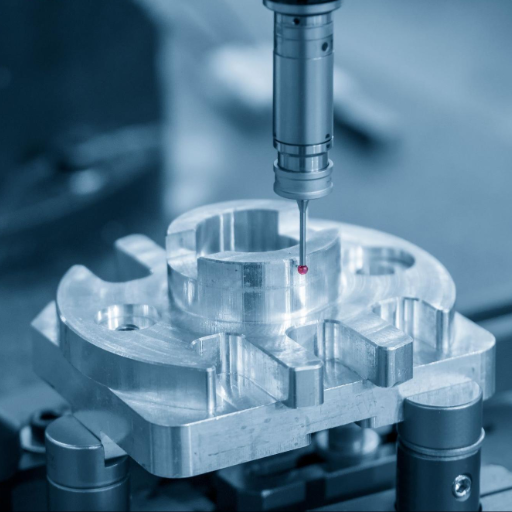
An FAI report is a critical document used to assure that a manufactured part or assembly meets the standards set out in engineering drawings and documents. It is a summation of fields that will give a portrait of the part’s compliance with these standards. The report basically proves consistency, quality and that the correct parameters have all been met according to generally published guidelines.
The principal components of the FAI report, in general, deal with dimensional measurements, material and process specifications, and functional test results. The purpose behind the dimensional measurements is to ascertain, based on the engineering draft and other documents, that the physical quantity corresponds to the specified tolerances. Material and process specifications are basically an attestation to the correct choice of materials and the application of approved procedures for manufacture. Functional test results aim to assert that the part will indeed work the way it is expected to if it is put to use in its actual application.
Also, the FAI report would provide detailed part identification details, including part numbers, revision levels, information about suppliers that helps assure traceability for proper checks all the way through the process. The information would be appended by certifications, documentation supporting such assertions, or those pertinent to a manufacturer’s compliance: material certificates and test reports existent evidence of such compliance. The interplay, often explicit, between all of these elements creates an interdependence that assists in the creation of a pristine record and leads toward a real opportunity for transparency for manufacturers and clients.
FAI is a determining human factor for having parts quality assessed according to design specs. Accountability of this documentation refers to the process by which each design requirement or characteristic is documented, confirmed, recorded, and justified as it pertains to production. This involves checking the product against various engineering drawings, material specifications, and pre-specified standards to allow any discrepancies or nonconformances to be rectified with immediate effect within the manufacturing sector.
It takes clear documentation in order to be sure that accountability is built in such a way that traceability is possible. A record of every characteristic comprising the lists in the design specification is taken, namely, the characteristics are uniquely identifiable and recorded, including the results of the requisite inspections. This ensures that such crucial characteristics as the dimensions, tolerances, and material properties are given a thorough validation, conforming to the quality regulation values. Through the configuration of an exact record, a path is established for the manufacturers to create evidence that the finished product satisfies the intended specifications.
Characteristic accountability is finally found to joint with quality control and also meant to be in service for the stakeholders’ network. This reduces the risks stemming from the fabrication process, providing solutions to issues in a more professional manner. For the clients-faced with partial product reliability, FAI accountability points to the credibility of performance in the products that are being accepted. This primarily comes to give companies a chance to build trust while working for long-term partnerships with growing accountability.

A most common problem experienced during First Article Inspection (FAI) process is inadequate documentation. Missing, incomplete and unclear specs or drawings make a mess of things causing delays. To relieve the situation, the company must submit the plan for capturing all critical design and manufacturing information, ensuring all are up to date and clearly documented. Periodical reviews of injection mechanic design documents should assist in reducing risks and maintain relevance all through the process inspections.
Next is the lack of consistency in how measurements or inspections are undertaken. Variability in measurements taken, and records kept can result in errors that may pop up during the FAI review. Standardized measurement techniques and calibrated equipment will help solve this problem. Training in uniform measurement techniques for the employees also helps maintain a high level of accuracy and repeatability.
Communication breakdown between suppliers and manufacturers, however, stands as the biggest stumbling block in inching towards the FAI. Misalignment of expectations and unclear reporting often drag the process into delays and rejection due to lack of precise communication. In order to demolish this issue and quicken the FAI process, vendors might consider setting clear communication and protocol expectations at the very beginning of their interaction and maintain a communicative mode through a combined relationship that nurtures ways to solve the problems that arise.
This case study underlines a manufacturer plagued with repeated delays in the FAI process due to poorly documented information and subsequent mis-matches of expectation between his team and his suppliers. To mitigate this possibility in the future, it developed the protocol of actively taking time to formalize communication under each new project scenario. In this way, clear documentation standards were set, together with instructions for suppliers. This act in and of itself signaled a reduction in the requisite time to obtain approvals as both parties were in sync with their requirements, thus cutting back on frustrating feedback loops. This clearly shows that the initial communication regime is the pivot around which the FAI exercise can flourish.
The introduction of a centralized management system, able to monitor the systematic data of inspection, was a successful step to sort out nonsystematic reporting issues undertaken by another firm. All forms, files, and format files from various raw materials come all in one area. This led to the reduction in defaults and shortening at the review stage. The same way real-time updating became possible and tracking inspection progress up to date useful. This case speaks of the importance of an integrated system to communicate efficiency and accuracy in the context of FAI management.
In FAI management, a structured approach supporting clarity and specificity is necessary. The beginning principle should be for all persons on the FAI team to be well-trained on the procedures & method and for them to comprehend the roles and responsibilities implied for each member individually. This will provide consistency in essence for all inspections by doing itself with the assistance of standardized documentation and checklists etc.
The proper access to quantitative data metabolic with other key pieces of stored data, such as design specifications, materials, and production notes, is more important. With this integration, the system automatically keeps itself informed and capable of providing real-time updates that are both useful for real-time deadline tracking and are directly encouraging for compliance verification, hence generating an updated media for a clear explanation. A system-driven approach is for discussing, addressing, and solving issues because different departments are now dependent and work in close collaboration, maintaining updated information for everybody at all times.
As a complementary benefit of some form of a plan, it will provide the way to be effective while preventing delays and variations. As a solution to this problem, conduction of a pre-inspection meeting with all interested parties is an effective step to identify expectations and address any operational issues encountered by them before initiation of the inspection. Periodic review and audits of the FAI process will keep it in compliance with the organization’s product quality standards while creating opportunities for improvements. This is one way to boost the accuracy and efficiency for the FAI of an organization, hence adding a lot to the quality of products and the way of approached compliance.

Standardized process implementation is quite vital for prosperous FAI in CNC machining. Go for checklists and templates that will precisely slot every step of the checking in place, while at the same time slashing ambiguity and ensuring all teammates are united with one another. For the inculcation of a common ground for adherence, teach your staff with trainings on this.
Automation and software applications can play a major role in cutting short the time taken for the FAI process to minimize errors arising from human performance. For instance, optical measurement systems could ensure that the parts are verified formidably and with minimal error accommodation. Add these tools in the FAI sequence with enhanced accuracy as an added advantage, while the integration with reporting and follow-up data storage maintains lessened accuracy.
Carry out periodic FAI process reviews for areas needing improvement. Utilize cross-functional teams for the analysis of information collected from inspections with continuous recurrence of issues, which pertain to an objective of reducing lead times and enhancing product quality in the long run by streamlining processes and eliminating wastes resulting from inconsistencies and inefficiencies.
First Article Inspection (FAI) serves a prime role in ensuring consistency of product quality; mainly, when it is fitted into a Quality Management System (QMS). The importance of FAI in giving the assurance that all requirements for the design, manufacture, and materials are met before starting regular production cannot be overemphasized. It reduces the chance of non-conformances and begins the manufacturing process adhering to established quality standards, thus giving rise to dependability and trust in the output of productions.
It will be a beneficial move, then, if either fewer policies and some simpler QA standards are gently intermingled with FAI stipulation as mandatory subjects which should be created when well-crafted material including guidelines and guidance will be made for their actuation. The standards so set should have in them standard practice to be followed for inspection, recording of results, and checking nonconformity when found. In this way, everyone relies on set processes in the FAI strategy. This way, the engineers, quality teams, and production workers, therefore, are guided as to their roles under the FAI system. Regular and frequent training on the FAI’s schemes would go a long way in enhancing the FAI to the principles of the QMS.
Finally, functional use of the FAI data in the QMS improvement process can highly enhance system efficiency and product quality. It assists as an investigative tool for an organization and hence by observing patterns of recurrent nonconformances in the auditing process and locating the root cause of the nonconforming items; the company can take the correct corrective action and thus tweak flow to suit production in identifying structural changes. Such an approach puts a stop to the misnomer that the FAI as a compliance tool and our GAARA is a driving force for major capacity enhancements in our QMS being applied.
Verification and compatibility evaluation strategies are essential for ensuring that processes, products, or systems meet specified requirements and function harmoniously within their intended environments. These strategies assess whether both predefined standards and objectives are achieved through systematic testing and validation processes.
Verification has the base on which is validated the confirmation that the system or product designs correspond to the specific requirements. It typically involves detailed inspections, reviews, and testing at various stages of the production lifecycle. Verification is meant to catch any errors or inconsistencies early so that they are corrected with cost-effective measures further down the line. The verification work also documents that the requirements are being satisfied as intended.
On the other hand, compatibility testing checks whether an application, program, or system is able to interoperate, work under anticipated conditions, and conform to standards within the technical culture of the user. Testing these focuses on how competently the software will run under all possible conditions in a customer’s environment of operation, or how the requisite software system standards will be satisfied; that is, it assesses if the developed application, or any version thereof, is compatible. This will allow the company to recognize any serious situations that it hadn’t yet considered and thus offer optimal use of certain valuable qualities for any enhancements. These considerations then lay a comprehensive foundation for QA and continuous improvement.
A: The First Article Inspection (FAI) Process involves verifying the first part produced, finished product, or batch of parts for its requirements under design and initial contract requirements. FAI is to verify that the design or manufacturing process can produce parts that will meet the requirements and the quality standards. The purpose was to catch the issues early, it’s a great way to hold the product and part number accountable and supports Advanced Product Quality Planning(APQP) and Production Part Approval Process(PPAP) activities.
A: Common methods of verification are comparison tests between CMMs, calipers, micrometers, and gauges, supplemented by visual inspections and functional testing. The method of choice will depend on the feature being verified and the inspection plan in force at the time. CMMs come into play more for items dimensioned with GD&T that require a high degree of precision for verification, whereas calipers and micrometers are enough for simpler dimensions. A well-drafted FAI requires listing of all the feature dimensions and methodologies for acceptance standards.
A: In truth, they degree that one wishes to admire the characteristics, processes, or components involved. Decrease the burden to some degree by remembering that a partial FAI can be justified given that particular characteristics, processes, or components, as seen on the applicable drawing, only prior to realization, alter. A distinction of roles between minimal and full FAI is a rare exception when a customer or one of the coffin standards demands otherwise.
A: First-article verification is a control matching part supplied requirements to start production with a production part approval process. FAI is the evidence that the design and manufacturing processes are capable of consistent compliance in producing products satisfying set requirements even before long-scale production is fully started. These results form the basis for continued inspection outcomes for process capability study requirements and control procedures during the first production run and all parts produced in any of the subsequent manufacturing runs.
A: Usual culprits include missing or incorrect dimensions on the ballooned drawing, nonconstancy regarding GD&T features, incorrect material certifications, and discrepancies between measured and inspection methods being inversely proportional to the resolution thereof (sort of the objective-correction via either design upgrades, followed by tweaking of the process, rework of the parts first produced, updating of the inspection plan, or repeating-first-parts inspection).
A: The first article inspection software will help automate data capture, handling form 1 and form 3 and linking ballooned drawing, and tracking electronically the inspection result. This integrates FAI software with CMMS (computerized maintenance management systems) or quality management systems for better traceability, scheduling the first production run, and also linking inspection reports with maintenance-related or process-changing requests. A digital approach, meanwhile, lessens manual—based errors, saves time in approval cycles, and ensures the initial produced part, as well as any subsequent parts, meets the design and quality standards.