

Supportive, Professional, Client-Focused Service
From prototypes to full-scale production, we’ve got you covered.



Swiss screw machining is the advanced manufacturing process that has the greatest impact on precision parts production of all kinds, especially when it comes to difficult materials like stainless steel. The metal is considered the best not only due to its outstanding strength but also because of its resistance to corrosion and its wide applicability. Therefore, it remains a dominant choice for the medical, aerospace, and automotive industries among others. Nevertheless, its toughness makes it hard to machine, thereby resulting in a high cost of manufacture. The article is an introduction to the world of Swiss screw machining and how this technology can not only produce but also quality steel parts with exceptional precision that no one can match. The post will cater to both novice and professional readers looking forward to cutting-edge production techniques and thus provide them with valuable insights about Swiss screw machining for stainless steel components.

Swiss-type lathes are machines that have unique characteristics and are highly capable of performing precision machining on small and intricate parts. The principle behind the mechanism is to hold the workpiece in a collet and to push it through a bushing which supplies support very close to the cutting tool. The deflection is very much reduced this way and hence it is possible to get a very precise machining process. The cutting tool does not move but the workpiece is moved axially, so tolerances can be very tight in the produced components.
One characteristic that stands out in Swiss-type lathes is their capacity to do multiple operations at the same time. The machines often have many axes of motion that are used to perform turning, drilling, milling, and threading in one setup. The ability of Swiss lathes to multitask leads to a great decrease in the time taken for production and a major increase in the efficiency. Swiss lathes also avoid the need for tool repositioning which would otherwise cause errors, thus maintaining a consistent quality throughout the machining process.
Swiss-type machining is a preferred choice in the case of stainless steel parts and other materials that are difficult to machine. The environment that gets created by the bushing and the precision movements of the machine ensure very little tool wear and an excellent finish. The advanced design of Swiss-type lathes makes it possible for manufacturers to produce very detailed parts, thus being an essential technology for the medical, aerospace, and electronics industries. The technology’s role in modern manufacturing can be appreciated by both beginners and professionals if they understand these core aspects.
Swiss machines, which are also referred to as Swiss-type lathes, have gained recognition for their accuracy and quickness in making small and complex parts. They make use of the modern-day mechanical components and super technology combined. Among the key elements of a Swiss machine are as follows:
The guide bushing is a very necessary part that holds the workpiece at a very close location to the place where it is being machined. Unlike the conventional lathes, this feature of stabilization reduces the vibration and at the same time allows the machining of long and slender parts with great precision. Studies conducted have shown that this invention allows Swiss machines to be as accurate as ±0.0002 inches, and it makes them perfect for the production of parts for the aerospace and medical industries.
The sliding headstock shifts the workpiece in a longitudinal direction through the tool zone, which is by all means the quintessential characteristic of Swiss machines. Such a mechanism contributes to the accuracy of Swiss machines since it makes sure that the workpiece is not moved during operations like turning, drilling, and milling. A recent report from the industry states that this design is a great help in the production of small parts with diameters varying from 0.1 mm to 32 mm at a rate of hundreds of thousands of units per day.
Swiss machines usually come with tool stations arranged above and below the workpiece. Some models can have as many as 36 tool positions, which make it possible to carry out complex, multi-axis machining operations without the need of having more than one setup. The advanced CNC controls that are now in place enable the main and sub-spindles to be used for simultaneous machining, which in turn brings down the overall cycle time to a great extent.
Typically, a Swiss machine consists of the main spindle which is dedicated for primary machining and the sub-spindle which is used for secondary operations like back-working. The sub-spindle allows to carry out all operations in one setup resulting in High productivity and no handling errors at all. The latest advancements in spindle technology have resulted in increased speed and torque, which in turn, allowed the manufacturers to easily process even the hardest materials including stainless steel.
Top-notch coolant application and chip disposal are very important factors if the Swiss machining process quality and efficiency are to be maintained. Today’s machines are provided with high-pressure coolant systems that not only lower the temperature but also prolong the life of the tool while at the same time advanced chip management systems are at the operation to ensure that the machines are not affected by clogging hence leading to downtimes.
It is through these components that Swiss machines keep on being the reference point for precision machining in the specialized industries that depend on them, thereby helping manufacturers to be more accurate and consistent than ever before in their production processes.
CNC (Computer Numerical Control) machines have a big impact on Swiss machining in terms of precision, efficiency, and repeatability. They enable the makers to create the most complicated and detailed parts with accuracy that is unrivaled, thus, satisfying the strict requirements of the medical, aerospace, and electronics industries among others. The exact movement of the cutting tools and material movement is what walking the CNC path means; so, errors are reduced greatly, and each part is made to the highest specifications.
Possibly the biggest upside of bringing CNC machines into Swiss machining is the turning around of production processes. By setting machines up to perform certain tasks, labor can be cut down and thus time saved as well as output increased. This turning around also cuts down on human error which is why there is always consistent quality even in large production runs. Moreover, the CNC machines can work non-stop for long stretches, thereby, not only you getting maximum output but also very little downtime.
Apart from all that, CNC technology is a source of great flexibility in Swiss manufacturing. By using the machine’s programming, the switch from one product design to another can be done pretty quickly, which means the manufacturer can be responsive to the market change or produce small quantities at a low cost. And then there are the sophisticated tooling and control systems that come with the CNC machines that make it possible to do the difficult operations like simultaneous multi-axis machining, which would otherwise be very hard or even impossible to do by hand. It is these qualities that make in CNC the machines an essential upgrade to the Swiss machining processes and the combination of precision and flexibility that they offer is indeed a boon to the modern manufacturing requirements.

In the manufacturing process, precision parts are a very important factor because they make the components to fit together without any gaps and to perform correctly. The accurateness of these parts is the criterion for the performance, safety, and reliability of a number of products, from medical equipment to car engines and airplanes. Precision allows the manufacturers to meet the very narrow tolerances that are indispensable in the critical applications, and consequently, to cut down on errors and to improve the quality of the product.
The functional aspect of precision parts is only one side of the coin, on the other side they also influence production processes in terms of efficiency and cost-effectiveness. Precise parts help the manufacturer to minimize the waste by eliminating the need for rework or adjustments, which in turn leads to faster assembly and, therefore, lower production costs. What is more, precise manufacturing aids in the absorption of large production runs by keeping the quality of every piece and the reliability of its performance in the application where it is intended to be used at the same level.
The manufacturers’ use of advanced machining technologies such as CNC and Swiss machining makes it possible for them to achieve amazing precision, even when the designs are quite complex and the tolerances very small. The precision is necessary in industries where the slightest deviation might result in negative scenarios like the production of medical implants or aerospace systems. The ability to produce such high-quality components shows that the precision parts are absolutely essential for the fulfilment of modern manufacturing demands.
Swiss-type lathes exhibit these pluses without any other type of lathe when it comes to the machining of stainless steel, a metal that despite being very strong, resistant to corrosion and widely applied in medical, aerospace, and automotive industries, nevertheless would still not be able to be used perfectly if not with the help of such lathes. These lathes have been designed with utmost precision and efficiency as their main features and thus have several key advantages associated with them.
Hilby-type lathes are capable of such precision that sometimes they even report their tolerances within the margin of ±0.0001 inches. This is especially important when dealing with stainless steel, especially in the industries that require absolutely no mistakes and top-notch youngsters like surgical tools and aviation parts.
As the case may be with other metals, stainless steel requires the most delicate of treatments and handling to avoid any types of surface defects. On the other hand, swiss machines have a mechanism that is least prone to causing disturbances during the operation. That has the double effect of yielding a particularly smooth surfacer and thus of lessening further operations like polishing or grinding that could have been necessitated by the original surface quality.
Today’s Swiss lathes come with multi-axis functions that are perfect for complex parts’ elaborate manufacturing. This feature is particularly advantageous when it comes to stainless steel fixtures since it drastically cuts down the time taken for each cycle and thus turns out more pieces of work all at once, besides being accurate.
Stainless steel is an expensive material and production engineers often have to consider its cost impact on their budgets very closely. The use of Swiss lathes entails efficient utilization of bar stock as well as scrap rates notably lowered so that stainless steel parts can be machined without incurring too high costs. Reported figures indicate a reduction in material of up to 20% depending on the applicability.
Stainless steel cutting is a tough task and difficulty in maintaining the required precision leads to wear on the cutting edges. Swiss lathes utilize advanced cooling techniques and exact chip quantity management so as to make the life of tools longer and to keep the cutting quality steady thus downtime due to tool changing is greatly reduced. Industry studies point to 30-50% improvement in tool life on average when using optimized Swiss-type setups.
Swiss-type lathes are the ones that can deal with all sorts of stainless steel ranging from austenitic and ferritic to martensitics. This factor of adaptability in different types of steelworking enables the manufacturer to cater to a variety of components from tensile automotive parts to medical devices that are resistant to corrosion.
The switch to Swiss-type lathes for the stainless-steel processing not only gives the manufacturers raw materials that are strong and durable but also helps in realizing their designs, especially complex uplifting ones, with no waste at all. These machines with ever-increasing sophistication continue to be the innovators in the area of stainless steel cutting.
In Swiss machining, rigorous quality control standards are enforced to guarantee the components produced with precision, consistency, and reliability. The entire process of control is very careful and starts with the inspection of the raw material. First, the lot is tested for conformity with the specified grades, tolerances, and mechanical properties so that the quality of the material can be assured for its intended application. Besides, the use of only approved materials reduces the variation and therefore assures the same quality.
The use of modern Swiss lathes, equipped with advanced monitoring systems, is a must throughout the machining process if the precise specifications are to be met. The automated process provides continuous measurements of dimensions, surface finishes, and tolerances, thus ensuring that the parts are perfectly aligned with the design requirements. In case a deviation is detected, corrective actions can be taken right away to solve the production problem. This system of quality control that operates in real-time greatly reduces waste and accelerates the process.
Post-production inspection, at last, comes to the rescue and checks that the finished products measure up to the highest standards. A series of detailed analyses, mostly involving dimensional inspection, durability tests, and visual examinations for defect or irregularity detection, are performed on the components. The pre-process evaluation, in-process monitoring, and post-process inspection together make it possible for Swiss machining to provide products that meet the quality requirements of different industries. The methods also ensure that the users will be the receivers of the components with extraordinary precision and dependable performance.

The aerospace industry is hugely dependent on Swiss machining for high-precision parts that are essential for the aircraft operation to be reliable. The positive sides of Swiss machining such as working with complex geometries along with tight tolerances have made it a very good choice for making connectors, fasteners, and control system parts. All these tiny and detailed parts must pass the very high-quality industry standards to be safe and functional.
Swiss machining is the leading equipment in the aerospace field where even tiny mistakes can lead to huge disasters. Precise, and durable components made by this method are always over the standard, have 100% reproducibility, and are not afraid of extreme conditions, such as high pressure and temperature ranges. For instance, hydraulic fittings made in this manner give leak-proof reliability that is very crucial for maintaining performance in critical systems.
Moreover, on top of all these, Swiss machining does not only benefit the industries through its splendid features but also qualifies for the use of special materials that are commonly used in the aerospace manufacturing like titanium and stainless steel. These materials have a great strength-to-weight ratio that is needed for the efficient design of aircraft while at the same time being resistant to corrosion and wear. With the help of this technology, the aerospace industry is not only able to obtain precision engineering but also trustworthy performance through the exact specification and efficient handling of materials.
Swiss machines are indispensably important in medical device production thanks to their capacity for the creation of very exact, tiny, and intricate parts. These machines are perfectly suited for the fabrication of the parts that are needed in medical devices like surgical instruments, orthopaedic implants, and diagnostic devices. The high precision of these machines ensures that the components pass the stringent tolerances and high-quality standards that are required in the medical applications, where reliability and accuracy are paramount.
Working with different biocompatible materials is one of the main advantages of Swiss machines in medical device manufacturing. That’s why among them are stainless steel, titanium, and highly engineered polymers. The use of these materials is very important for production of the medical components that are not only safe for patients but also capable of withstanding extreme circumstances. The Swiss machines provide the perfect platform for the machining of these materials to be both efficient and highly precise, thus keeping the waste down while reaching the desired specifications.
On top of that, one can consider that the automation and the advanced technologies provide the Swiss machines manufacturers with the cost-effective and scalable production of medical devices. They make it possible for the manufacturers to produce a large number of consistent components in a short period, which is very significant in the context of the increasing demand for medical care. Their multifunctionality, accuracy, and efficiency are what makes Swiss machines the most powerful tool in the development of modern medical technology.
Swiss machining is a major factor in the automotive industry and especially in the area of high-precision, intricate parts production. The machine is used for making different types of parts: fuel injectors, transmission parts, brake system parts and others. Machine tools have been developed for the production of parts with very tight tolerances and thus they are able to assure that the main automotive systems will be good functional and operationally satisfactory, too.
Quality and consistency of products are among the main benefits of Swiss machining in this industry. The machines are able to process a wide variety of materials, for instance, lightweight aluminum along with high-strength alloys, which is a huge plus point. This leads to the creation of parts that can withstand the toughest durability and performance standards, which is the case for any car safety and efficiency. Besides, by allowing multiple operations to be performed in a single setup, Swiss machines also help shorten lead times and create a more economical production process.
With the automation and support of Swiss machining, the growing demand for electric vehicles (EVs) is also covered as the market gets more and more focused on sustainability and performance, Swiss machining keeps on supporting the manufacturers to deliver high-quality, reliable parts that are even capable of meeting the evolving needs of the market.

The various grades of stainless steel vary in terms of their composition, resistance to corrosion, strength, and application with each grade having unique characteristics that make it specific to the requirements.
The machinability of stainless steel is influenced to a large extent by the grade, composition, and mechanical properties. The austenitic structure of Grade 304 is one of the reasons why it is considered to have excellent machinability as it allows for the smooth cutting and shaping of the metal. Machining requires careful selection of cutting speeds, tools, and lubricants since they are crucial in the work hardening management that occurs during the process.
Grade 316 is very much like Grade 304 but has molybdenum respectively added, which improves the corrosion resistance but reduces the machinability slighty. The grade calls for tool adjustment and slowdown in the cutting speeds to make the work done correctly without overcoming tool wear. Even with these difficulties, it finds use in important places where the resistance to extreme conditions is a must.
On the other hand, stainless steel Grade 430 is a ferritic one with intermediate machinability. The lack of nickel, on the one hand, makes the steel cheaper and, on the other hand, gives it less ductility in comparison to the austenitic grades. During the process of machining, Grade 430 has very limited formability and weldability thus, is best used in simple applications like decorative trims or appliances that do not require high structural integrity or extreme corrosion resistance.
Swiss machining, which is well known for its precision and speed, poses some challenges that need to be taken into account in order to get the best results. One of the problems is the material deflection, especially when long or thin parts are being machin-ed. This might lead to inaccuracies or even surface defects. To solve these problems, the guide bushing, which is the best feature of the Swiss lathes, helps support the workpiece near the cutting tool and this, in turn, reduces deflection greatly.
Moreover, the challenge of managing thermal expansion in-favor of the component size during the machining process arises. Higher-than-usual temperatures can lead to dimensional inaccuracies in the parts being machined, which is especially true when the material is heat sensitive. Appropriate cooling systems for efficient heat dissipation, together with cutting tools and speeds optimized for minimizing the temperature rise are some of the efficient ways to cope with this problem. Close monitoring and occasional adjustments of the process can also be effective in reducing the risk of thermal-related issues.
Another critical area to be considered in Swiss machin-ing is the tool life, due to the nature of continuous operations. A worn-out tool can affect both the accuracy of the part and the quality of its surface. Therefore, regular inspection of tools, scheduled predictive maintenance, and using top-notch materials that are resistant to wear are some of the important practices that can help in this situation. By following such steps, the machinists will guarantee continuously high-quality as well as performance when working with even the most complicated and detailed components.
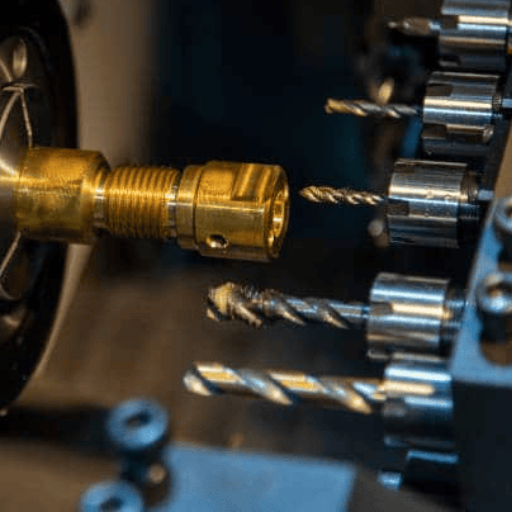
Live tooling is a breakthrough that stiffens the basis of Swiss screw machine and opens up a new area of precision manufacturing. As opposed to the traditional lathe operations where tools are not only stationary but also very limited in movement, live tooling gives a wider scope of rotary motion to the cutting tools thus allowing the same lathe to perform complex operations like drilling, milling, and tapping. This capability results in less secondary operations and thus time and overall workflow efficacy are transformed for the better.
One of the main benefits of live tooling is that it allows for very complicated part shapes to be machined accurately in one go. In fact, by intertwining turning and milling operations on the same machine, manufacturers, are able to confer higher precision and sameness regarding parts having intricate features. This also lessens the chance of misalignment, which is often caused when a part is moved from one machine to another, thus allowing the setting of tighter tolerances and better quality control.
Moreover, live tooling is a support to quicker production rates and a decrease in operational costs. The success of such a setup is attributed to the reduction of the number of machines and setups, which in turn results in less downtime and a faster machining process. This not only increases the quantity of production but also makes it possible for manufacturers to deliver on time with quality. These advantages have made a live tool a critical part of modern Swiss screw machining, which acts like a propellant for the whole precision manufacturing industry with its new technologies.
The role of guide bushings in Swiss machining processes is crucial since they are the main components that help improve the overall quality and accuracy of such operations. These parts provide the necessary support to the workpiece that the machine is doing and thus, are the ones that hold the components during the operation. By reducing the vibrations and misalignments that might occur during the operation of the machine, guide bushings make sure that the precision is consistent and repeatable which is very important for the production of parts with very tight tolerances. Their property of being able to keep the workpiece in place with great precision makes them to be utilized in various sectors such as aerospace, medical, and electronic manufacturing where accuracy is of utmost importance.
The ability of guide bushings to support the workpiece extremely close to the cutting tool is one of the major advantages of the use of guide bushings. This leads to the cutting forces not causing any deflection even when long or slender parts are being machined. This way, the manufacturers can not only get the best surface finishes but also keep the dimensions accurate throughout the productions of large runs. With guide bushes, it is possible to have complex shapes with high efficient reduction of demand for secondary operations.
Moreover, guide bushings augments the overall machining duration and productivity. The unimpaired feed rate becomes possible, thanks to their stabilizing effect, so therefore the improved quality, less cycle time and higher throughput. In that, they support work so very accurately, guide bushings indirectly contribute to the cost-effectiveness of Swiss machining which combines the very good accuracy with the efficient performance. The balance of precision and productivity is what characterizes their importance in modern manufacturing.
Spindles and collets are the very foundation of Swiss machining, and their absence would mean that the whole process would not be as efficient or as accurate. The spindle, which is in charge of workpiece rotation, is responsible for ensuring and maintaining the same speed and precision throughout the different machining processes. The spindle’s precision determines the quality of the final product because any unevenness in rotation will cause defects and variations from the design specs. The spindles that have high performance are the ones that can keep their stability even when rotating at the highest speed, so that the intricate and delicate work of Swiss machining can be done without any interruption.
On the other hand, collets are to a great extent responsible for the gripping and holding of the workpiece during the machining process. They produce an even and strong grip which subsequently minimizes the chances of slippage or misalignment. Such a strong grip is very important for the survival of tolerances and accuracies, more so for the production of small, complex components. Plus, the unique feature of collets to grip materials of different diameters adds to the versatility of Swiss machining, as it now can handle different workpieces with the same level of accuracy.
Spindles and collets are thus the two prime components of Swiss machining that have been responsible for the hallmark combination of precision and efficiency that characterizes this process. Their cooperation has resulted in the production of superior, intricate parts with negligible defects and little waste. Spindles and collets have become indispensable in the manufacturing sectors of the present times that require precision to the micron level, as they provide consistency and repeatability in performance.
A: For Stainless Steel Swiss Screw Machining, it is a specialty swiss-type CNC turning process that is very precisely and accurately suited to the production of the best-quality parts made of stainless steel. The use of sliding headstock along with the very close positioning of the workpiece to the cutting tool allows the deflection to be minimized and the machining of very small components that are intricate as well as the production of identical parts for high-volume production.
A: Along with a large number of materials, the swiss machining is capable of handling stainless steel very efficiently. The swiss capabilities, besides, stainless steel, also include machining of a lot of different materials such as brass, aluminum, titanium, and specialty alloys. Moreover, this entire spectrum of materials can be produced in an uninterrupted and high-volume manner while still keeping the screw machine quality and the precision of the swiss operations.
A: Swiss lathes are preferred in situations where very high precision and machining of small, complex geometries are necessary. While swiss CNC machines and swiss-type CNC provide precision and repeatability far beyond the standard lathe and like with the case of conventional turning, only for larger diameters; however, swiss machining still gives a better control for long, slender parts. They also minimize machine downtime by carrying out machinings in a single setup and can produce multiple parts with the same accuracy as the parts.
A: Definitely, yes. One of the main benefits with the swiss machining process is that it is often completed in one setup by using live tooling and multiple spindles. The reduction of machine downtime and secondary operations is one of the benefits of this approach. The tooling for the swiss and the tooling options allow turning tools, milling, drilling, and tapping operations to be done in one pass, thus increasing throughput for high-volume production.
A: Tooling for the swiss process includes special turning tools holders, milling cutters, drills, and taps that have been designed for use with the automatic and swiss-type CNC platforms. Tools for working on stainless steel are chosen based on their toughness and wear resistance; carbide and coated inserts are common. The tooling options are specifically designed to the machine components and process to make sure consistent screw machine quality is maintained and tooling changeovers are minimized.
A: The direct spindle of the Swiss machine is enclosed with a guide bushing that supports the workpiece in the cutting zone, and this approach effectively minimizes deflection and vibration. The usage of precise servo controls on Swiss CNC machines, in combination with high-quality tooling, has been the principal reason for the Swiss machining to be known for providing precision and repeatability necessary for intricate components of medical parts, watch components, and precision machine parts.
A: No, it is not. Swiss screw machining for stainless steel has the flexibility of scaling from prototype runs to high-volume manufacturing. The process allows single operation setups for prototypes and is then optimized for high-volume production when producing many swiss identical parts with consistent screw machine quality and reduced cycle times.
A: Swiss machining solutions are utilized in the sectors that value extreme precision and regular supply of many identical swiss parts, such as medical devices, aerospace, electronics, automotive, and the swiss watchmaker sector. These sectors are heavily dependent on swiss machining for small, intricate components and machine parts where the precision of swiss and screw machine quality are crucial.
A: The investment needed for the swiss lathe machines or swiss CNC machines is usually more than for the standard lathe but however, the swiss machining will generally reduce the total cost per part for complex, small-diameter components by eliminating secondary operations, extending tool life with proper tooling options, and guaranteeing high-volume production with consistent precision. For parts of the same size and simplicity as conventional turning, conventional turning may, however, remain the more economical option, but for intricate, long, or slender parts, Swiss machining provides superior efficiency and quality.