

Supportive, Professional, Client-Focused Service
From prototypes to full-scale production, we’ve got you covered.


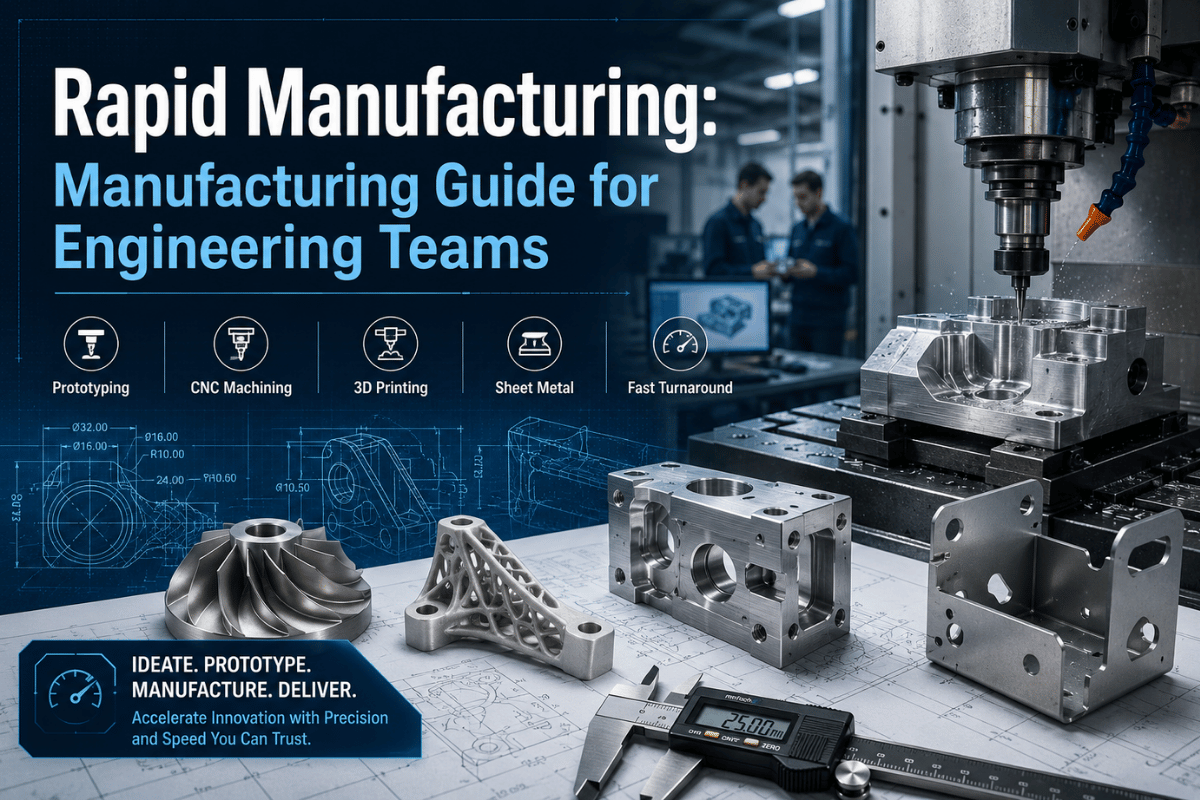
Need custom parts quickly – but without a commitment to a $50,000 production mold or a 12-week turn around – rapid manufacturing is the solution. Whether you require five aluminum brackets by Thursday or 500 plastic housings for your pilot program, contemporary rapid manufacturing methods deliver viable options, unavailable until as recently as a decade ago, to design and procurement departments.
However, the terminology frequently proves misleading. Several companies have appropriated the phrase “Rapid Manufacturing” as a brand name, ensuring that searches produce homepages rather than process descriptions. Many buyers also mistakenly associate rapid manufacturing with rapid prototyping, even though the terms are related yet not interchangeable. This guide clarifies the situation by providing a precise definition, an in-depth breakdown of the individual processes (CNC machining, 3D printing, injection molding, and sheet metal fabrication), a useful process selection matri×, real lead time data from production manufacturing companies, and an outlook on the industry trends leading up to 2025-2026.

Rapid manufacturing is the process of manufacturing parts that are used for final application by employing digital manufacturing technologies that reduce or eliminate conventional hard tooling; this dramatically lowers lead times to a mere 1 to 10 business days, a far cry from the many weeks or months required by traditional manufacturing processes. It covers both prototype quantities and low-to-mid production volumes and is therefore an ideal choice whenever speed, fle×ibility in design, or economies of small-scale production outweigh those of maximum per-unit output.
The mechanism is straightforward: an engineer transmits a CAD file, a quick online quoting system generates a quote with the appropriate lead time within minutes, and manufacturing commences without the necessity of an exclusive mold or die, or the extended lead times characteristic of many job shops. A rapid manufacturing company can move from digital file to shipped parts in a fraction of the time required by traditional job shops — without minimum order quantities, without months-long tooling cycles.
Quick Reference — Rapid Manufacturing at a Glance
| Typical lead time | 1–10 business days (varies by process) |
| Volume range | 1 to ~10,000 units per run |
| Tightest tolerance | ±0.005 mm achievable on CNC metal parts |
| Key processes | CNC machining · SLA/FDM/SLS · Rapid injection molding · Sheet metal |
| Hard tooling required? | No for CNC and additive; minimal rapid tooling for injection molding |
Where things can get complicated is in terminology. Because several established manufacturers identify themselves as “Rapid Manufacturing,” web searches can easily lead buyers to company home pages rather than helpful process details. For the purpose of this guide, “rapid manufacturing” refers to any type of process that offers speedy delivery, design flexibility, and efficient production of smaller volumes in exchange for tooling-related delays.
It is important to understand that “rapid manufacturing” refers to a broader category of services, not a single technique. A firm offering rapid manufacturing is likely to provide CNC machining, additive manufacturing, and in some cases rapid injection molding as part of its overall offerings; the choice depends on factors such as material, geometry, and order volume.
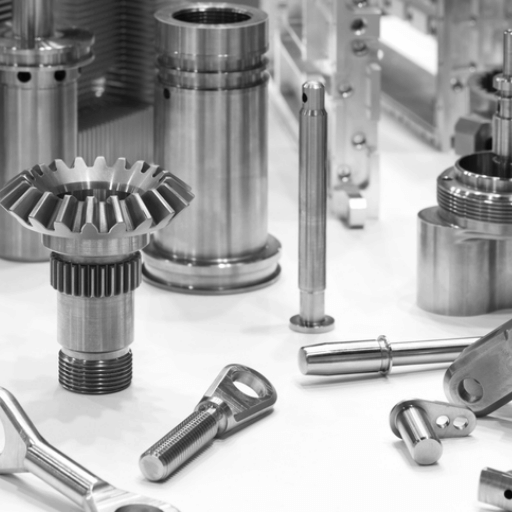
Confusion between the terms “rapid manufacturing” and “prototype manufacturing” often results in purchasing mistakes. When an engineer orders parts for functional end-use components under the term “rapid prototyping,” they may receive parts made with materials unsuitable for mass production. Likewise, when “rapid manufacturing” is ordered for design validation, one may incur expenses greater than warranted by the tolerances and specifications required. The distinction is driven by the purpose and specifications of the final product, not the manufacturing methodology.
| Dimension | Rapid Prototyping | Rapid Manufacturing |
|---|---|---|
| Primary purpose | Validate concept; test form, fit, function | Produce end-use parts for real-world deployment |
| Typical volume | 1–5 units | 5 to 10,000+ units |
| Material requirement | Functional simulant acceptable | Production-grade material required |
| Tolerance priority | Loose — visual and fit validation | Tight — full functional specification |
| Cost per unit | Higher (single-part economics) | Decreases as volume grows |
| Lead time | 1–3 business days | 1–10 business days |
| Tooling | None | None (CNC/additive); rapid tooling for injection molding |
Nope – though nowadays this distinction is intentionally becoming increasingly muddy. We’re now using the same CNC mills and 3D printers as rapid prototypers to produce end-use parts. The main thing separating them is intended application and level of down-stream visibility – will this part be customer facing, under the purview of a regulator, or have to withstand field conditions?
Then the part is “rapid manufacturing” and should be qualified to use a production-grade material certified to tighter tolerances and, maybe even ITAR / ISO traceability levels. Is the part a design feedback loop part solely used by engineers?
Then it’s technically “rapid prototyping.”
Some premier rapid prototyping services, such as Lecreator’s rapid prototyping services, are built with to both use cases in mind – enabling product teams to rapidlyprototype, then go straight to production-ready parts, without having to re-validate all of their suppliers at either end of the process, the result is significant shortening of development time.

About Six Rapid manufacturing processes provide more than 90 percent of all output – and none of them are all things to all engineers. That is, each is suited to different combinations of material, volume, and geometry complexity – and picking the wrong process is a quick way to get a big price tag or a very late project. Read on to learn where each of six processes shine, with the critical specifications engineers will need to be aware of before handing over the design.
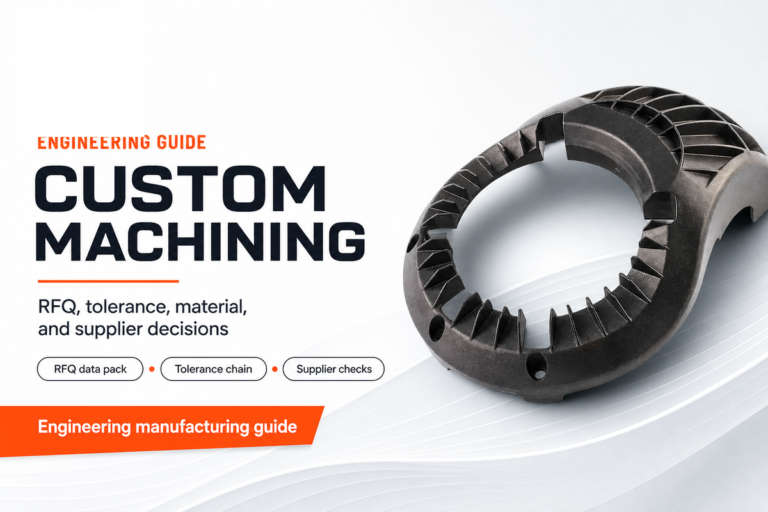
The workhorse for fast production of metal components is CNC machining, encompassing both CNC turning and CNC milling. An expert CNC machining service carves away material from solid block stock with a multi-axis computer controlled tool – this delivers parts with authentic, real-world mechanical properties and perfectly machined surfaces with very high dimensional tolerances – and no upfront tooling costs are required. This is the first port of call for any metal components being manufactured between one off and a few hundred items.
FDM processes layer extrusion of thermoplastic filament which makes it the most widely accessible and inexpensive of additive processes for initial phase manufacturing. It has the poorest tolerances but is cheapest for low volumes. Use this technology when concept proof outweighs accuracy.
SLA uses a UV laser to cure liquid photopolymer resin; it offers the most detailed resolution and the highest dimensional accuracy of the additive process families. It has become a standard for all medical device prototypes, optical housing molds, dental guides, or anything requiring pristine cosmetic surfaces or less than 0.1mm tolerances.
SLS lasers fuse nylon powder, to create parts without the need for support structures. This lets you achieve geometries that are impractical for SLA and CNC-strong, functional parts with nearly identical mechanical properties in every direction that are perfect as assembly hardware, jigs, low-volume production, or bridge inventory.
With rapid injection molding, aluminum or soft steel tool bodies and plates can be used instead of hardened steel production molds. This dramatically reduces tooling lead times from the conventional four to twelve weeks down to one to four weeks for aluminum mold tooling, or as little as twenty-four hours for 3D-printed soft tooling molds. Rapid injection molding produces real, injection-molded parts with the material properties, dimensional control, and surface finish typically associated with injection molding, at volumes where a production tool is cost prohibitive. Aluminum tools machine five to ten times faster than steel tool bodies.
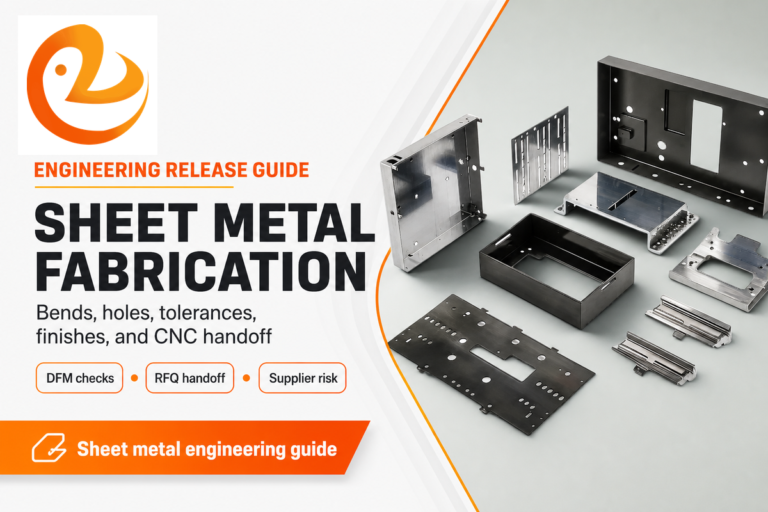
Sheet metal rapid manufacturing uses laser cutting, punching, and bending to create flat and formed metal sheet components in aluminum, mild steel, stainless steel, and copper. When the overall geometry is composed of flat sheets, and low-volume pricing is desired, it’s a go-to process for enclosures, mounts, frames, and housings.
Engineering Note — CNC Tolerance Standards (ISO 2768)
CNC machinists using parts with ISO 2768, “fine” grade tolerance achieve ± 0.05 mm tolerance on dimensions up to 30 mm (0.002 in), and ± 0.1 mm (0.004 in) on dimensions up to 120 mm. Dedicated fixturing and precision tooling allow experienced machinists to hold ±0.005 mm on critical mating features — a tight tolerance machining specification that exceeds most structural part requirements.
Smart Practice: You only want ±0.005 mm on the critical fits – in bearing bores, on locating pins, in functional sliding components, etc. Specify ±0.005 mm all around your part is often more costly to machine by up to 15-50%.
| Process | Metals | Plastics / Polymers |
|---|---|---|
| CNC Machining | Al 6061/7075, SS 303/316, Ti, Brass | PEEK, Nylon, Acrylic, Delrin, UHMWPE |
| FDM | — | PLA, ABS, PETG, ASA, TPU, Carbon nylon |
| SLA | — | Photopolymer resins (standard, engineering, castable, bio) |
| SLS | — | PA12 nylon, glass-filled nylon, TPU, PP |
| DMLS | SS 316L, Ti6Al4V, Inconel 625/718, AlSi10Mg, CoCr | — |
| Rapid IM | — | ABS, PP, PC, PE, Nylon, TPE and most standard thermoplastics |
| Sheet Metal | Al, Stainless Steel, Mild Steel, Copper, Brass | — |
![How to Choose the Right Rapid Manufacturing Process [Decision Framework]](https://le-creator.com/wp-content/uploads/2026/05/4-10.png)
Three decision drivers determine the best rapid manufacturing process for any part: Material type, Volume, Complexity. All other aspects of the manufacturing process-including cost, lead time, surface finish and finishing operations-are directly determined by these three factors. use the decision matrix below to quickly and efficiently narrow down to the best process option in under 30 seconds. then refine based on the factors below:
The Rapid Process Selection Matrix – Choose Material, Volume, Complexity In 30 Seconds
| Material × Volume | Low Complexity | Medium Complexity | High Complexity |
|---|---|---|---|
| Metal · 1–100 units | CNC / Sheet Metal | CNC Machining | CNC (5-axis) |
| Metal · 100–1,000 units | CNC batch | CNC batch | CNC or DMLS |
| Plastic · 1–50 units | FDM | FDM / SLA | SLA |
| Plastic · 50–1,000 units | FDM / SLS | SLS | SLS |
| Plastic · 1,000+ units | Rapid Injection Molding | Rapid Injection Molding | Rapid IM (validate with SLS first) |
These secondary factors shift the recommendation:
Check the DFM tips for your part file and review a CAD file preparation checklist before sending your files. Before it costs you more on re-work and more in lead time in revisions (the impact on total cost has been identified by a quality expert as as high as 60% in the concept and early design stages).
Rapid manufacturing happens through a standard digital tool chain. Typically, you can submit STEP or IGES file (preferable if submitting for CNC or injection molding), or a mesh file (STL or 3MF) if the process is additive. On the supplier’s end, they use CAM software (like Mastercam, Fusion 360, or Hypermill) to machine path to their machines for a subtractive part or use industrial slicer software for layer paths in the additive process.
Most of the “large” ODTs have automated RFQ tools that take an uploaded CAD file and can return pricing and lead times almost instantaneously without the human interaction involved previously. The impact on the engineer’s side of things is quite clear. Submit your STEP file whenever possible.
It’s the best format for capturing intent and helps prevent mistakes when the supplier processes your RFQ.

Lead time and cost are the first numbers engineers and procurement people are going to ask for. The data provided above is derived from established rapid manufacturing platforms using actual published data not the best-case numbers promised in a marketing pitch and not the over-specified values to guard against contingencies.
lead times below show the published standard ranges from on demand and rapid manufacturing production providers:
| Process | Expedited | Standard | Economy |
|---|---|---|---|
| CNC Machining | Same-day — 2 days | 3 days | 7–18 days |
| SLA / SLS / MJF | 1–2 days | 3 days | 5–7 days |
| DMLS (metal 3D printing) | 5 days | 5–10 days | 10+ days |
| Sheet Metal Fabrication | 3 days | 3–5 days | 7–10 days |
| Rapid Injection Molding | 3–7 days (small mold) | 7–15 days | 15–20 days |
| Conventional IM (with tooling) | — | 4–12 weeks | — |
nowhere is this contrast more dramatic than in injection molding – where standard hard steel tooling takes 4-12 weeks from order placement to the first shipped part to 1-4 weeks with rapid tooling. The 6-10 weeks gained shaving off the product calendar by nearly half represents the biggest return for rapid manufacturing of mid-volume plastic part.
Metal parts demand the fastest throughput currently available – and the 5-, 6-, or more axis machines mentioned in our high-speed CNC guide to CNC machining offer opportunities for even greater cycle time reduction on geometries that are intricate and difficult to work.
Cost structure by process:
Tip — On-Demand Manufacturing for Bridge Production
The space between prototype validation and high-volume tooling commitment – production tooling is months away, customer orders are incoming – is the highest-risk procurement decision point. We can reliably bridge that gap with on-demand manufacturing, using our CNC milling or SLS 3D printing capability. You’re still able to order 50-500 production spec parts in days, without commitment to expensive tooling, fulfill initial customer demand, and only tool for high volume when your design is finalized. What this means for you: reduced time to market and no sunk-cost pressure from committing tooling too early.

Rapid Manufacturing Isn’t Only for the Cutting Edge or the Small Player. In every industry that builds on engineered components – medical, automotive, aerospace – rapid manufacturing is the methodology used to translate a production intent into a production artifact – for prototypes to finished production parts, in low-volumes, tooling that cannot be amortized traditionally, and the like.
In Aerospace and Defense, the typical application of rapid manufacturing includes structurally critical brackets prototypes, flight instrumentation housings, ground support equipment, and ITAR (International Traffic in Arms Regulations) controlled components, including those requiring domestic supply chain origin. Aluminum and titanium dominate this market space (Al 7075-T6 and Ti Grade 5 are the most prevalent grades). This industry demands production-level mechanical properties and traceability across the entire supply chain. A typical example: an aerospace team needed 10 CNC-machined aluminum 7075-T6 structural brackets for a flight load test campaign — rapid CNC delivered parts in 3–5 days compared to the 6–10 weeks a traditional job shop would require. ISO 9001 and AS9100 certified suppliers (which include ITAR compliance and military certifications like ISO 9001 and DD 2345, where applicable) are required in Aerospace.
For the Medical Device sector, SLA and CNC Machining have become core to the process from implant prototypes, to surgical guide production, to housing for drug delivery systems to sterilizable assembly jigs. With SLA process accuracy (0.05mm), coupled with bio-compatible resins (ISO 10993 are common for many medical devices and even many applications), the SLA process is now commonly employed for surgical guides (patient specific), planning devices, and certain implant prototypes. Metal additive manufacturing such as DMLS in Ti6Al4V provides a pathway to producing complex geometries with a production-capable mechanical signature on titanium cranial plates and cobalt-chrome hip and knee implant geometries and similar part types – on a lead-time of as short as 5 days. Critical part certifications such as AS9100, and other medical related quality system standards such as ISO 9001 and medical QMS system, including as is becoming more common, the ISO 13485 standard.
Within the automotive industry, rapid manufacturing has found a strong use case for tooling and fixture creation, pre-production runs of interior components and body parts, development engine and transmission parts, and inspection tools. Motorsport teams of all disciplines, including Formula and enduring sports racing teams routinely use rapid CNC machining to turn over suspension components, gearbox components, and aerodynamic aids within 2 days, often in support of ongoing race events. It is very common to see pre-production runs of between 100 and 500 pieces in the form of interior trim plastic components being delivered by a rapid tooling program prior to a large investment in the $50,000-$200,000 production tool.
Whether you are building your first electronics product at a small hardware startup, or have already shipped devices at scale, rapid manufacturing has played a part in your product development process. This includes FDM parts for low-fidelity form factor studies; SLA for early-look aesthetic parts; precision CNC machined metal enclosures and heatsinks; and even custom injection molding through aluminum and rapid tools to quickly produce low-volume production batches of pre-launch products, or as part of your full product ramp. Many startups iterating on the core hardware will produce between 4 and 5 CNC generations within less than a 2 week cycle – compare that to an 8 week cycle traditionally – in the support of building what is likely going to become your shipped product. No minimum quantity requirement combined with an ever shrinking lead-time makes rapid manufacturing perfect for rapid iteration cycles.
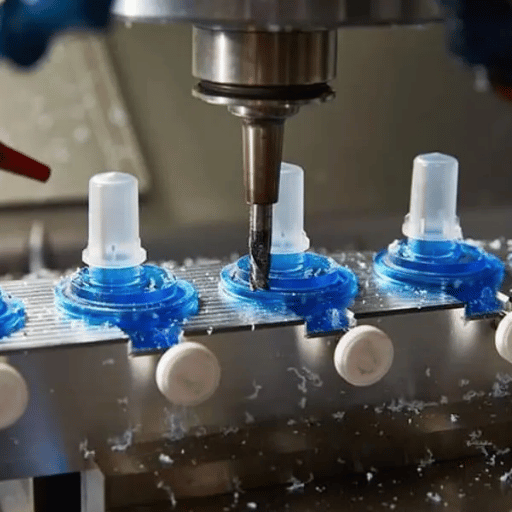
Rapid manufacturing excels at providing solutions to some key challenges but can present other issues if not applied properly. The following information represents a pragmatic technical look – not a sales pitch – into the capabilities of these processes.
Advantages
Limitations
Common Mistake: Selecting injection molding for under ~100 unit orders
Selecting injection-molded parts for 20-50, or even 2,000, units is the costliest mistake in rapid manufacturing. Using a steel injection mold for a 50-axis plate costs $10,000-$5,000 before the first part leaves the factory, which is $200-$5,000 in tooling alone. SLS or CNC for the same scenario offers better geometry accuracy and much lower cost. With the added benefit of unlimited re-design.
The other side of this mistake—FDM’ 2,000 unit manufacturing run-takes the same toll-cost hit. For the lowest-ever cost per part, do not use FDM printing where you could instead have used SLS or rapid injection molding. Use the selection matrix supplied in Z3#4 to calculate the crossing point for your part.
Common Mistake — Over-Tolerancing CNC Parts Across the Board
When applying 0.005 mm tolerances globally for CNC printing, rather than only to functional mating surfaces, cost tends to shoot up without ability to improve performance. Research in manufacturing quality and DFM shows that applying the tightest tolerance grade globally rather than only to critical features can increase CNC part cost by 15–50% compared to a properly graded tolerance scheme. Apply tight tolerances only where required — bearing seats, locating pins, and critical fit interfaces. Use standard grade (±0.1–0.2 mm) elsewhere. For a full breakdown, see our guide on CNC machining tolerances before finalizing your drawing.
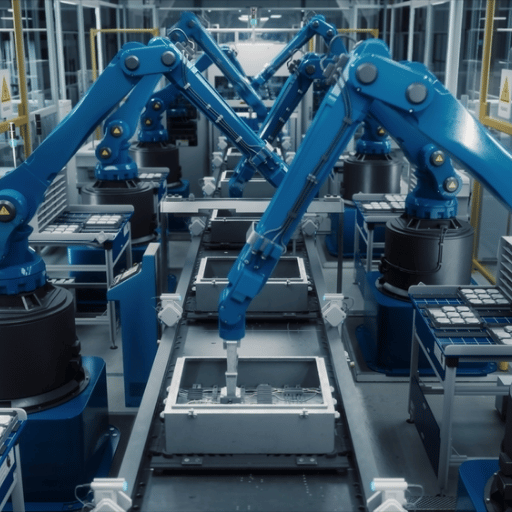
3 structural shifts are transforming what “rapid” means in manufacturing, and what engineering and purchasing teams should anticipate in the coming 12-24 months.
The global additive manufacturing revenues for 2025 was cca $23-31bn-according to independent analysis from companies in Grand View research and Research & Markets-are forecast to grow at a 20-24% compound annual rate through to 2030. North America makes up a third of these revenues. For rapid manufacturing decision makers: this growth means additive manufacturing process costs are shrinking, more certified material options available, and industrial-scale metal printing is being democratised, by far more contract manufacturers. Consequently, parts that needed CNC machining only 5 years ago, are more and more becoming available to build upon the additive process.
Major on-demand manufacturers (like Xometry and Protolabs) are already deploying AI in their quoting systems. They use machine learning and artificial intelligence (AI) tools to process uploaded CAD geometry and generate price quotes in real time, identifying issues like wall thickness failures and presenting price estimates in seconds. Early stage production for another wave of AI is getting underway, offering not just instantaneous quoting, but real time, AI-guided design-for-manufacturability (DFM) feedback at that initial quoting stage that makes actual, specific design changes that reduce cost.
In the longer run, this translates into faster design cycles, reduced late-stage DFM rework, and a fundamentally different way for engineering teams to approach their designs – focusing on manufacturability upstream, in concept generation. Engineers can make decisions up front with AI guidance at the stage that accounts for the highest percent of overall product cost (up to 60% during concept generation), the stage where traditionally manufacturing insight was least available.
Recent Supply Chain Strain Propelled Structural Changes Toward On-Demand Manufacturing The past few years’ supply chain pain point amplified a structural movement away from high inventory stocks toward distributed, on-demand manufacturing. Instead of stocking six months of parts, engineering and ops departments are now using digital inventory – files for parts on-demand, for use by pre-qualified rapid manufacturers who can fulfill within days. For an example of the trend, look no further than the U.S.
National Science Foundation; their future manufacturing program received $25.5 million for ongoing research-indicative of the expanding role for distributed digital manufacturing in the industrial world. The take: get at least one on-demand manufacturer fully qualified for each critical part type *before* you’re staring down a supply-chain break.
“The speed advantage of rapid manufacturing doesn’t diminish when you move from prototype to production — it compounds. Every week saved at the prototype stage translates to earlier market feedback and earlier revenue. The teams that treat rapid manufacturing as a strategic capability, not a one-off convenience, consistently get to market faster.”
When you’re preparing for a product launch, pilot run, or building your supply chain resilience, you should be proactively assessing which parts may benefit from rapid manufacturing processes and a trusted supplier should be qualified in advance. Begin with this guide’s Process Selection Matrix, and engage with Lecreator’s engineers for DFM consultation and same day quotes.
About This Article
Lecreator has extensively researched and developed the content provided here by its in-house engineering and technical team. Lecreator specializes in the manufacture of aluminum, stainless steel, and engineering plastic prototypes and low-to-mid-volume production parts via its advanced CNC machining and rapid prototyping services. It is a ISO 9001:2015-certified supplier with capabilities that meet the rigorous standards of aerospace, medical, automotive, and consumer electronics industries from its precision manufacturing facilities.