

Supportive, Professional, Client-Focused Service
From prototypes to full-scale production, we’ve got you covered.


One of the most commonly used materials for structural applications in the marine environment is marine grade stainless steel, and for good reason. The marine environment possesses aggressive elements of corrosion with its constant exposure of materials and structures to the corrosive elements. This is a post that explains, and at length, why marine grade stainless steel is the ultimate solution to these undesirable conditions. Exceptionally resistant of unfavorable conditions, this metal longevity enhancement is helped by further elaboration on the key areas of application. If you are looking for any affordable, effective and long lasting stainless steel for projects in humid and/or Salt water conditions, read on and find out why marine stainless steel should be your go-to option.
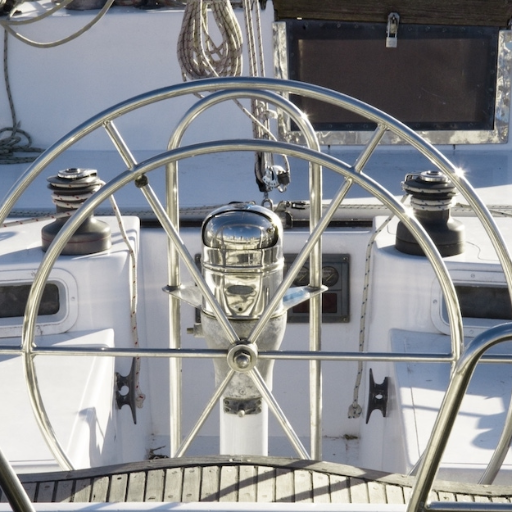
316 steel is considered to be marine stainless steel. This is because the materials are enriched with molybdenum which provides increased protection against pitting and corrosive effects from saline water and humidity. Unlike the other grades of stainless steels, marine stainless steel can endure and survive for many years and can be useful for fittings on boats, constructions built on the sea, or even beneath the water. A project involving exposure to harsh environmental conditions will durable and need little maintenance thanks to its sustainability.
Marine stainless steel is a category of stainless steel applied for the construction of structures that will be exposed to high salinity, moisture and harsh weather. Of all available marine grades, stainless steel 316 is the most popular because it has a larger amount of molybdenum as compared to 304 grade hence it offers better protection from pitting corrosion as well as crevice corrosion. It is therefore suitable for construction in ships and marine equipment, wharves, and constructions near the coastal regions. In addition, today, innovation confirms that it can guarantee not only in fabricating structures effective gains from corrosion, but also from damaged structures and beaten down structures thus making it very popular in extensive functional and decorative situations where salt water comes into contact with the structures.
Marine stainless steel outperforms other materials such as aluminum, carbon steel, and bronze in terms of corrosion resistance, durability, and maintenance.
The present table shows a detailed comparison of marine steel and other frequent materials for construction. Indeed, if one considers the marine environment that requires corrosion resistance with no need or little maintenance, it is undoubtably the marine stainless steel that fits this description.
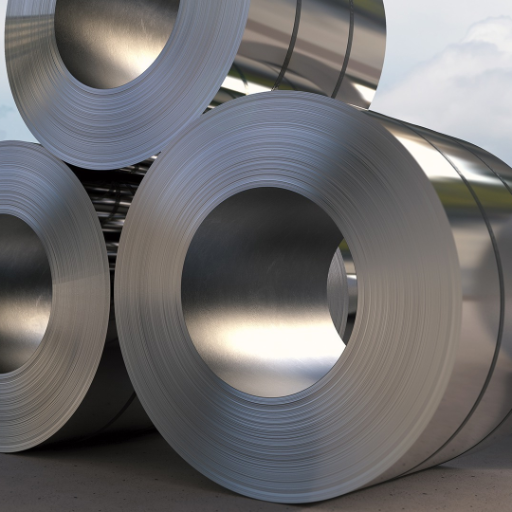
Marine stainless steel is so good for boats because of its corrosion resistance even in the presence of salt owing to the stainless steel. Likewise, it has very high durability and strength capable of withstanding all kinds of marine work activities. Furthermore, it has a few maintenance needs, does not stain easily, and remains shiny all along, thereby enhancing its functional as well as decorative aspects.
Marine stainless steel, for example 316 stainless steel, has been developed specifically to endure the harsh conditions encountered in the maritime industry. The ability to resist pitting and crevice corrosion in salt water and chloride containing media is greatly enhanced with the presence of molybdenum in its structure. New reports have shown that this particular steel has found great applicability in boat fittings, propeller shafts and deck hardware among other things owing to its durability and serviceability. Even in environments where there is moisture and saline conditions in smelters, the exposure allows it to last for long periods of time due to its passive corner bearing characteristics as well as its chromium-oxide layer that repairs itself.
316 Grade stainless steel has gained its popularity because of its remarkable durability and strength properties, and it is especially preferred for heavy or tough working conditions. Depending on the application, stability against high loads and pressures and the capacity to resist failure induced by wear are advantageous. Moreover, it does not lose its structure even at high temperature applications and does not get deformed easily that is why its wear life is prolonged. These properties make 316 Grade steel suitable for heavy, protective, industrial, marine stainless steel and for architectural purpose, where both strength and roughness matter.
Grade 316, known as marine stainless steel, is in high demand due to its ability to withstand high temperatures and stresses. The range of temperatures from the cryogenic end to about 1,500 degrees F. (815 °C) will not posta significant obstacle to the use of this material in different conditions. The content of molybdenum present in Grade 316 helps to lower the effects of such chemicals by reducing unwanted corrosion and scaling at high temperatures when in use.
Grade 316 materials are known for their resistance against deformation and preserved strength when mechanically challenged, and all this is due to the even formula and sturdy crystalline lattice. The tensile strength of this steel is low as 70 psi to up to 90 psi but not less nor more, and this promotes maximum load even in the materials such as these. The balance of classes being able to withstand temperature changes, on the one hand, impurities and addition of extra elements do add even more thermal expansion steel making thus heat and withstanding varying temperatures, steel causes the features of marine stainless steel and other marine structures such as automotive components as well as industrial structures to be of greater appreciation.
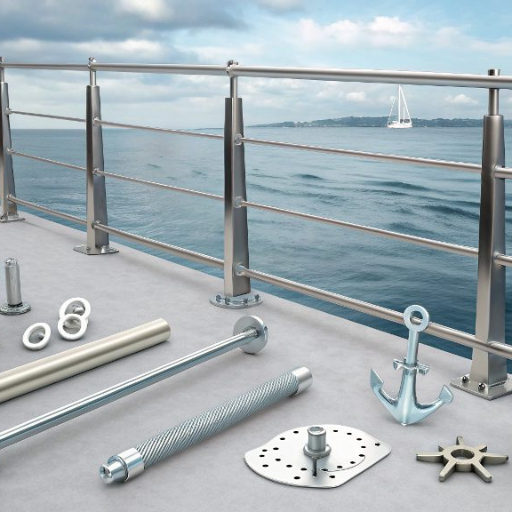
Boat owners use marine stainless steel since it does not get corroded by harsh sea waters. Many boat anchors, fittings as well as fasteners, propellers and railings are made from it with many years of service in the presence of salt and water. Moreover, because of its impressive strength, as well as a smooth surface, it is used extensively in supporting frames or fittings for ships and pleasure crafts.
Marine stainless steel in the shipbuilding industry is generally employed in constructions where strength and non-corrosivity are essential. These include:
These uses explains how stainless steel, as the material, is so important for preservation, presentability and utility of today’s naval structures.
The hardware and accessories used for the marine environment are engineered to withstand the harsh conditions in which they are used. Among them, cleats, hatches, hinges, and latches are included which are metalwork that resists rust and corrosion. They are indispensable for the operation of the boat, the safety of the passengers, and the crew. Recent developments involve the application of materials that are suitable for the marine stainless steel and high-quality grade aluminum, which have saltwater and UV rays lasting capabilities.
Marine grade stainless steel is a vital material needed in the operation of boats and close to coastal environments due to its contribution towards performance, longevity, and safety. Given its high resistance against rust, destruction, and even damaging sea conditions, it finds immeasurable value in the manufacture of boat fittings, rigging gear, railings, and chains. Its robustness justifies using it in situations with continuous exposure to sea salt and moisture.
In the case of coastal structures, marine stainless steel is frequently adopted in the development of seawalls, bridges, docks, and piers. The structures are subjected to continuous tide, wave, and harsh weather impacts, while premium quality stainless steel helps in maintaining the structures for a longer period and with less effort. Courtesy of improved design technology and metal science, the concept of incorporating maritime 316 stainless steel into construction windows is no longer a far-fetched one, allowing for maximum prevention against corrosion from the high chloride concentrations in the environment.
Additionally, the visual benefits of the material coupled with its recyclable nature increases ease of adherence to current green building requirements in all respects making it a safe and ethical call for the engineering practices of the 21st century in coastal and marine areas.

Because marine stainless steel is extremely strong and capable of withstanding various environmental influences, it is very promising in terms of long-run savings. This is in contrast to a multitude of materials that require considerable care and upkeep to keep them in good condition – little stakes increase the frequency of repair processes and/or replace the elements in question. This covers the outflow of funds at the start by the sharp decrease in the cost of preservation over the course of the period. Besides, it has an impressive wear resistance, even in an aggressive medium and does not need to be disposed of very soon, as it renders the structure or product usable for a much longer period. Being completely recyclable on the other hand, turns out to be an added advantage as it causes negligible waste disposal fees while addressing environmental concerns. What’s more, it has been shown in recent industry reports that marine stainless steel performs better than many alternatives in wet or salty environments, enabling more economic use of infrastructures which have longevity in mind. All of this depreciates, in turn, the inherent value of its cost and it turns out to be an easily accessible and cost favorable solution in a variety of applications.
Regular upkeep is another factor which is not required for marine stainless steel due to its high corrosion resistance, and hence very suitable for exposed areas. This feature means that there is no corrosion even in the presence of rain, sea water and contrary elements degradant. Consequently, there is less maintenance required in the form of repairs which facilitates diminished costs for a long duration. Moreover, the innate attributes of the material make it sturdy enough to withstand harsh environments without wearing out quickly, which translates to dependable service with very little maintenance. With all the mentioned benefits, salt water stainless steel has proved to be very useful in the sectors where tough and long lasting materials are needed.
Not enough does marine stainless steel appeal with its strength alone, it is also inherently sustainable. Yes, the global stainless steel consumption is curated in a way that the leads to its end-of-life scrap recycling being very high, 80-90%, in engineered stainless products. Consequently, this increases the recycled material content in the ultrahigh permeance alloy thus reducing raw material input therefore decreasing authorial exploitation of the environment associated with the creation processes.
In relation to this metals production carbon footprint, it is worth mentioning that stainless steel production in particular employs an appreciable portion of recyclable used stainless which helps lessen energy utilization and emission of greenhouse gases. Since marine stainless steel is durable and recyclable, it contributes significantly to sustainability as it helps achieve the zero waste goal among other green concepts. In this regard, the selection of such material is very advantageous in entering the closed-loop economy, where all costs and production levels are maintained without sacrificing the environment in any way.
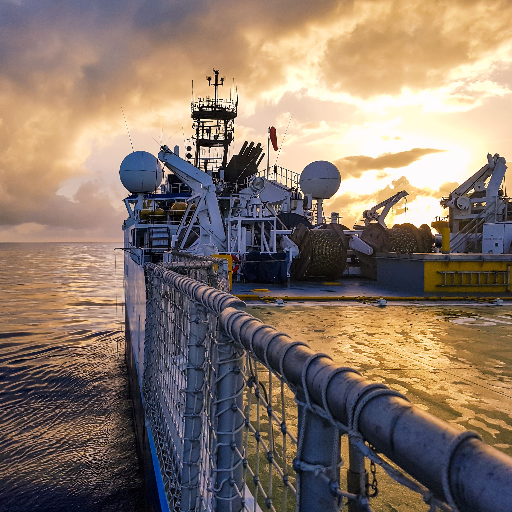
Regular care of the marine stainless steel prolongs its service life without compromising its beauty.
One may restore the beauty and function of marine stainless steel easily by undertaking the steps below. The most primal step I undertake is rinsing stainless which has been exposed to seawater with plain water to prevent any corrosion. For routine cleaning, mild detergent in warm water and a sponge or soft towel is used in order not to cause any abrasions and scratches. Occasionally, I use specially designed stainless steel cleansers or polishes in order to maintain the lustrous look and prevent the steel structure from the harsh marine environments. One need not also focus on how the hardware is looking and temporarily where it is fixed thinking that it may be located appropriately rather than any signs of deforming, functional in general or worn-out fragile and can be used. These ensure that the marine stainless steel possessed lasts longer in better conditions.
Marine stainless steel is engineered to resist oxidation and corrosion. Despite this, saltwater environments will be aggressive and highly damaging in case they are exposed for a prolonged period of time. Prompt detection of corrosion also plays a major role – you might just find your object with some strange spots or singularities on the surface. Conducting regular check-ins is important: tarnishing, some discoloration, pinholes over the surface can be found in areas with riskiest spots such as the ones with small openings and cracks accessing salt and water.
Corrosion can be controlled by employing a series of approaches: cleaning well, regular maintenance, and creating a conducive environment. For instance, make sure that saltwater drops inside stainless steel equipment are thoroughly washed with fresh water. This is due to the fact that residues are left behind after exposure to saltwater. One can use a non-abrasive cleaner and a specially formulated stainless steel polish to clean and protect the surfaces. Harsh marine environments are less likely to cause degradation if a substance or material is coated. Also, cathodic protection by means of sacrificial anodes disperses the stress to the hardware. With these in place, marine stainless steel in navigational aids can be used for a long period of time.
For Marine Grade Stainless Steel to be durable is dependent upon an understanding of how to handle and operate with the item:
Excellent guidelines should have an increased implementation of the first listed items, thereby giving marine stainless steel more longevity in the rough environment.
Marine Corrosion – A study on the corrosion resistance of Type 316 stainless steel in seawater, focusing on crevice and pitting corrosion.
Effect of Stainless Steel Composition on Atmospheric Corrosion Resistance at a Marine Site in Dubai – Research analyzing the atmospheric corrosion resistance of various stainless steel grades in marine environments.
Corrosion Resistance, Coating, and Magnetic Property Issues of Nonmagnetic Austenitic Stainless Steels for Ship Hulls – A detailed study on the corrosion resistance and stress corrosion cracking of Type 316 and Nitronic 50 stainless steels in marine applications.
Corrosion Resistance and Corrosion Behavior of High-Copper-Bearing Steel in Marine Environments – A study on the corrosion resistance of high-copper-bearing stainless steels in marine conditions.
Stainless steel alloys designed to be utilized in the aquatic conditions can allude to a marine stainless steel alloy. Such types of alloys are needed where the presence of sea water or chlorides, and sometimes even moisture is high. 316 stainless steel alloy compounds like 316/L, duplex materials and in some cases, titanium are included in marine stainless steel grades. Such alloys have corrosion-resistance, do not pit or suffer crevice corrosion which occurs with common stainless like 304, very quickly after installation near sea although other stainless steel such as 304 does not work in such conditions.
316L incorporates both nickel and molybdenum, the latter enhancing how the alloy fares against the corrosion due to chloride ions as well as localized corrosion. Reduced-carbon (L) type controls the formation of carbides while welding so that the corrosion resistant qualities of the steel are maintained after work. Chromium concentration facilitates the stainless steel into the passive state (an iron oxide layer) therefore protecting the base centrifugal metal; in some cases, nitrogen and silicon contents are made for strength and resistance purposes. However, some grades contain less molybdenum or some extra phosphorus that makes them more prone to corrosion.
Alloys that contain metals are resistant to corrosion but none of them are completely resistant to rust though commonly stainless fasteners are made of marine 316 or rather are fasteners made from the duplex stainless alloy which is more resistant to corrosion and therefore said to be made of the marine stainless steel. Under severe conditions like in salt water for a prolonged period or in very high chloride rich environments even these fasteners can suffer corrosion or galvation if there are gaps in the material where such chloride can be retained. Inspection on interval and appropriate design (do not design close fitting joints that create crevices) implementation will allow the service life to be extended.
Grade 304 stainless is a popular choice for its widespread utility but lags behind in chloride prone environments. This is why marine applications do not use it. Grade 316 austenitic (more so for 316L) is the best grade of steel for maritime uses as it contains metals such as, nickel and centimeters of molybdenum for enhancement. Duplex grades offer superior and great corrosion resistance while having higher strength. Consequently, these grades are used on structures requiring reduced wall thickness or high load carry capacity.
In a bid to lay down sound policies, it is recommended that all fasteners should be made of stainless steel in order to avoid galvanic corrosion and these should be machined complete with the appropriate alloy. Care should be taken to avoid crevices that may trap chloride ions. Sensitisation should be eliminated by proper welding as well. There should be regular maintenance which involves cleaning off any salt deposition. It is also advisable to undertake application of coatings or cathodic protection in the event of immersion especially in highly aggressive salt containing water. Use of appropriate grade of stainless steel (316L, 304, 430, duplex, super duplex or titanium where applicable) and ensuring drainage and ventilation toward the surface where the marine stainless steel lies will help reduce susceptibility and enhance performance over time.