

Supportive, Professional, Client-Focused Service
From prototypes to full-scale production, we’ve got you covered.


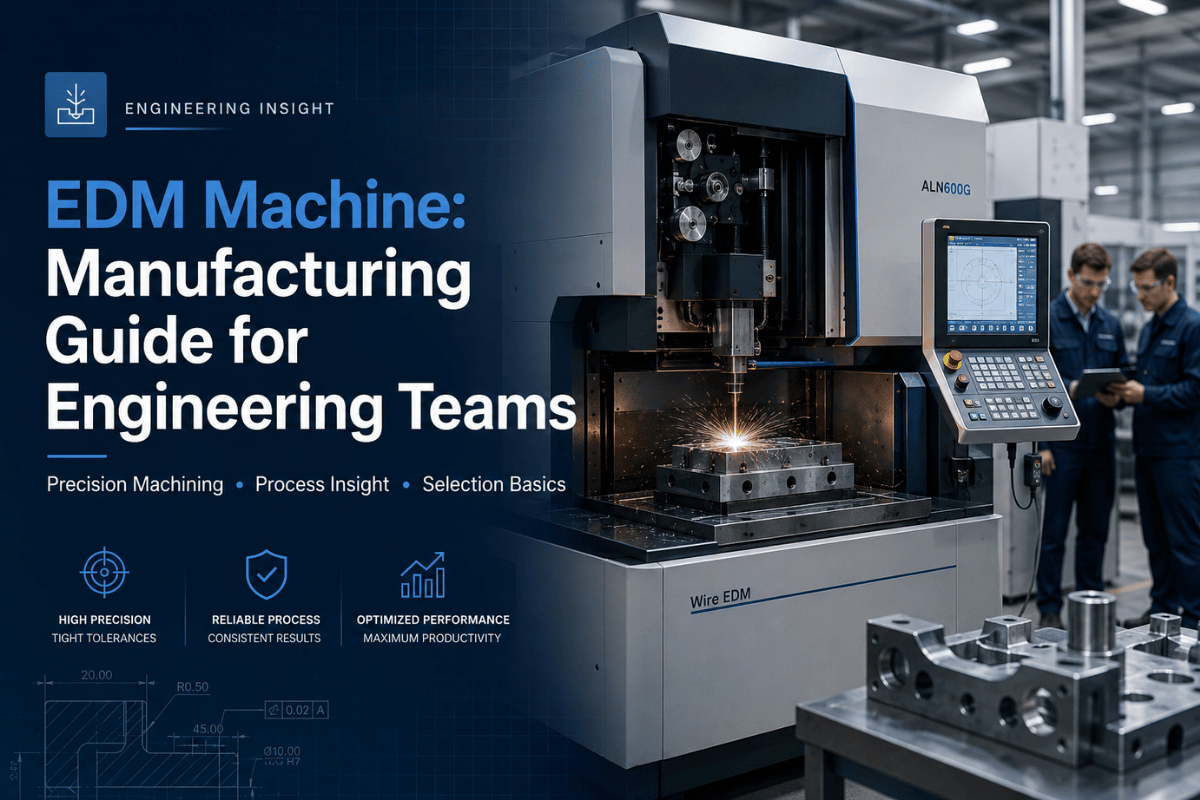
An EDM machine is a tool that removes metal through precise electrical sparks — never direct contact with the workpiece. Since electrical discharge machining arrived on production floors in the late 1950s, it has been the go-to process for features that conventional cutting tools cannot reach: hardened tool steel cavities, sub-millimeter titanium slots, and cooling holes bored at length-to-diameter ratios over 100:1. Whether you are an engineer specifying tolerances, a buyer comparing vendors, or a shop owner weighing outsourcing against equipment ownership, this guide covers the complete picture — how EDM works at the physics level, which of the three machine types fits your application, what materials and tolerances to expect, and when EDM costs less than CNC despite the higher hourly rate.
EDM AT A GLANCE
Quick Specs: EDM Machine
Process Type
Electrical Discharge Machining (non-contact spark erosion)
Compatible Materials
All electrically conductive metals (steel, titanium, carbide, Inconel)
Typical Tolerances
±0.0001″ to ±0.001″ (±0.0025–0.025 mm)
Surface Finish
Ra 0.1 µm (mirror) to Ra 3.2 µm (standard)
Machine Types
Wire EDM | Sinker (Ram) EDM | EDM Drilling
Key Advantage
Machines hardened materials without mechanical cutting force
Industries Served
Aerospace | Medical | Die/Mold | Defense | Electronics
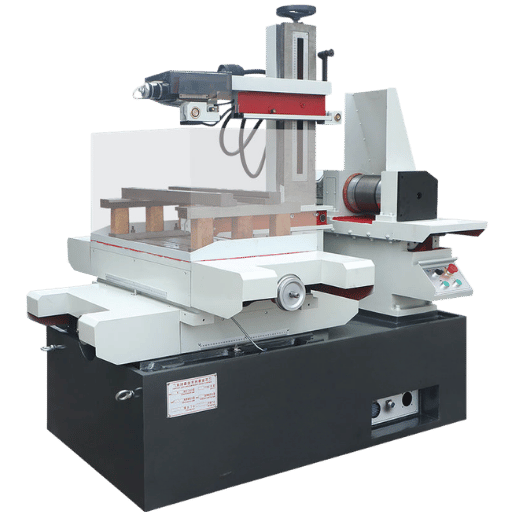
An EDM machine uses electrical discharges to remove electrically-conductive material. Instead of a physical cutting tool, the tool- andworkpice- erodes material by tiny, microscopic electrical sparks. The work piec, and the tool electrode, is maintained in dielectric fluid (such as deionized water for wire EDM, or hydrocarbon oil for sinker EDM) with a small space maintained in between.
When voltage (usually 20-300V direct current) applied across the gap exceeds a threshold level, an electrical discharge initiates. This plasma arc has a temperature of 8,000-12,000C at the discharge point, and vaporizes a tiny amount of work. The dielectric then immediately quenches the arc, clears away debris, and the process continues with a new spark, tens of thousands to hundreds of thousands of times per second.
The result of almost zero result from millions of these microevents is exact, dimensionally perfect material removal, using current wire EDM processes there are tolerances of 0.0001 with a finish of Ra 0.1 m with no secondary polishing needed.
One of the great myths: EDM heat is like welding or flame cutting. It isn’t. Each spark is of a few microseconds duration and heats the workzone by a few microns.
The large work isn’t rapidly heated, the heat build-up is managed entirely by the dielectric bath, which is why thin walled components emerge from the EDM unwarped, whereas normal milling would tend to deflect or distort them under the cutting forces.
Three electrode configurations define the three EDM machine types:
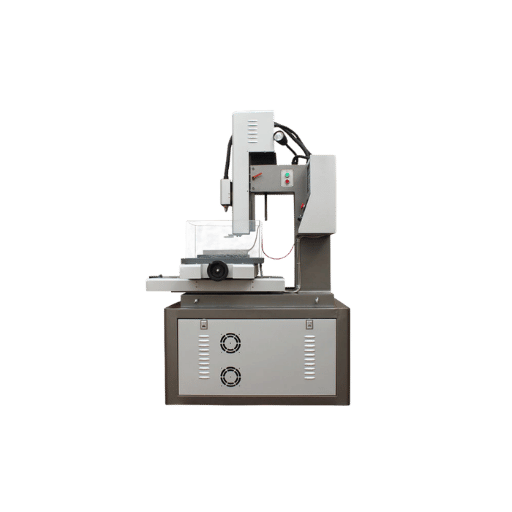
Another classification of the 3 types of EDM machine covers specific application niches. The most frequently made sourcing mistake in EDM projects is to select the wrong type.
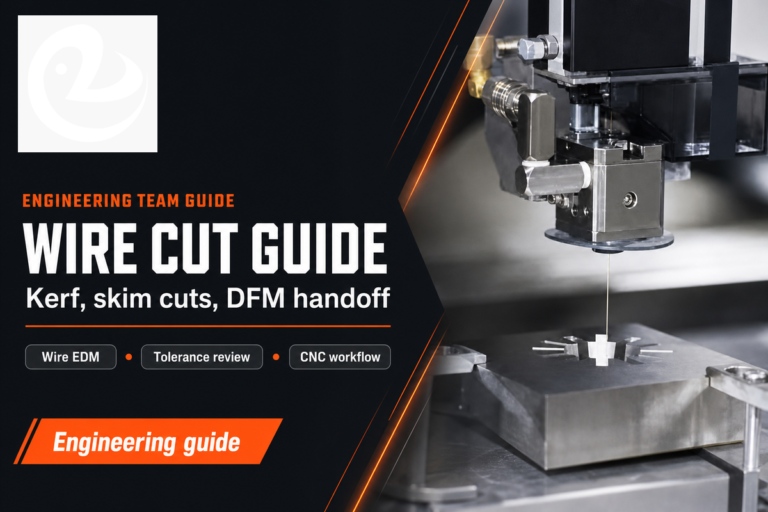
A continuous-feed, metallic electrode (brass or coated-brass wire, typically 0.004-0.012 (0.10-0.30 mm) diameter) will cut 2-D profile and taper features through the entire depth of a part. The wire feeds freely, following a CNC programmed path, through a bath of deionized water and must never physically contact the work. As the wire wears through the cut, whole spools of fresh wire are fed at the required rate to keep the electrode diameter constant. Unlike normal tools, here there is no wear to keep track of.
Wire EDM precision benchmarks:
Best for: stamping dies, accurate gear profiles, splines, extrusion dies, wire guides, ideal 2-D profile cuts in hardened steel or tungsten carbide.
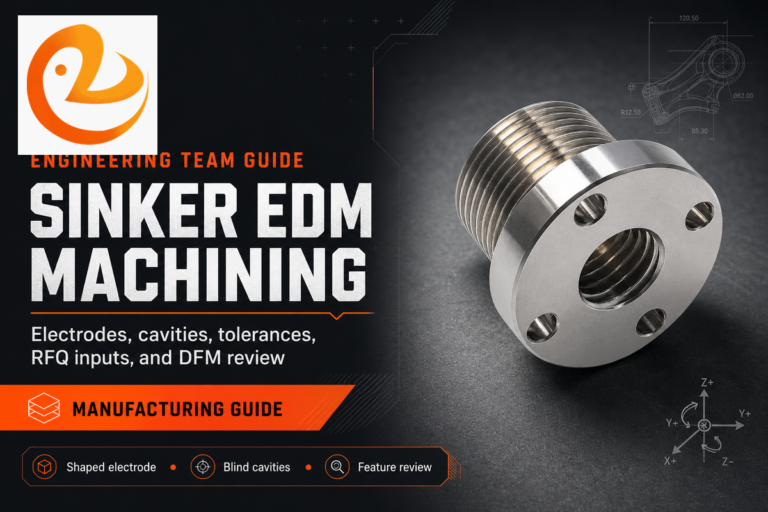
For complex 3D shapes that are impossible to produce on the lathe, sinker EDM uses a custom electrode, machined from graphite or copper. To make the electrode, the inverse of the cavity shape is machined into the electrode material, which then sinks (gets lowered) into the workpiece, both submerged in hydrocarbon dielectric oil. It then permanently erodes exactly the shape we want into the workpiece. Unlike wire EDM this process produces true 3-D cavities; under cuts, textures, complex draft angles. It is however expensive- every geometric feature of the cavity must be sharply machined on a separate electrode, costing upwards of $50-$300+ per electrode.
Best for: injection mold cavities, die-casting inserts, forging dies, deep countersinks and rib features on hardened tool steel.
This tube of quartz or graphite, between 0.010-0.120 in. diameter, can drill small, deep holes at length-to-diameter ratios of up to 300:1. High-pressure dielectric fluid is pumped through the center of the tube, flushing out eroded material and preventing arc blow-out: deep-hole drill bits are limited to low length-to-diameter ratios before fracture in hard materials.
Best for: turbine blade film cooling holes, oil feed passages in hardened shafts, injection nozzle orifices, start holes for wire EDM cutting.
In Practice
This aerospace manufacturer drilling cooling holes (0.020 diameter, 1.5 deep) in Turbine blades out of Inconel 718 after three chips snap-flutes on the first hole. The rotating tube drills each of the 300 holes in a single fixtured, with constant shape and no breakage. No conventional method could produce these features at this ratio in this type of material at feasible cost.
EDM Machine Type Comparison:
| Type | Best For | Tolerance | Surface Finish | Primary Cost Driver |
|---|---|---|---|---|
| Wire EDM | 2D profiles, tapers, through-cuts | ±0.0001″ | Ra 0.1–3.2 µm | Part thickness, skim passes |
| Sinker EDM | 3D cavities, mold inserts, dies | ±0.0002″–0.0005″ | Ra 0.4–3.2 µm | Electrode machining time + EDM runtime |
| EDM Drilling | Deep small holes, high L/D | ±0.001″ | Ra 1.6–3.2 µm | L/D ratio, hole count, material |

Unlike all other EDM processes, this one requires a metal workpiece- it must be electrically conductive. If electricity can pass through it, regardless of strength, toughness or hardness, EDM can machine it- making it by far the most flexible process of the ones discussed here.
Compatible materials:
| Material | EDM Suitability | Notes |
|---|---|---|
| Hardened tool steel (D2, H13, M2) | Excellent | EDM’s most common application material — any hardness |
| Tungsten carbide | Excellent | Extreme hardness presents no barrier; slower cutting speed |
| Titanium alloys (Ti-6Al-4V) | Excellent | Cuts without work hardening — major advantage over CNC |
| Inconel 718, Hastelloy, Waspaloy | Excellent | Superalloys that destroy conventional tooling; EDM is unaffected by alloy strength |
| Copper, brass, aluminum | Excellent | High conductivity enables fast, stable arcing and clean burr-free edges |
| Stainless steel, spring steel | Good | Standard EDM application; no special considerations |
| Plastics, rubber | Not compatible | Non-conductive; no arc formation possible |
| Standard ceramics, glass | Not compatible | Non-conductive; exception: some conductive-binder ceramic composites |
| CFRP / GFRP composites | Not compatible | Fiber-reinforced polymers lack consistent conductivity for stable arcing |
Common Mistake
Design teams may request EDM of components built from ceramics and then find out when quoting that the ceramics are non-conductive and won’t be EDM machined. On tooling programs this can lead to significant rework expense for the $5,000-$20,000. Confirm material conductivity before planning EDM features into any ceramic component.
For EDM machining of aluminum, especially in terms of finding the alloy and also to suit the EDM parameters, refer to our EDM machining of aluminum guide.
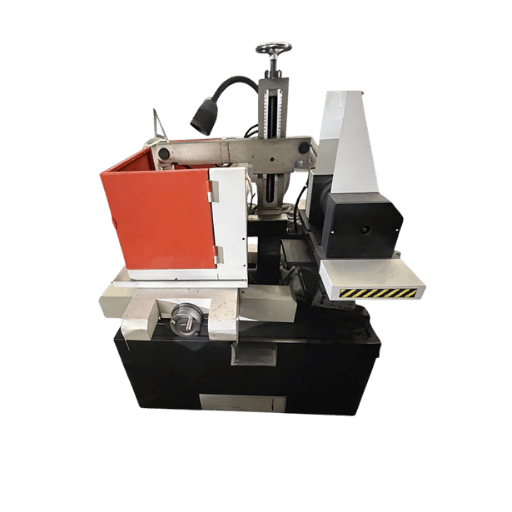
If so, that’s not the case. For some materials, such as very hard ones like nickel alloys, with complex profile will cost you a significant amount of machining time if you choose a traditional cutting method, then EDM is probably the most appropriate choice.
Wire EDM was initially adopted on a broad scale in tool-and-die shops in the 1960s. The markets have evolved substantially since that time, and today five industries are responsible for most of the EDM demand:
1. Aerospace
Examples include: A turbo-blade film cooling hole (EDM drilling through Inconel 718 at 0.020-0.040 diameter), a fuel nozzle orifice, a structural titanium bracket with sharply defined internal slot structure, or honeycomb core features. Both Inconel and titanium alloys are aerospace industry standard materials, and both represent the best use cases for the EDM process. Part cost can be sufficiently high as to make the relatively slower cycle time of EDM process, economically attractive because of the reduced part breakage, rework and costly stress relief steps.
If you’re referring to the CNC machining of aerospace aluminum parts, you can find information in our guide to aerospace CNC machining.
2. Medical Devices
Surgical instrument parts, implant tooling, micro features on titanium bone anchors and orthopedic implants, endoscope component slots. In surgical instrumentation burr-free edges are not simply aesthetic – sharp edge artifacts entrap biological material and add to sterilization challenges. Wire EDMed non contact process is one of only a handful of machining operations that produces burr-free edges without secondary tooling.
See our in-depth resource on medical device CNC machining for broader context on process selection in regulated manufacturing environments.
3. Die & Mold
Injection mold cavities (sinker EDM for 3 D cavity geometry) such as die-casting inserts, forging dies, stamping dies, progressive die components etc. SinkerEDM machines cavity details in hardened P20 or H13 tool steels which are otherwise unrippable by milling cutters- deep rib features, side-wall radii below 0.5 mm, textured cavity surfaces. Wire EDMcuts die-cutting profile in the hardened condition directly and skips the CNC soften heat-treat rework distortion round.
4. Electronics
Precision connector contacts, PCB test fixture slots, leadframe tooling, and micro-mold inserts for electrical connector housings. Feature sizes below 0.5 mm — slots, through-holes, chamfers — are routine in wire EDM.
Conductive electronics materials—copper, brass—are very easy and stable to EDM Machine due to high electrical conductedivies
5. Defense
Firearm rifle barrel chambers and bolt face geometry. Armor-piercing projectile tooling. Precision guidance system component features.
Low volume high precision cost insensitive programs EDM’s natural environment. Defense components routinely specify tolerances and surface finishes that sit in wire EDM’s strength zone.
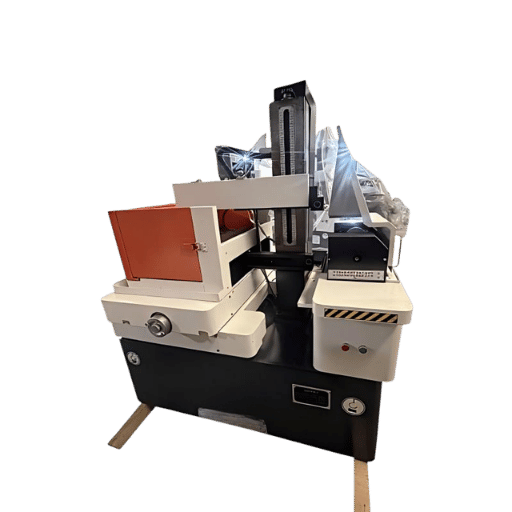
Material is removed mechanically: thermal removal occurs by direct contact of rotating tools – mills, drills, turning inserts. Coolant aids chip removal, not cutting action. Hardness has one direct mechanical consequence: tool wear rate and thus feeds & speeds achievable. Electrical removal introduces no direct contact, no tool in contact with work. Tool wear isn’t an issue. No burr formation occurs. Geometry can be achieved that a rotating tool can never reach due to 5-axis translations. Costly tradeoff: EDM delivers relatively slow bulk stock removal compared to CNC for large functional mold & die modifications, and when producing truly complex freeform geometry the processes are mutually exclusive. Not competitors; complementary.
For a technical side-by-side comparison of EDM and common CNC machining processes, visit our process selection guide. The decision matrix below summarizes key decision points.
The 7-Scenario EDM Decision Matrix
| # | If Your Part Has… | Choose | Because |
|---|---|---|---|
| 1 | Material hardness >HRC 45 (hardened tool steel, carbide, superalloy) | EDM | CNC tool wear becomes prohibitive and unpredictable; EDM is hardness-independent |
| 2 | Sharp internal corners (radius <0.5 mm) or deep narrow slots | EDM | Wire radius defines the corner capability; milling requires tool-clearance radius |
| 3 | Thin walls or fragile features that deflect under cutting force | EDM | Zero mechanical force → zero deflection, no spring-back, no fixture over-clamping |
| 4 | Small deep holes (diameter <3 mm, L/D ratio >10:1) | EDM Drilling | Conventional drill bits fracture; tube electrode with internal flush removes chip instability |
| 5 | High-precision 3D cavity requiring ±0.0002″ positional tolerance | Sinker EDM | Graphite electrode reproducibility and spark gap compensation exceed milling tool-tip stability |
| 6 | Prototype features cut directly in pre-hardened tool steel | EDM | Cuts in the hardened state; CNC requires machine soft → harden → rework post-distortion |
| 7 | Zero-burr requirement (medical, aerospace, fuel system, clean-room assembly) | EDM | Non-contact spark erosion produces no plastic deformation at edges — no burr formation |
When CNC wins: high-volume production of soft-to-medium hardness parts; complex true 3D freeform surfaces (5-axis milling); large bulk material removal; non-conductive materials. For high-speed CNC machining of aluminum, see our resource on high-speed CNC machining.
In Practice
A mold shop is given a hardened P20 steel insert for a mold cavity with 0.030 corner radius and 10 draft. The cavity is 4×6 with a 55 mm thickness. The shop spec’s 3 carbide end mills and 1 makeshift electrode, which all fracture. 4 hours’ machine time with a sinker EDM using a flat graphite electrode produces the full cavity with Ra 0.8 m finish ready for polishing up to SPI-A3 finish for manufacture. Total cost including electrode prep cost roughly equal to the 3 broken end mills.

EDM achieves the tightest true 3D tolerances in production work of any metalworking process: tighter than most CNC machining centers running under standard production conditions. Two independent verified data points from different sources establish the upper bound for tolerances achievable in production on modern equipment:
Surface finish is a function of number of skim passes, each removing recast layer material and improving Ra. Cycle time is cost factor.
| Cut Type | Surface Finish (Ra) | Dimensional Tolerance | Skim Passes | Cycle Time Impact |
|---|---|---|---|---|
| Roughing (1st cut) | Ra 3.2–6.3 µm | ±0.002″ | 0 | Baseline |
| Standard finish | Ra 1.6 µm | ±0.0005″ | 1 | +30–50% |
| Fine finish | Ra 0.4–0.8 µm | ±0.0002″ | 2–3 | +80–120% |
| Mirror / ultra-fine | Ra 0.1 µm | ±0.0001″ | 4+ | +150–200% |
📐 Engineering Note — Lecreator Engineering Team
Always specify EDM tolerances by feature function, don’t just expect a blanket set on drawing to be understood by the supply chain. When running large sinker EDM cavity tooling with a new graphite electrode, positional tolerance typically obtained is around 0.0002; usefully worn electrodes acceptably drift toward 0.0005. Fine surface finish below Ra 0.4 m can usually only be obtained by 3 or more quick skim passes, adding 30-50% to cost quoted cycle time – this detail can be flagged at RFQ time.
Call out tolerances on drawings to AMSE B4.1 (preferred tolerance grades for cylindrical features) and ISO 2768 (general linear and angular tolerances) before handing off to an EDM supplier. Use established national standards to reach an agreed precision class.
An interesting experiment: “Our assumption was too high quality” turns out to be exactly wrong. Our initial search for a real world maximum tolerance figure for EDM was 0.001; 3 independent sources all confirm 0.0001 as realizable on standard production equipment.
Related reading: surface roughness standards for machined parts and our guide to CNC machining tolerances.

EDM cost is divided into two—the cost of per part outsourcing (sending the work to a job shop) and the cost to own the machine (bring EDM in-house):
In general individual wire edm machinshops, range from 35-45 an hour for machining time, to the shop’s usual programming/ fixturing charge. Commercial edm machining services, with ISO 9001 quality systems, CMM inspection, documented traceability run 60-120 an hour. Operator labor adds an additional 50-100 an hour, depending on region/ experienced workers.
Additional cost factors:
For EDM machining services from Lecreator, you can get an EDM machining quote directly from our engineering team.
Standard wire EDM from largest brand (Fanuc RoboCut, Sodick, Makino) costs $80,000-$144,000 new. Second hand from 2010-2018 vintages begin at $14,500-$55,000, with the capability to fulfill most tolerances required in production; add $5,000-$15,000 for installation, chiller and de-ionized water system, and operator training. Yearly consumables – wire ($0.01-$0.10/ft depending on brass vs. coating), dielectric resin, guides and filters (average, when applying 1500+ hours per year and no reconditioning) – begin at $8,000-$15,000/year.
EMD i Sinker området spenner fra $20,000 for brukte inngangs maskiner til $200,000+ for store pakke presisjons generatorene fra Charmilles eller Sodick.
A practical threshold. When an operation spends, on a reasonable average, more than $40,000/year on wire EDM outsourcing, the work is steady, not sporadic, machine ownership generally amortizes within 18-24 months. For levels of annual outsourcing below that number, it conserves capital and sidesteps the operator training curve.
Buy vs. Outsource — Example
A contract manufacturer (spending $45,000/year to outsource wire EDM) evaluating the use of a rebuilt Sodick at $52,000(s) would find the all-in anual operating cost would be around $26,000-$30,000, when including brass wire (~ 8$/lb, roughly 2800 lbs/year assuming a steady medium volume), replacement of DI water resin, and .25 FTE of operator time. For $45,000 to outsource the process, the payback periods are around 20-24 months- if EDM volumes as expected remained comparatively steady across the years.
Skip the capital investment
Get an Instant EDM Machining Quote from Lecreator
Wire EDM, Sink er EDM and precision CNC-ISO, quick leadtimes, engineering support provided.
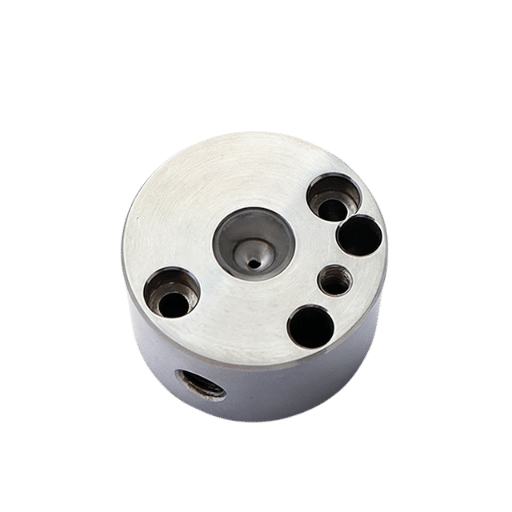
The worldwide EDM machine market was valued at around US$2.22 billion in 2025 growing at a CAGR of 5.59%—reaching an estimated US$2.91 billion in 2030 (Mordor Intelligence). Study on another segment of CNC EDM from Market & research + Markets estimates a CAGR of 8.1% till 2031, implying a faster growth for the numerically controlled segment vis-à-vis the older conventional EDM machines. Different research firms employ different methodologies for market size estimation but the trend is similar.
Four technology shifts are reshaping EDM capacity through 2030:
1. AI-Adaptive Spark Control
Today’s advanced EDM generators analyze the performance of each discharge—including the efficient removal of work material versus “nuisance” sparks—at several million cycles per second. Fanuc’s gap-voltage-independent control technology adjusts feedrate in real time without intervention. When the wire inevitably breaks (production is that efficient), newer systems auto-retract and auto-reload. Practical outcome: invariant part quality, lower wire consumption, less machine-attended hours per part.
2. Lights-Out Automation
Robotics-driven part-handling cells loading multiple EDM machines in parallel are on the upswing in high-volume die/MED-producing environments. One Methods Machine customer has been running one robot loading 12 wire EDM machines across a 60′ floor rail since 2009 with almost zero handholding. Automated wire re-thread makes overnight unmanned production feasible for most part geometries.
3. Micro-EDM for Miniaturization
Diminutive feature size—less than 0.1 mm—driven by medical device miniaturization regulations is forcing feature-to-feature accuracy to a small fraction of conventional tolerances. Enabling micro-EDM solutions now handle wire diameters below 0.020 mm to produce features that previously could only be laser- or chemically-etched.
4. Hybrid Additive + EDM Workflows
Metal additive manufacturing (laser powder bed fusion, directed energy deposition) produces nearly finished shapes with complex internal details. EDM then machine out external precision features to drawing tolerance—combining the geometry freedom of additive with the accuracy of EDM. This hybrid methodology is gaining popularity in aerospace and medical device tooling.
Major growth potentials through 2030: medical miniaturization—more capable miniaturized parts, pace-of-invention progressing at least until the global regulatory uniformity evolves—electric vehicle batteries—coinciding with a North American reshoring trend in tool-and-die manufacturing.
Standard wire EDM holds ±0.0005″ (±0.0127 mm) routinely on production equipment. High-precision setups reach ±0.0001″ (2.5 µm) — confirmed by three independent published sources (Jiga.io, Xometry, Fathom Manufacturing, all 2024–2026 data). Sinker EDM typically achieves ±0.0002″–0.0005″ using fresh graphite electrodes with spark gap compensation.
Surface finish from first roughing pass starting Ra 3.2 m range down to Ra 0.1 m employing 4th or greater skim passes with wire EDM—no additional polishing stage.
The older assumption that EDM is limited to ±0.001″ is outdated by roughly a decade. When specifying EDM tolerances on engineering drawings, reference ASME B4.1 or ISO 2768 and distinguish between first-cut and skim-finish conditions in the callout.
Sources & References
About This Guide
Is written and reviewed by the Lecreator Engineering Team. Lecreator offers precision CNC machining services including EDM, multi-axis milling, and turning for aerospace, medical device, and industrial customers. Our team works directly with EDM machined part drawings on a daily basis.
Disclosure: technical datasheets referenced in this article are based on independently published industry references provided as inline sources. All tolerances and surface quality data are based on readily available published benchmarks from machine builders and credible third-party guides current to 2024 -2026. This disclosure does not constitute an official engineering standard. Consult your machine builder’s published datasheet before making final production engineering determinations.