

Supportive, Professional, Client-Focused Service
From prototypes to full-scale production, we’ve got you covered.



Carbon Fiber Applications Across Industries: Properties, Uses, and Machining Methods
Carbon fiber (also written as carbon fibre in international and British usage) is a lightweight structural material made from thin strands of carbon atoms, each 5–10 micrometers in diameter, bonded in a crystalline alignment that delivers high strength and stiffness. When embedded in an epoxy or polymer matrix to form carbon fiber reinforced polymer (CFRP), the resulting composite outperforms steel at a fraction of the weight.
From the wings of a Boeing 787 to the fork of a custom road bike carbon fiber applications now span almost every engineering sector. This guide covers where carbon fiber is used, why engineers choose it, how parts are fabricated and where alternative materials are preferable – with genuine data not advertising hype.
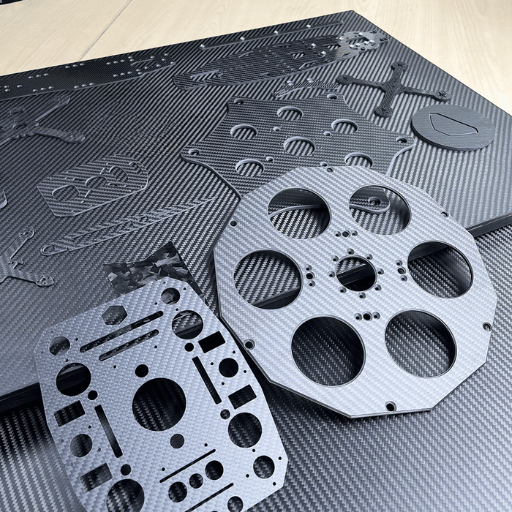
For teams that require finished parts, carbon fiber CNC machining at Le-creator converts raw cured laminates into tight-tolerance components ready for assembly.
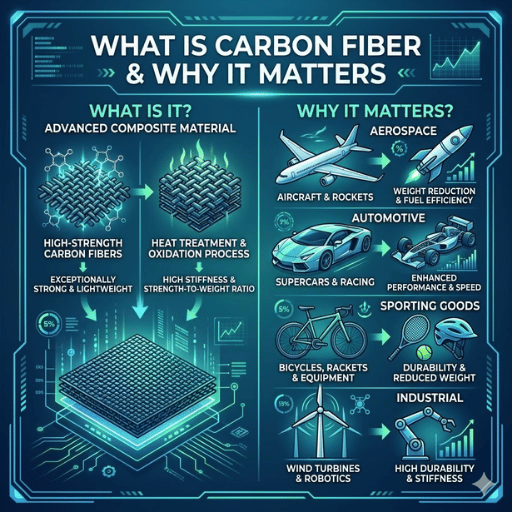
Known as carbon in most engineering shorthand, carbon fiber consists of strands of carbon atoms aligned along the fibre axis. That crystal alignment gives the material its defining mechanical properties: high tensile strength, high stiffness (modulus), and a high strength-to-weight ratio — five times stronger than steel on a per-kilogram basis — yet the material weighs less than a quarter as much.
Two main precursor types dominate production:
Modern carbon fibre traces back through two separate threads. Thomas Edison carbonized bamboo filaments for incandescent lamp filaments in 1879 — a functional use of high carbon content material, though not a structural composite. The modern era began in 1958 when Roger Bacon, working at Union Carbide, produced the first high-performance carbon fibres by carbonizing rayon at extreme temperatures. Commercial aerospace adoption of carbon fibre picked up through the 1970s as carbonization and surface treatment processes matured.
In practice, carbon fibre is always used in a composite material system — the fibre tow is combined with a polymer matrix (typically epoxy) and cured under heat and pressure. This carbon fiber reinforced composite (CFRP) is what engineers specify, not bare fiber strands. Its matrix transfers load between fibres, provides corrosion resistance and high chemical resistance, and defines the thermal ceiling of the part.
Physical properties and testing standards: tensile properties of carbon fibre are measured per ASTM D4018 (standard test methods for carbon fibre tows) and ISO 10618:2004 (carbon fibre — determination of tensile properties of impregnated yarn). These standards define how modulus of carbon fiber and breaking strength are reported commercially.
| Property | Carbon Fiber (CFRP) | Steel (AISI 1010) | Aluminum 6061-T6 | E-Glass Fiberglass |
|---|---|---|---|---|
| Density | 1.55 g/cm³ | 7.9 g/cm³ | 2.7 g/cm³ | 2.54 g/cm³ |
| Tensile Strength | 1.4–3.0 GPa | 0.4–0.55 GPa | 0.31 GPa | 1.5–3.5 GPa |
| Young’s Modulus | 150–250 GPa | ~200 GPa | ~69 GPa | ~72 GPa |
| Specific Strength | ~5× steel | Baseline | ~1.5× steel | ~2× steel |
| Low Thermal Expansion | Yes (near-zero axial) | Moderate | Moderate | Moderate |
All of these mechanical properties explain the benefits of carbon fiber across many applications — but carbon fiber also carries significant trade-offs. Cost, brittle failure behavior, and recycling difficulty all limit where CFRP makes engineering sense.
No part of the aircraft industry has pushed lightweight carbon fibre composite technology harder than commercial aerospace. Structurally, the case is straightforward: every kg of weight taken away from an aircraft has an impact on fuel consumption throughout the service life of that aircraft. When scaled, these numbers are conclusive.
Boeing 787 Dreamliner — the aircraft is 50% composite by weight consisting of CFRP primary fuselage barrel sections and wings. According to Boeing, the composite structure yields a 20% better fuel burn than comparable size aircraft of the previous generation and the design consists of 40,000–50,000 fewer fasteners than an equivalent Al structure. Fewer fasteners mean fewer fatigue initiation points and lower scheduled maintenance costs over the 30 year lifespan of the aircraft.
Airbus A350 XWB — 53% CFRP by structural weight. Wing covers alone measure approximately 32 meters long by 6 meters wide, making them among the largest single-piece carbon fibre reinforced polymer structures in commercial production.
Military platforms — the F-35 Lightning II uses about 35% composite by airframe weight. High-heat zones around the engine use bismaleimide (BMI) resin systems rather than standard epoxy, pushing the thermal ceiling beyond 200°C. Aerospace application of carbon fibre in fighter aircraft is largely dictated by reduction in radar cross-section as well as weight.
NASA research — NASA’s Superlightweight aerospace Composites (SAC) initiative has estimated that additional 25% mass savings could be achieved using CNT-reinforced composites compared to typical CFRP architectures, though manufacturing scale-up remains a barrier.
SpaceX Starship case study — SpaceX publicly chose stainless steel over carbon fibre reinforced polymers for Starship after initially considering CF. Cited reasons were instructive: raw material cost ($3/kg for steel vs. approximately $135/kg for aerospace CF), operating temperature ceiling (stainless survives 815°C re-entry heat; CFRP matrix degrades above roughly 200°C), and cryogenic propellant behavior (steel gains strength near liquid oxygen/methane temperatures). This decision shows that even in an application dominated by lightweight carbon fibre composites, material selection has to account for the full mission profile.
In 2024, the global aerospace carbon fiber market was valued at approximately $5.75 billion, with projections to reach $10.68 billion by 2030. When used in aerospace, carbon fiber accounts for 32–43% of total CF demand, making it the single largest consuming industry.
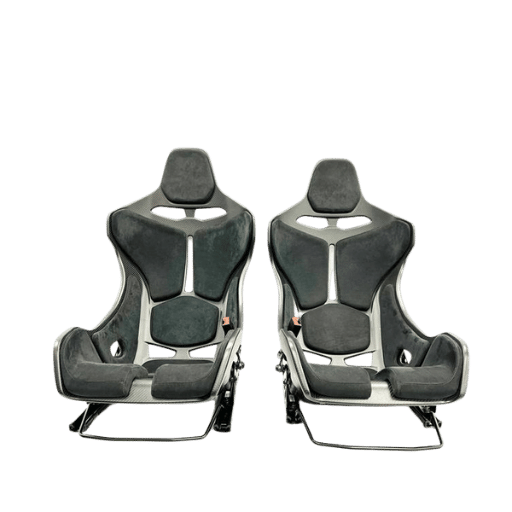
Within the automotive industry, Formula 1 established carbon fibre composites as a credible structural material for ground vehicles. An F1 monocoque chassis — the safety cell surrounding the driver — can weigh as little as 35 kg in carbon fiber form. CFRP composites account for roughly 85% of a modern F1 car’s total volume, yet contribute only about 20% of its mass. Under 2026 FIA technical regulations, the minimum car weight is 768 kg, a target that would be physically impossible to meet with steel or aluminum primary structures.
Successful use of CF in motorsport to reduce weight has filtered into road car production. BMW’s i3 electric vehicle used a CFRP Life Module body structure that saved approximately 350 kg compared to a conventional steel equivalent — a figure BMW reported at launch. CFRP is 50% lighter than structural steel and 30% lighter than aluminum for equivalent load-carrying sections.
Electric vehicles have become a strong pull for carbon fiber products. Per the U.S. Department of Energy, a 10% reduction in vehicle weight produces a 6–8% improvement in electric range — a relationship that makes lightweight material cost-effective at the battery-pack level. EV battery enclosure applications alone are projected to grow from a $250 million market in 2025 to $3.5 billion by 2033 as automakers balance weight, crash protection, and thermal management in pack design.
McKinsey estimates the manufacturing cost of weight savings via carbon fiber composite at roughly EUR 8–10 per kilogram saved, against vehicle lifetime fuel or energy savings that often exceed this figure in performance and premium segments. Economics are tighter in high-volume mainstream production, which is why most mass-market vehicles still use carbon fiber composites for trim and accent panels rather than primary structure.

Sports equipment manufacturers have used carbon fibre longer than most people realize. Bicycle frames are the most visible example: a production CF frame weighs 700–1,100 g versus 1,400–1,800 g for an equivalent aluminum design. UCI competition rules set the minimum bike weight at 6.8 kg — a limit that exists because manufacturers could go lighter, raising safety questions about impact behavior at race speeds. Early steel road bikes weighed 15 kg or more; the gap to a 6.9 kg CF race bike represents roughly 55 years of composite development.
Golf club shafts switched from steel to graphite (CF-based) at scale in the 1980s. A graphite shaft runs 50–80 g versus 100–130 g for steel, and the mass reduction shifts the club’s swing weight profile to allow faster head speed — a direct performance gain measurable in ball exit velocity.
Fishing rods and tennis rackets follow similar logic: carbon fiber provides strength and light weight that fiberglass can’t match at the same section dimensions. A CF fishing rod is typically 50% lighter than its fiberglass counterpart and allows casting 20% farther due to improved tip response.
By 2023, the sports composites market was valued at $3.82 billion, growing at a CAGR of 5.8%, with carbon fiber composites holding approximately 51% market share within the sporting goods industry.
⚠️ Warning: CF Sporting Equipment Failure Modes
Carbon fiber bicycle frames and tennis frames fail catastrophically on impact — brittle fracture with no visible bending before the break, unlike aluminum which deforms progressively. Subsurface delamination after an impact event is invisible to the naked eye. Peer-reviewed research (NIH/PMC; Wiley/SPE) documents cases where frames appeared undamaged after crashes but failed structurally under subsequent normal load. Any CF frame involved in a significant impact should be inspected by a specialist before further use.

Practical application of carbon fiber continues finding new applications well beyond aerospace and sport into fields where the combination of low weight, stiffness, and biocompatibility-adjacent properties creates real functional advantages.
Carbon fibre is widely used in the medical industry for prosthetic limbs, fluoroscopy and CT table tops, and surgical instrument handles. Prosthetic running blades, including those used in Paralympics competition, depend on CF’s spring-back energy storage, which fiberglass cannot replicate at the same section thickness. X-ray tables use CF because the material is radiolucent: X-rays pass through with little attenuation, giving clinicians unobstructed imaging without moving the patient. NIH/PubMed literature confirms CF radiolucency as a standard material specification for diagnostic imaging equipment.
By the time modern wind turbines reach 80-100 meters in length, the structural spar cap running the length of the blade must withstand stunning amounts of bending load while contributing as little mass as possible to the already-elastic spinning system. At those lengths, carbon fibre spar caps provide the stiffness-to-weight ratio that glass fiber alone cannot deliver at 90+ meter spans. GWEC (Global Wind Energy Council) reported 117 GW of new wind capacity installed in 2023, a record year that placed wind energy as the second-largest consuming segment for carbon fiber after aerospace – a use sector consuming roughly 25% of global CF materials.
For structural repair, carbon fibre reinforcement strips and wraps are a standard way of improving the strength of existing large-scale concrete structures such as bridge columns, parking decks, and beam soffits – without the weight penalty of an added steel framework or the disruption of a reconstruction project. carbon fiber wraps have been shown to restore, or even exceed, original load-tolerance when used to reinforce corroded, damaged, or under-designed concrete elements. As global budgets for bridge rehabilitation grow, so does the application of carbon fiber to civil infrastructure.
Racing yacht hulls and mast systems have employed CFRP since America’s Cup competition transitioned to composite construction in the early 1990s. Corrosion resistance in a salt-water environment is a significant advantage over metal – no galvanic cell, no oxidation, no need for protective coating. high-performance offshore racing boats now employ CF to make hull skins, bulkheads, and deck structures where every kilogram saved raises speed.
Global CF Demand by Sector (approximate shares)
Common uses of carbon fiber in these industries all share the same root logic: the primary use of carbon fiber composites is to carry a specific structural load at the minimum possible mass, in an environment where corrosion or chemical exposure rules out unprotected steel. When those conditions are present, carbon fiber composites have no direct equivalent among conventional engineering materials.
For industrial buyers who need finished carbon fiber parts rather than raw laminates, carbon fiber parts machined to print are available through Le-creator’s 80-machine production center in Shenzhen – working for industrial, medical, and electronic customers.

Manufacture of carbon fibre composite parts starts with a carbon fibre tow – thousands of individual carbon filaments in a single strand – combined with a polymer matrix, typically epoxy, to form lightweight composites. Which manufacturing method is selected determines part geometry, fiber orientation, tolerance, and production volume.
| Method | Best For | Tolerance | Volume |
|---|---|---|---|
| Hand Layup | Custom shapes, prototypes | ±0.5 mm | Low |
| Autoclave Molding | Aerospace structural parts | ±0.1 mm | Medium |
| Filament Winding | Cylinders, tubes, pressure vessels | ±0.2 mm | Medium–High |
| CNC Machining | Precision post-cure finishing | ±0.01–0.05 mm | Any |
Post-cure CNC machining is the standard method for bringing molded carbon fiber materials to final dimensional specification. Post-cure CFRP panels and profiles require trimming, drilling, and contouring to achieve hole locations, edge profiles, and mating surface flatness that molding alone cannot guarantee. This process introduces three engineering challenges that differentiate CF machining from metal work:
💡 Pro Tip: Dust Extraction Is Non-Negotiable
Carbon fibre dust is a respirable particulate hazard under OSHA 29 CFR 1910.1000. Fibers under 3 micrometers in diameter reach the lower respiratory tract. Any shop machining carbon fibre composites must run a dedicated dust extraction system — not a general shop vacuum — with HEPA filtration. Operators require N95 or P100 respirators, nitrile gloves, and eye protection. Finished CF products in service pose no inhalation hazard; the risk is exclusively in the machining and cutting environment.
Le-creator’s perspective on carbon fibre machining comes from direct production experience. With 17+ years in CNC machining and a facility running 80+ machines, the team processes carbon composites and matrix composites for medical device housings, electronics enclosures, and precision industrial components. Proper fixture design to prevent delamination — and the discipline to use the right tooling grade — separates clean production parts from scrap.
Teams sourcing finished components can review carbon fiber machining capabilities and request quotes directly. For complex profiles or tight-tolerance hole patterns in carbon fiber reinforced composites, early DFM (design for manufacturability) review catches layup orientation issues before toolpaths are cut.
Understanding how precision machining turns raw carbon fiber into finished components also matters for design engineers specifying tolerances: molded CFRP surfaces are typically ±0.3–0.5 mm, while CNC-machined features can hold ±0.02–0.05 mm — a 10× improvement that is often critical for mating interfaces in assemblies.
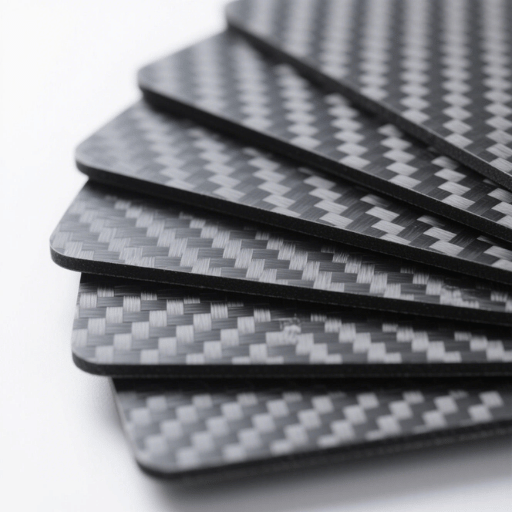
As a versatile material in high-performance engineering, carbon fibre composite draws comparison to fiberglass, Kevlar, and aluminum. All sit within the same general region of performance/weight/cost space. Which to use really depends on what properties turn out to be load-path critical for the specific application.
| Factor | Carbon Fiber | Fiberglass | Kevlar | Aluminum |
|---|---|---|---|---|
| Strength-to-Weight | Excellent | Good | Excellent (tension) | Good |
| Cost per kg | $15–100+ | $2–5 | $20–40 | $2–4 |
| Impact Resistance | Poor (brittle) | Good | Excellent | Good |
| Temperature Limit | ~200°C (epoxy) | ~300°C | ~150°C | ~150°C |
| Corrosion Resistance | Excellent | Good | Excellent | Moderate |
| Recyclability | Difficult | Moderate | Difficult | Easy |
End-of-life CFRP is a genuine problem in the composites industry. Pyrolysis (thermal decomposition) and solvolysis (chemical matrix dissolution) can recover fiber with 80–90% of virgin fiber mechanical properties, but both processes are energy-intensive and costly. The history of carbon fibre usage — from Roger Bacon’s Union Carbide laboratory in 1958 to a $5.75 billion global market in 2024 — has outpaced the development of recycling infrastructure. Circular economy initiatives around carbon fiber are growing, but recycled CF still represents a small fraction of total market supply. Designers specifying CFRP for new products should factor end-of-life disposal into material selection decisions.
For organizations already working with carbon fiber composites and needing machined components, Le-creator’s carbon fiber machining service provides CNC routing, drilling, and finishing for CFRP parts with tolerances down to ±0.02 mm and full dust extraction compliance.

Bicycle frames, golf club shafts, laptop shells, high-end luggage, automotive trim panels, phone cases, and camera tripod legs all use carbon fibre composites. The material shows up wherever a manufacturer can justify the cost premium through measurable weight or stiffness gains.
Aerospace and defense is the largest single consumer of carbon fiber, accounting for approximately 32–43% of global CF demand by volume. Wind energy is the second-largest segment at roughly 25%, driven by the need for longer turbine blades that require the stiffness of CFRP spar caps. Automotive and sporting goods each account for approximately 15–16%. The aerospace industry’s dominance reflects both the high per-part CF content in aircraft structures and the premium pricing that makes the material cost-justifiable for flight applications.
Carbon fiber has several real limitations. Cost is the most cited: raw CF material runs $15–100+ per kilogram versus $2–4/kg for aluminum. Failure mode is brittle — CFRP fractures suddenly without visible deformation warning, which creates safety concerns in impact-prone designs. Recycling is difficult; neither pyrolysis nor solvolysis processes are mature enough to be economically standard. UV exposure degrades the epoxy matrix over time without UV-protective coatings. Carbon fiber is also electrically conductive, which can set up galvanic corrosion cells when in direct metal contact without insulating barriers.
Carbon fiber is justified where weight saving produces clear and quantifiable performance or efficiency gains relative to the added cost. In aircraft structures, every kilogram saved multiplies across millions of flight cycles — the economics are clear. In EV platforms, the DOE-documented 6–8% range gain per 10% weight reduction creates a direct ROI against battery cost. In consumer sporting goods where incremental performance gains are marginal and the user is recreational rather than competitive, the value case is weaker. For purely aesthetic applications where fiberglass with a CF weave finish achieves the same visual result, the full CFRP material cost is hard to defend.
About 90% of commercial carbon fiber is made from polyacrylonitrile (PAN) precursor through a multi-stage thermal process. PAN fiber is first stabilized through oxidation at 200–300°C, converting it to a thermally stable ladder polymer structure. It then undergoes carbonization in an inert atmosphere at 1,000–3,000°C, driving off non-carbon elements and aligning the remaining carbon atoms into a graphite-like crystal structure. The fiber receives surface treatment to improve epoxy adhesion, then sizing (a protective coating for handling), and is finally wound onto spools for shipping. The full chemical and mechanical processes from precursor to finished tow takes several hours of continuous furnace time per batch.
Cutting and machining CF creates respirable dust – OSHA requires HEPA extraction, N95+ respirators, and eye protection under 29 CFR 1910.1000. Finished carbon fibre products pose no hazard to end users during regular use.
Le-creator Technology (Shenzhen) has processed carbon fiber composite components for medical, electronics, and industrial customers for 17+ years. With 80+ CNC machines and in-house dust extraction systems, the facility handles everything from one-off prototypes to production runs — with tolerances down to ±0.02 mm on drilled features and edge profiles.
This article was written with input from the technical team at Shenzhen Le-creator Technology Co., Ltd., a CNC machining manufacturer with 17+ years of production experience and 100+ staff operating 80+ machines across metal and composite materials. Le-creator’s direct experience machining carbon fiber reinforced polymer parts for medical device, electronics, and industrial clients informs the manufacturing section of this guide. Market data, academic references, and standards citations are sourced independently from the organizations listed below.