

Supportive, Professional, Client-Focused Service
From prototypes to full-scale production, we’ve got you covered.


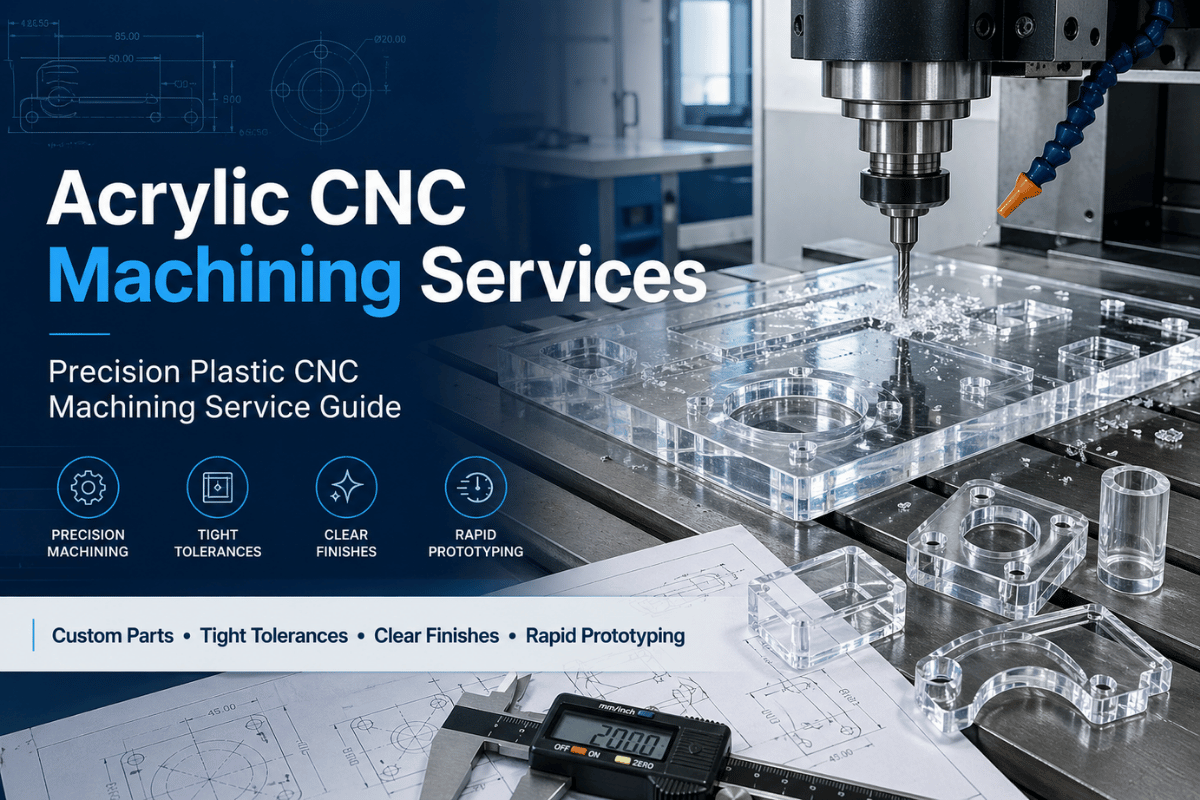
For buyers, Acrylic CNC Machining Services can turn clear PMMA sheet, block, rod, or tube into parts with pockets, holes, threads, polished windows, engraved marks, and controlled-fit edges. Buyers are not only asking “Can this be machined?” The harder question is whether the drawing gives the supplier enough information to protect optical clarity, avoid cracks, quote the right finishing steps, and inspect the part without later argument.
Quick answer: Acrylic CNC machining services are best suited for PMMA parts that need more than a flat outline: drilled holes, countersinks, pockets, tapped features, repeatable fit, or surfaces that may need polishing after machining. Simple flat profiles may only need laser cutting. To make CNC acrylic parts quote-ready, prepare CAD files, material grade, tolerance callouts, finish needs, inspection points, and packaging notes before upload.
| Material names | Acrylic, PMMA, polymethyl methacrylate, Plexiglas-style clear plastic |
| Reference density | 1.19 g/cm3 in the NIST PMMA material composition table |
| Strong fit | Transparent covers, light guides, lenses, display products, machine windows, optical prototypes |
| Main process risks | Cracking, melting, chip welding, cloudy machined edges, stress marks, over-tight tolerance callouts |
| Commercial next step | Use this guide to prepare the RFQ, then send the file through our acrylic CNC machining service. |

Acrylic CNC machining service usually includes material sourcing or customer-supplied PMMA review, CNC milling, routing, drilling, tapping, engraving, turning for round features, surface finishing, dimensional inspection, and packaging for clear surfaces. In this context, “acrylic” is not just a shop nickname. NIST Chemistry WebBook identifies poly(methyl methacrylate) with monomer formula C5H8O2 and molecular weight 100.1158, while ASTM D4802-16(2024) defines PMMA acrylic plastic sheet around methyl methacrylate content and test properties.
That matters because a supplier is not only cutting a shape. It is checking whether the PMMA form is cast, extruded, UV-filtering, optical grade, tinted, frosted, or supplied as tube or rod. Each quote for machined acrylic parts should state whether the supplier is machining from sheet, bar, or block stock, and whether polishing is part of the quoted scope.
Can acrylic be CNC machined?Yes. Acrylic can be CNC machined when the part needs controlled holes, pockets, threads, countersinks, 3D contours, edge quality after cutting, or repeatable fit. If the part is a simple flat sign or cover with no depth features, laser cutting may be enough; if the drawing includes functional geometry, CNC usually gives the supplier more control.
For a quote on clear PMMA parts, use our Acrylic CNC Machining Services page. For broader process capability, materials, and production options, see our main CNC machining service page.

PMMA gets specified because the part must be seen through, lit through, inspected through, or presented cleanly. That creates a different design problem from POM gears or nylon wear parts. POM components can hide a tool mark. Transparent PMMA covers may turn the same mark into a visible defect.
A 2023 Optica Publishing Group paper describes PMMA as a polymer used for optical applications and studies its complex refractive index over the UV, visible, and near-infrared range. In buying terms, this means the drawing should state which surfaces are optical, cosmetic, or purely mechanical. Without that distinction, the shop may quote every surface as if it needs the same finish, or miss the one surface that actually matters.
PMMA is often selected as a glass substitute when light transmission, high transparency, lower weight, and UV stability matter more than heat resistance. Its material properties still need context: chemical resistance, scratch-resistant coatings, and long-term durability depend on grade, exposure, cleaning method, and surface finish, not only on machining.
✔ Advantages
⚠ Limitations
One practical rule is to mark only true optical faces as optical-critical. If every face receives an optical finish requirement, the quote can grow because polishing, handling, cleaning, and inspection time grow with it. If no face is marked, the supplier may leave normal machine marks on a viewing window.

CNC and laser cutting solve different acrylic problems. Laser cutting is often attractive for flat profiles, fast outlines, and polished-looking edges on sheet. CNC machining is better when the part needs depth, threads, controlled countersinks, pockets, curved 3D forms, or datum-based inspection.
A 2023 Applied Sciences study on CO2 laser cutting of 5 mm PMMA reports that laser power, cutting speed, and focal-plane position affect kerf quality. That is the buyer lesson: laser cut quality is not automatic. It depends on the setup, material thickness, and edge requirement.
Use CNC cutting for features that require depth, datums, or thread control; use acrylic CNC cutting language carefully because suppliers may apply it to routing, milling, or laser profiles. Cutting tools, chip evacuation, and fixture support drive machinability, while laser settings drive edge gloss and heat exposure.
| Part scenario | Choose CNC when… | Laser may fit when… |
|---|---|---|
| Display window | Countersunk screws, sealing grooves, pockets, or flatness inspection are required. | It is a flat rectangle or profile with simple mounting holes. |
| Light guide | Optical faces, stepped features, and post-processing need controlled machining. | A flat outline and edge-light test sample are enough. |
| Threaded acrylic block | Threads, tapped holes, or counterbores are part of the design. | Laser is not the main process for functional threads. |
| Flat signage plate | Use CNC if the plate also needs pocketing, bevels, or precise fixture datums. | Use laser if edge appearance and profile speed are the main goals. |
With mixed geometry, send one drawing that labels which features are CNC machined, which edges may be laser cut, and which faces cannot be heat-affected. A supplier with both CNC milling service and CNC turning service capability can then quote the real process path instead of guessing.

Safe acrylic design rules are not a universal feed-rate chart. Machine rigidity, cutter geometry, coolant or air blast, chip evacuation, material form, and feature depth all change the answer. Instead, buyers should remove avoidable risks from the CAD file before asking for price.
| Risk | Design trigger | Quote-ready fix |
|---|---|---|
| Cracking near holes | Holes too close to an edge, sharp inside corners, or press-fit hardware. | Add radius notes, review hole-edge distance, and specify fastener load. |
| Melting or chip welding | Deep slots, poor chip exit, or long cutter engagement. | Allow tool access, open pockets where possible, and ask for a test cut on critical geometry. |
| Cloudy machined edge | A drawing asks for clear visibility through a cut face but omits finish. | Call out as-machined, sanded, buffed, flame-polished, vapor-polished, or optical-critical. |
| Tolerance-driven scrap | Every feature is set to tight tolerances without functional reason. | Separate fit-critical dimensions from visual or clearance dimensions. |
| Dust and chip safety | Fine plastic dust from machining or finishing is treated as harmless housekeeping. | OSHA notes that plastics can be explosible in dust form; ask the shop about extraction and cleaning for production runs. |
📐 Engineering NoteFor acrylic quote review, use ±0.005 inch as a standard tolerance reference and ±0.002 inch only for selected features that justify tighter control. Treat those numbers as quoting targets, not blanket defaults. PMMA sheet material control is better tied to ASTM D4802-16(2024) than to a generic plastic note because the standard addresses PMMA acrylic plastic sheet tests and classifications. Critical optical or medical-device parts also need inspection method, surface finish, cleaning, and whether the machined form still fits the application after processing.
If you already have a draft, compare it with our acrylic design guidelines before asking for a production quote.
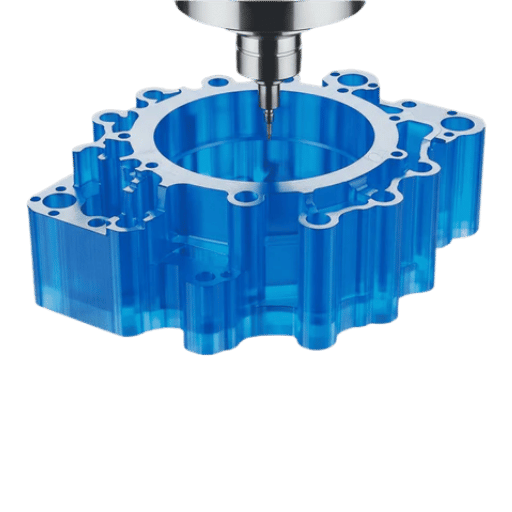
One quick way to improve your acrylic CNC quote is to make your demands unambiguous. CNC shops can not quote cycle times, finishes, inspection, and packaging until the RFQ specifies what the part will be used for. Use this 9-criteria matrix before forwarding the CAD.
| # | RFQ item | Why it changes the quote | Buyer action |
|---|---|---|---|
| 1 | CAD file | STEP or native CAD reduces interpretation risk. | Send CAD plus PDF drawing. |
| 2 | PMMA grade | Cast, extruded, UV-filtering, tinted, and optical grades behave differently. | State acceptable material forms. |
| 3 | Critical dimensions | Blanket tight tolerances raise inspection and scrap risk. | Mark fit-critical features only. |
| 4 | Optical faces | Polishing and handling time depend on visible surfaces. | Label viewing faces and non-viewing faces. |
| 5 | Finish requirement | As-machined, sanded, buffed, flame polished, and vapor polished are not the same job. | Attach sample photo or finish note. |
| 6 | Quantity path | Prototype, bridge batch, and production runs use different setup logic. | List first quantity and expected repeat quantity. |
| 7 | Inspection plan | CMM, visual inspection, and optical inspection require different time. | Name the dimensions and surfaces to inspect. |
| 8 | Packaging | Clear parts scratch during handling more visibly than opaque plastic parts. | Request film, sleeve, separator, or single-part bagging if needed. |
| 9 | Delivery terms | Landed cost, duties, and freight affect real buyer cost. | Ask whether the quote is EXW, FOB, DAP, or DDP. |
For acrylic CNC projects, DFM review, inspection documentation, and DDP pricing are most useful when the RFQ says which features and surfaces matter. Use the matrix, then request the CNC machining acrylic quote.

Use the following numbers as drawing-note examples, not universal acrylic machining limits. The supplier still needs to confirm tool access, fixture support, PMMA grade, and whether ±0.005 inch standard tolerance or selected ±0.002 inch tolerance is realistic for the exact feature.
| Feature type | Numeric specification to define | RFQ reason |
|---|---|---|
| Clear viewing face | Mark the optical zone, for example 80 mm x 40 mm, and state if ±0.005 inch flatness control is needed. | Prevents every surface from being priced as optical. |
| Mounting hole | Call out 3.2 mm, 4.5 mm, or 6 mm holes with the exact ±0.002 inch or ±0.005 inch tolerance expectation. | Separates loose clearance holes from critical assembly holes. |
| Counterbore or countersink | Define 1.5 mm depth, 2 mm land, or 90 degree screw geometry when the fastener must sit flush. | Avoids cracking from unclear screw-seat geometry. |
| Pocket or channel | State 1 mm, 2 mm, or 5 mm depth and the minimum corner radius allowed. | Helps the shop choose cutter diameter and step-down strategy. |
| Polished edge | Label the edge length, such as 120 mm, and whether 100% of that edge must be polished. | Keeps finish labor tied to visible areas. |
| Engraved mark | Define text height, for example 2 mm or 3 mm, and the side of the part receiving the mark. | Prevents a cosmetic mark from landing on the viewing face. |
| Bonding or gasket surface | Call out the contact width, for example 4 mm, 6 mm, or 10 mm, plus the allowed finish. | Protects sealing or adhesive performance. |
| Packaging-sensitive face | Mark scratch-sensitive faces over 25 mm x 25 mm and request film or separator packaging. | Makes handling cost visible before shipping. |
| Prototype-to-production path | Separate 1 pc prototype, 10 pcs pilot, and 100 pcs production review quantities. | Keeps prototype setup decisions from hiding production risks. |
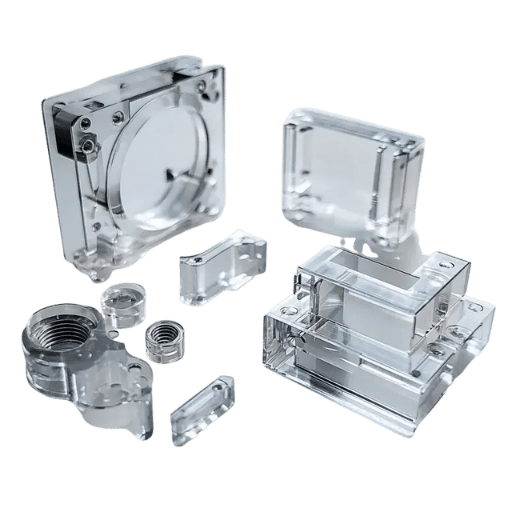
Cost for acrylic CNC machining is shaped by machine time, material form, setup count, surface finish, inspection, packaging, and deadline pressure. Clear covers with two holes price differently from a transparent manifold with micro channels, polished windows, O-ring grooves, and 10 inspection dimensions.
Cost and Lead-Time Drivers
For urgent prototypes, confirm whether a 3-5 day delivery target and 100% inspection can apply to your exact geometry, finish, and quantity. If your first run is for design validation, our rapid prototyping service page is the better path than a production-only quote request.
When you request an online quote, clarify whether the drawing uses Plexiglass as a trade or common name for PMMA. Industrial applications often need the quote to separate prototype risk from full-scale production requirements.

Acrylic parts are often chosen when function and appearance overlap. One PMMA block may need optical clarity, fastening features, cosmetic edges, and repeatable assembly fit. Application need should drive the drawing notes.
For automotive display covers, lightweight PMMA can replace glass or metal guards when optical access and lower mass matter, but precision fabrication still depends on controlled machining, finish notes, and inspection. In any manufacturing industry context, those notes keep prototype and production quotes comparable.
| Application | Main requirement | Design note to send |
|---|---|---|
| Machine vision window | Optical face quality and flatness | Label viewing area and allowable edge marks. |
| Light guide | Clear edge, controlled geometry, repeatable light path | Mark polished edges and nonfunctional faces. |
| Display product | Cosmetic finish and scratch control | Request protective film and visual acceptance criteria. |
| Fluid manifold prototype | Channel dimensions and inspection | Provide cross-section detail and inspection dimensions. |
| Lens or optical prototype | Surface quality and measurement plan | Separate prototype geometry from final optical-grade acceptance. |
FDA’s recognized consensus standard entry for ASTM F3087-15 (2024) warns that processing techniques such as machining can alter some characteristics of acrylic resin forms, so fabricated parts should be evaluated with methods suited to the final device. In medical, lab, or regulated equipment, that is the signal to define cleaning, traceability, and test evidence before price review.
To compare application examples close to this topic, use our acrylic parts applications guide and the main plastic CNC machining service category.

Supplier checks should be more specific than “Can you machine acrylic?” Ask whether the shop has machined similar PMMA geometry, can separate cosmetic and functional surfaces, can provide inspection documentation, and can pack clear parts without scuffing.
Ask whether the shop can handle precision CNC machining and precision machining inspection for custom acrylic CNC machining services, not only flat panels. Better RFQs name CNC acrylic machining, CNC machined acrylic, CNC machined parts, CNC machined acrylic parts, machining acrylic parts, complex geometries, and CNC machining applications in the specification when those are the actual scope.
Also check whether inspection is in-house, whether the supplier specializes in optical plastic parts, whether fast turnaround is realistic, and whether the supply chain has material alternatives. Treat vague phrases such as high-quality, cost-effective, or exceptional accuracy as claims to define, not promises to accept; a marked drawing should ensure the supplier knows which surface is cosmetic.
“For acrylic parts, the most expensive misunderstanding is usually not the raw material. It is the missing note that tells the shop which surface is optical, which hole controls assembly, and which edge can remain as-machined.”
– Practical RFQ note
For regulated or documentation-heavy projects, include the required standard, inspection record, certificate, account-management need, delivery term, and packaging expectation in the RFQ. ISO 9001:2015, IATF 16949, AS9100D, ISO 13485, DDP pricing, and inspection documentation only help when they are matched to the actual application: aerospace prototype, medical fixture, display cover, or industrial machine window.
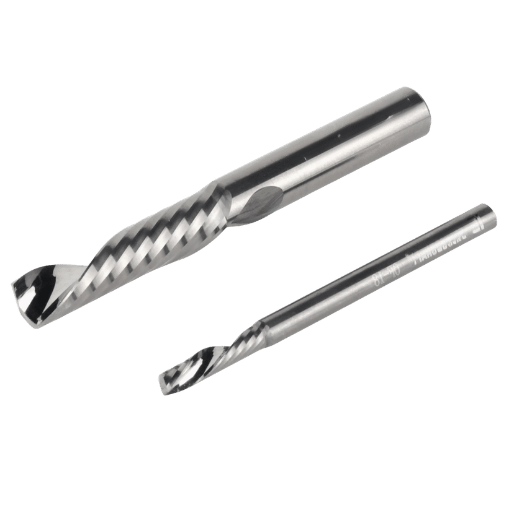
Most acrylic CNC buyers are not just looking for a vendor name. They are trying to decide whether PMMA can be machined, whether acrylic CNC cutting or laser cutting fits the part, what finish is realistic, and which details must be ready before a supplier can price the job.
Use this section as a quote-prep checklist rather than a universal speed chart. A useful RFQ tells the machining team what to send back, what to label on the drawing, what to verify before production, and where the part has cosmetic, optical, or assembly risk.
If you are sending CNC-machined acrylic parts for quote review, prepare two files: a clean STEP model for machining and a PDF drawing that marks optical faces, critical dimensions, finish, inspection points, quantity path, and packaging requirements.
If your drawing is complete, send the CAD file with the 9-step quote matrix language. If your drawing is not yet complete, call out critical optical faces, fit dimensions, finish, quantity path, and packing first.