

Supportive, Professional, Client-Focused Service
From prototypes to full-scale production, we’ve got you covered.


Acrylic Design Guidelines: A Data-Driven Reference for Product Designers and Procurement Engineers
Last updated: March 2026 · 12 min read
📐 Quick Specs — Acrylic (PMMA)
| Material | PMMA — Poly(methyl methacrylate) |
| Light Transmission | 92% at 3 mm thickness |
| Density | 1.17–1.20 g/cm³ |
| Tensile Strength | 55–76 MPa (ASTM D638) |
| Glass Transition (Tg) | 105 °C |
| Thermal Expansion (CTE) | (5–10) × 10⁻⁵ /°C |
| Common Thickness Range | 1.5–50 mm |
Design for acrylic requires more than just a sheet thickness from a catalog. Every choice from grade to CNC feed rate influences its crack resistance, optical hardness, and the durability of the end part for the long haul. This acrylic design guide gathers the critical masses, tolerances and fabrication parameters product designers and procurement engineers need to move from material selection to CNC machining acrylic parts without a costly rework cycle.
Covering material characteristics, grade analysis, dimensional rules, CNC parameters, secondary steps (laser cut, thermoforming), typical uses, chemical suitability. Each topic section provides actual data points called out to ASTM/ISO standards so you can confidently write specifications.
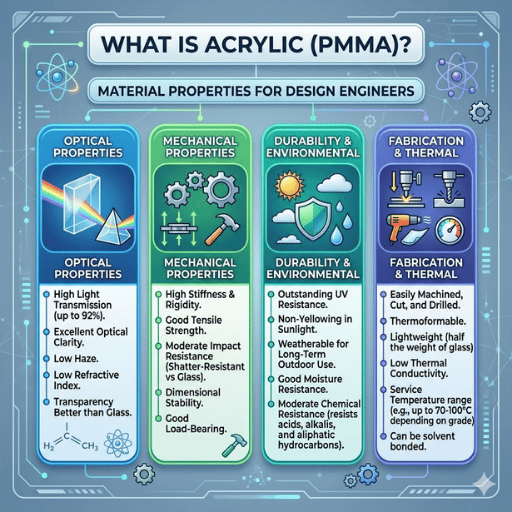
acrylic (also called poly(methyl methacrylate) or PMMA) is a clear thermoplastic transmitting 92% of the visible spectrum through a 3 millimeter sheet. That is better than standard soda lime glass (~90%), making it a clear leader for optical and display applications where clarity is a prime factor.
with a specific gravity of 1.17-1.20 g/cm3, acrylic is roughly half the weight of glass (2.5 g/cm3). This light weight advantage comes into play for hanging signage, portable display cases and other housings designed to reduce shipping costs by lowering weight. The refractive index is 1.4905 and acceptable for many optical and display purposes.
While not as tough as polycarbonate, the modulus of rupture (bending strength) of PMMA (55–76 MPa per ASTM D638) and flexural strength (83–117 MPa per ASTM D790) respectively exceeds high end soda lime glass. The Tg of 105 °C establishes the high temp limit for service -go beyond it, and the part folds like a book.
Engineering Note: With a CTE of (5–10) × 10⁻⁵ /°C — approximately seven times that of aluminum (2.3 × 10⁻⁵ /°C) — installing acrylic panels in metal frames requires a 0.5–1.0 mm gap for every 300 millimeters of length to avoid buckling at ambient temperature swings. This is one of the most overlooked acrylic design rules in mixed-material assemblies.
| Property | Acrylic (PMMA) | Soda-Lime Glass | Polycarbonate (PC) |
|---|---|---|---|
| Density (g/cm³) | 1.17–1.20 | 2.4–2.5 | 1.20–1.22 |
| Light Transmission (3 mm) | 92% | ~90% | ~88% |
| Tensile Strength (MPa) | 55–76 | 30–40 (compressive: 1,000) | 55–75 |
| Impact Resistance | 10–17× glass | Baseline | 250× glass |
| Refractive Index | 1.4905 | 1.52 | 1.586 |
| Max Service Temp (°C) | ~80 (continuous) | >500 | ~120 (continuous) |
| UV Resistance | Good (inherent UV filter) | Good | Poor without coating |
| Scratch Resistance | Moderate — prone to scratching | Excellent | Low — scratches easily |
Polycarbonate outshines acrylic with 250X the impact resistance compared to glass which is used as a baseline, but wins for high clear optical a scale. UV weathering surpasses glass, a great choice for outdoor signage, glazing and display housings when transparency is prime. Polycarbonate yellows within 5-10 years outside without UV coatings. Unlike glass, both plastics can be CNC machined into complex shapes, but their fabrication parameters vary greatly.
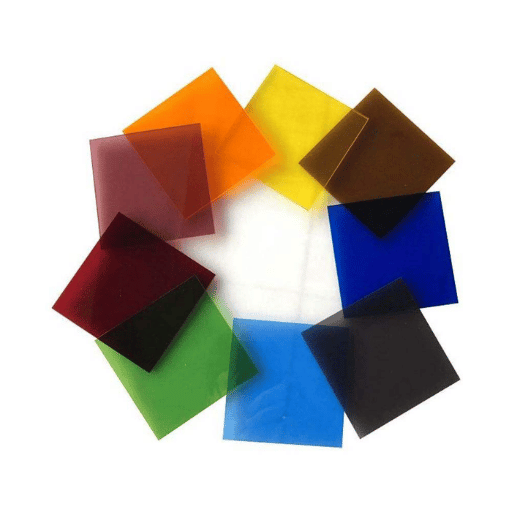
The rigidity of every piece of acrylic sheet varies considerably by its building method, which has a profound influence on CNC turnaround time, stress crack behavior, and optical quality. Cast and extruded are the two primary acrylic types and contain very different molecular weight distributions, internal stress levels and cost factors.
Casting involves spilling liquid MMA monomer in between glass plates and stopping it from flowing by bringing together a rigid jig. The end result yields a slow curing process that produces higher molecular weight chains, less residual internal stress, superior optical clarity and crisp CNC cast acrylic chips that would otherwise gunk up. The flame polished edge is crystal clear, but the material isn’t susceptible to solvent crack stress fractures.
extruded acrylic is passed through heated rollers, giving up to 30% faster sheet production at less cost. Tolerance ranges for thickness uniformity are tighter (±5% vs ±10% for cast) but the lower molecular weight creates problems during machining; extruded acrylic often presents a gummy, stringy appearance when machined CNC – chips tend to melt and weld back to the surface. Flame polishing often produces a cloudy or bubbly appearance along the edge. Possibly worst of all, exruded grades are significantly more susceptible to internal stress relief scratches and will crack when exposed to solvent-cements.
Le-creator processes both cast acrylic and extruded acrylic in the shop each day on 3-axis and 5-axis CNC machines and finds that real-world tool wear, surface quality, and rejection rate make the choice of grade it decision that should be made by the designer, not purchasing.
| Attribute | Cast Acrylic | Extruded Acrylic |
|---|---|---|
| Optical Clarity | 92% transmission, no haze | 91–92%, slight internal haze possible |
| Thickness Tolerance | ±10% (per ISO 7823-1) | ±5% |
| Machinability (CNC) | Clean chips, low tool loading | Gummy chips, re-welding risk |
| Stress Cracking Resistance | High — solvent bonding safe | Low — cracks near solvent joints |
| Flame Polish Result | Crystal-clear edge | Cloudy or bubbly edge |
| Thermoforming Behavior | Wider forming window | Narrower, higher shrinkage |
| Relative Price | 1.3–1.8× extruded | Baseline (lower) |
The common mistake: using extruded acrylic for deep-drilled holes or solvent-bonded assemblies. The internal resin stress common to extruded acrylic accumulates with this class of feature and will cause an unanticipated crack days or weeks after final assembly. If these features are included in your design, specify cast acrylic sheets, which costs a little more but avoids field failures.
In your prototyping or pre-production stages, where edge finish and cracking may be acceptable, extruded grades present a cost-effective alternative. For the long run, final production parts sent to end user optical components, medical devices or glued components, cast acrylic offers the much safer specification.
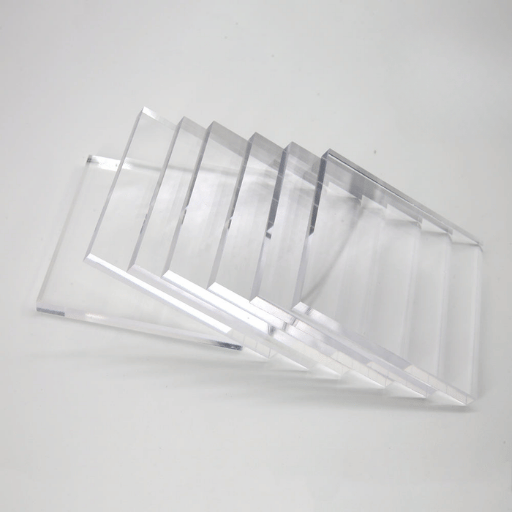
Knowing your raw material selectors is the first place. ISO 7823-1:2003 specifies cast acrylic sheets thickness tolerances from 1.5 mm to 25 mm. A stock 6 mm cast sheet received today could measure anywhere from 5.4 to 6.6 mm. This slight incoming variance translates to a significant factor when calculating part wall thickness, especially with snap-fit or press-fit parts.
Minimum wall thickness for CNC-machined acrylic features is highly dependent on unsupported span length. For spans less than 50 mm, keep unsupported walls above 1.5 mm. Thinner walls are sometimes possible, but the added potential for cracks during machining or handling make a significant difference. For structural panels (think fuselage or chassis roofing panel), 3 mm offers a practical minimum.
Hole designing is simply a matter of scaled ratio: a hole’s diameter should be no less than the sheet thickness, with a minimum edge-to-hole center distance of 2 the hole diameter. Going any closer encourages stress cracks, especially in extruded grades. Internal corners should be filleted with at least a 0.5 mm radius – pinpoint corners can function as crack initiations under the right conditions.
💡 Le-creator DFM Checklist for Acrylic Parts
CNC possibilities for acrylic, for standard feature Machining roughness, are typically 0.05 mm to 0.10 mm. For finer-point features under 0.03mm, fixturing may need to be corrected and feeds slow down accordingly. Ask to see a test cut of your design file before finalizing tolerances as this may significantly increase your cost.
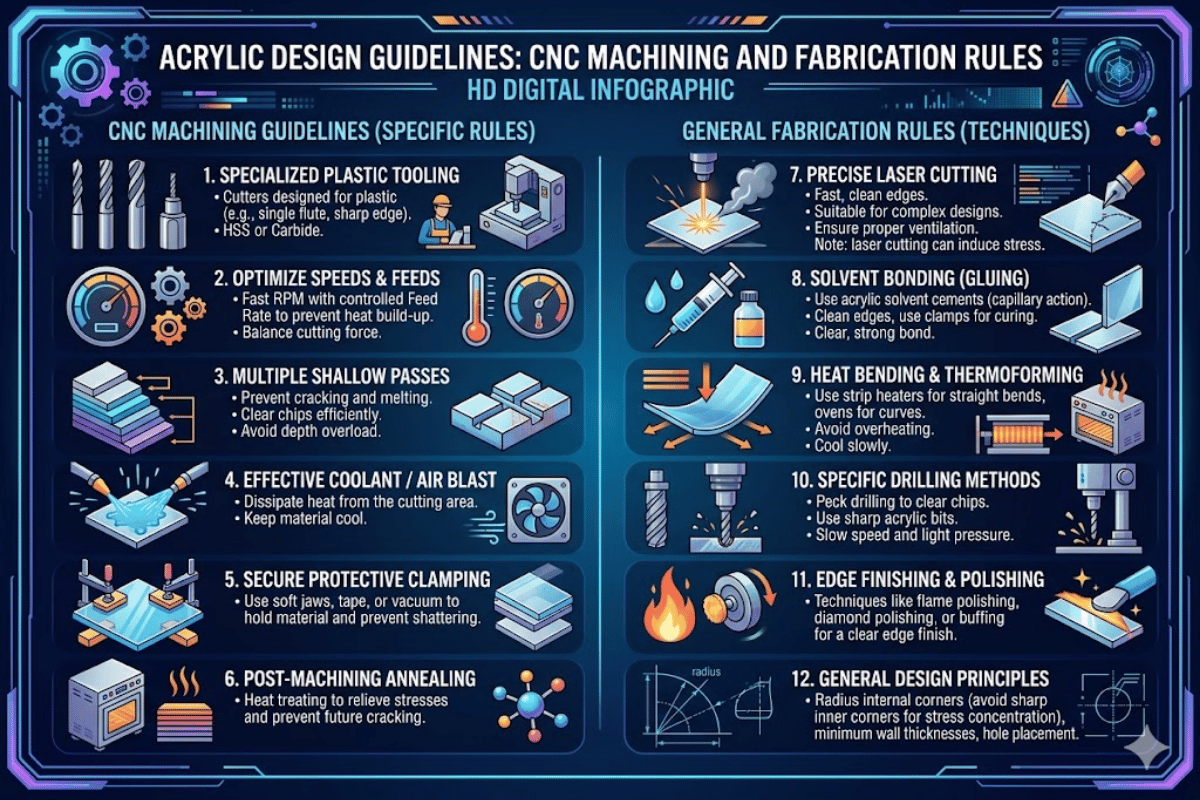
Machining acrylic on a CNC is a different mindset than machining metals. The material is fragile under impact, melts fairly easily, and contains invisible residual stresses which can crack after polishing. The best way to make high-quality acrylic parts is to get the speeds and feeds right.
The spindle speeds for machining acrylic are generally between 8,000 and 18,000 RPM depending on the operation. As the tool diameter gets smaller the spindle speed increases to still provide sufficient chip load. The feed rates are roughly between 600 and 1,500 MM/Min.
These should result in similar chip loads on each flute; thin chips sufficiently sizable to get heat away from the cutting zone. The best results come from relatively fast Machining with slower spindle RPMs, at too slow a feed rate at higher RPMS we get friction build up in the chips and not near enough heat removal from the cut. This softens the acrylic.
| Operation | Spindle (RPM) | Feed (mm/min) | Tool | Notes |
|---|---|---|---|---|
| Profile Cutting (6 mm sheet) | 10,000–14,000 | 800–1,200 | Single-flute, 6 mm Ø | Climb milling preferred |
| Pocket Milling | 12,000–16,000 | 600–1,000 | Double-flute, 3–4 mm Ø | Shallow passes (≤1.5× tool Ø) |
| Drilling | 8,000–12,000 | 300–600 | Carbide, 118° point angle | Peck cycle mandatory for depth >2× Ø |
| Engraving | 15,000–18,000 | 1,000–1,500 | Single-flute V-bit, 60° | Depth ≤0.3 mm per pass |
| Finishing Pass | 14,000–18,000 | 1,200–1,500 | Single-flute, O-flute carbide | Ra 0.4 μm achievable |
Specialized plastics-cutting tools clearly make a difference. Standard aluminum end mills generate too much heat and leave poor edge quality on acrylic. Choose single-flute or double-flute cutters with polished flutes and a 15–20° positive rake angle.
The polished flute surface prevents chip adhesion, while the high rake angle produces a clean shearing cut at the edge without chipping.
Climb milling (where the cutter rotation is in the same direction as the feed) is ideal to use for acrylic and is highly recommended when machining using the CNC-machined. Climb milling forces the workpiece down on to the table and produces a better surface finish. Conventional milling raises the part during machining and produces tool marks which then need to be hand finished.
Using the correct tool and climb milling can take a Ra 0.4 m surface finish to CNC-machined acrylic components.
PMMA softens at its glass transition temperature of 105 °C, but some work with the tool tip can cause melting in isolated locations well below the work’s raw temperature. The visual is glistening, melted, at the edges (not the usual ‘machined’ matte finish required), a re-weld of chips in pockets, and micro-cracks when polarized light is incident.
Air cooling is usually the best way to go when machining acrylic. Do not use any metal-cutting coolant because most of them have chemicals which would attack PMMA, leading to crazing. If you have to have liquid cooling use a mist of water-soluble coolant (verified to be PMMA-compatible).
Engineering Note – Stress Relief Annealing: Use on small parts or components with thin walls that lack design margins. Anneal after rough machining at 80 °C for 2–4 hours (1 hour per mm of thickness) then slow-cool at 10 °C/hour. This removes machining-induced stresses that would otherwise lead to warpage reducing the risk of the finished article, delayed cracking and dimensional instability during later machining passes. Le-creator incorporates annealing suggestions in DFM feedback for all plastic machining jobs utilizing acrylic.
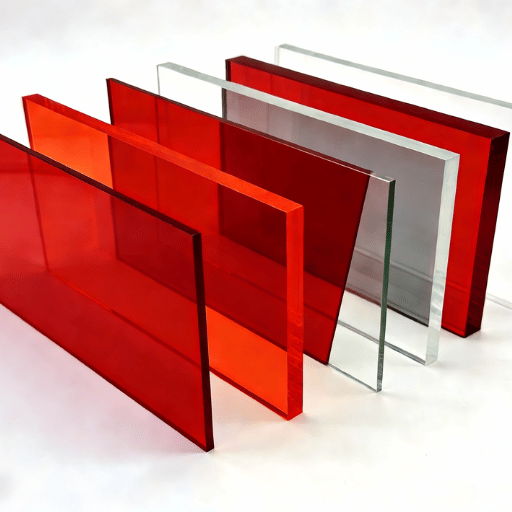
CO₂ laser cutting is the most common method of finishing acrylic sheet for 2D profile parts. It produces edges with perfect clarity Flame-polished edges, often nearly zero post-processing. When machining flat sheet stock up to 15-20 mm thick, laser cutting will normally be your lowest-cost and highest-quality option. For stock 20 mm or more, heat-affected zone increases adversely affects edge quality. For 3D machining or thicker stock, CNC route is the best alternative.
Laser-cut edges on cast acrylic exhibit significantly higher clarity than extrusions. Bubbling at the kerf edges owing to lower molecular weight, on the extruded material causes this difference. If the application requires a polished edge appearance on a laser-cut sheet, specify cast acrylic sheets in your BOM.
Acrylic can be thermoformed into curved or shaped parts when heated to 150–190 °C, above the Tg but below the decomposition temperature. Cold-bending without heat treatment is possible for gentle curvature, but minimum bend radius is large: 200-330 times sheet thickness. E.g., a 3 mm acrylic sheet would need a minimum 600-990 mm bend radius. More severe bend radii must be formed through heat, described in ACRYLITE thermoforming fabrication’s guide.
Minimum draft angles of 5° are necessary on thermoformed parts for release from the mold. Deeper draws require more clearance – 7–10° is preferred in conditions of draw depth over 50 mm.
An often-misunderstood result: just after CNC machining, thermoforming can be valid. Form a flat acrylic sheet using a machined feature first, then complete the stress-relief anneal (80 °C, slow cool) and you may now safely thermoform without cracking among the machined features. This combination of precise-machined pockets while achieving formed curves offers new design space for complex shapes.
| Process | Best For | Thickness Range | Edge Finish | 3D Capability |
|---|---|---|---|---|
| CO₂ Laser Cutting | 2D profiles, signage, decorative parts | 1–20 mm | Crystal-clear (cast) | No |
| CNC Routing/Milling | 3D pockets, precision holes, thick stock | 1.5–50+ mm | Matte (can flame polish) | Full 3-axis / 5-axis |
| Thermoforming | Curved enclosures, domes, covers | 1.5–12 mm typical | Retains original surface | Single-curvature / draw |
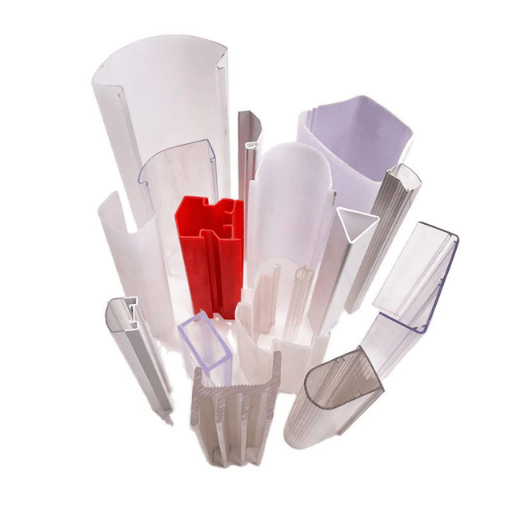
acrylic’s combination of optical clarity, light weight, and machinability makes it suitable for many different applications across industries. Here are the most common categories and a practical design tip for each:
For quotes on any of these part types, Le-creator’s acrylic CNC machining service provides DFM review within 24 hours of file upload.
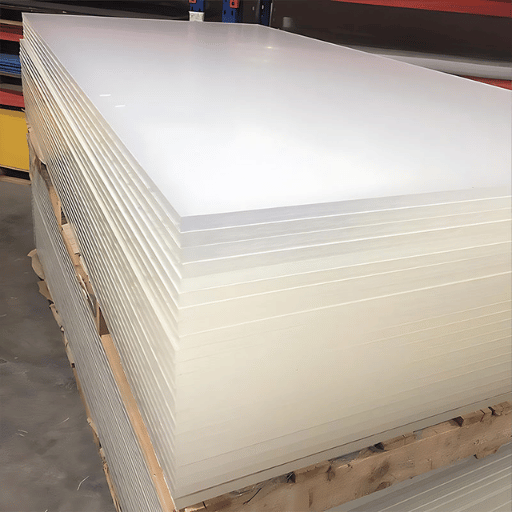
acrylic chemical resistance chart is one of the most detailed available, but the property is frequently misunderstood. PMMA will tolerate many common chemicals but makes an ill-suited substitute for glass with aggressive solvents. Incompatibility results in crazing, networks of microcracks that permanently disable optical clarity.
Clean acrylic with a soft microfiber cloth dampened with a little mild soap and water solution. Gently wipe to prevent scratching from particles trapped in the wiping cloth. Rinse with distilled water and air dry. Use anti-static sprays formulated for plastics on static-charged dust.
Never wipe acrylic with a paper towel, an abrasive scouring pad, or wipe dry. The hardness of PMMA (Rocker Well M 85-105) is considerably lower than glass, and virtually any fibrous substance can leave scratches visible in angled light.
| ✔ Compatible | ⚠️ Incompatible — Causes Cracking |
|---|---|
| Dilute acids (acetic, citric) | Acetone and ketones (MEK) |
| Dilute alkalis (sodium carbonate) | Aromatic hydrocarbons (toluene, xylene) |
| Mild detergents and soap solutions | Chlorinated solvents (methylene chloride*) |
| Aliphatic hydrocarbons (mineral spirits) | Ethyl acetate and esters |
| Isopropyl alcohol (≤10% concentration) | Ammonia-based glass cleaners |
*(Methylene chloride is intentionally used as a solvent welding agent for acrylic – but only on properly annealed cast acrylic with precisely controlled application) – inadvertent contact produces irreversible crazing.
For a complete listing of chemical compatibility by chemical family, consult the ISM PMMA chemical compatibility chart. Be sure to include a copy with your assembly information if the acrylic part may be subject to process chemicals or cleaners during service.
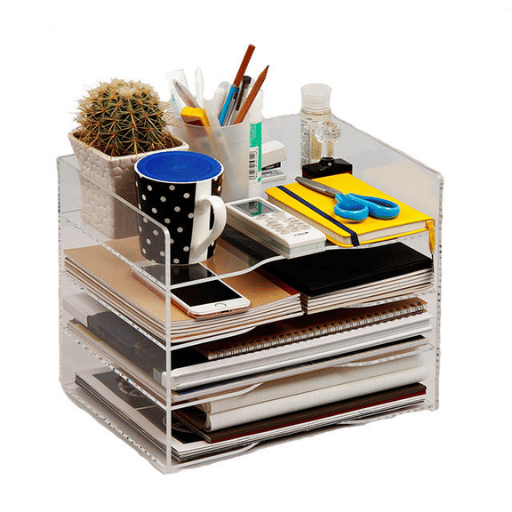
Cast acrylic sheets are produced by polymerizing MMA monomer between glass plates. The result is a tougher, higher optical clarity product that machines better. extruded acrylic simply feeds the melted resin through rollers. The product is less costly, more consistent in thickness, but poor machine (gummy chips), more prone to cracking at solvent joints, and has cloudy flame-polished edges. For CNC parts, cast acrylic is the better choice.
Certainly. PMMA has natural UV stability and will stay clear for over ten years outdoors. It outperforms polycarbonate outdoors, which turns yellow without an expensive UV protective coating.
No. PMMA will stand up to dilute acids, dilute alkalis, many general purpose cleaning agents, and aliphatic hydrocarbons such as kerosene. It fails to stand up to acetone, ketones, aromatic solvents such as toluene and xylene, chlorinated solvents, and ammonia-based cleaners. These incompatible chemicals induce stress cracking and crazing for life, often within minutes of contact.
Yes. PMMA is one of a narrow number of plastics that can be depolymerized into its monomer (MMA) by heat, then repolymerized into perfect acrylic sheet without loss of material quality.
For unsupported spans less than about 50 mm, 1.5 mm thick is a practical minimum material thickness. Slightly thinner (down to about 0.8 mm) machining is feasible but the likelihood of cracking from machining or handling rises exponentially as you approach the minimum. Machined parts thinner than 1.5 mm benefit from stress-relieve annealing at 80 °C before handling. For structural or load bearing panels, 3 mm thickness is a more prudent minimum for most geometries.
Acrylic transmits 92% of light (vs ~88% for PC), offers better scratch resistant qualities, better UV stability, and is less costly. Polycarbonate can exhibit significantly more impact resistant capability – approximately 250× glass for polycarbonate versus around 10–17× glass for acrylic. Use polycarbonate for machine guards and safety shields, over-80 C continuous heat resistant applications, load-bearing structural profiles, or other impact critical applications. Use acrylic for optical excellence, outdoor durability and signage, display cases, lighting applications, or areas where appearance and light transmission are more important than impact loading. Both materials weigh less than half of glass and are shatter resistant.
Ready to move from design to production?
Upload your CAD file and get a DFM-reviewed quote with material recommendations within 24 hours.
Source Transformation: This paper was prepared from published ASTM and ISO standards, manufacturer technical data sheets (ACRYLITE), and the ISM chemical compatibilities database. CNC automation specifications and DFM design rules are derived from Le-creator’s manufacturing experience with cast and extruded PMMA thousands of CNC-machined components. Discrepancies between sources are clarified with original standard citations and specific tolerances.