

Supportive, Professional, Client-Focused Service
From prototypes to full-scale production, we’ve got you covered.


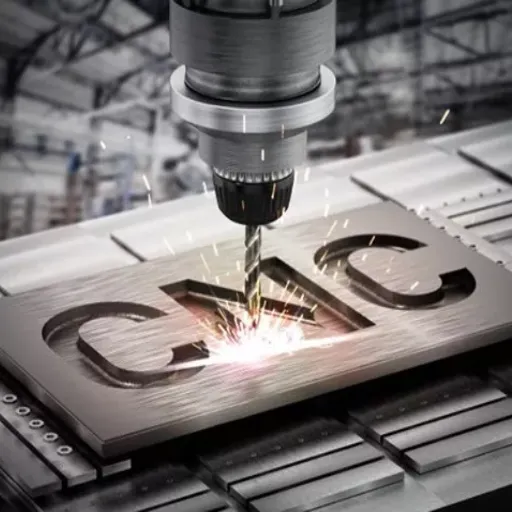
Choosing a CNC supplier in China will most likely be a moment of change for your company, offering you competitive pricing, output of the highest quality, and dependable manufacturing power. Yet, the road can be very hard without a good strategy. There are numerous options to choose from, and your biggest challenge will be finding a supplier who not only meets your standards but also complements your business vision. This detailed guide makes your task easier by walking you through the main steps of testing and qualifying a CNC supplier in China.
In this guide, you will learn to check the qualifications of suppliers, evaluate the communication methods, inspect the quality control systems, and pick the one that fits your production needs perfectly. At the end of this guide, you will be able to take decisions which are not only informed but also accompanied by confidence and trust.

CNC machining, which stands for Computer Numerical Control machining, is a manufacturing process that utilizes computer software to accurately control the movement of machine tools and equipment in the factory. This precise technique manages a whole range of complex machines such as grinders, lathes, mills, and routers.
Understanding the various types of CNC machining suppliers available helps you identify which best serves your specific production needs. Typically, there are four main categories:
When choosing a CNC machining supplier, factor in your project’s volume, complexity, and industry-specific requirements. Research reviews, certifications, and service capabilities to find a partner that aligns with your manufacturing goals.
Selecting the right CNC machining supplier is essential for ensuring successful manufacturing projects, especially in industries where precision, quality, and productivity are paramount. Recent trends indicate that manufacturers prioritize suppliers capable of meeting the tightest tolerances, delivering consistent quality, and offering quick delivery times.
A dependable supplier eliminates losses from production delays and inaccuracies that can derail project timelines.
Critical in aerospace, automotive, and healthcare sectors where even small variances can result in massive delays.
Reliable suppliers provide valuable input on design alterations and product performance improvements.
Partnering with reliable suppliers provides sustainability, scalability, and competitive positioning in fast-paced markets.
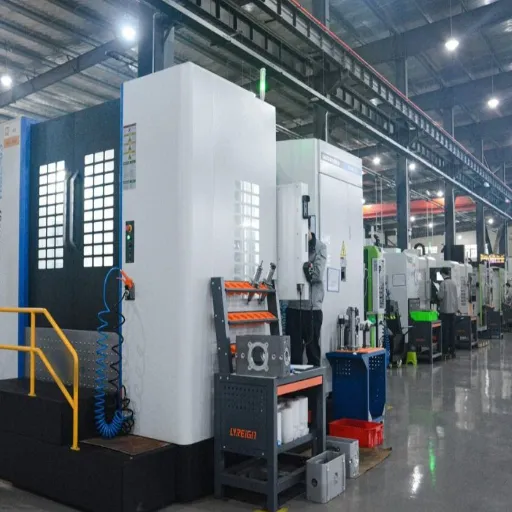
Finding the best CNC machining companies in China greatly benefits from accessing current market analysis data. Here’s a strategic approach to identifying potential suppliers:
Combining these sources makes it easier to find manufacturers that excel in quality while supporting your production requirements.
When evaluating suppliers in China, consider several critical factors essential for maintaining productive and reliable partnerships. Recent search trend data highlights three fundamental criteria:
Reliable suppliers present detailed company profiles, clear pricing structures, and open communication channels. They willingly share information about their processes and capabilities.
Assess whether suppliers can meet your volume requirements consistently. Verify their ability to scale production up or down based on demand fluctuations.
Look for ISO 9001 certification and other international standards that demonstrate quality management systems are in place and properly maintained.
Apart from the main verification methods, there is a possibility of checking customer reviews, auditing the factories, and if feasible, going on a factory tour. All these methods work together to form a process that gives you an insight into and provides the best supplier according to your business needs.
Online resources and platforms serve as powerful tools for finding reliable CNC machining suppliers. When combined with current search engine data, the entire process becomes faster and more efficient.
Step 1 – Business Directories: Check platforms like ThomasNet and Alibaba that contain manufacturer listings with detailed reviews, certifications, and company profiles.
Step 2 – Advanced Search Features: Filter suppliers based on specific keywords such as material types or machining capabilities.
Step 3 – Refine Results: Use filters for location, production capacity, and customer feedback to conduct focused selection.
Step 4 – Analyze Trends: Study popularity trends over time to identify emerging industry leaders and trusted providers.
By integrating these tools, you can easily find a CNC machining supplier compatible with your technical and logistical business needs.
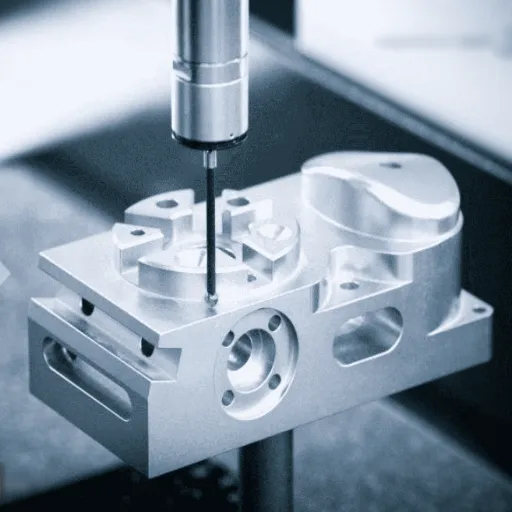
One of the main pillars of productive processes is quality control standards that manufacturer products of the same quality and of the same kind meet the set requirements. The most recognized and generally accepted standards like ISO 9001 and AS9100 not only assist manufacturers in making superior products but also ensure strict adherence to the trade regulations by providing businesses with a detailed roadmap.
| Standard | Focus Area | Industry Application |
|---|---|---|
| ISO 9001 | Quality management systems | Universal application across all industries |
| AS9100 | Aerospace quality standards | Aerospace and aviation manufacturing |
| ISO 13485 | Medical device quality | Healthcare and medical device manufacturing |
The implementation of these standards translates the supplier’s commitment to quality into clear and certain terms for the customers. The use of search trend data aids in the fast identification of suppliers who are claiming the adherence to these standards and thus, helps in directing the manufacturers that are skilled and proficient in compliance with the world-renowned quality benchmarks.
ISO certifications serve as guarantees that manufacturers comply with universally recognized quality, safety, and efficiency standards—critical requirements in aerospace, automotive, and medical device sectors.
Leveraging current search engine data helps locate ISO-certified suppliers that are both compliant and in demand, combining certification credibility with real-time market relevance for confident supplier partnership decisions.
Merging quality control assessment with recent data creates an powerful tool for evaluating CNC suppliers properly and efficiently:

Communication that is efficient and effective with the Chinese CNC suppliers has a direct influence on the collaboration, project timelines, and quality checks. The latest findings show that the major hindrances to communication between suppliers are language difficulties, different time zones, and technical specs.
Suppliers with bilingual support teams facilitate clearer communication and reduce misunderstandings
Regular communication alongside proper documentation processes builds trust and project transparency
Video calls, instant messaging, and project management software minimize delays and enhance collaboration
Businesses that communicate clearly and consistently with suppliers not only eliminate risks but also meet expectations while creating stronger alliances.
The lead time and delivery capabilities elicit great concern from the supply chain metrics point of view that allow companies to meet the demands of their customers in the best way possible. Lead time includes the time that elapses between the submission of an order and the arrival of the product while delivery capabilities denote the skill of the supplier to deliver the products at the right time, in the correct amount, and without any mistakes.
Current search trends show growing interest in methods to optimize lead times. The most effective approaches include:
By understanding and working on these factors, companies improve customer satisfaction while cutting down on costs associated with delays and strengthening competitive market positions.
When deciding to outsource CNC machining to China, it is very important to consider thoroughly the logistical aspects so as to make the processes efficient and cost-effective. The geographic separation creates difficulties that consist of longer shipping times, customs clearance delays, and higher transportation costs.
Choose suppliers near ports or in export infrastructure areas to minimize shipping complications and costs
Consider time zone differences that may lead to communication delays and slower decision-making processes
Understand Chinese trade policies, tariffs, and quality standards to avoid unexpected costs or legal issues
Use real-time supply chain tracking and project management platforms to enhance communication between partners
The demand for suppliers with ISO and AS9100 certification is presently motivating firms to undergo certifying processes. Set lead times and quality parameters, as well as penalties for non-compliance, from the very beginning to the effective handling of risks. Although purchasing from China comes with a very high cost reduction, consider it along with the logistic issues and delays to reap the benefits consistently.
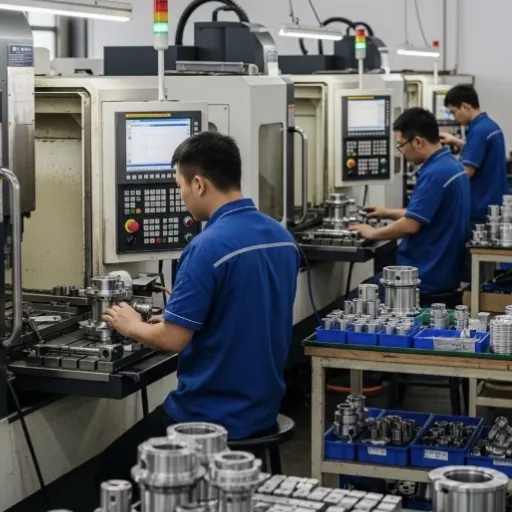
On-site inspections offer remarkable chances to ascertain the reliability of suppliers and their ability to deliver. Plant tours help firms to check the amount they can produce, the standards they follow to control the quality and if they adhere to the international regulations like obtaining ISO certifications.
Several evaluation areas during factory visits highlight current trends and best practices supported by the latest industry data:
Assess the overall working environment, including:
Clean workplaces, proper safety gear, and respectful labor policies signal commitment to ethical operations.
Examine how the factory manages quality assurance:
A visible and robust quality control system marks a trustworthy manufacturing partner.
Environmental impact receives increasing attention. Verify:
Recent studies indicate promoting sustainability makes companies more appealing to environmentally conscious customers.
Evaluate machinery and technology used in production:
Old and poorly serviced machines may cause inefficiencies and product inconsistencies. Modern, well-maintained equipment signals capability to satisfy demand and maintain operational excellence.
Request proof of certifications:
Certifications validate factory authenticity and highlight determination to maintain high quality standards.
By focusing on these aspects during factory visits, companies gather essential insights enabling well-informed partnership decisions, minimizing risks while ensuring long-term success.
A factory’s capacity and technology investments can be correctly identified by analyzing the machines and equipment that are being used. The presence of state-of-the-art and well-maintained technology usually reveals a factory that is efficient and can produce goods of high quality and quantity to meet demanding production requirements.
This comprehensive assessment enables companies to determine if the factory can cater to both present and future needs effectively.
Before setting up a huge production line, it would be prudent to assess the Chinese CNC machining company in terms of consistency of machining services and capacity to deliver the required quantities of CNC parts. Request production samples and inspection reports as a means to confirm the quality system and the ability to produce quality parts over time.
Look into their manufacturing capabilities, with 5-axis CNC milling and CNC lathe as the most advanced technology. Find out about the lead time and tooling turnover. Ask for references and conduct factory audits to ensure the supplier has the ability to handle CNC machining projects and prove their experience with CNC parts and custom CNC orders.
Make sure they can provide complete documentation related to machining processes, compliance with geometric dimensioning and tolerancing, and export logistics that are completely transparent.
The first step is to pinpoint the CNC machining suppliers in China that have a reliable service history in the CNC machining industry. Professionalism, good pricing that is clear, and fast communication are the main supplier attributes that support good qualities—all of these aspects are important in the process of selecting the right supplier.
Please make sure they provide CNC machined parts in China and have post-processing services like finishing and testing for quality assurance. Ask for the CNC machining service range from prototypes to mass production to make sure they are able to develop alongside your needs.
Last but not least, besides certifications, on-site quality control measures, and the number of years spent in the machining sector, check to see if they can help you lessen the uncertainty that comes with partnering with unreliable suppliers.
To evaluate the manufacturing capability, it is crucial to go to the CNC machining factory and personally verify the presence of the latest CNC machines, the ability to perform 5-axis CNC milling, and the presence of CNC lathe machines that can cater to different CNC machining projects.
Examine the list of their CNC machines, tooling inventory, and process controls to verify that the quality of CNC machining service is consistent and that the production of CNC parts is mastered. Ask for past examples of CNC parts as well as references that show the supplier’s expertise in custom CNC and parts for export through CNC.
Check if they follow a quality system, provide inspection reports, and can perform geometric dimensioning and tolerancing on critical features. Just like factory audit or third-party inspection, they help in establishing whether the machining supplier fits your needs.
Lead time can be a factor of various things, but dependable CNC machining companies ought to inform the customer of realistic times for prototypes, small batches, and mass production. Ask for a detailed list showing guideline’s time, setup’s time, machining’s time, finishing’s time, inspection’s time, and logistics to predict the total lead time of CNC parts.
Check out the time different Chinese CNC machining shops take to deliver and thus, get to know the suppliers who offer a nice combination of speed and quality and can easily fit into your schedule. Confirm their capability of doing fast and uninterrupted production for CNC machining when demand is high.
Stating clearly, lead time expectations, tooling ownership, and shipping modes will allow you to make good decisions in CNC machining and to foresee supply chain failures.
To find a great CNC machining supplier, check the Chinese suppliers that were reviewed positively by customers, had a good trade history and had proper factory credentials. To make sure they are really good suppliers, ask for certifications, samples of CNC machined parts and get references from customers who did similar CNC machining projects.
In case you cannot go to the factory yourself, think of employing third-party inspectors to ensure the CNC machining factory has the right amount of CNC machines for your needs and is using the correct procedures properly.
Analyze their ability to provide documentation for the CNC machining manufacturing, testing records, and logistics handling for the export process. A mixture of references, audits, and verified sample production helps to make confident supplier selection decisions.
Every new supplier comes with the potential danger of poor quality products, delays, and misunderstandings, which are the problems that usually arise when selecting new suppliers in China. However, these risks can be reduced by the following measures like; making small initial pilot runs of the CNC machined parts, setting very clear quality control checks according to the geometric dimensioning and tolerancing requirements, and carrying out proper quality system verifications.
Instead of relying only on verbal communication, it’s better to establish contracts that include penalties for missed deadlines along with third-party inspections held during the production to ensure that the machining services satisfy your standards.
First build the relationship and then increase the order sizes only after you have received consistent successful deliveries for the CNC machining projects. To minimize the risk associated with sole supplier reliance and consequently, increased vulnerability, always have more than one supplier option.
This study explores the development and evaluation of high-grade CNC machine tools in China, providing valuable insights into supplier capabilities and industry standards that inform selection decisions.
This research analyzes the geopolitical and technological factors influencing China’s CNC machine tool industry, offering a comprehensive framework for evaluating suppliers within complex market dynamics.
This paper discusses the role of CNC machine tools in intelligent manufacturing, with a focus on quality and precision in China’s manufacturing sector, offering practical insights for supplier evaluation.
Looking for and confirming a CNC supplier in China is a significant commitment to the successful manufacturing of your business. Although the process seems complicated at first, the very systematic approach that this guide gives you will greatly reduce the risks while also providing the have the possible productive partnerships.
The start of success is the very in-depth research—knowledge of different supplier types, access to online resources and market data to recognize potential partners. An evaluation of the quality control through ISO certifications, documented processes and customer reviews gives a lot of confidence in the capabilities of the supplier. Communication protocols, logistics, and lead time expectations are the areas where operations foundation for successful collaborations stands.
On-site factory visits might be regarded as the most important part because they provide the best possible insights into working conditions, the investment in technology, sustainability practices, and the production capacity, the actual. These appraisals done along with reviewing all the documentation and checking references lead to making informed decisions that are much less risky and at the same time creating strong, long-lasting relationships with suppliers.
Supplier selection should be thought of not as a one-time transaction but as the beginning of a continuous partnership. Play it safe by starting with pilot runs, gradually increase order quantities as trust grows, and keep the option of multiple sourcing open to protect the supply chain from being disrupted. Using the methods, checklists, and evaluation criteria in this guide, you can position your business to take advantage of China’s competitive manufacturing while meeting the high-quality standards and reliability your operations demand.