

Supportive, Professional, Client-Focused Service
From prototypes to full-scale production, we’ve got you covered.



The choice of manufacturing technique underscores the difficulty in the production of aluminum components. The two processes—CNC milling and CNC turning—are extensively used and each commands special preference, based on design, complexity, and application of the part. But how do you know which process will suit the needs of your specific applications? This blog post will surround a direct comparison between CNC milling and CNC turning to underline their need, advantages, and applications, specifically when it comes to the production of aluminum parts. Be you a manufacturer, an engineer, or an industrial designer, this comparison shall provide valuable information to assist you in reaching a lucid decision to set you on your way to realizing the project targets.
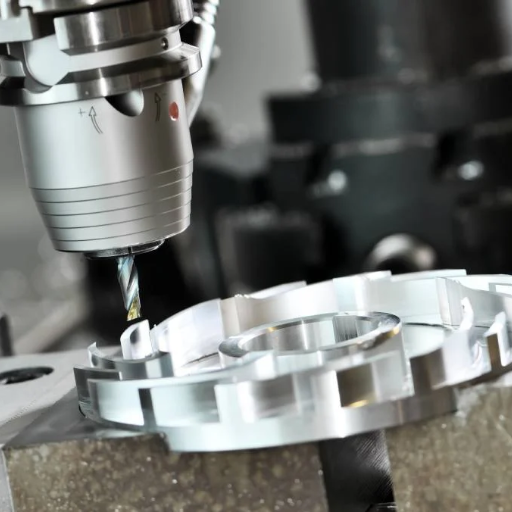
CNC milling is a machining method that creates various parts and components by carefully subtracting material from a workpiece with computerized rotary cutting tools. This manner of machining makes the manufacture of complex shapes and profiles practical. It is capable of working through programmed instructions that instruct how much will be cut, controlled across multiple axes of tool movement. This makes it convenient to produce complex and accurate machined parts made of a variety of materials, like metal, plastic, and composites.
After the preparation of a digital model in the form of a CAD drawing, this design is made machine-readable through CAM software. The workpiece is securely attached to the table of the machine during a milling program, and the cutting tools are guided around various pathways in order to machine away excess material. With the possibility of 2D to 3D machining combined, many engineered components and prototypes are turned into specific products using CNC milling.
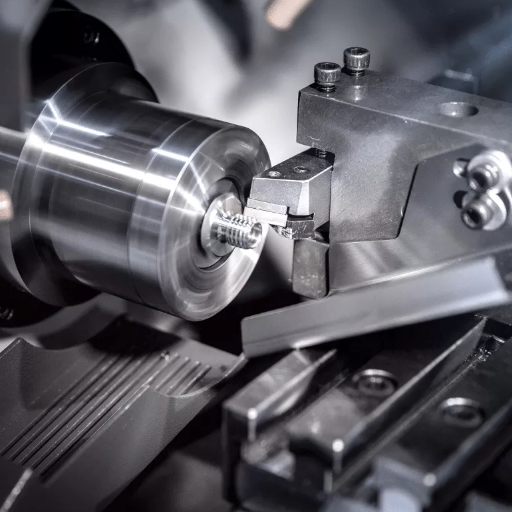
CNC turning refers to a set of very high-precision manufacturing processes used to produce an object by using cutting tools to remove material from a rotating workpiece so as to create the desired shape. In other words, this method is carried out with a computer numerical control machine tool. The workpieces are held and made to rotate at very high speeds by a spindle, where things like drilling and threading are performed on them by a tool moving against the spinning workpiece.
The method is highly efficacious in producing cylindrical components and is much sought after for materials such as aerospace, automotive, and medical manufacturing. CNC turning is very adaptive in the handling of a plethora of materials—ranging from metals to plastic and composite parts such as shafting, bushings, and fittings. The process uses computer programs to ensure that the piece is produced with the minimum error and according to specific dimensions and is thus useful in mass production and custom manufacturing.
CNC milling and turning clearly show the movement of the material and the cutter moving together in a given manner during the entire process.
Both are incredibly precise, flexible tools that allow totally untrodden pathways today—from aerospace, medical device, and transport to the production of general and perhaps aesthetic items.
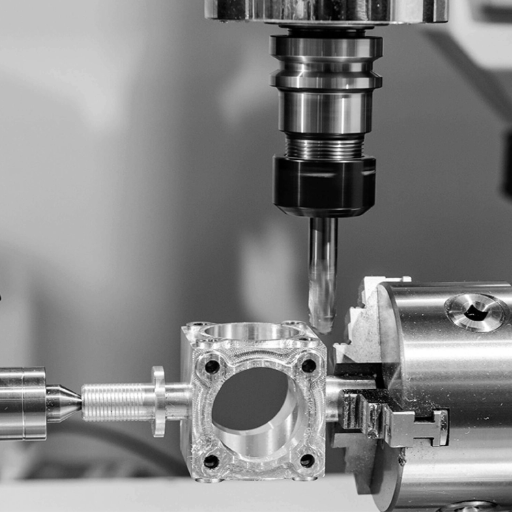
CNC milling machines are tools that have high technological advancements used in manufacturing goods by cutting the desired profile or shape out of a piece of metal. These machines are computer-operated using computer numerical control (CNC) and this system allows instructions to be transmitted to the machine to cut or model to a pre-set specification. The machines generally work in some form of metal, plastic, wood, or composite, making them highly versatile and useful for so many different industries.
CNC milling machines are considered a must for aerospace, automotive, and medical device industries to exercise their effectiveness in showing the capability of creating precise and intricate pieces and tolerances among other options. Apart from simply speeding time to market, it even tends to increase the manufacturing flexibility by reducing manual oversight and, therefore, possible human errors. Employing the technology further helps in automation. CNC milling is becoming a modern-day technical importance that has ultraprecise components executed under tight manufacturing tolerances.
CNC turning machines are indispensable tools in today’s manufacturing industry, dedicated to producing cylindrical parts with precision and cost-effectively. Such machines are operated with the workpiece rotating while the cutting tool shapes it to the required dimension. The process is particularly suited for manufacturing shafts, bushings, or threaded parts, for instance, the demand for which arises mainly in industries based on automotive, aerospace, or telecommunications.
During a comparison of tools in CNC turning and manual turning, it reflected the automation and precision required for these tools.
Decision Factor: The choice depends on technological requirements. CNC turning tools are perfect for large-scale production or any intricate designs that call for speed and perfection. Manual turning tools are wonderful for simple projects or situations with constraints on automation.
Aluminum precision machining is critical because of its application across industry in sectors like aerospace, automotive, and electronics, where tolerances for tight tolerances go hand in hand. It does not make for ease in machining due to its distinctive features, such as being softer and a good thermal conductor in comparison to other ferrous metals. High precision and good surface finish require standard cutting tools and methods, lest the material be damaged.
Highly desirable for machined aluminum geometries. The computerized factor gives an even performance to prevent discrepancies in dimensions for complex shapes and geometries.
Generally more adaptable and cost-effective for simpler applications, but carries higher risk of human error resulting in significant inaccuracy.
Based on certain cases and requirements of interest, the mode in which each of CNC milling and CNC turning through aluminum appears more efficient.
Key Takeaway: The gap between CNC milling and CNC turning arises when part designs are factored in. Part shape, complexity, and quantity will come into play in deciding the better machining method for aluminum machining.
It is important to consider the cost-effectiveness of the CNC milling and CNC turning processes, which otherwise depend on various factors, such as the required volume of parts production, intricacies involved, and precision.
Higher Initial Costs:
Justified When:
Lower Operating Costs:
Best Economic Choice For:

CNC machining of aluminum alloys finds the highest use due to its superlative machinability, versatility, and exceptional properties. Being so light, these products are corrosion-resistant and excellent thermal and electrical conductors. It is preferred across the aerospace, automotive, and consumer electronics industrial spectrum.
Superior Machinability
Easy to cut and shape with CNC-controlled machines
Corrosion Resistance
Eliminates need for additional surface treatment, saving time and costs
Lightweight
Ideal for applications requiring strength without weight
Excellent Conductivity
Superior thermal and electrical properties for specialized applications
Milling and turning are fundamental machining processes for making complex geometries, each being specified for different functions.
Process: Removes material using a cutting tool with rotational movement
Ideal For:
Best Suited For: Detailed characteristics requiring precision and versatility
Process: Workpiece rotates while single-point cutting tool removes material
Ideal For:
Best Suited For: Accurate and quick production of uniform circular details
In milling and turning processes, the material removal rate (MRR) is crucial in that it indicates how quickly and efficiently material is removed during the manufacturing process.
Advantages:
Variables Affecting MRR:
Best For: Complex geometries requiring rapid material removal
Considerations:
Key Benefits:
Best For: High-precision cylindrical or shaft components
Decision Factor: Understanding how the material removal rate balances with the secondary goal of acceptable quality product goes a long way in machining effectively.

Due to high precision and complex components manufacturing options, CNC milling is widely employed in several industries.
Fabrication of gears, brackets, housings, and other machinery components requiring tight tolerances and minimal variation.
Key Benefit: Consistency in quality and service for intricate designs
Manufacturing lightweight and durable components including engine parts, turbine blades, and structural frameworks.
Key Benefit: Meets safety and performance standards with capability to work with metals to composites
Production of high-accuracy surgical instruments, implants, orthopedic devices, and brackets requiring precise shapes and finishings.
Key Benefit: Flexible customization for patient-specific solutions
This widely used capability assists in making symmetrical components with consistency and in high volumes efficiently.
Production of shafts, bushings, and couplings essential for mechanical assemblies. These components must be tightly machined within close tolerances to ensure proper fitting and pressure-tight assemblies.
Crucial for making careful and physically separated parts such as turbine blades, housings, and attachments. Safety and quality standards are strictly maintained through CNC turning processes.
Fabrication of special devices and tools including surgical apparatus, orthopedic implants, and custom-made implants. Technology delivers tailor-made, highly precise parts meeting specific patient needs.
CNC manufacturing is crucial in almost every sector of industry with its unsurpassed precision and reliability.
CNC milling involves the cutting tool moving along the spindle over a stationary workpiece to create features suitable for multi-axis and complex-part machining. CNC turning uses a CNC lathe where the aluminum workpiece rotates and stationary cutting tools carry out the turning processes at fast feed rates, making it suitable for round geometry and fine cuts. The choice of process depends on the geometry, surface finish requirements, and manufacturing considerations.
It depends on what the parts look like. For round parts in high quantities, CNC turning might be more efficient as cycle times are shorter with less handling. However, for parts with complex pockets, holes, or multiple faces, CNC milling or a combination of turning and milling might be more efficient. Many machining firms combine turn and mill operations to speed up production.
Yes. Many precision aluminum components can be manufactured by applying both milling and turning operations to achieve the final geometry. Typically, rough turning is done using a CNC turning center first. After rough turning, geometrically challenging features are produced using multi-axis CNC milling, holes are drilled, and face milling is performed on flat surfaces. This combined approach in one setup reduces handling processes while improving precision.
Milling cutters used for aluminum include high-feed end mills, carbide roughing cutters, and specialized aluminum milling cutters with polished flutes to prevent chip welding. Plain milling and face milling are normal cutting types. Tool selection is critical for achieving proper surface finish and minimizing aluminum oxide build-up. Surface coating and flute geometry are optimized specifically for cutting aluminum.
Turning centers and CNC lathes are recommended primarily for rotating parts such as shafts, bushings, collars, and threaded spindles, as they offer superior concentricity, shorter cycle times, and less time-consuming setups. When parts feature additional complexities, turn-mill operations or advanced CNC turning with live tooling for milling features on the lathe should be considered.
Multi-axis CNC milling can generate elaborate, multi-featured components in a single setup, avoiding multiple secondary steps and providing significant improvements in accuracy. Live tooling and sub-spindle CNC turning can transform the turning center into a device capable of milling, drilling, or threading, enhancing versatility. These capabilities provide improved precision manufacturing for parts requiring ideal surface finishes.
While natural aluminum oxide formation isn’t as harmful as with ferrous materials, good cutting tool selection and chip evacuation remain essential. Long chips in milling processes can weld to the tool face, different from chipping during turning. Both processes need appropriate coolant choices, exact tooling geometry, and proper feeds to prevent built-up edge and guarantee consistent part and surface qualities.
The choice begins by examining part geometry, tolerances, production volume, and required surface finish. If the part is predominantly cylindrical and requires high accuracy and repeatability, CNC turning is highly recommended. For parts with complex pockets, multiple faces, or non-rotational features, CNC milling provides flexible 3D cutting capabilities. For many projects, blended milling-turning or advanced CNC machining solutions working collaboratively will provide the right balance, maximizing efficiency and accuracy in parts manufacturing.
The wise manufacturer will use various pertinent criteria to determine the methods that best suit their objectives and finances. Both CNC milling and CNC turning are powerful, precise tools essential for modern manufacturing across aerospace, automotive, medical, and industrial sectors. Understanding the strengths of each process—milling’s versatility for complex geometries and turning’s efficiency for cylindrical parts—enables manufacturers to make informed decisions that optimize both quality and cost-effectiveness in aluminum parts production.
Key Takeaway: The choice between CNC milling and turning ultimately depends on part geometry, complexity, production volume, and specific application requirements. Many modern manufacturing operations benefit from combining both processes to achieve optimal results.