Best Practices for Using and Maintaining Titanium Cutting Tools
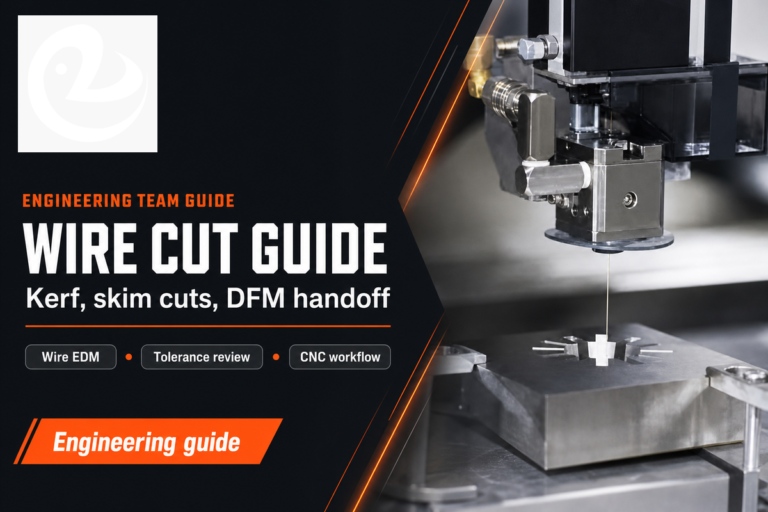
Since it is macroscopically strong and can be used easily as it gets hot along with being hard, Machining of titanium gets difficult. On the other hand, utilizing appropriate cutting tools, all such problems can be alleviated by them, thus giving the manufacturers an opportunity to work with high quality and optimum velocidade. Within this writeup, the discussion is about the appropriate cutting tools for titanium cutting with wave of advancement in the design and materials of the tool per se. Whether you have been machining titanium for years or have just started, the article about these tools will guide you in picking the most fit tools for the job, those that work faster, last longer and do excellent work. Stick around as we explore the main aspects, benefits and applications of these high-tech tools.
Titanium alloys have many positive attributes. They are very lightweight yet very durable, almost on par with some steels and corrosion resistant, and they can be even worn in the body. Pure titanium is a very strong and weightless material but it can be added with components such as aluminum or vanadium to create a particular alloy. That allows for its superior mechanical as well as high-temperature characteristics. The application of such materials is very prevalent in the industries where heavy-duty, high-performance materials are demanded — aviation, medical and automotive. However, titanium alloys are machines of the types Hi-Tech or Universe Tooling. Because the material is hard, and the heat is not carried out from the materials, machining cannot be done using common tools. Special titanium cutting tools and technologies have to be used.
Properties of Titanium Alloys
Titanium alloys are used extensively due to their exceptional performance and easy manipulation, along with rust resistance. These materials have an impressive strength to weight ratio which makes them appropriate for all applications that demand strength and reduced size, for instance the air industry and health equipment. Aside from that, these materials have already proven themselves to be corrosive agents on many corrosion mechanisms, including those with sea water or acids, thus expanding the scope of causation.
Another essential characteristic of titanium and its alloys, is the capacity to retain mechanical characteristics in the extreme thermal conditions. Depending on the material componentity, they allow operation even in very high temperature environments without structural damage. Such characteristics are especially important for heat-resistant equipment employed by any industry or application fields — be it automotive industries or power generation ones.
The use of these particular alloys is further extended by their demonstration of biocompatibility. This is particularly applicable in the medical and dental fields. They are essentially biocompatible implants since they do not elicit an undesirable ‘foreign body’ response when used for surgical implants or prosthetic procedures. Thus, this joint structural integrity, high endurance to changes in temperature, sparing tendency to corrode and the ability to coexist with body tissues attests to the importance of titanium in as many and quite useful contexts as these titanium cutting tools befit.
Applications of Titanium in Manufacturing
01
Aerospace Engineering
Titanium is commonly used in the aerospace industry for manufacturing aircraft frames, jet engines, and spacecraft majorly because of its high strength-to-weight ratio and thermal property.
02
Automotive Industry
High-performance cars and sports cars are seen with titanium parts, e.g. exhaust systems or connecting rods, enhancing durability and reducing weight.
03
Medical Devices
Titanium is used in making medical implants, prosthetics, and dental implants on account of its high biocompatibility and resistance to corrosion.
04
Marine Equipment
Titanium is useful for all marine applications, from hulls to propeller shafts, where non-corrosiveness in seawater is a must.
05
Chemical Processing
Titanium is chosen to build heat exchangers, tanks, and piping systems because of its resistance to corrosion within chemical processes.
Benefits of Using Titanium in Machining
✓
Strength to WeightTitanium is massively strong while being vastly lightweight, which makes it incredibly favorable in the machines of parts that need toughness as well as reduced weight.
✓
Strong Resistance to CorrosionIt has a great resistance to wear and a good resistance to alkalines which make it a further dependable device under extreme conditions.
✓
Thermal StabilityEven at incredibly high temperatures, the shape and strength of titanium remain largely unaffected, making it well suited for applications that necessitate heat-resistant material.
✓
BiocompatibilityTitanium is invaluable in certain cases due to its human-friendly nature and the compatibility of human tissues with this metal for medical applications like orthopaedic implants.
✓
Longevity and DurabilityMachined titanium parts provide long life; intricate titanium components, thus ameliorating the need for frequent replacement and are hence more cost-efficient in the long run.
Types of Cutting Tools for Titanium Machining
Types of Cutting Tools for Titanium Machining
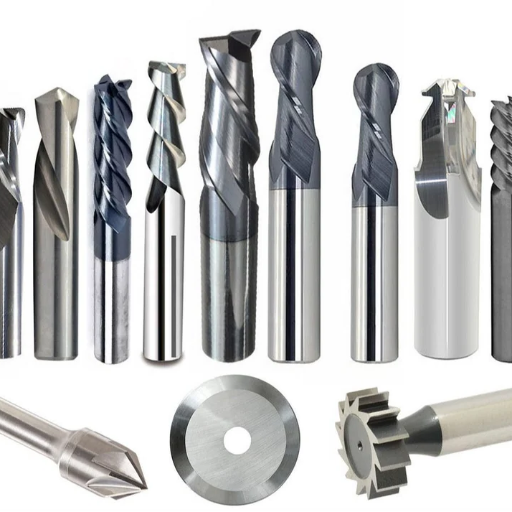
Solid Carbide End Mills
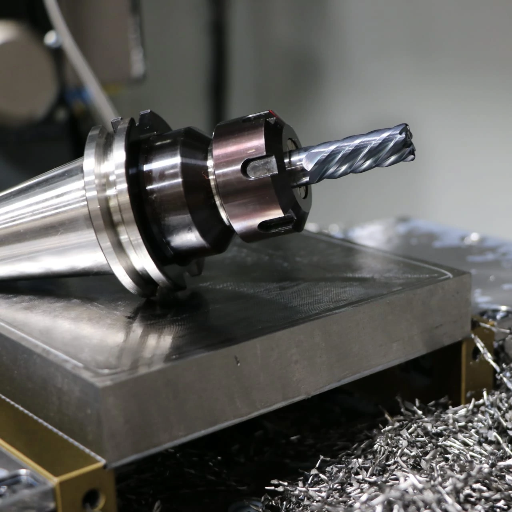
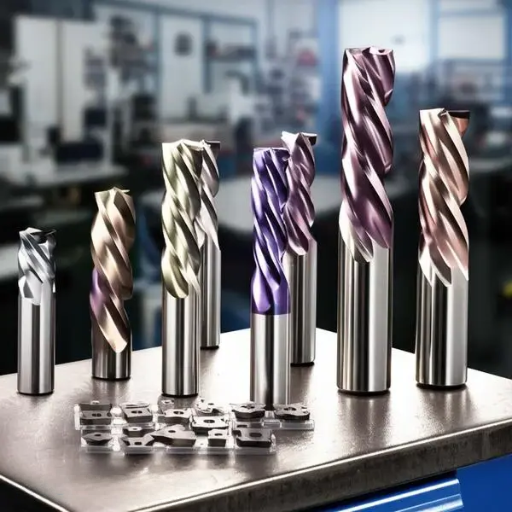
Solid carbide is an outstanding class of tools used to machine titanium. They are particularly efficient because carbide is actually stronger than other tool materials in the market, which is necessary to maintain a sharp cutting edge even under severe circumstances. The lesser they are affected by friction, the smaller the load on the structure and the lower the heat build-up on the cutting edge. This property is a huge advantage when dealing with titanium, as the recession cutter tends to operate at high temperatures per se.
Solid carbide mills serve the purpose of resisting deformation and delivering superior performance at high cutting speeds. They also are significantly rigid and will deflect much less, thus allowing for repetition of every cut of the same quality and accuracy. This is very pertinent for maintaining minimal accepted tolerances in the parts being made out of titanium, a critical aspect in industries such as the aerospace, medical, and automotive segments.
The use of correct machinability parameters is a vital part of the utilization of solid carbide end mills for working with titanium. Having a perfect feed rate, speed, and the use of cutting fluids can assist greatly to enhance the tool life, without harming workpiece quality. As far as these end mills are rigorously combined with proper practices and equipment, overcoming challenges while working with titanium, and having long-lasting precision performance, were already achieved by many.
Carbide Drills for Titanium
When in doubt, turn to carbide drilling. You can find the truth of this statement by using carbide drills in the machining of tough and extremely hard titanium alloys, albeit hard to find better holes for their ability to maintain precision. Carbide drills are in fact made from high-class carbide supplies, thereby making them highly resistant to heat and wear — two highly significant features that can be harnessed when cutting this incredibly tough metal. In terms of design, the most innovative advances in these types of drills have been aimed at optimizing assist, increasing fluidity in chip removal, reducing heat generated during cutting while adequately lubricated, if not cooled, afterwards. Carbide drills can be excellent performers in titanium machining, if the cutting factors are optimized for the drilling usage.
It is clear that machinists are looking to updated techniques for keeping their carbide drills operational without affecting productivity. Some tried and tested approaches include utilization of high-pressure coolants for cooling, TiAlN (titanium aluminum nitride), or diamond coatings for increased wear resistance, starting with pilot holes, in order to successfully stabilize the drilling process. Combining such knowledge from practice and refined technology brings direct rewards in terms of efficiency, minimizing tool wear, and costly shut down times for titanium machining.
Titanium Cutting Pliers: A Specialized Tool
Precision-engineered cutting pliers for titanium are designed to efficiently cut and work on titanium and similar very hard materials. Those usually have hardened, wear-resistant cutting edges and ergonomic handles for touch and durability. These are a crucial tool in leading industries like aerospace, medical device manufacturing and jewelry making that cannot afford anything less than precision and reliability. Specifying proper tools classified for titanium and proper maintenance will guarantee that they last even further in long life without lessening their functionality.
Best Practices for Machining Titanium
Best Practices for Machining Titanium
Choosing the Right Cutter for the Job
Choosing the right cutter is crucial for obtaining fine tool life along with precision during titanium machining. Normally, high-performance carbide tools are in preference here due to their capabilities of enduring the toughness of titanium and resisting elevated temperatures as well. Coated carbide cutters usually provide wear resistance and relieve the amount of heat at the cutting edge to increase efficiency, while coatings like TiAlN and AlCrN excel here. Other ways are merely effective in reducing cutting forces and heat generation by utilizing sharp tools that have positive rake angles, a significant issue in titanium work because of its very low thermal conductivity. End mills with variable flutes help eliminate a large amount of vibration and chatter to make the cut even smoother and to alleviate the blade. To avoid work hardening and protect the tool from excessive wear, the lowest possible knife speed with upward feed rate has to keep in the limelight.
Optimal Cutting Speeds and Feeds
Even though the titanium is difficult to machine, understanding the most effective and beneficial cutting speeds and feeds of titanium cutting tools is essential for longevity and effective performance. As the heat formed during the cutting is contained at the cutting edge due to the low thermal conductivity of titanium, with such a high amount of heat, the excess changes within the temperature helps in wearing out of the tool. Generally, cutting speeds and feed rates are prescribed lower when machining such tools. As recommended by industry standards, the cutting speed ranges from 30 to 60 meters each minute for uncoated carbide tools and 60–100 m/min for advanced coated carbide tools during common titanium alloys machining such as Ti6Al4V. Typically, such tools work with feed rates ranging between 0.1 and 0.3 mm per tooth in relation to the size of the tool and the geometry of the work piece.
Another crucial parameter is the use of the recommended depth of cut for any machining operation. In roughing, the recommended depth of cut is quite high; 2–6mm can be used while for finishing 0.2–0.5mm cuts are preferred. More so, titanium cutting tools benefit from the use of high-pressure coolant systems. They help to clear the chips from the cutting zone, reduce heat generation and improve the efficiency of the tool. The use of tools with different helix angles and a sharp positive rake angle also helps in the reduction of vibration tendencies and ensures smooth operations. This is because such parameters are balanced for practical purposes and the process of cutting titanium is effective when definite parameters are taken into account.
Roughing vs. Finishing Cuts
Roughing cuts prioritize material removal with higher feeds and depths, while finishing cuts focus on precision and surface quality with lighter loads.
Aspect
Roughing
Finishing
Objective
Material removal
Surface quality
Feed Rate
High
Low
Depth
Large
Small
Speed
Moderate
High
Tool Wear
Higher
Lower
Vibration
Higher
Lower
Precision
Lower
High
Tool Type
Durable
Fine edge
Best Practices for Using and Maintaining Titanium Cutting Tools
Best Practices for Using and Maintaining Titanium Cutting Tools
Proper Cleaning Techniques
It is important to clean the titanium cutting tools to ensure a long life and efficient work. Cleaning begins with immediate removal of debris and residue after use. This is to avoid material build-up which might affect precision the equipment may need hence, risking future effectiveness. Since some such materials could damage the equipment, gently clear away dirt, particles, etc. from the surface without scratching them by using soft hair brushes, cloth, etc.
No harsh chemicals will be used to avoid any possible corrosion hazards on the metal and harm to the protective coating of the tool. Whenever you must use a cleaning agent, be very sure it is mild soap or an especially designated agent for cutting tools that will not be harsh on the titanium. Rinse the tools with water, making sure that there is no more cleaning agent on them and pat them dry completely before storage.
Maintenance is one of those regular tasks. During cleaning and sterilization an observant eye will spot wear and tear and it should remedy as soon as possible in order to forestall a decline. Proper state of tool preservation explains the need to maintain their performance for years in a clean, dry warehouse.
Sharpening Methods for Longevity
Maintaining Titanium cutting tools for a longer life is an important aspect, and sharpening is the key technique to practice. These tools are durable and wear-resistant, but for their longer chipping period, these tools should follow well-executed sharpening rules. Thus, maintaining essential techniques is primarily needed, wherein they must include the use of sharpening stones or a diamond tool that is designed keeping in mind the hard metals of titanium. These stones, in particular, act as fine abrasives so the edge may be sharpened with the least possible abrasion.
Maintain the sharpening angle, between 20 and 30 degrees, that will suit the expected life of tool. Additional improvement of reshaping or sharpening can be done using low-speed grinder together with a good coolant for preventing heat build-up. Possible damage to titanium’s metallography has to be identified in proofs of symmetry at the cutting edge immediately following sharpening. Furthermore, good housekeeping is necessary to unleash the life potential of a tool in terms of cutting efficiency. Below-par sharpening techniques can lower the already limited life of titanium tools. Compliance to these tips assures decent quality and efficiency on a long-term basis.
Optimal Operating Conditions
The best part about the titanium cutting tools often needs to maintain certain conditions to bear the wear and provide precision. One of the first conditions is that they have to work at moderate cutting and feeding speeds to prevent overheating, which may impair its performance. Proper cooling methods will be needed to control temperature, prevent wear and tear, and make cutting fluids mandatory. Besides this, very high pressure should also be avoided to prevent undue stresses on the tool’s structure. Following these, prolonged tool life is ensured and a whole series of high-quality work will consistently appear.
Comparing Titanium Cutting Tools with Alternatives
Comparing Titanium Cutting Tools with Alternatives
Performance Comparison with Steel Cutting Tools
Titanium cutting tools offer manifold advantages over their sharpened steel counterparts, especially under heavy-duty conditions. By their high strength to weight ratio, titanium tools give the advantage of strength and toughness against extreme conditions. They are also resistant to corrosion and keep their structural integrity better than steel at higher temperatures. This makes them ideal for machining hard materials and under environments where heat dissipation is the crux.
On the other hand, steel cutting tools, especially high-speed steel (HSS), are less costly and well suited to general machining functions. Steel tools can be manufactured and sharpened easily, rendering a cost-viable option for mild chores. That said, when pitted against titanium tools, they have less thermal stability and lower wear resistance. Hence, they are less suitable for high-end or high-temperature work.
At the close of the day, the choice between titanium and steel cutting tools depends on the particular requirements in a task. For strict tolerance, high-temperature, and heavy-duty scenarios, titanium tools are top-rated. In less of a cost-prohibitive setting with general use, steel provides a robust, dependable, and practical alternative.
Cost-Benefit Analysis of Titanium vs. Other Materials
Titanium is compared to steel, aluminum, and carbon composites in terms of weight, strength, cost, durability, and corrosion resistance.
Material
Weight
Strength
Cost
Durable
Corrosion
Titanium
Very light
Very strong
High
Excellent
Excellent
Steel
Heavy
Strong
Low
Good
Moderate
Aluminum
Light
Moderate
Moderate
Moderate
Good
Carbon Composites
Very light
Strong
Very high
Moderate
Excellent
Environmental Considerations in Tool Selection
In selecting the tools for titanium machining, a significant role is played by environmental aspects in ensuring sustainability and efficiency. The act of machining titanium would require cutting fluids along with energy-intensive processes. However, the adoption of eco-friendly cutting fluids with high degradability can have a significant effect in the actual reduction of the environmental imprint. In addition, the use of advanced machining technologies such as high-efficiency milling (HEM) and cryogenic cooling systems present a well-founded option toward lowering energy consumption and waste generated during these processes.
Moreover, the recyclability of tool materials counts as another critical aspect. Tools made of durable and recyclable materials like carbide or cermet alloys prolong the life cycle; reducing waste goes hand in hand with the environment objectives. Proper maintenance and reuse when necessary are also environmentally responsible things. By integrating sustainable practices in tool selection, and machining processes for titanium manufacturers can reduce waste, save resources, and contribute to green production while still maintaining efficiencies and performances.
Frequently Asked Questions (FAQs)
How does cutting action and chip thickness affect MRR in the machining of titanium (Ti)?
+
Cutting action and chip thickness also likewise govern the metal removal rates (MRR) when it comes to titanium. So, increasing the chip thickness per tooth can lead to an increase of the material volume being removed per pass for the sake of MRR; on the contrary, on the point of the heat generated or tool wear, strict consideration has to be given to tolerance of the limits of either. Encroach on medium axial and radial depths of cut with each pass so the correct r.p.m. and feed pressure produce predictably retaining the desired chip thickness. Chip-breaker geometry is desirable in tools that encourage thorough chip evacuation while not loading the cutting edge with chips. MRR can be increased by raising chip thickness relatively conservatively, but the tool will not last if effective coolant, HPC (high pressure coolant), or reduced engagement width is not applied.
What type and RPM/SFM of CNC strategies are most suited to improve surface finishing of high-strength Ti?
+
For high-strength titanium, priority CNC strategies should offer stable cutting conditions and provide conservative sfm settings compared to steels. These may include using trochoidal milling (a process whereby smaller engagement takes place) and helical interpolation to spread heat and reduce tool-engagement. Lower sfm coupled with high feed per tooth (within the acceptable chip thickness range) can improve finish and preserve tool life. Wherever possible, use climb milling so the tool corner radius is relevant in resisting edge chipping and the high-pressure coolant works to minimize extreme heat and help evacuate chips for a predictable finish.
Should I install a 5-flute, 6-flute, or 7-flute end mill for slotting or width control on a titanium configuration?
+
Numbers of flutes make the difference in such considerations to control chip clearance for 3- to 4-fluted end mills while higher flute counts (like 5–7) are desirable for a single-finish-pass rotation or when slot is supposed to be narrow enough to allow a lower chip per tooth, thereby producing as good a surface finish as possible. Basically, a 6- or 7-fluted format will allow greater axial cutting edge availability enabling considerably smoother finishes and at a lesser radial engagement minute. A 5-fluted end mill can also go in balance with chip removal and productivity. In case of slotting, measure the chip thickness and radial engagement because if it gets clogged, it would become a serious damnation to a poor slot with heat going everywhere.
How does helical flute design and corner radius influence tool life and chipbreaker performance during titanium milling?
+
Helical flute design helps in the rise and expulsion of chips, which in turn eliminates recutting and excess heat buildup during titanium milling. An ideal helix gives a significant amount of shear when cutting titanium, expected to deliver the most delicate cutting action. The larger the corner radius, the higher the resistance against chipping under high axial loads, prolonging tool life under relatively aggressive cutting conditions. By placing a chipbreaker on the flute or margin, it can subsequently break the chips away from the cut, lessening the possibility of thermal wear and enhancing better consistency of chip removal and overall surface finish.
What are the considerations for slotting, tool width, and avoiding built-up edges in Ti work?
+
When slot milling titanium, choose tool width and flute count carefully to let the chip be evacuated out: wider slots might need a tool with larger fluted-throat capacity or with a smaller flute count. Avoid choke cutting by keeping the radial plunge low and also adjust your chip thickness as per feed and rpm. Tool coatings and chipbreaker features can work well in decreasing adhesion and built-up edges. Besides this, intermittent cutting or pecking could be of some help in chip clearance for deeper slots. Lastly, optimize the design of the corner radius as-per operation — an efficient profile cut will have sharp corner radii, while features of large corner radii are required to assist strength and decrease corner wear.